




Building a Fleet Culture That Reaches Every Department
How do you build a fleet culture that reaches beyond the shop? Ross Jackson shares his approach to making every department part of caring for the equipment it depends on.
 MENU
 SEARCH
How do you build a fleet culture that reaches beyond the shop? Ross Jackson shares his approach to making every department part of caring for the equipment it depends on.

Building a stronger fleet culture starts with connecting the people who maintain vehicles with those who depend on them.
Government Fleet
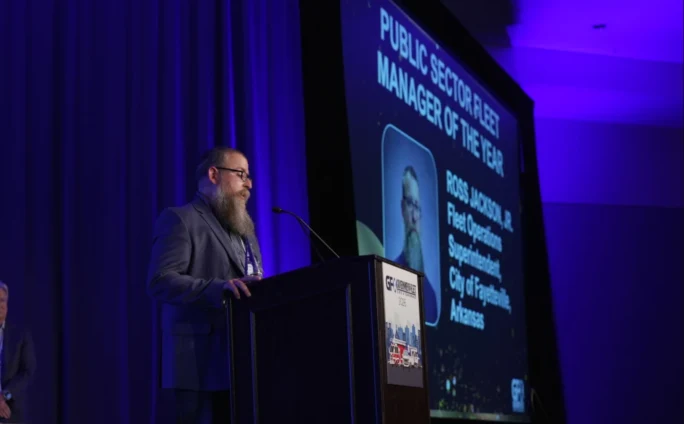
Before Ross Jackson Jr., CAFM, was responsible for keeping a city’s fleet running, he was helping a friend work on a 1967 Ford Mustang GT Fastback. He had started college studying criminal justice, planning to follow his father into law enforcement. That project sent him toward a different career.
His path to becoming fleet operations superintendent for the City of Fayetteville, Arkansas, took him through trade school, a dealership, and more than 14 years with a county fleet operation. Today, the 2026 Public Sector Fleet Manager of the Year is focused on strengthening his team’s culture and building a commitment to equipment care across the departments fleet supports.
Jackson enrolled in trade school, where he earned Student of the Year honors, then started at a local dealership changing oil. He completed OEM training and became a certified technician.
When work slowed during the housing crisis, the dealership divided technicians into teams competing for billable hours. The teams that billed the most hours kept their jobs, and although Jackson’s team came out ahead, the experience still prompted him to seek greater stability. He credited that period with teaching him the value of hard work and accountability.
He later joined Placer County Fleet Services in California, spending more than 14 years in various roles. Eventually, he and his family moved to Arkansas for a better quality of life and for him to pursue leadership opportunities. After a short time with the University of Arkansas, he became Fayetteville’s fleet manager.
But what did those lessons look like when Jackson put them to work in Fayetteville? For him, leading fleet meant understanding what happened beyond the shop doors and how his team’s decisions affected the people relying on its work.
In the following conversation, Jackson explains how that understanding shaped his approach to leadership and why building a stronger fleet culture requires participation from the departments it supports.
Ross Jackson: Throughout my career, I’ve worked under a variety of leaders with very different management styles. Some taught me what to do, and others taught me what not to do. The leaders who had the greatest impact on me were the ones who trusted their people, recognized their abilities, and gave them the freedom to do their jobs without being micromanaged. They were available when you needed guidance but didn’t feel the need to have their hands in everything.
That’s something I’ve tried to carry into my own leadership style. Hire good people, give them the tools and training they need, trust them to do their jobs, and hold them accountable. I’ve also learned that what gets measured gets managed. You have to know where you stand if you expect to improve. I believe you can give people the freedom to succeed while still setting clear expectations and measuring results.
Jackson: Working at a dealership taught me pretty quickly that accountability and fixing it right the first time were critical. When your paycheck depends on billable hours, you learn to be productive, efficient, and stand behind your work. But I also learned that the flat-rate system didn't always encourage teamwork.
As a younger technician, there were plenty of times I needed help from someone with more experience. The problem was that helping me meant they were losing time on a job that paid them. Sharing knowledge could also mean creating competition for future work. Even borrowing tools could be hit or miss because, as we used to say, you were "putting miles on someone else's tools."
Government Fleet
Those experiences had a big influence on the kind of shop I wanted to build when I moved into management. I wanted experienced technicians helping develop younger technicians, not feeling like they were training their competition. I wanted technicians to have the tools they needed to do their jobs, including investing in specialized equipment and shop-owned tools that everyone could use to take on bigger and more complex repairs.
I still believe strongly in accountability, productivity, and getting the job done right the first time. The difference is that I want technicians working together to accomplish those things. When one technician learns something new, the entire shop should benefit from it. To me, that's how you build a stronger team and a better fleet operation.
Jackson: When I arrived in Fayetteville, one of the first things I recognized was that we needed to get better at using our Fleet Management Information System (FMIS). We had the system in place, but we weren't taking full advantage of what it could tell us.
I believe in starting with small wins and building on them, so we started with our technicians, training them on properly accounting for their time and documenting the work they performed. From there, we worked with our office staff to improve the information we were capturing on our assets.
Once we started getting better information, we could identify where we needed to focus our efforts. Preventive maintenance compliance was a big one because it was directly affecting our fleet availability. We needed to get ahead of repairs instead of constantly reacting to breakdowns. Improving PM compliance became one of our early priorities, and we began measuring our progress and holding ourselves accountable.
At the same time, I was spending time with the departments we supported, visiting their operations, learning about their equipment, and understanding their missions. I wanted to hear directly from the people using the equipment about what was working, what wasn't, and what they needed from fleet.
Those relationships were just as important as improving our internal processes. It's difficult to support a department effectively if you don't understand what they do or the challenges they face.
For me, it was about building trust on both sides of the shop doors. Internally, we needed better information, processes, and accountability. Externally, we needed strong working relationships with our customers. Both were necessary to move the operation forward.
Jackson: One of the first things I focused on was explaining the "why" behind what we were doing. I wanted our technicians to understand how their work directly affected fleet availability, the departments we support, and ultimately the citizens we serve. PM compliance wasn't just a number we were trying to improve. It was about keeping equipment on the road and available when our customers needed it.
We started having more conversations about what we were finding during preventive maintenance inspections and the importance of addressing repairs while the vehicle was already in the shop. One question I wanted technicians asking themselves was, "Will this vehicle make it to its next PM without coming back into the shop?" Every time a vehicle comes back between scheduled services, that's additional downtime, another interruption to our customers' operations, and potentially a delay in the services they provide to our citizens.
I wanted our team to understand that we weren't just maintaining vehicles and equipment. We were helping police officers respond to calls, firefighters protect lives and property, sanitation crews collect trash, and public works crews maintain our infrastructure. When you start connecting the work being done in the shop to the people depending on that equipment, it gives the job a greater sense of purpose.
I believe that helped change the way our technicians looked at their work. It wasn't just about finishing the job in front of them anymore. It was about doing everything we reasonably could to keep that vehicle from coming back before its next scheduled service.
Jackson: One of the challenges we faced was communicating changes that came out of our fleet utilization study. We identified vehicles and equipment that were seeing very little use, and we started having conversations with departments about finding those assets a new home, moving them into a shared motor pool, or potentially selling them at surplus.
What I learned quickly was that just because the data supports a decision doesn't mean everyone is going to agree with it. Departments had grown accustomed to having certain equipment available whenever they needed it, even if they only used it a handful of times each year. From their perspective, giving up that equipment could mean losing the ability to do their jobs when the need arose.
That's where change management and communication became so important. We needed to do a better job of explaining that the goal wasn't simply to take equipment away or cut costs. It was to make better use of the resources we already had while still meeting their operational needs.
In some cases, renting equipment for occasional use could cost a fraction of what it takes to own and maintain it. In others, moving an underutilized asset into a shared motor pool meant several departments could benefit from equipment that previously served only one.
The biggest lesson was that you can't just show someone a utilization report and expect them to embrace a change. You must listen to their concerns, understand their mission, and involve them in finding a solution.
Those conversations helped us move away from the idea that every department needed to own every piece of equipment it might occasionally use and toward looking at how we could share resources across the city.
Jackson: There will always be competing priorities in fleet, but some things simply aren't negotiable. Public safety and critical infrastructure have to come first. When a police officer, firefighter, or utility crew needs a piece of equipment to do their job, they are depending on us to make sure it's safe, reliable, and available.
That's why it's so important to understand what each department does on a daily basis, what equipment they depend on, and what constitutes an emergency for them. What might seem like a routine repair to us could be keeping an entire crew from doing their job. You can't make good decisions about priorities if you don't understand the impact your decisions have on the departments you support.
For example, if we have several vehicles in the shop and a critical piece of equipment goes down that's needed for an emergency infrastructure repair, we may need to shift technicians and resources to get it back into service. We don't have unlimited people, time, or resources, so we have to make the best decisions we can with what we have.
That means weighing the needs of multiple departments, communicating with those affected, and putting our resources where they'll make the biggest difference. I've always believed fleet should operate as an extension of the departments we support. Their mission is our mission, and the better we understand what they do, the better we can support them when it matters most.
Jackson: I actually faced this on my very first week in with one of our larger public safety departments. My team and theirs sat down together in a conference room to discuss some longstanding concerns. I had also heard from my boss that the relationship needed work.
Fleet had fallen behind on vehicle replacements and upfits, and there were concerns about turnaround times and overall performance. I've always believed that as a leader, you're ultimately responsible for the success or failure of your operation. It didn't matter that it was my first day or that I hadn't been there when those problems developed. I was there now, and it was my responsibility to help fix them.
That first meeting wasn't about making excuses or defending what had happened in the past. It was about listening, understanding their frustrations, and figuring out what we needed to do differently. I wanted them to know their concerns were being heard and that we were committed to improving the service they received.
From there, it came down to communication, accountability, and following through on what we said we would do. We worked to get replacements and upfits back on track, improve turnaround times, and make vehicle reliability/availability a priority. Trust doesn't come back because you have one good meeting or make a few promises. It comes back when people consistently see results and know they can depend on you.
I think one of the biggest lessons from that experience was that you don't have to be responsible for creating a problem to take responsibility for solving it.
Jackson: I believe taking care of equipment starts with making sure operators understand how to use it properly. We've made it a priority to provide OEM and equipment-specific training before new assets are placed into service. That gives operators an opportunity to learn the equipment, ask questions, and understand the maintenance and inspection requirements from day one.
We've also worked to improve accountability through telematics and digital vehicle inspections. These tools help us identify potential issues earlier, but they're only as effective as the people using them.
Our technicians play a big role in this as well. We encourage them to speak up when they notice something that doesn't look right, whether it's a recurring repair, unusual wear, or something that may point to an operating or training issue. Just as importantly, we want that communication going both ways.
Operators and supervisors need to feel comfortable bringing concerns to fleet, and our technicians need to understand that identifying and communicating those concerns is part of taking care of the equipment.
Ultimately, we're trying to build habits through training, communication, and accountability rather than simply creating more rules. When operators understand why inspections matter, supervisors reinforce those expectations, and fleet follows through on reported issues, equipment care becomes a shared responsibility.
Jackson: I have a sticker on my desk that says, "Don't knee-jerk. Gather the facts." I actually have a former coworker to thank for that advice. Earlier in my career, I could sometimes be a little quick to react to a situation before having all the information. That advice stuck with me, and it's something I try to practice every day.
When equipment care or maintenance responsibilities fall short, I believe the first step is understanding what happened and why. Was there a training issue? Were expectations clearly communicated? Is there something we could have done differently on the fleet side?
There are usually multiple perspectives to consider, and the first version of a story isn't always the whole story. That doesn't mean we shy away from accountability. It means we make decisions based on facts rather than assumptions. Sometimes the answer is additional training, sometimes it's improving a process, and sometimes it's having a straightforward conversation about expectations.
At the end of the day, we're all working for the same city and serving the same citizens.
I believe you can address problems, set clear expectations, encourage ownership, and still maintain strong working relationships. People may not always agree with a decision, but they should know they were heard and treated fairly.
Jackson: Our FMIS and telematics have been critical in helping us make better decisions based on actual equipment use rather than assumptions. One of the biggest examples has been our fleet utilization study. We started looking at things like the number of trips, miles and hours used, days an asset was actually operated, and how much time it spent sitting available but unused.
That information has helped us have more productive conversations with departments about their equipment needs. When a department requests an additional asset, we can look at the data to help determine whether expanding the fleet is justified or whether an existing asset could meet that need.
We've also been able to identify underutilized equipment that might be better suited for a shared motor pool, reassignment to another department, or surplus. The goal isn't just reducing the number of vehicles we own. It's making sure we're getting the most value and use of our equipment for our tax or ratepayers.
We've also used our FMIS to improve accountability and performance within Fleet. Better labor tracking, repair histories, and preventive maintenance reporting have allowed us to identify problems earlier and measure whether the changes we're making are actually working.
Our PM compliance improved from 57% in FY2023 to over 92% in FY2025. That improvement has been an important part of our efforts to reduce unscheduled repairs and improve fleet availability. I believe data is one of the most valuable tools a fleet manager has, but you have to know how to use it.
The numbers don't always tell the entire story, especially when you're dealing with specialized equipment or emergency response vehicles. That's why we combine what the data tells us with conversations with the departments operating that equipment. It helps us make better decisions and explain the reasoning behind them.
Jackson: One thing I've learned is that just because a change makes sense on paper doesn't mean everyone will immediately see the benefit. Early on, I probably underestimated how much communication was needed when we started looking at fleet utilization and finding opportunities to share or reassign equipment.
From a fleet management perspective, the numbers might clearly show that a piece of equipment is rarely used, but that doesn't necessarily mean the department sees it the same way. That equipment may provide peace of mind knowing it's available when needed, and there may be operational reasons that aren't immediately obvious in the data.
I learned that we needed to spend more time understanding those concerns and explaining what we were trying to accomplish before expecting buy-in. Rather than simply presenting the data and recommending a change, we started focusing more on conversations with departments, understanding their needs, and working together on alternatives.
I still believe strongly in making data-driven decisions, but I've learned that the people affected by those decisions need to be part of the process. Sometimes that means adjusting your approach, and sometimes it means recognizing that the numbers don't tell the whole story.
Jackson: I believe the first 90 days should involve more listening than talking. Spend time with your employees, understand their challenges, and meet with the departments you support. Learn their missions, what they expect from fleet, and where you can improve. Building a strong customer service culture starts with understanding who your customers are and what they need.
While doing this, take a hard look at your data and safety practices. PM compliance, fleet availability, technician productivity, repair turnaround times, and accident history are all good places to start. You need to understand where your greatest risks are, both in the shop and with the equipment operating on the road. You can't improve what you aren't accurately measuring.
I'm also a big believer in small wins. Find opportunities to make improvements early, address safety concerns, involve your employees in the solutions, and build on those successes. You'll know it's working when your numbers begin improving, risks are being reduced, employees are taking ownership of their work, and your customers recognize the difference in the service they're receiving.
Loading data...
How do you build a fleet culture that reaches beyond the shop? Ross Jackson shares his approach to making every department part of caring for the equipment it depends on.


Operations
Public fleets have more data than ever, but inconsistent records and missing information can still undermine maintenance, replacement, and cost decisions.
Operations
David Renschler walked into Fairfield with plenty to learn and no idea what awaited him. Twenty years later, the lessons from what came next are still shaping his approach to fleet.
Safety
How a strong accident response process helps government fleets move from the initial report to recovery while building a clearer record for what needs to change next.
Maintenance
Downtime is rarely caused by a single surprise failure but rather by an issue that builds over time through setbacks ranging from deferred maintenance to poor replacement planning. So what's the fix?
Operations
A look at where to find good talent, what fleets are doing to incentivize those techs to stay within the fleet, and what promotion looks like for a technician within the public sector.
Safety
Behind every wildfire response is a complex network of vehicles, data, and decisions that must work in sync under extreme pressure. Global heating trends require strong fleet coordination and reliable communications to keep crews safe and operations running smoothly.
Spring officially started Friday, March 20, and while some fleets may still be waiting for all the snow to melt, now is the time to shift from winter survival to summer readiness.
Operations
Every fleet operation has a team that works in its own unique way. What matters is that each person understands how their role fits into the bigger workflow, and how the team functions as one.
Operations
When it comes to the public sector, outcomes are usually driven by three areas fleet leaders can actually control, but it’s combining these into one operating model where operations see the most success.
Operations
A look back at some key leadership points from the year and how that advice can shape the decisions for your fleet's future.