




Operations
Can Public Fleets Trust the Data Driving Their Decisions?
Public fleets have more data than ever, but inconsistent records and missing information can still undermine maintenance, replacement, and cost decisions.
 MENU
MENU SEARCH
How a strong accident response process helps government fleets move from the initial report to recovery while building a clearer record for what needs to change next.
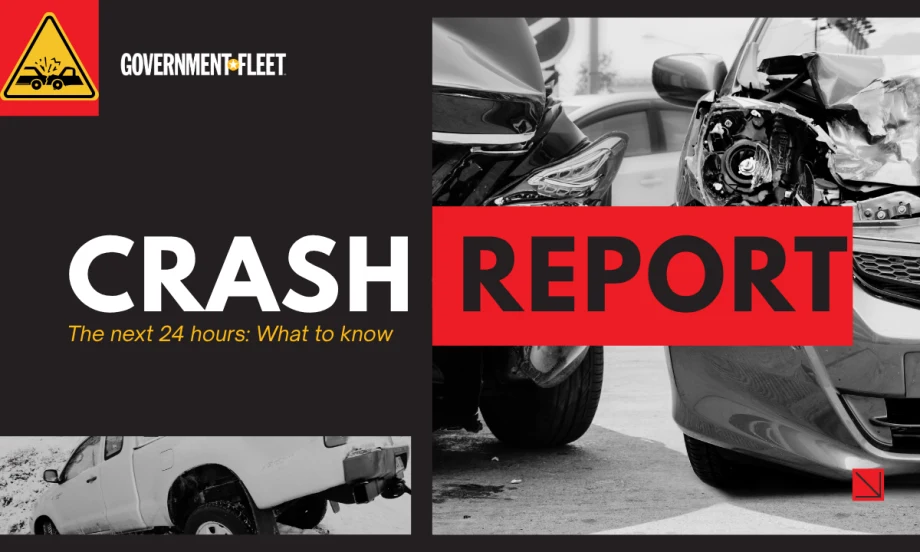
A crash can expose every weak point in a fleet’s process.
Government Fleet
It’s not something any fleet wants to deal with, but vehicle accidents can and do happen. How an agency responds afterward can shape everything that follows.
For government fleets, accident response is not only about getting a vehicle repaired, because a crash can create consequences that reach well beyond the vehicle itself, especially when the facts are still fresh and decisions need to be made quickly.
Jeff Tews, CPFP, retired fleet services manager, City of Milwaukee, Wisconsin, said the first 24 hours can be critical because certain details may need to be established quickly.
"Depending on the nature of the accident, there may be facts that need to be learned as soon as possible," Tews said. "If it was a crash, you may need to test those involved to establish if drugs or alcohol were a factor in the outcome."
Al Curtis, BCFP, director of fleet management, Cobb County, Georgia, said the first step should be getting the claim entered into a risk management information system (RMIS). The employee and/or supervisor must enter the claim within the first 24 hours, and the submission should include adequate photos so the claims adjuster can perform a proper desk evaluation.
The vehicle must also be taken to fleet management, or scheduled for drop-off, for a repair assessment. That early reporting step matters because late documentation can slow claims, hold up repairs, and leave gaps in the record.
The information collected at the scene can shape everything that happens afterward.
Curtis said drivers or supervisors should collect the following:
Tews said drivers should also have a checklist to follow in case of an accident. That checklist should prompt the driver to remain calm, admit nothing, assess the situation for dangers and injuries, report the accident immediately, and begin documenting facts, if possible.
"Supervisors or assigned investigators should arrive as soon as possible and begin the documentation of the scene to reconstruct the accident by interviewing the driver and any passengers, taking pictures, documenting the weather and road conditions, all while evidence is fresh," Tews said.
That documentation can become important later if the agency has to defend against a claim or pursue recovery for damages.
"Reports need to be thorough and complete, as they may form the basis for defense of a claim, or evidence to support filing a claim to recover damages," Tews said.
He added that investigators should work with police and provide contact information for the agency, along with information for filing a claim. The supervisor may also be designated to send a driver for drug or alcohol screening as soon as possible.
Once an accident is reported, the process should move quickly beyond the driver and supervisor.
Curtis said that once an accident is entered into RMIS, notifications automatically go to claims adjusters, department leadership, and fleet management. If the county is liable, the risk and safety department works directly with the claimant or the claimant’s legal representative to resolve the claim. If resolution is not possible and a lawsuit is filed, the county attorney’s office assumes responsibility for handling the matter.
Tews said agencies should have a procedure in place to notify leadership as soon as possible to avoid surprises. Risk management and/or legal teams should receive detailed accident reports as soon as they are available, accompanied by police reports and photos.
Supervisors should also begin compiling supporting information for the agency. That may include weather and road conditions at the time of the crash, telematics records showing the agency vehicle’s position and speed, and inspection records from the day of the accident and the two days before it. Vehicle repair history and previous repair tickets should also be reviewed.
That broader information can help establish whether the vehicle was properly maintained, whether the driver had a pattern of prior issues, and whether the agency had documentation to support its position.
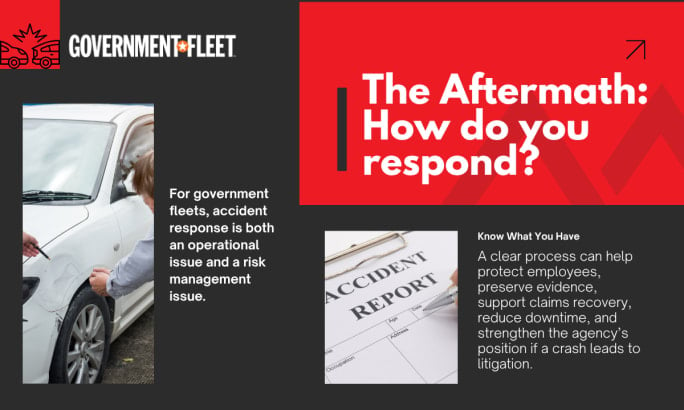
Not every damaged vehicle needs the same response; many times the the situation will differ in small details.
Government Fleet
The accident management process often slows down when documentation, inspections, or claims information is incomplete.
Curtis said delays often occur when vehicles are not brought promptly to fleet management for damage assessment. Fleet professionals must evaluate each vehicle and schedule repairs as needed, but departments sometimes struggle to take vehicles out of rotation immediately, which can slow the process.
Because of this, fleet management should follow up proactively to ensure evaluations are completed on time.
One frustration fleet may run into is waiting on needed information to move the process along.
"Waiting for completed reports (either internal or police) tend to take time, as new questions may arise," Tews said. "Repair estimates for equipment may take more time, especially if more than one estimate is needed. Confusion may be caused when claims are filed that appear to contradict reports on file."
Those delays can affect both repair timelines and claims recovery. They can also create uncertainty for departments trying to keep services running while a vehicle is out of rotation.
Not every damaged vehicle needs the same response; many times the the situation will differ in small details.
Curtis said the decision should come through fleet management’s professional assessment after inspection. Fleet evaluates the severity of damage, safety implications, and cost considerations before recommending whether a vehicle can remain in use, should be repaired, or should be replaced.
Tews said the fleet manager may decide whether to repair or replace the damaged vehicle based on operating metrics. A vehicle with minor cosmetic damage that does not affect safe operation may not need to be repaired, especially if it is scheduled for replacement within a year or two.
"Many fleet managers still follow the guideline that if repair exceeds 70% of the current value, the vehicle is considered a total loss," Tews said.
That calculation can vary by agency and asset type, but the underlying decision should be based on more than the visible damage. Fleet also has to consider replacement timing, repair history, mission criticality, downtime, and whether the vehicle can safely continue operating.
Even when another department manages the claim, fleet still plays a central role.
Curtis said fleet provides the technical assessment of vehicle damage, oversees repairs, and confirms when the vehicle is safe to return to service. Fleet’s documentation supports the claims process even when risk and safety manages the claim itself.
Tews said fleet should serve as the central gatekeeper for information gathered at the scene, along with later reports and supporting documents.
"Fleet investigators or supervisors may be designated by the risk manager or agency representing attorneys to present information at any hearings or in court," Tews said. "Fleet is expected to provide a factual record of unbiased information from a third-party point of view. This will build credibility."
That credibility matters because fleet can explain the condition of the vehicle, the nature of the damage, the repair decision, and the operational cost of the accident.
Strong documentation can determine whether an agency recovers money owed after an accident.
Curtis said photos, detailed repair estimates, and the final paid repair invoice are essential. Because the county must keep vehicles operational, it cannot always wait for an at-fault insurer to inspect the vehicle before moving ahead. In subrogation, strong photos and clear documentation are critical to recovering costs.
Tews said all repair information for the vehicle must be available, including estimated damage and any hidden costs discovered during the repair.
"Information should be available from the report regarding the other vehicle’s driver and insurance company contacts,” Tews said. “If the other driver is uninsured, this information must also be known. All this information should be part of the report, as well as any additional information required by the representing attorney and the risk manager."
That documentation should not be assembled after the fact. It needs to be built into the accident response process so each department knows what must be collected, where it should be stored, and who needs access to it.
The cost of an accident extends well beyond the repair order, especially once the agency begins accounting for the operational disruption that follows a damaged vehicle back to the shop.
Curtis said risk and safety tracks all direct costs in RMIS, including bodily injury claims, county vehicle damage, towing, third-party property damage, and rental charges. Fleet management tracks vehicle downtime separately.
Tews said those costs should be readily available through the fleet maintenance software program, with each component of the repair linked to the accident repair order for the vehicle. That includes towing and rentals.
Downtime or lost use should also be calculated based on how the vehicle is used and how available it is expected to be. Tews said that could mean 8.0 hours of normal use for a passenger car or 24-hour use for a police patrol unit.
"Staff time may need to be calculated separately, especially if the driver or passengers in the agency vehicle lose work time due to injuries," Tews said.
A full cost picture can help a fleet justify training, equipment changes, policy revisions, or replacement decisions. It can also give leadership a clearer understanding of how much a crash actually costs once downtime and operational disruption are included.
Accident data should not end with the claim, especially when the details behind a crash can help an agency understand whether the response process worked and where future risk may be reduced.
Curtis said accident data is used to inform decisions about training enhancements, policy updates, and equipment or vehicle specification adjustments. Tools such as body-worn cameras, dash cameras, and accident reports support ongoing analysis and improvement.
"There are lessons to learn from every accident that can lead to improvements, especially with public works vehicles that spend the majority of time working on the road, sometimes in the flow of traffic," Tews said.
Those lessons may point to driver retraining, reassignment, scheduling changes, or vehicle specification updates.
"Drivers with poor skills should obviously be retrained or reassigned,” Tews said. “However, it is possible that changes in driver start/stop times or scheduling may result in time savings during known periods of heavy traffic."
Vehicle specifications may also play a role. Tews said supervisors may determine that a higher horsepower engine can allow an agency truck to get up to road speed quicker, resulting in fewer traffic altercations. Emergency lighting improvements may also make agency vehicles more noticeable to oncoming traffic.
The goal is not simply to identify fault; it is to understand what the crash revealed about driver behavior, vehicle design, traffic exposure, policy gaps, and training needs.
When is the best time to improve accident response? The answer should be before another vehicle is damaged.
Curtis said agencies should establish a policy of financial responsibility for late reporting. When departments understand that delays may make them responsible for repair costs, they prioritize timely reporting and getting vehicles to fleet.
He also recommended maintaining strong relationships with repair shops and conducting periodic inspections to ensure contractual performance. A telematics program can also help identify at-risk behaviors early and support corrective action before those behaviors lead to future incidents.
Tews said agencies should begin by carefully analyzing their current accident procedures, including how drivers and operators are trained and how records are maintained.
That review should also include funding for training, supported by historical accident data.
For government fleets, accident response is both an operational issue and a risk management issue. A clear process can help protect employees, preserve evidence, support claims recovery, reduce downtime, and strengthen the agency’s position if a crash leads to litigation.
More importantly, it gives fleets a better chance to learn from each accident while there is still time to improve the process.
Tews said agencies should approach that review with the same level of scrutiny they would expect if the crash later ended up in court.
"Be ready to support funding requests for an inside training section or outside training service using historical data from the accidents of previous years," Tews said. "Pair your trainers with the attorneys that will represent your agency when claims go to court. Establish or revise checklists and procedures to provide quality reports that cover all the bases of any accident."
Loading data...
Operations
Public fleets have more data than ever, but inconsistent records and missing information can still undermine maintenance, replacement, and cost decisions.





Operations
David Renschler walked into Fairfield with plenty to learn and no idea what awaited him. Twenty years later, the lessons from what came next are still shaping his approach to fleet.
Safety
How a strong accident response process helps government fleets move from the initial report to recovery while building a clearer record for what needs to change next.
Maintenance
Downtime is rarely caused by a single surprise failure but rather by an issue that builds over time through setbacks ranging from deferred maintenance to poor replacement planning. So what's the fix?
Operations
A look at where to find good talent, what fleets are doing to incentivize those techs to stay within the fleet, and what promotion looks like for a technician within the public sector.
Safety
Behind every wildfire response is a complex network of vehicles, data, and decisions that must work in sync under extreme pressure. Global heating trends require strong fleet coordination and reliable communications to keep crews safe and operations running smoothly.
Spring officially started Friday, March 20, and while some fleets may still be waiting for all the snow to melt, now is the time to shift from winter survival to summer readiness.
Operations
Every fleet operation has a team that works in its own unique way. What matters is that each person understands how their role fits into the bigger workflow, and how the team functions as one.
Operations
When it comes to the public sector, outcomes are usually driven by three areas fleet leaders can actually control, but it’s combining these into one operating model where operations see the most success.
Operations
A look back at some key leadership points from the year and how that advice can shape the decisions for your fleet's future.