




Operations
Can Public Fleets Trust the Data Driving Their Decisions?
Public fleets have more data than ever, but inconsistent records and missing information can still undermine maintenance, replacement, and cost decisions.
 MENU
MENU SEARCH
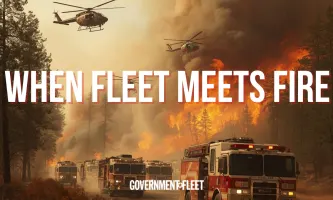
Behind every wildfire response is a complex network of vehicles, data, and decisions that must work in sync under extreme pressure. Global heating trends require strong fleet coordination and reliable communications to keep crews safe and operations running smoothly.
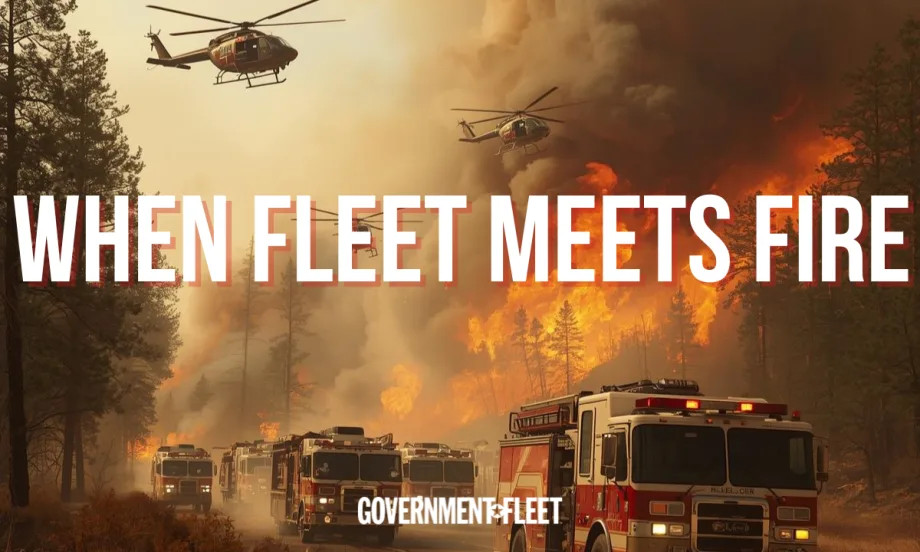
With hot temperatures and drought becoming more common, municipalities needs to plan for a future of fire.
Government Fleet. This is an AI-generated image. Refer to our Terms of Use.
*Summarized by AI
A wildfire is defined as an unplanned, uncontrolled fire burning in natural vegetation, such as forests, grasslands, or prairies. These fires can spread rapidly and can occur naturally but are often caused by human activity.
As the global climate warms, wildfires are increasing.
NASA scientists have been studying wildfire data over a 21-year span and found that extreme wildfires have become more frequent, more intense, and larger. One of the largest increases in extreme fire behavior was in the temperate conifer forests of the Western U.S. and the boreal forests of northern North America.
With the forests of North America as one of the “hot spots,” being prepared for fire season may be more important now than ever before. For municipal fleets, having a plan and being prepared can mean the difference between life and death.
We spoke with retired Chief Kim Zagaris, Senior Policy and Technology Advisor for the Western States Fire Association, to learn more about fire management and how to best prepare.
Chief Zagaris draws on 48 years of frontline experience managing wildland fires and complex incidents, shaping public safety in the Western United States for nearly five decades. His distinguished career spans local, state, federal, tribal, national/ international roles, positioning him as a trusted voice and influential leader in Mutual Aid and wildfire management.
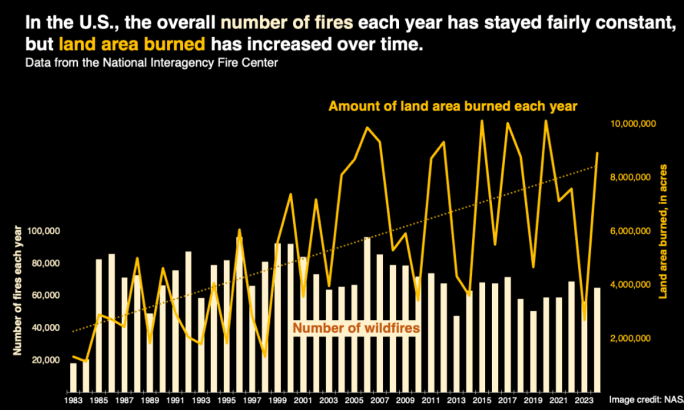
Fire as a tool to manage cropland has declined over the past 20 years. This has helped reduce the area burned by fires in the grasslands. Data is from the Global Wildfire Information System (GWIS).
NASA
Fire season in the U.S. generally spans from May through October, with the highest risk being in summer and fall. However, climate change has made fire risk a year-round reality on the West Coast, where the peak-risk period has lengthened from five months to seven.
“Land management practices and decades of fire suppression have led to dangerous fuel accumulation,” said Chief Zagaris. “Urban expansion into fire-prone areas has heightened risk, while unpredictable weather patterns challenge response efforts. All these forces have converged to make wildfire incidents more difficult to predict, contain, and recover from.”
Since wildfires are fast-moving, coordination and communication during public fleet emergency deployment are critical.
Wildfire response preparedness does not lie solely with firefighters and frontline responders, but also with the chain-of-response model within fleet emergency response.
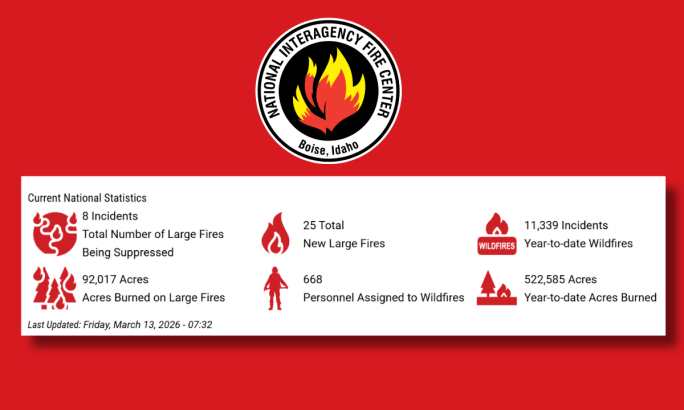
As of March 2026, in the U.S., more than 92,000 acres have been burned by large wildfires, with more than 522,500 acres burned total.
National Interagency Fire Center
With a hotter, drier climate, fire agencies have had to adapt as best they can.
Fire agencies have responded to these challenges by refining tactics and embracing new technologies. Early detection systems, such as remote sensors (Alert California/Alert West Cameras, smoke sensors, and heat sensors) and aerial surveillance (Drones, staffed aircraft with special sensors, Fire Integrated Real Time Intelligence System Program (FIRIS), Earth Fire Alliance Satellites), now provide crucial situational awareness.
Rapid response strategies, including resource pre-positioning and mutual aid agreements, ensure that personnel and equipment are ready in advance.
“Technology has become central, with real-time mapping, drone reconnaissance, and resilient communications platforms enhancing decision-making and coordination. Interagency collaboration—across fire, law enforcement, emergency management, and public health—has proved essential for interagency coordination, National Incident Management System (NIMS) Incident Command System (ICS), unified command, and resource allocation utilizing Multi-Agency Coordination System (MACS) during major incidents,” noted Chief Zagaris.
Chief Zagaris advocates robust preparedness among communities and local fire agencies, emphasizing comprehensive risk assessments to identify hazards and vulnerable populations through:
Recruiting and retaining skilled wildland firefighters has become increasingly difficult. Chief Zagaris noted that competitive pay and clear advancement opportunities are vital for attracting talent.
He also cited the need for mental health support, including counseling and peer networks, to address the psychological toll of fire service. Housing assistance programs can also help retain firefighters by supporting personnel as they navigate rising living costs.
He explained that expanded recruitment efforts are also necessary, adding that “some agencies are recruiting Collegial Athletes, both men and women, to join the Fire service, targeting diverse communities and offering flexible pathways, which are key to maintaining a capable workforce prepared for evolving threats.”
Combining fair compensation, career stability, and strong support systems will be critical for sustainable workforce retention in the future.
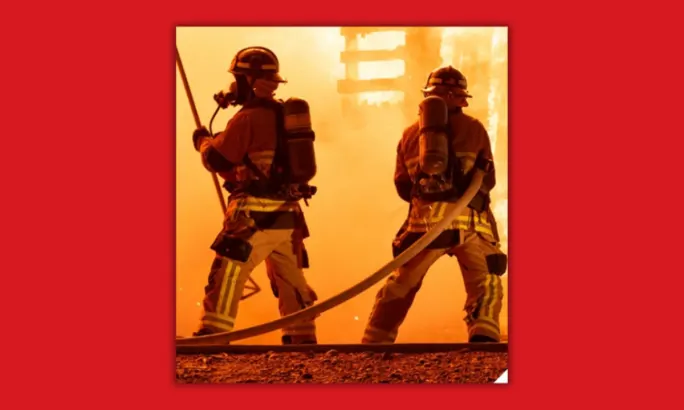
Two firefighters on the fireline.
Public Safety Broadband Technology Association (PSBTA)
Looking ahead, Chief Zagaris envisions a future grounded in proactive, technology-driven wildfire management:
Chief Zagaris’s legacy and vision underscore the importance of adaptability, collaboration, and forward-thinking leadership in public safety. His insights offer a roadmap for fire agencies and communities facing the growing challenges of wildland fire management.
“While we have always maintained a strong wildfire response and suppression workforce, we must continue to balance and to strengthen our preparedness, prevention, and mitigation efforts,” he said. “As we do so, we must remember that we serve the public—and that we owe it to our firefighters on the ground to ensure safety as they provide protection for lives, property, and the environment.”
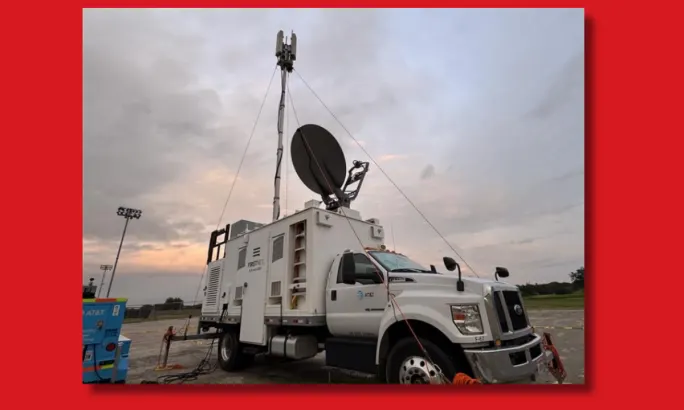
Pictured here is a FirstNet Deployable.
Public Safety Broadband Technology Association (PSBTA)
You can find more information about wildfires in the National Interagency Coordination Center Wildland Fire Summary and Statistics Annual Report 2025.
Loading data...
Operations
Public fleets have more data than ever, but inconsistent records and missing information can still undermine maintenance, replacement, and cost decisions.



Operations
David Renschler walked into Fairfield with plenty to learn and no idea what awaited him. Twenty years later, the lessons from what came next are still shaping his approach to fleet.
Safety
How a strong accident response process helps government fleets move from the initial report to recovery while building a clearer record for what needs to change next.
Maintenance
Downtime is rarely caused by a single surprise failure but rather by an issue that builds over time through setbacks ranging from deferred maintenance to poor replacement planning. So what's the fix?
Operations
A look at where to find good talent, what fleets are doing to incentivize those techs to stay within the fleet, and what promotion looks like for a technician within the public sector.
Safety
Behind every wildfire response is a complex network of vehicles, data, and decisions that must work in sync under extreme pressure. Global heating trends require strong fleet coordination and reliable communications to keep crews safe and operations running smoothly.
Spring officially started Friday, March 20, and while some fleets may still be waiting for all the snow to melt, now is the time to shift from winter survival to summer readiness.
Operations
Every fleet operation has a team that works in its own unique way. What matters is that each person understands how their role fits into the bigger workflow, and how the team functions as one.
Operations
When it comes to the public sector, outcomes are usually driven by three areas fleet leaders can actually control, but it’s combining these into one operating model where operations see the most success.
Operations
A look back at some key leadership points from the year and how that advice can shape the decisions for your fleet's future.