




Operations
Can Public Fleets Trust the Data Driving Their Decisions?
Public fleets have more data than ever, but inconsistent records and missing information can still undermine maintenance, replacement, and cost decisions.
 MENU
MENU SEARCH
A look at where to find good talent, what fleets are doing to incentivize those techs to stay within the fleet, and what promotion looks like for a technician within the public sector.
A strong technician workforce starts long before the hire and depends on what happens after they join the shop.
Government Fleet
The frustration behind the technician shortage, potentially crisis depending on the level of need, is nothing new within the world of fleet. Departments continue to look for solutions to bring in new talent who will want to grow within the team.
Challenges, such as the rise in EVs, have not made the search easier, forcing department leads to find technicians who also have the appropriate training. Of course the flip side presents the quandry of new hires versus simply providing the training and if that can be managed within the fleet's timeline.
Still, the age-old question remains: Where can fleets find that talent and what is the secret to keeping those talented individuals once they've been hired on?
The solution is hardly a one-size-fits-all, though many of the lessons learned by certain fleets can be carried over to others, rather fleets may be more inclined to lay out their non-neogtiables and find areas that can be more flexible.
Needs vary depending on where a fleet is at but following a certain path could provide results. Again, the solution isn't hidden, rather it's something culled from what past fleets have learned and seeing how that might fit into present operational needs.
When hiring is necessary, fleet managers have to consider where that talent is coming from and if they can step onto the proverbial fleet treadmill without missing a step.
With that in mind, saying that there is a public job posting,and waiting for the right candidate to find it may no longer be enough. Fleets are having to treat recruitment as a relationship-building effort that starts well before a vacancy needs to be filled.
That can begin by getting in front of people who may not yet realize what a public sector fleet shop can offer. The modern technician role has moved well beyond outdated perceptions of shop work, with new vehicles pushing the position deeper into technology and continued training.
Part of that means connecting with the next generation of technicians before they enter the workforce. Local schools, career programs, and technical colleges can give fleets a direct line to people who may not yet realize what a public sector fleet shop can offer.
It also gives departments a chance to show the job as it exists today, with new vehicles pushing the modern technician role deeper into technology and continued training.
Before posting the position, fleet leaders may need to ask:
For departments that cannot find candidates who already fit every need, those early connections matter even more. A structured training path can give fleets a way to bring someone into the operation and build their skills around the work the department actually performs.
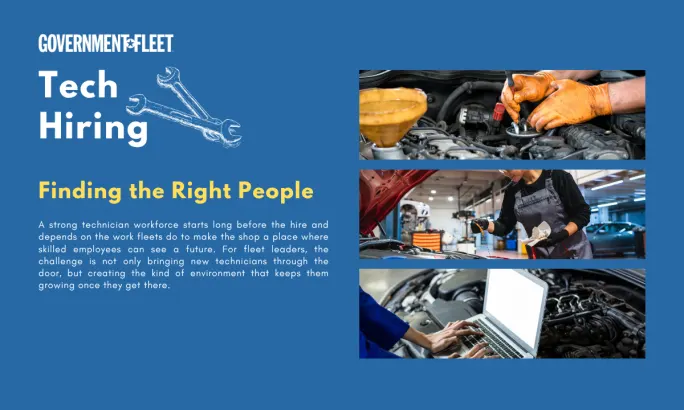
The process to bring on a new tech can be lengthy, so it's worth setting them up for success once they enter the shop doors.
Government Fleet
The blueprint starts before the opening is posted. It starts with making the career visible and giving future technicians a realistic way to see themselves in the shop.
Hiring technicians is just one half of the equation, keeping them is the other half. While today's job market could be called less than stable, those who are looking for technician roles usually have more choice when it comes to finding the right work place.
In the public sector, there isn't just competition with other fleets but competition from the private sector.
That can make training incentives another reason an inividual may wanto to be a part of the fleet. For technicians, it can also be a sign that the department is willing to invest in their future.
Training does not have to follow one narrow path. The most useful approach may depend on where the technician is in their career, what vehicles are moving through the shop, and what gaps are already affecting the department’s ability to keep work in house.
Fleet managers can mix and match training options to create the right plan for their shop, with training tied to what the technician needs as well as the current needs of the operation.
Some of those training paths could include:
Training matters for retention because that education can help answer a question many employees may not ask out loud: What happens for me if I stay?
A technician who sees a path forward may be less likely to view the position as a stop along the way to something else. In a tight labor market, that path can become one of the department’s strongest retention tools.
The cost of training can still be a hurdle, especially for public sector fleets working within a fixed budget. But cutting back on training may create larger costs elsewhere if more work has to be outsourced, repairs take longer, or technicians begin looking for employers that will help them keep pace with the industry.
As vehicles continue to change, training becomes part of the retention blueprint, not an extra benefit added after the fact.
Not every technician wants to move into a supervisory role, and not every strong technician should be pushed in that direction. Some may want to stay focused on the work in the bay, while others may begin to see a longer career path that eventually leads to shop leadership or fleet management.
For those employees that do plan to move up, the planning needs to start before a position opens. If a technician has the interest and aptitude for carerr advancement, current leadership should already be thinking about what that path could realistically look like within the department.
That means looking beyond technical training. A technician preparing for a leadership role may need more exposure to how decisions are made, how budgets are built, how vendors are managed, and how priorities are communicated across departments. The job changes when someone moves from doing the work to helping direct the work, and that transition should not be left to chance.
Before a technician approaches leadership about a future role, fleet managers can plan ahead by looking at what would need to happen for that move to make sense. Things to consider include:
That last consideration may be one of the most important since growth does not have to begin with a promotion; it can begin with letting a technician lead a small project, help onboard a new employee, take part in planning discussions, or represent the shop in conversations with another department.
Those experiences can show whether someone is ready for more responsibility while also giving them a clearer picture of what leadership actually requires.
A timeline can help make that path more concrete. Without one, career growth can become a vague promise that never turns into action. Fleet leaders do not need to guarantee a specific title by a specific date, but they can outline the steps that would prepare someone for the next opportunity. That gives the technician something to work toward and gives the department a better way to measure readiness.
Mentorship should also be part of that plan to help individuals understand the internal pressures of the job and guide them forward. It's even worth looking outside the operation as someone from another fleet may offer perspective that is harder to see from inside the same organization. That kind of guidance can be especially valuable once the technician steps into a new role and has to navigate the shift from peer to supervisor.
For fleet leaders, the point is not to create a promotion path for every technician. The point is to recognize when someone is looking for a future inside the organization and make that future visible. In a labor market where skilled technicians have options, that visibility can be one more reason to stay.
And down the road, the technician who was once being mentored may become the person helping the next employee find their own way forward.
Loading data...
Operations
Public fleets have more data than ever, but inconsistent records and missing information can still undermine maintenance, replacement, and cost decisions.





Operations
David Renschler walked into Fairfield with plenty to learn and no idea what awaited him. Twenty years later, the lessons from what came next are still shaping his approach to fleet.
Safety
How a strong accident response process helps government fleets move from the initial report to recovery while building a clearer record for what needs to change next.
Maintenance
Downtime is rarely caused by a single surprise failure but rather by an issue that builds over time through setbacks ranging from deferred maintenance to poor replacement planning. So what's the fix?
Operations
A look at where to find good talent, what fleets are doing to incentivize those techs to stay within the fleet, and what promotion looks like for a technician within the public sector.
Safety
Behind every wildfire response is a complex network of vehicles, data, and decisions that must work in sync under extreme pressure. Global heating trends require strong fleet coordination and reliable communications to keep crews safe and operations running smoothly.
Spring officially started Friday, March 20, and while some fleets may still be waiting for all the snow to melt, now is the time to shift from winter survival to summer readiness.
Operations
Every fleet operation has a team that works in its own unique way. What matters is that each person understands how their role fits into the bigger workflow, and how the team functions as one.
Operations
When it comes to the public sector, outcomes are usually driven by three areas fleet leaders can actually control, but it’s combining these into one operating model where operations see the most success.
Operations
A look back at some key leadership points from the year and how that advice can shape the decisions for your fleet's future.