




Women in Fleet: Leadership, Innovation, and Industry Evolution
Fleet leadership has moved beyond the shop floor into a role shaped by higher expectations and constant change, and women have helped drive that evolution. But how has that shift happened, and what does effective leadership look like in operations today?
by LP Monroe
March 3, 2026
For women entering the municipal fleet profession, there are many routes into leadership roles.
Credit:
Government Fleet
5 min to read
- The fleet management industry is transitioning from a purely technical focus to a complex, sustainability-driven field integral to serving communities.
- Women have long contributed to fleet management through roles in operations, design, engineering, and leadership, bringing innovation and forward-thinking to the industry.
- Female leaders in fleet management advocate for taking risks and learning from mistakes, reflecting a philosophy of innovation and growth.
*Summarized by AI
Fleet management has always been an industry defined by movement; a movement of people, vehicles, technology and leadership itself.
What was once viewed as solely a technical role has metamorphized into an industry that is complex, sustainability-driven and connected to the communities’ fleets serve, this evolution in the fleet industry is not just about operations or workflow processes.
It reflects innovation, adaptation, and forward-thinking; qualities women fleet leaders have long brought into fleet and continue to strengthen today.
In my own leadership journey within municipal fleets, I often return to a philosophy that captures the spirit of both innovation and growth: “Take chances, get messy, make mistakes, and boldly go where no man has gone before.”
The Fleet Leadership Evolution
Women are not newcomers to fleet or fleet leadership. Women have long been embedded in the fleet systems, strategies and innovations that shape our industry as operators, designers, engineers, problem solvers, and leaders.
As the municipal fleet industry continues to evolve, so too do the demands placed upon those responsible for leading it. Decades ago, the decisive, authoritative, and rigid “The General” leadership model was widely utilized, yet this leadership model came with limitations.
Employees were often viewed as pistons within an engine. Employees were seen as essential yet not always recognized as the very force that keeps vehicles, and in many ways the fleet industry itself moving forward.
Creativity was often stifled, and innovation slowed. In some corners of the municipal fleet industry, stagnation became commonplace. Today, fleet leadership reflects a noticeably different reality. Modern fleet environments demand adaptability, engagement, emotional intelligence, systems level thinking.
Fleet leadership is no longer defined by authority alone, but by the ability to navigate complexity operationally, relationally, and strategically.
Modern municipal fleets are comprised of logistics, alternative fuels, and continuity infrastructure. Women leaders are particularly visible within this space not because women are homogenous, but because women often navigate complexity as a matter of lived experience.
I have been fortunate to observe women in fleet leadership roles. Leaders such as Joanna Smith, Associate Director of Prince George’s County Department of Public Works and Transportation, Tonya Glass, IRA Program Manager at Resources Innovations, and Sarah Ellison, President and Founder of Frontline Public Safety Solutions, exemplify the adaptability, systems -level thinking, and leadership increasingly required in modern fleet environments.
Beyond their industry contributions, these women cultivate something equally critical to fleet: Community.
Women have always been part of fleet’s evolution whether the spotlight followed or not. When women are not prominently visible within fleet narratives, the false assumption emerges that women are exceptions rather than constants.
Understanding the Path Ahead for Women in Fleet
Representation matters, not as a matter of symbolism, but because it influences how leadership, capability and opportunity are understood. At the same time, barriers have not disappeared. There are still moments when women are challenged not on their decisions, but on the fact, they are the decision makers.
Sometimes resistance is overt, sometimes it is subtle: interruptions, gatekeeping, unnecessary control dynamics. Occasionally, this is driven by insecurity or the fear of being outshined or replaced.
Such dynamics are harmful not only to women in fleet, but to the municipal fleet industry itself. An industry defined by adaptation cannot afford stagnation of thought or talent.
For women considering entry into the municipal fleet profession, the pathway is often far more accessible than commonly assumed. I offer the following tried and true career advice that have benefited me and other women in the fleet industry:
- Bring something to the table
Do not enter the industry cold. Municipal fleet workflows always connect back to the vehicle and the end user. Build a base knowledge of vehicles, how various agencies utilize them, and more importantly operational realities surrounding vehicles. You do not need to be erudite, you need context, and you should always maintain curiosity.
- Educate yourself
Online resources and education make it easier to gain knowledge in collision, vehicle performance, recalls and warranties, alternative fuels, telematics, etc. Document everything you learn and place it on your resume — it counts.
- Reach out and discard linear learning
Do not hesitate to make a call or send an email. Municipal fleet professionals are often willing to offer guidance. Remember that you do not need to have a technician background to enter fleet. Finance, procurement, AI, engineering, design, and public relations all shape fleet operations. Define what you bring, be confident in what you bring, ask questions and do not let “no” deter you. As I often say, “Nine people can tell me no, I just need the tenth person to tell me yes.”
I think of a recent conversation with Pat Dixon, President of USC Canterbury. Pat and I have never met in person (She is in Texas, and I am in Maryland), yet we built trust the way fleet professionals often do; Through shared challenges, consistency, and professional respect.
We spoke on a day that was challenging for me. I did not announce it and believed I was camouflaging it well. But Pat heard it anyway. Her follow up email to me was not lengthy or performative. It was attuned and, at that moment, I felt seen.
Her email gave me the push I needed to finish the day strong. That is leadership. That is emotional intelligence in action. That is women in fleet leadership.
As fleet looks toward an increasingly complex and technology-driven future, leadership will continue to require adaptability, innovation, and the ability to lead people through constant change.
To accomplish this, women in fleet are municipal fleet’s greatest asset, not AI. I encourage the reader to take chances, get messy, make mistakes and boldly go where no man has gone before.
Subscribe to Our Newsletter
More Operations

How St. Johns County Turned Fleet Data Into Better Replacement Decisions
St. Johns County, Florida, had fleet data, but turning it into reliable decision guidance was another matter. Instead of starting over with a new fleet management system, the county connected existing tools and built a scoring system that gives managers an objective look at fleet health.
Read More →
Fleet Forward Conference Introduces One-Day Passes for 2026
New one-day registration lets fleet professionals attend Tuesday, Wednesday, or Thursday, with passes available for $249.
Read More →
ENC Unveils its ZAVIR Medium-Duty Shuttle
Two variants of the concept shuttles were revealed: a low-floor configuration and a high-floor configuration.
Read More →
Could Your Next Fleet Technician Start as an Intern?
What if your next technician hasn’t worked in a fleet shop yet? What fleets are doing to free up time.
Read More →
How Phoenix Is Building Its Next Generation of Fleet Technicians
With more than 8,000 vehicles and pieces of equipment to maintain, the City of Phoenix could not afford to wait for fully trained technicians to walk through the door. Instead, they revamped their entire workforce strategy and showed how public fleets can create their own talent pipeline while preparing existing employees for increasingly complex vehicles.
Read More →
What’s Slowing Your Fleet Down?
Could a change in how work gets done help your fleet return vehicles to service sooner?
Read More →
Can Public Fleets Trust the Data Driving Their Decisions?
Public fleets have more data than ever, but inconsistent records and missing information can still undermine maintenance, replacement, and cost decisions.
Read More →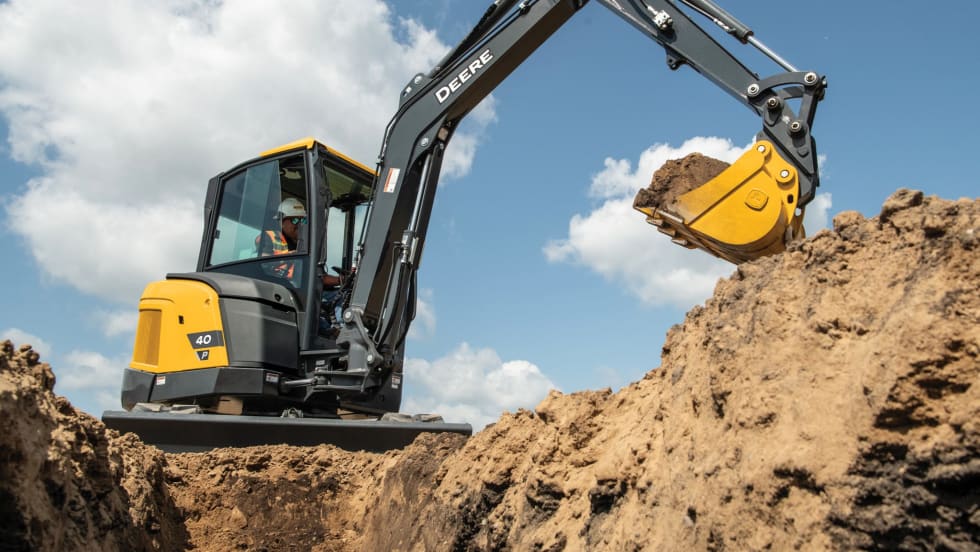
John Deere Introduces 40 P-Tier Compact Excavator
John Deere is adding a compact excavator designed for crews that need to move equipment between jobsites and handle multiple types of work with one machine. The 40 P-Tier weighs less than 10,000 pounds and offers configurable hydraulics, attachment options, and connected fleet-management capabilities.
Read More →
How Leading Fleets Improve and Why Business Plans Matter
This week, we look at what past Leading Fleet winners can teach us about making progress, plus how to build a business plan your fleet will actually use.
Read More →
Nominate a Fleet Leader for the 2027 Public Fleet Hall of Fame
Do you know a fleet leader who has made a lasting impact on the industry? Nominate this fleet professional for the 2027 Public Fleet Hall of Fame.
Read More →