




Want More? Why Your Public Safety Fleets Need Telematics Devices
Government Fleet Fundamentals: Public Safety Vehicle Types
A no-nonsense guide on common emergency response vehicles and their use cases for firefighters, paramedics, and police officers.

Christy Grimes・Former Senior Editor
Emergency response vehicles vary depending on the geographic location and needs of a community.
Photo: Government Fleet
6 min to read
First responders rely on their vehicles to provide support to their communities. Whether it’s a fire truck, police car, or ambulance, these vehicles are essential in public safety operations.
Because the types of vehicles used in these responses varies depending on the geographic location and needs of a community, there may be some specialty vehicles you’re unfamiliar with. In this installment of Government Fleet Fundamentals, we’re breaking down public safety vehicle types.
Vehicles Used to Battle Fires
Type 1 fire trucks, which are more commonly referred to as an engine company or a pumper truck, are the most common trucks used by fire departments. The National Fire Protection Association (NFPA) develops guidelines and standards for firefighting agencies to follow.
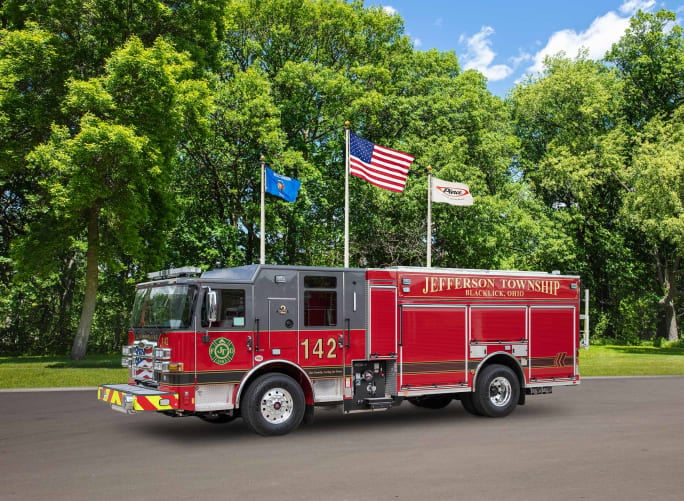
Pumper trucks are required to have a pump with a minimum tank size of 300 gallons, though most feature a larger tank.
Photo: Pierce Manufacturing
NFPA 1901 sets the standard for what is required to be carried on automotive fire apparatus equipment. Because pumper trucks meet these standards, they are used across the country, no matter the locale.
They are required to have a pump with a minimum tank size of 300 gallons, though most feature a larger tank, according to Pierce Manufacturing. The trucks must also offer a minimum of 1,000 gallons per minute of water transfer.
Type 2 fire trucks typically carry many of the same features as Type 1 trucks but are more compact. They are often deployed as first response units or heavy rescue engines, carrying specialized equipment. These trucks also typically have smaller water tanks and pumps.
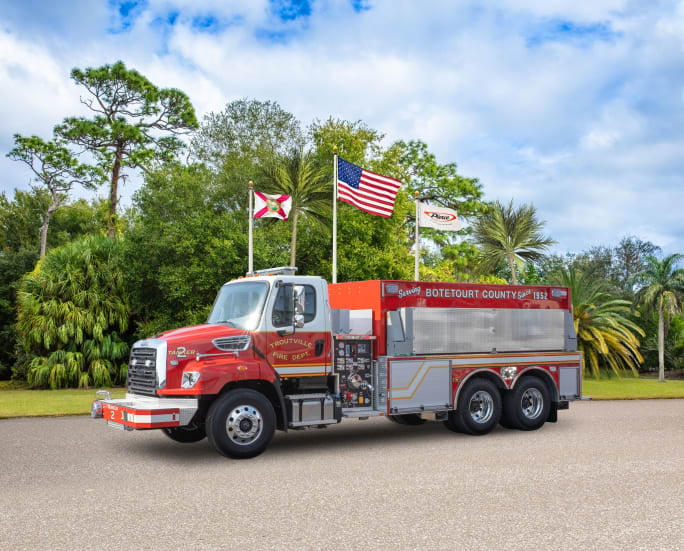
Type 2 fire trucks typically carry many of the same features as Type 1 trucks but are more compact.
Photo: Pierce Manufacturing
Wildland trucks, or Type 3 trucks, are most often used in rural and wildland settings and generally respond to fires in off-road terrains, like wildfires or brush fires. According to Pierce Manufacturing, these trucks commonly sit on a commercial 4x4 chassis.
These trucks also carry water and must have a minimum 500-gallon water tank and a pump capable of releasing 150 gallons per minute.
Type 4 trucks are similar to Type 3 trucks but have a larger water tank — at least 750 gallons — as well as reduced hose capacity requirements: 50 gallons per minute of water transfer. These are often also used for wildland responses.
Type 5, 6, and 7 trucks are often grouped together because they feature many of the same design qualities but have varying gross vehicle weight ratings (GVWR). These vehicles are typically pick-up trucks with 4-wheel-drive on a medium-duty chassis. These vehicles can be customized to fit a community’s needs. They are sometimes used as fire response units with an EMS response kit, while others are equipped with water tanks and pumps.
Aerial ladder trucks feature a long, extendable ladder mounted on a turntable that allow it to rotate. The ladder is typically between 70 and 100 ft. in length and is used to reach high places, such as the upper floors of buildings or for rescue operations.
Tiller trucks are aerial ladder trucks with a long, articulated frame. These trucks have a steerable rear axle, making them easier to maneuver in tight spaces. These trucks often carry extra-long ladders, which can be extended to reach higher buildings.
Tower ladder trucks have a bucket or platform at the end of the ladder which allows firefighters to carry out rescues or operate hoses from an elevated, stable position.
Quintuple combination pumpers, more commonly known as quint trucks, provide five functions: pump, water tank, fire hose, aerial device, and ground ladders.
Airports use specialty vehicles, called aircraft rescue firefighting (ARFF) trucks. They are specialized to be able to respond to a variety of calls, including airplane crashes, wheel or brake fires, and medical or other fire emergencies.
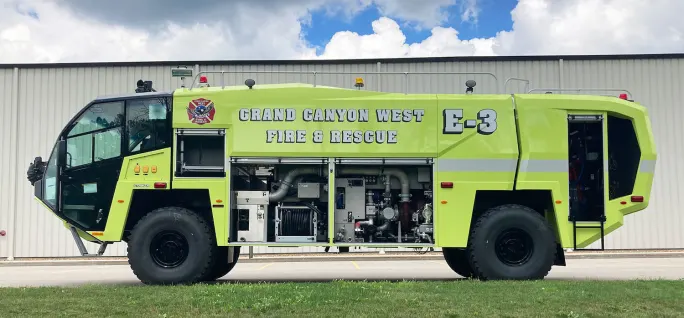
Aircraft rescue firefighting trucks are specialized to be able to respond to a variety of calls, including airplane crashes, wheel or brake fires, and medical or other fire emergencies.
Photo: Oshkosh Airport Products
The tanks on these trucks are generally larger, since there is no hydrant access readily available. These trucks are equipped with high reach extendable turrets (HRET), which can pierce an aircraft fuselage and spray water or a suppressing agent to knock down a fire.
ARFF trucks also typically carry firefighting foam, which is mixed with water when dealing with fuel spills. The mixture coats surfaces, suppressing fires by cutting off oxygen supply.
In addition to traditional fire trucks, fire departments also often use some sort of fire command vehicle as a sort of home base to coordinate firefighting operations at a scene. These can range from a sedan to a pickup truck or SUV, or even a mobile command unit trailer.
Vehicles Used for Medical Care
Type 1 ambulances are mounted on a truck-style chassis. The driver compartment resembles a regular pickup truck, according to Braun Ambulances. The cab and patient module are connected via a small pass-through that looks like a window. These are commonly used for advanced life support and emergency medical services.
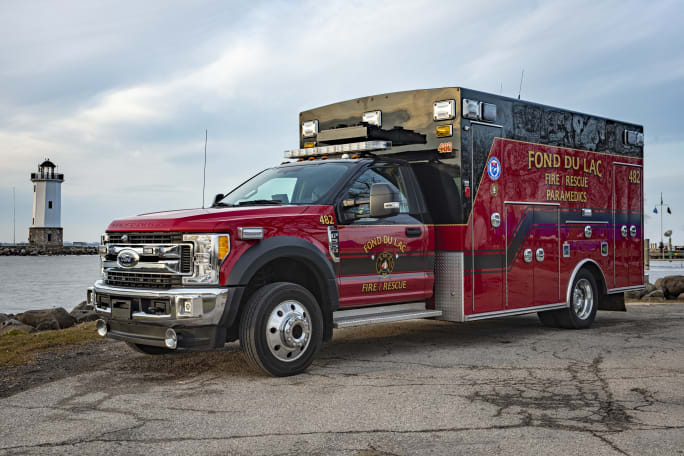
Type 1 ambulances are commonly used for advanced life support and emergency medical services.
Photo: Braun Ambulances
Type 2 ambulances are built on a van chassis and have a smaller patient compartment than traditional ambulances. These are typically used for non-emergency medical services.
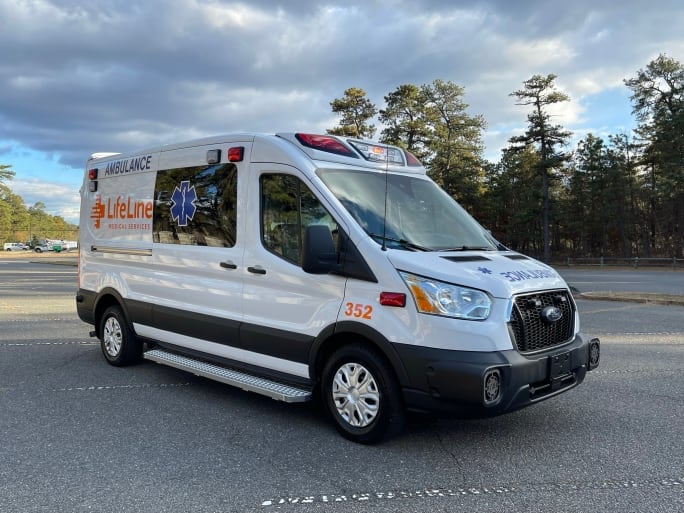
Type 2 ambulances are typically used for non-emergency medical services.
Photo: Demers Ambulances
Type 3 ambulances are built on a cutaway van chassis, allowing for a larger patient compartment that is integrated with the cab. These are the types of ambulances you are most likely to see on roadways.
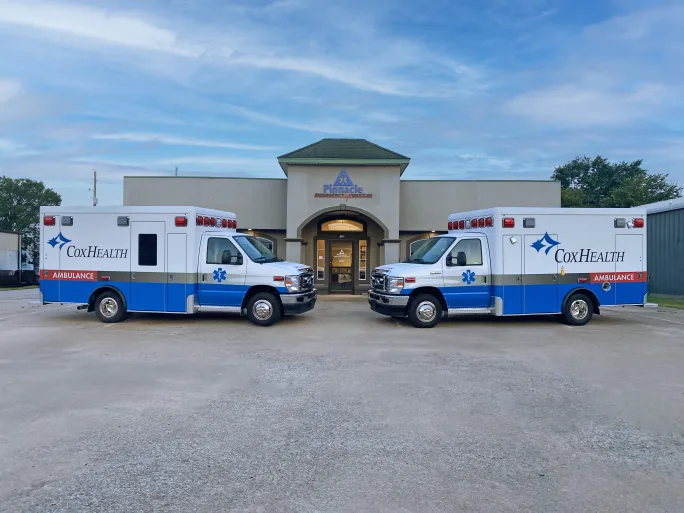
Type 3 ambulances are the types of ambulances you are most likely to see on roadways.
Photo: Crestline Coach
Helicopters are often used as air ambulances and provide rapid patient transport, or in hard-to-access remote areas where ground ambulances cannot reach. They are most often used in life-threatening situations or for inter-hospital transfers. Air ambulance helicopters are typically owned and operated by private companies.
Vehicles Used for Policing
Patrol vehicles are the most common vehicles on law enforcement fleets, and can vary from sedans, to SUVs, or pickup trucks. These vehicles are used for regular patrols, escorts, and pursuits.
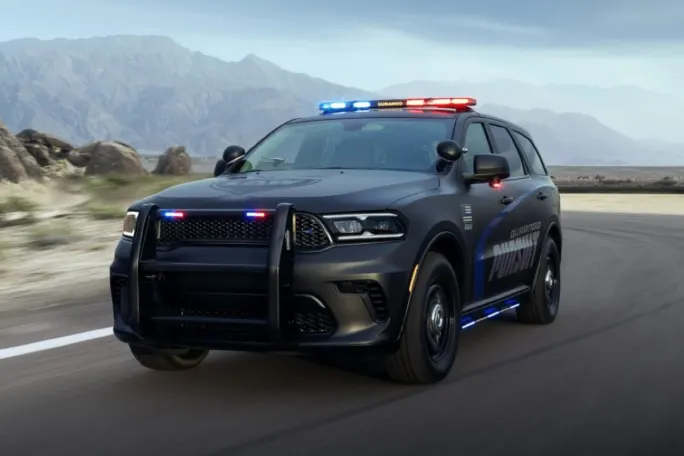
The vehicles typically used for patrol are often pursuit-rated vehicles, because they are designed to handle the rigors of pursuit driving.
Photo: Stellantis
The vehicles typically used for patrol are often pursuit-rated vehicles, because they are designed to handle the rigors of pursuit driving. They have stronger braking systems, more engine power, pursuit-rated tires, and all-wheel drivetrains. Patrol vehicles are most often marked.
Special service vehicles (SSVs) are often equipped to perform special tasks rather than standard patrol duties. This can include detective duties, administrative duties, warrant officer duties, and more.
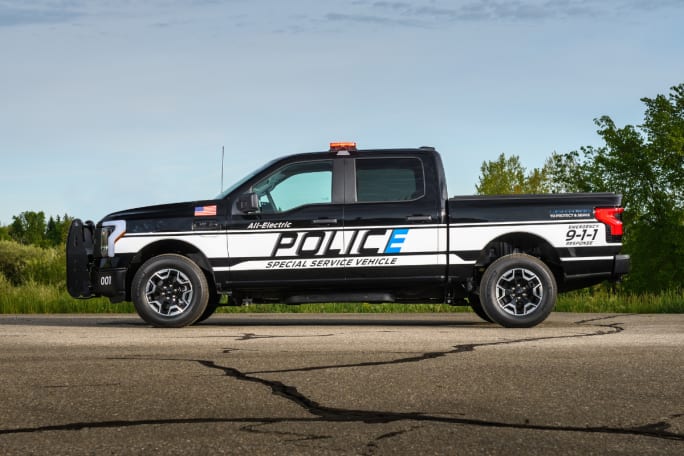
are often equipped to perform special tasks rather than standard patrol duties.
Photo: Ford
Both pursuit-rated vehicles and special service vehicles can be upfitted to fit agencies’ needs, with things like prisoner partitions, K-9 cages, and more.
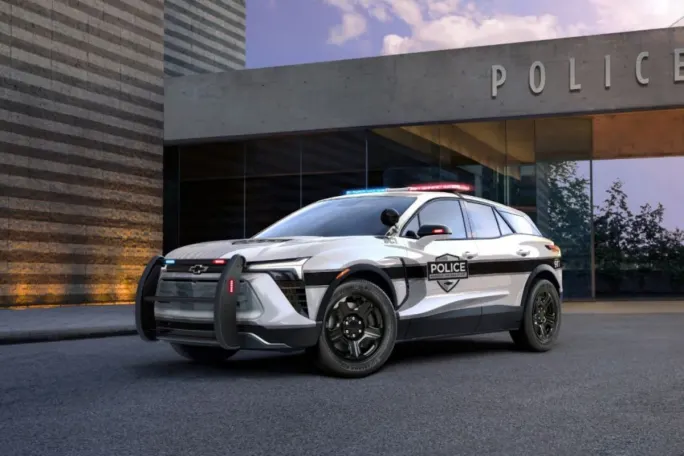
Both pursuit-rated vehicles and special service vehicles can be upfitted to fit agencies’ needs, with things like prisoner partitions, K-9 cages, and more.
Photo: GM
Motorcycles are often used by motor units and can be used either seasonally or year-round. They can be valuable in areas were maneuverability is key, like urban settings.
Bicycles can be used to connect officers to their communities, serving as a way to break down the barrier a traditional vehicle may appear to present. They are often used for community engagement, and crowd control in urban settings. Additionally, bicycles may be used for off-road patrols.
All-terrain vehicles and utility task vehicles are also used in off-road scenarios like parks, beaches, or rugged terrains. They allow officers to patrol and respond to incidents in locations that standard vehicles can’t access.
Prisoner transport vehicles are used to transport arrestees to jail, courthouse appearances, and work sites. Vans and trucks are most often used for prisoner transports.
Mobile command centers are set in large vehicles or trucks that are equipped with communication and coordination equipment used during major incidents, local events, or emergencies where a temporary headquarters-like setting is needed.
Armored vehicles are used for SWAT teams and high-risk operations. These vehicles typically have ballistic panels and windows to protect law enforcement officers.
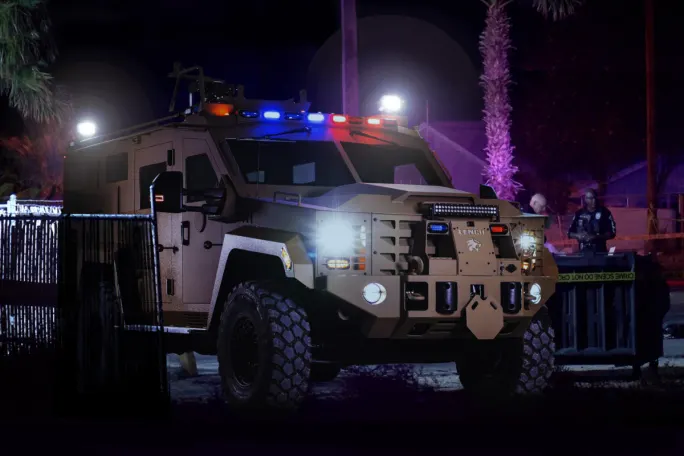
Armored vehicles are used for SWAT teams and high-risk operations.
Photo: Lenco
Helicopters are used for air patrols and are common in urban and coastal settings.
While this is not an exhaustive list of all public safety vehicles — since there are many specialty vehicles used for emergency response — this list can serve as a basic guide to help you understand common public safety vehicles and their use cases.
Subscribe to Our Newsletter
More Operations

Is Keeping Older Fleet Vehicles Really Saving Money?
Is keeping vehicles longer saving money, and what happens when a diagnostic test points to the wrong fix?
Read More →
How Smart Fleet Strategy Can Help Local Government Agencies Do More with Less
Keeping a vehicle longer may ease this year’s budget, but what does it cost the next one? A closer look at fleet decisions can reveal opportunities to reduce spending while protecting essential services.
Read More →
Connect with Government Fleet on LinkedIn
From industry news and fleet management strategies to conversations with peers, Government Fleet's LinkedIn page offers public-sector fleet professionals another way to stay informed and connected.
Read More →
Town of Queen Creek Named Most Successful Fleet Award Winner of Inaugural RTA Fleet Success Awards
Five fleets were honored at RTA Connect 2026 in Chicago for excellence across resource efficiency, intentional culture, risk management, and stakeholder satisfaction.
Read More →
Sponsored•October 14, 2026
A buyer's guide to fleet management software in 2027
Buying fleet management software in 2027 means looking beyond features and price. As fleet operations, technology and expectations evolve, this guide explores what today’s fleet professionals should consider when choosing a system that can deliver value now and adapt to what comes next.
Read More →
Hazard Alerts, Fleet Car Sales Rise and a New Shuttle Concept
Fleet car sales doubled, but the bigger picture tells a different story in this week’s roundup.
Read More →
How St. Johns County Turned Fleet Data Into Better Replacement Decisions
St. Johns County, Florida, had fleet data, but turning it into reliable decision guidance was another matter. Instead of starting over with a new fleet management system, the county connected existing tools and built a scoring system that gives managers an objective look at fleet health.
Read More →
Fleet Forward Conference Introduces One-Day Passes for 2026
New one-day registration lets fleet professionals attend Tuesday, Wednesday, or Thursday, with passes available for $249.
Read More →
ENC Unveils its ZAVIR Medium-Duty Shuttle
Two variants of the concept shuttles were revealed: a low-floor configuration and a high-floor configuration.
Read More →
Could Your Next Fleet Technician Start as an Intern?
What if your next technician hasn’t worked in a fleet shop yet? What fleets are doing to free up time.
Read More →