





Related: Samsara's New Safety and AI-Powered Technology for Fleets
Public Sector Leaders Partner with Samsara to Advance Real-World AI Innovation
Samsara introduced three AI-powered public sector solutions focused on road condition monitoring, waste service verification, and student ridership management for government agencies and school districts.
May 13, 2026

Samsara introduced new AI-powered public sector tools designed to help agencies manage road conditions, waste operations, and student transportation through real-time data and operational insights.
Credit:
Government Fleet
3 min to read
- Samsara has launched three AI-powered solutions aimed at benefiting the public sector.
- The solutions target road condition monitoring, waste service verification, and student ridership management.
- Government agencies and school districts are the primary users of these AI innovations.
*Summarized by AI
Samsara Inc. announced three new AI-powered solutions designed to help government agencies and community organizations improve public safety, increase operational efficiency, and support infrastructure management.
The Public Sector AI Suite is intended for organizations including state and local governments and K-12 school districts. According to Samsara, the platform uses real-time data and AI-driven insights to help agencies manage infrastructure, waste operations, and student transportation.
“Public sector leaders today face an unprecedented convergence of challenges: aging infrastructure, constrained budgets, and growing public demand for transparency and accountability in how government services are delivered,” said Ben Calderon, CTO, Hardware & Operations at Samsara. “Samsara’s Public Sector AI Suite helps government and community leaders do more with their budgets, with quick and visible returns.”
Ground Intelligence Focuses on Road Conditions
Ground Intelligence is designed to help public works agencies identify road hazards and weather-related issues using data collected from Samsara-connected vehicles operating on major U.S. roads.
The platform includes severity-based pothole mapping that uses g-force thresholds to assess road damage and prioritize repairs. Agencies can also use StreetSense to access anonymized, ground-level footage from Samsara-equipped vehicles to evaluate storm damage, clogged drains, fallen trees, or other roadway conditions before dispatching crews.
According to Samsara, the system is designed to reduce time spent locating maintenance issues and improve repair planning.
“Kalamazoo County handles roughly 6,000 pothole service requests every year, and with a lean team, we’re always looking for smarter ways to serve our community,” said Rusty McClain, assistant operations director for the Road Commission of Kalamazoo County, Michigan. “Samsara’s new Pothole Visibility tool changes that entirely by giving us more eyes, arms, and legs on the road when we’re stretched thin.”
Waste Intelligence Adds Service Verification Tools
Samsara also introduced Waste Intelligence, an AI-powered service verification platform for waste management operations.
The platform uses multicamera video footage and AI tools to help agencies confirm trash pickups, resolve service disputes, document overfilled containers, and support enforcement of contamination or overage fees with timestamped video records.
According to Samsara, the system is intended to reduce administrative workload and improve revenue recovery.
Ridership Management Targets Student Transportation Safety
Ridership Management is designed for school transportation operations and replaces paper-based ridership tracking with a real-time digital manifest system.
The platform can identify unexpected boarding activity, wrong-stop departures, and student care requirements. It also includes end-of-route verification tools and automated reporting features intended to improve operational oversight and compliance documentation.
Samsara said the platform also supports route planning and fleet management decisions through ridership data analysis.
Public Sector Event in Chicago
Samsara is showcasing the new solutions at its Go Beyond Public Sector event in Chicago, where the company is also highlighting its partnership with the City of Chicago and recognizing Dallas Fort Worth International Airport and Garden City Public Schools with Connected Operations Awards.
Quick Answers
Samsara's AI-powered solutions focus on road condition monitoring, waste service verification, and student ridership management for government agencies and school districts.
*Summarized by AI
More Operations

How St. Johns County Turned Fleet Data Into Better Replacement Decisions
St. Johns County, Florida, had fleet data, but turning it into reliable decision guidance was another matter. Instead of starting over with a new fleet management system, the county connected existing tools and built a scoring system that gives managers an objective look at fleet health.
Read More →
Fleet Forward Conference Introduces One-Day Passes for 2026
New one-day registration lets fleet professionals attend Tuesday, Wednesday, or Thursday, with passes available for $249.
Read More →
ENC Unveils its ZAVIR Medium-Duty Shuttle
Two variants of the concept shuttles were revealed: a low-floor configuration and a high-floor configuration.
Read More →
Could Your Next Fleet Technician Start as an Intern?
What if your next technician hasn’t worked in a fleet shop yet? What fleets are doing to free up time.
Read More →
How Phoenix Is Building Its Next Generation of Fleet Technicians
With more than 8,000 vehicles and pieces of equipment to maintain, the City of Phoenix could not afford to wait for fully trained technicians to walk through the door. Instead, they revamped their entire workforce strategy and showed how public fleets can create their own talent pipeline while preparing existing employees for increasingly complex vehicles.
Read More →
What’s Slowing Your Fleet Down?
Could a change in how work gets done help your fleet return vehicles to service sooner?
Read More →
Can Public Fleets Trust the Data Driving Their Decisions?
Public fleets have more data than ever, but inconsistent records and missing information can still undermine maintenance, replacement, and cost decisions.
Read More →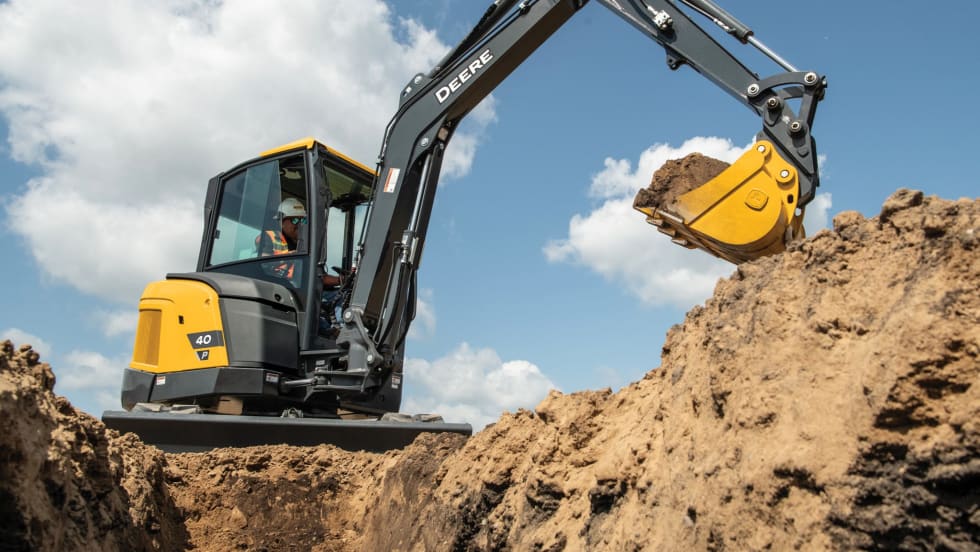
John Deere Introduces 40 P-Tier Compact Excavator
John Deere is adding a compact excavator designed for crews that need to move equipment between jobsites and handle multiple types of work with one machine. The 40 P-Tier weighs less than 10,000 pounds and offers configurable hydraulics, attachment options, and connected fleet-management capabilities.
Read More →
How Leading Fleets Improve and Why Business Plans Matter
This week, we look at what past Leading Fleet winners can teach us about making progress, plus how to build a business plan your fleet will actually use.
Read More →
Nominate a Fleet Leader for the 2027 Public Fleet Hall of Fame
Do you know a fleet leader who has made a lasting impact on the industry? Nominate this fleet professional for the 2027 Public Fleet Hall of Fame.
Read More →