




Mercury Associates Returns to Independent Ownership
New owners John Martin, Brad Smith, and Daniel Reichmann plan to expand Mercury’s analytical capabilities while continuing to grow the CFMO program.


The firm plans to develop tools that can work across different data sources rather than requiring clients to use a particular fleet management system.
Mercury
Mercury Associates has returned to independent ownership more than two decades after the fleet consulting firm was founded.
John Martin, Brad Smith, and Daniel Reichmann purchased the company from Student Transportation of America on July 17 through their holding company, Mercury Associates Partners LLC. Reichmann will serve as CEO and CFO, Martin as president, and Smith as chief operating and chief people officer.
Building on Mercury’s Fleet Management Work
The three executives began discussing a possible acquisition after working together during a period of staffing and leadership changes at Mercury.
Although they did not initially expect the opportunity to become available, they came to view ownership as a way to give the firm more control over its direction.
“Acquiring Mercury allows us more flexibility and freedom to explore opportunities and take risks that we were constrained from pursuing under corporate ownership,” they said in a joint response provided to Government Fleet.
The new owners said the transition will not affect existing contracts or client relationships. Government fleet clients can expect Mercury to continue providing advisory services, with more emphasis placed on analytical tools that can turn fleet data into operational recommendations.
The firm plans to develop tools that can work across different data sources rather than requiring clients to use a particular fleet management system.
CFMO Program Remains a Priority
Mercury also plans to continue expanding the Certified Fleet Management Organization program, which evaluates fleet operations using documented performance standards.
The company acquired the program’s rights and framework in early 2025 after it had been dormant since 2019. Mercury subsequently updated the program and relaunched it at the 2025 Government Fleet Expo & Conference.
As agencies have worked through the certification process, Mercury said access to usable data has remained a common obstacle.
“We are seeing that data remains an issue,” the company said. “Being able to easily extract and disseminate data that proves the efficiency and quality of an organization remains a challenge.”
Mercury said the certification process gives fleet operations a way to measure performance and strengthen how results are reported to agency leadership.
The company is also reviewing whether to develop a modified version of the program for private-sector fleets. Additional government fleet organizations that complete the certification process are expected to be recognized during GFX 2027 in Cobb County, Georgia.
Mercury was founded by Paul Lauria in 2002. Its website now identifies the company as an independent consulting firm without commercial ties to another business entity.
More Operations

A buyer's guide to fleet management software in 2027
Buying fleet management software in 2027 means looking beyond features and price. As fleet operations, technology and expectations evolve, this guide explores what today’s fleet professionals should consider when choosing a system that can deliver value now and adapt to what comes next.
Read More →
Hazard Alerts, Fleet Car Sales Rise and a New Shuttle Concept
Fleet car sales doubled, but the bigger picture tells a different story in this week’s roundup.
Read More →
How St. Johns County Turned Fleet Data Into Better Replacement Decisions
St. Johns County, Florida, had fleet data, but turning it into reliable decision guidance was another matter. Instead of starting over with a new fleet management system, the county connected existing tools and built a scoring system that gives managers an objective look at fleet health.
Read More →
Fleet Forward Conference Introduces One-Day Passes for 2026
New one-day registration lets fleet professionals attend Tuesday, Wednesday, or Thursday, with passes available for $249.
Read More →
ENC Unveils its ZAVIR Medium-Duty Shuttle
Two variants of the concept shuttles were revealed: a low-floor configuration and a high-floor configuration.
Read More →
Could Your Next Fleet Technician Start as an Intern?
What if your next technician hasn’t worked in a fleet shop yet? What fleets are doing to free up time.
Read More →
How Phoenix Is Building Its Next Generation of Fleet Technicians
With more than 8,000 vehicles and pieces of equipment to maintain, the City of Phoenix could not afford to wait for fully trained technicians to walk through the door. Instead, they revamped their entire workforce strategy and showed how public fleets can create their own talent pipeline while preparing existing employees for increasingly complex vehicles.
Read More →
What’s Slowing Your Fleet Down?
Could a change in how work gets done help your fleet return vehicles to service sooner?
Read More →
Can Public Fleets Trust the Data Driving Their Decisions?
Public fleets have more data than ever, but inconsistent records and missing information can still undermine maintenance, replacement, and cost decisions.
Read More →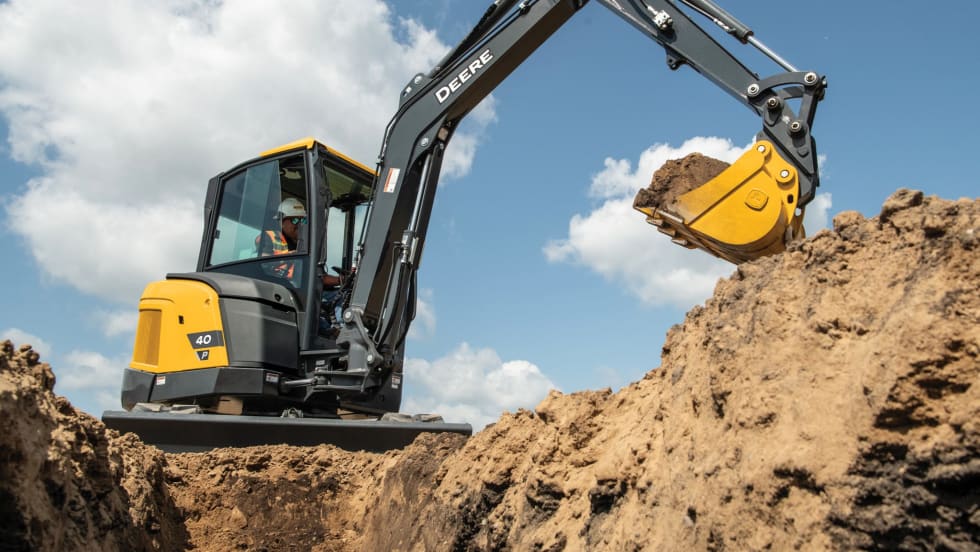
John Deere Introduces 40 P-Tier Compact Excavator
John Deere is adding a compact excavator designed for crews that need to move equipment between jobsites and handle multiple types of work with one machine. The 40 P-Tier weighs less than 10,000 pounds and offers configurable hydraulics, attachment options, and connected fleet-management capabilities.
Read More →