


About the Author: Roan Oropesa is the Director of Government Marketing for Enterprise Fleet Management. He is responsible for working closely with field teams, external and internal partners to drive success for government fleets. This article was authored and edited following Government Fleet editorial standards and style. Opinions expressed may not reflect those of GF.
How Smart Fleet Strategy Can Help Local Government Agencies Do More with Less
Keeping a vehicle longer may ease this year’s budget, but what does it cost the next one? A closer look at fleet decisions can reveal opportunities to reduce spending while protecting essential services.
by Roan Oropesa, Director of Government Marketing, Enterprise Fleet Management
October 16, 2026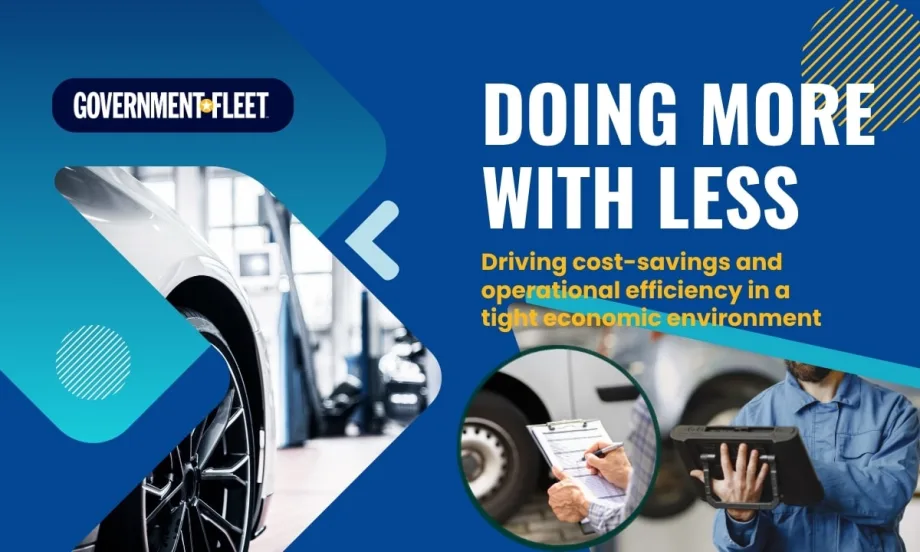
Strategic fleet management enables local government agencies to optimize resource allocation and efficiency.
Credit:
Government Fleet
4 min to read
This year, local government agencies have been under increased pressure to do more with less. They are required to continue delivering essential, first-rate services for taxpayers with budgets that keep tightening due to limited revenue, inflation, and rising costs.
Look no further than the National League of Cities’ (NLC) most recent City Fiscal Conditions report, which notes, “Only 45% of city finance officers feel optimistic about meeting fiscal needs in FY2026, down from 64% in 2024.”
Local governments have shifted from pandemic recovery and are now in a period of fiscal restraint, according to NLC. So, as city leaders across the country begin planning for FY27, they will need to continue working to adapt and navigate these fiscal challenges.
One place (or line item) where they can often find unrealized value is with their fleets, which is often a significant expense. The following principles are some of the ways government fleets drive cost-savings and operational efficiency in a tight economic environment.
Right-Size the Fleet
The first step is often to look at the fleet holistically and determine that each vehicle has a purpose and is utilized.
Right-sizing the fleet is making sure the department has the right number of vehicles for what’s required. While every government entity’s needs are unique, the principle remains the same: vehicles that are not active still consume taxpayer resources through ownership and operating costs.
A city may view an unused pickup as a sunk cost, but every year it remains in service it continues incurring cost and losing value. It’s important to consistently evaluate the fleet size to reduce ownership costs, improve utilization, and use taxpayer dollars as efficiently as possible.
Every vehicle should have a defined purpose, documented utilization, and a clear business case. When an agency aligns fleet inventory with operational demand, they can often save without compromising service delivery.
Right-Type the Fleet
Many local government agencies have vehicles that are oversized for their actual work. Some examples we see often are large, less fuel-efficient vehicles being assigned to light administrative duties; and retired, specialty police vehicles being retained after operational needs have changed.
Right-typing the fleet means appropriately matching the vehicle to the job that’s required. A vehicle may be fully utilized and still cost more than necessary if it's larger, heavier or more specialized than the work requires. Matching vehicle specifications to operational needs can lower total cost of ownership without sacrificing service levels.
Modernize the Fleet
It’s no secret that older, high-mileage vehicles can be more trouble than they’re worth. Older vehicles often end up being expensive due to large repair needs, increased downtime, and higher depreciation. Fleet replacement decisions are often delayed during periods of budget pressure, but postponing replacement is usually more costly than a planned replacement strategy.
The City of Havre de Grace, Maryland, saw success from modernizing its fleet. The city reduced its fleet’s average age from 11 to 4.8 years, acquiring 69 new vehicles, selling 60 city-owned vehicles, and returning $190,031 in equity back to the city. In addition, the partnership increased cost predictability through leasing and lowered the city’s total cost of ownership.
The value goes beyond maintenance and depreciation. Newer vehicles often offer advanced safety technologies, improved fuel economy, and greater reliability, all of which can contribute to lower total operating costs.
Implement Optimal Replacement Cycles
In addition to modernizing the fleet, it’s important to implement optimal cycling patterns. When combined with real-time market data and in-depth knowledge of goals and budget, a detailed financial analysis allows for informed decisions about replacing, holding, or selling vehicles.
Paying attention to life-cycle management and setting thresholds that define when it’s time to replace vehicles can benefit the bottom line. With true remarketing expertise, government fleets are empowered to achieve the highest possible returns, regardless of age, mileage, or condition.
Leverage Data to Drive Efficiency
Fleet managers should have visibility to essential vehicle data and reporting through connected car technology or plug-in telematics. With a comprehensive view of each vehicle, fleet operators can help track and evaluate their fleet strategy and its effectiveness.
Many fleets can become more efficient by leveraging telematics. The City of Miami Gardens significantly cut vehicle idle time since implementing Geotab’s telematics program. At its peak, the fleet experienced 75% idle time, which has now dropped to 68%. These improvements translate to over $61,600 in annual fuel and operational cost savings.
As local government leaders prepare for another challenging budget cycle, fleet management presents an opportunity to improve financial resilience without reducing services. By right-sizing fleets, matching vehicles to operational requirements, modernizing aging assets, cycling vehicles at optimal times, and leveraging data to improve decision-making, local governments can maximize budgets while continuing to meet the expectations of the communities they serve.
Subscribe to Our Newsletter
More Operations
Is Keeping Older Fleet Vehicles Really Saving Money?
Is keeping vehicles longer saving money, and what happens when a diagnostic test points to the wrong fix?
Read More →
Connect with Government Fleet on LinkedIn
From industry news and fleet management strategies to conversations with peers, Government Fleet's LinkedIn page offers public-sector fleet professionals another way to stay informed and connected.
Read More →
Town of Queen Creek Named Most Successful Fleet Award Winner of Inaugural RTA Fleet Success Awards
Five fleets were honored at RTA Connect 2026 in Chicago for excellence across resource efficiency, intentional culture, risk management, and stakeholder satisfaction.
Read More →
Sponsored•October 14, 2026
A buyer's guide to fleet management software in 2027
Buying fleet management software in 2027 means looking beyond features and price. As fleet operations, technology and expectations evolve, this guide explores what today’s fleet professionals should consider when choosing a system that can deliver value now and adapt to what comes next.
Read More →
Hazard Alerts, Fleet Car Sales Rise and a New Shuttle Concept
Fleet car sales doubled, but the bigger picture tells a different story in this week’s roundup.
Read More →
How St. Johns County Turned Fleet Data Into Better Replacement Decisions
St. Johns County, Florida, had fleet data, but turning it into reliable decision guidance was another matter. Instead of starting over with a new fleet management system, the county connected existing tools and built a scoring system that gives managers an objective look at fleet health.
Read More →
Fleet Forward Conference Introduces One-Day Passes for 2026
New one-day registration lets fleet professionals attend Tuesday, Wednesday, or Thursday, with passes available for $249.
Read More →
ENC Unveils its ZAVIR Medium-Duty Shuttle
Two variants of the concept shuttles were revealed: a low-floor configuration and a high-floor configuration.
Read More →
Could Your Next Fleet Technician Start as an Intern?
What if your next technician hasn’t worked in a fleet shop yet? What fleets are doing to free up time.
Read More →
How Phoenix Is Building Its Next Generation of Fleet Technicians
With more than 8,000 vehicles and pieces of equipment to maintain, the City of Phoenix could not afford to wait for fully trained technicians to walk through the door. Instead, they revamped their entire workforce strategy and showed how public fleets can create their own talent pipeline while preparing existing employees for increasingly complex vehicles.
Read More →