




How to Manage Aging Fleet Vehicles
With the ongoing supply chain crisis, fleet managers may be tempted to hold on to vehicles longer. But one fleet manager says, ‘not so fast.’


Fleet managers share tips on caring for older vehicles in fleets.
Photo: Canva/Government Fleet
If you manage aging vehicles, you already know they can be high maintenance. The older the unit, the more likely it is to need maintenance and repairs. Having to bring vehicles into the shop more often increases downtime and reduces availability to customers, not to mention increasing the total cost of ownership. These are the common woes of managing older vehicles.
But in today’s market, there is an additional level of complication: supply chains. OEM and aftermarket parts are hard to get and aren’t readily available; what used to take a few days to get in can now take weeks. When a vehicle is in the shop and is inoperable until a part arrives, downtime skyrockets and your customers may be left in a bind.
The challenges of managing an older fleet are clear, making the more important question, what can you do?
These seven tips can help.
1. Employ These Supply Chain Hacks
Tackling supply chain issues can be a quick win for managers of aging fleets. Kelly Reagan, fleet administrator for the City of Columbus, Ohio, offers two ways to stay ahead of supply chain delays.
The first is to increase your parts inventory so you can make timely repairs. “This is a must,” Reagan says. “Ours has increased by almost 50% year-over-year. All of our ‘just-in-time’ parts contracts are out the window because suppliers cannot meet the stringent requirements of the pre-COVID past. If we can find those frequently used parts, then we buy them — and lots of them.”
For fleets that have the budget to purchase new vehicles but struggle to get them in, Reagan says keep buying nonetheless — and don’t let hanging onto old vehicles become the new normal.
“Hold your ground and do NOT change your replacement standard,” he says. “If anything, accelerate your buying in an effort to ‘right-cycle’ your assets. Eventually the OEMs will catch up once they get their houses in order. Yes, you may get a glut of vehicles dumped on you; however, that’s easier to deal with than aged, costly vehicles that are falling apart.”
2. Create a Replacement Standard
If your fleet doesn’t have a replacement standard (RS, also referred to as a replacement cycle), now is the time to create and implement one. Determining the metrics for the optimal time to replace a vehicle can help with funding for replacements, and moreover, ensure you’re not spending money maintaining older vehicles that, from a financial and safety perspective, should be replaced.
“The best way to minimize or eliminate maintaining an aging fleet is to make sure you have a good lifecycle management strategy in place,” says Danny Brashear, senior industry consultant for AssetWorks, which offers asset management services and software solutions. “Each year the equipment depreciates, and the equipment downtime will increase. But if you plan out the equipment replacement cycle, then you’ll be able to maximize your return on investment by replacing the equipment at the optimum time.”
For when you are determining your replacement standard, Brashear offers this formula: “Look at the total cost of ownership for each equipment type and then plan to replace them once the operational cost exceeds your standards,” he says. “Every fleet is different, so your replacement schedule should reflect different equipment applications to get the most out of your fleet, including the residual cost on the back end.”
Reagan advises that fleet customers should play a central role in determining the RS as well.
“Remember to involve your end user agencies and get their buy-in for your RS. Then plan fiscally for replacements based upon your RS,” Reagan says. “Give direction and insight for your processes with data to back up your assertions. At least if you are not provided the appropriate funds for replacements, then it is not on you – you have fulfilled your fiduciary responsibilities by educating and informing your administration. Having an RS leaves the guesswork — and feelings — out of replacements.”
3. Use Technology to Determine Optimal Lifecycles
A replacement standard must be grounded in data, not solely on factors like model year or mileage that, on their own, can be arbitrary. Data is what tells the true story of when to retire a vehicle. Fortunately, technology can make this a less-daunting task than it may seem.
“Having a good fleet management information system (FMIS) and understanding how to use it will give you all the required tools needed to collect the needed data to build a good equipment replacement strategy. Without the historical data, how are you going to know?” Brashear says. “Using your FMIS, you can separate the different equipment type costs and then build a replacement plan that will help you get the most out of your fleet. This also means getting the most return from your fleet as well. Historical data is the key to show which equipment will give you the most bang for your buck for each of the different applications.”
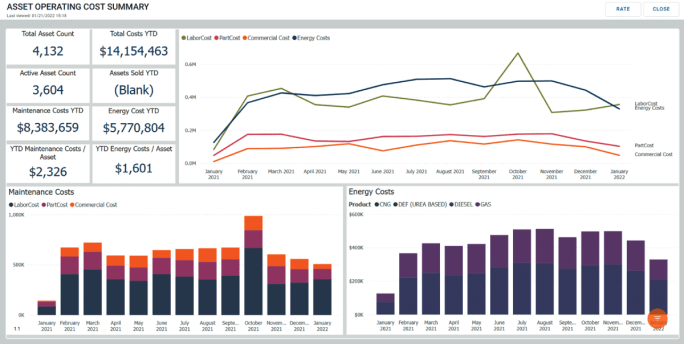
An example of asset analytics operating costs
Photo: AssetWorks
4. Don’t Budge on Replacement Cycles
When new vehicle supplies are tight, some fleet managers are pressured to change their replacement standard and keep vehicles longer. If that happens, it only gets more costly to continue to maintain those older vehicles.
“I am NOT a proponent of this, as it just forces us to kick the can down the road, and the farther we kick the can, the more costly it becomes,” Reagan says. “Fleet is a nuts-and-bolts business, based upon real data and regression and depreciation analytics. Without an RS, you are subject to pure supposition, guesswork and feelings.”
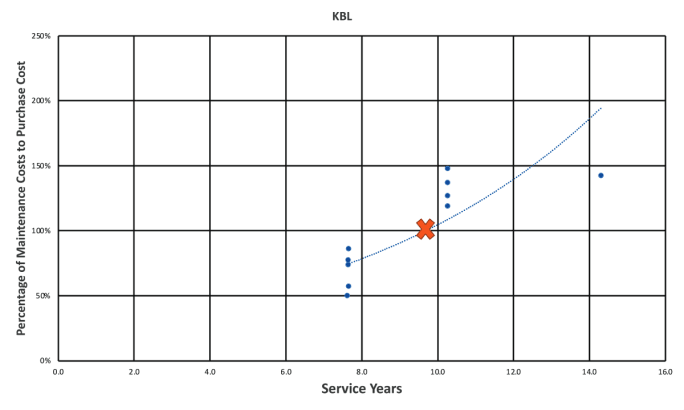
These regression analytics can help decided the optimum time to replace as asset.
Photo: AssetWorks, City of Columbus
Reagan says one thing can be adjusted though: the duty cycle.
“Change the duty cycle on the older units so that they will accumulate fewer miles,” he says. “The older the unit, the less use it gets simply because it is not as reliable as a newer asset.”
5. Leasing Vehicles
An alternative to purchasing replacement vehicles is to lease them instead.
In the face of budget constraints that delayed the purchase of replacement vehicles and increased the age of the fleet, the city of Platteville, Wisconsin, opted to try leasing.
“Since becoming the city manager in 2020, I started to hear more and more about municipalities switching to leased vehicles as a way to decrease costs and increase the number of newer vehicles in your fleet,” says City Manager Adam Ruechel.
Before making the switch, the city reviewed potential leasing option scenarios. “One of the things we wanted to ensure was if we were to shift towards leasing vehicles, our local car dealerships would be able to service the vehicles,” Ruechel says. After reviewing all of the scenarios, the fleet received authorization to move forward.
The city is still in the midst of its trial period, but so far, results are looking good for lowering the age of the fleet.
Historically, the city has purchased between one and three vehicles a year. Under the leasing model, they’ve added 12 vehicles at the same cost it would have paid for three.
“It certainly has allowed us to bring in more vehicles under the leasing options than we would have with outright purchasing vehicles,” Ruechel says. “By leasing the vehicles, you generally are going to have some units under warranty, which should reduce the amount of maintenance required as well as ensure your employees are utilizing newer and safer vehicles.”
6. Make the Case for Replacement Vehicles
Whether you’re angling for budget dollars for new vehicles or making the switch to a leasing program, the best way to argue your case is to show just how much money vehicles outside of their optimal lifecycle are costing the organization.
Reagan suggests performing a regression analysis on each type and class of vehicle that is outside of its lifecycle, then sharing it with decision makers.
“You must show the administration how much money is being needlessly spent on older aged, out-of-RS vehicles. Suggest to the administration that the money being needlessly spent could go toward recapitalization for new vehicles,” he recommends.
A regression analysis can demonstrate the value of investing in new vehicles. Benefits include dollars saved by replacing out-of-lifecycle units, sparing end users from breakdowns and delays that prevent them from accomplishing their mission, and boosting morale for both operators and the fleet department. “City employees are not driving junk, and fleet is not working on junk!” Reagan says.
Brashear agrees that fleets must show where they stand today and where they plan to be with an equipment strategy in place. He emphasized that the strategy should explain why cycle lengths are not always the same, even for the same makes and models. Often that comes down to application type, but it can also include things like geography and climate.
While there are many different strategies fleet can take and metrics to collect, Brashear says the key items to review are:
Acquisition cost
Lifecycle per equipment type
Inflation percentage
Residual cost
“Your business plan will need to incorporate all of these items plus whatever else is a common factor for your business such as shop downtime, equipment availability, customer needs, change in equipment applications, and others,” he says. “Don’t plan to replace a Class 8 truck with another Class 8 if the application has changed and you now only need a Class 6 truck. On the other hand, if the class of truck goes up, the user department should have to pay the difference, as it wasn’t included in the replacement life cycle.”
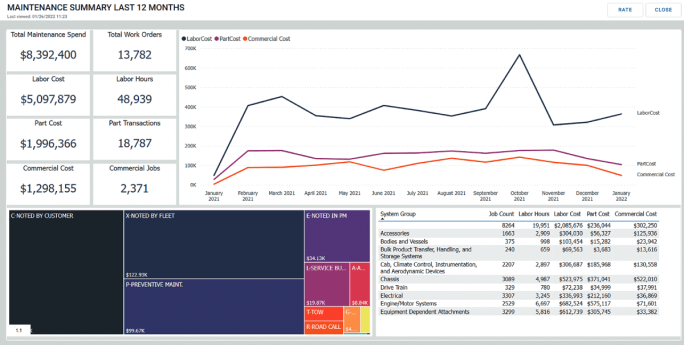
Having to bring vehicles into the shop more often increases downtime and reduces availability to customers, not to mention increasing the total cost of ownership.
Photo: AssetWorks, City of Columbus
Ruechel says presenting what the future could look like is useful for a leasing strategy as well.
“Review the long-term benefits of leasing vehicles by analyzing the number of vehicles you have planned to replace in the next 5-10 years,” he recommends. “Creating contingency funds when vehicles are sold is one way to garner dollars. Also look at the amount of money being added to capital improvement plans as a way to garner lease vehicles. If a municipality is looking to replace one vehicle, then leverage that cost and determine how many leased vehicles this could potentially bring to the municipality for the same price.”
Regardless of what strategy you propose, Reagan says to keep pushing for what you want.
“Don’t stop buying and advocating for new vehicles, like some may suggest,” he says. “Ask, Ask, and ask again for money every year — you cannot be shy. Inform, educate, and implore upon your administration the importance of replacing fleet vehicles and equipment every year. You are not doing yourself or the administration any favors by not delivering a reasonable cost-effective annual buy plan based upon data.”
7. Take Charge
Regardless of which tips you employ, Reagan says the key is to do your homework and deliver solutions, not problems.
“As fleet managers and administrators, we get paid to solve the problems,” he says to fellow fleet managers. “If you ask folks outside fleet to provide solutions, they may just do that, and most of the time you may not like those ideas. Know more about your fleet than the administration and all your end user agencies do — this is what you get paid to do, provide solutions.”
More Operations

Is Keeping Older Fleet Vehicles Really Saving Money?
Is keeping vehicles longer saving money, and what happens when a diagnostic test points to the wrong fix?
Read More →
How Smart Fleet Strategy Can Help Local Government Agencies Do More with Less
Keeping a vehicle longer may ease this year’s budget, but what does it cost the next one? A closer look at fleet decisions can reveal opportunities to reduce spending while protecting essential services.
Read More →
Connect with Government Fleet on LinkedIn
From industry news and fleet management strategies to conversations with peers, Government Fleet's LinkedIn page offers public-sector fleet professionals another way to stay informed and connected.
Read More →
Town of Queen Creek Named Most Successful Fleet Award Winner of Inaugural RTA Fleet Success Awards
Five fleets were honored at RTA Connect 2026 in Chicago for excellence across resource efficiency, intentional culture, risk management, and stakeholder satisfaction.
Read More →
A buyer's guide to fleet management software in 2027
Buying fleet management software in 2027 means looking beyond features and price. As fleet operations, technology and expectations evolve, this guide explores what today’s fleet professionals should consider when choosing a system that can deliver value now and adapt to what comes next.
Read More →
Hazard Alerts, Fleet Car Sales Rise and a New Shuttle Concept
Fleet car sales doubled, but the bigger picture tells a different story in this week’s roundup.
Read More →
How St. Johns County Turned Fleet Data Into Better Replacement Decisions
St. Johns County, Florida, had fleet data, but turning it into reliable decision guidance was another matter. Instead of starting over with a new fleet management system, the county connected existing tools and built a scoring system that gives managers an objective look at fleet health.
Read More →
Fleet Forward Conference Introduces One-Day Passes for 2026
New one-day registration lets fleet professionals attend Tuesday, Wednesday, or Thursday, with passes available for $249.
Read More →
ENC Unveils its ZAVIR Medium-Duty Shuttle
Two variants of the concept shuttles were revealed: a low-floor configuration and a high-floor configuration.
Read More →
Could Your Next Fleet Technician Start as an Intern?
What if your next technician hasn’t worked in a fleet shop yet? What fleets are doing to free up time.
Read More →