




Who Owns the Message on a Refuse Truck?
Refuse trucks can carry public messages into neighborhoods, but keeping those messages current takes planning and clear responsibility.
Refuse trucks can carry public messages into neighborhoods, but keeping those messages current takes planning and clear responsibility.
Government Fleet | Roadway Displays
I've been building changeable sign frames for refuse trucks since 1987. Getting the frames on the trucks is the easy part. The cities that keep their panels changing year after year tend to do a few of the same things, and most of it comes down to who's in charge.
Someone Has to Own the Message
Usually it's the recycling coordinator, or whoever is in charge of getting messages out to the general public. Sometimes it's a public information officer, and they have to get approval. The request tends to start with the recycling coordinator and the fleet manager. The city pays for it, through a grant or by planning it into the budget, and the division director usually approves the artwork.
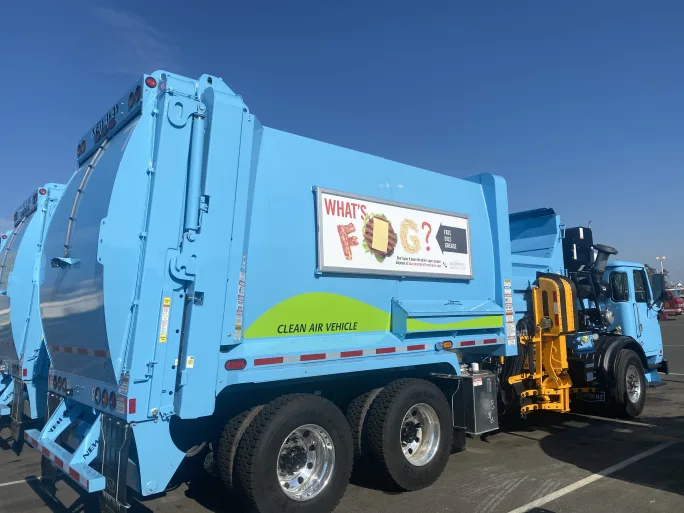
A Sacramento collection truck carries a "What's FOG?" panel about fats, oils and grease, a sewer topic, on a solid waste vehicle.
Roadway Displays
Keep it Simple
As the expression goes, a picture is worth a thousand words. When a truck rolls by, people don't have a lot of read time, so the picture is what gets the point across. Put too many words on a panel and the message is lost. I've seen it. It wasn't effective at all.
Keep it as simple as possible. And skip the QR code. It's hard to scan one when you're driving down the road.
Plan the Year Before it Starts
The cities that run it smoothly sit down at the beginning of the year and plan out a rotation schedule. Whoever is in charge of rotating the panels then knows what days and what months to make the changes.
The department that orders the frames, usually solid waste or recycling, decides what goes up. Some of them open the space to the rest of the city. They put out a memo to the other departments: we have these months available, and if you're interested, give us your artwork, first come first served.
How Often to Change, and Why Cities Stop
I have cities that change their panels monthly and others that change them quarterly. The frame system is designed to rotate messages on a regular basis, at least two to three times a year. If a city just wants a one-time message, it's not the right system.
The main reason cities stop is employee turnover. Then nobody knows who's in charge of the panels anymore. Unless I follow up and say, "It's been a while since you changed your panels," they'll just sit there.
So write down who owns the rotation, and make it part of the handoff when that person leaves.
City Trucks and Hauler Trucks
On its own trucks, a city has more say over what goes on the sides and what it can do with them. With private haulers, the city can make suggestions. It can say, "Hey, we have grant money. It's not going to cost you anything." Whether hauler trucks get frames is ultimately between the city and the hauler.
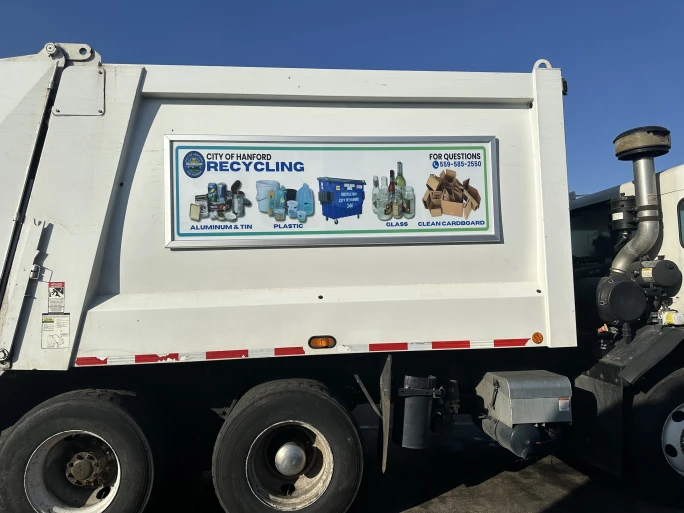
The City of Hanford uses its truck panel as a recycling guide, showing what goes in the cart by material, with a phone number for questions.
Roadway Displays
Be Honest About Measurement
Some cities measure their truck campaigns. A lot of them don't. They get the grant from the state, take the pictures, submit them with their forms and call it good.
If you want to measure, set it up on day one. You can set up an 800 number easily. Put it on the panel and count the calls.
A city here in Southern California once tested exactly that with us. On some of their trucks we put the panels upside down on purpose, with a specific phone number, to see how many people would notice and call. Anything that gets people's attention and makes them pick up the phone will tell you something.
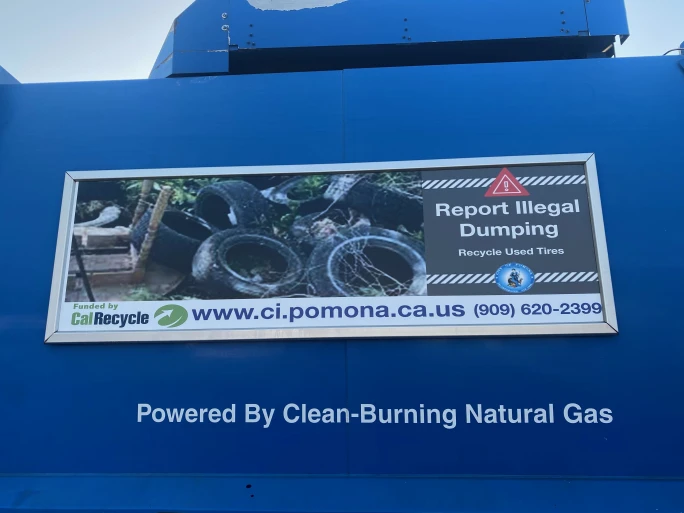
A City of Pomona truck asks residents to report illegal dumping, with the city's phone number and web address on the panel.
Roadway Displays
Target the Route, Not Just the City
It works better when the message is aimed at the people on the route. Los Angeles has several ethnic communities, including a large Korean population in one district, and we targeted the trucks on about three specific routes there. Trucks run the same routes, so a city can reach one neighborhood without changing the whole fleet.
What I'd Pass on to Any City Starting Out
Name an owner. Set the rotation at the start of the year. Keep the panels simple enough to read in passing, and give people a number to call so you can measure it.
─────────────────────────────────────────────────
About the Author: Dennis Barrett is CEO of Roadway Displays in Temecula, California, which has built changeable truck-side sign frames since 1987. He works with municipal fleets and refuse body manufacturers on speccing, installing, and maintaining signage on collection trucks, including programs for San Diego, Burbank, Los Angeles, and Long Beach. This article was authored and edited following Government Fleet editorial standards and style. Opinions expressed may not reflect those of GF.
More Operations
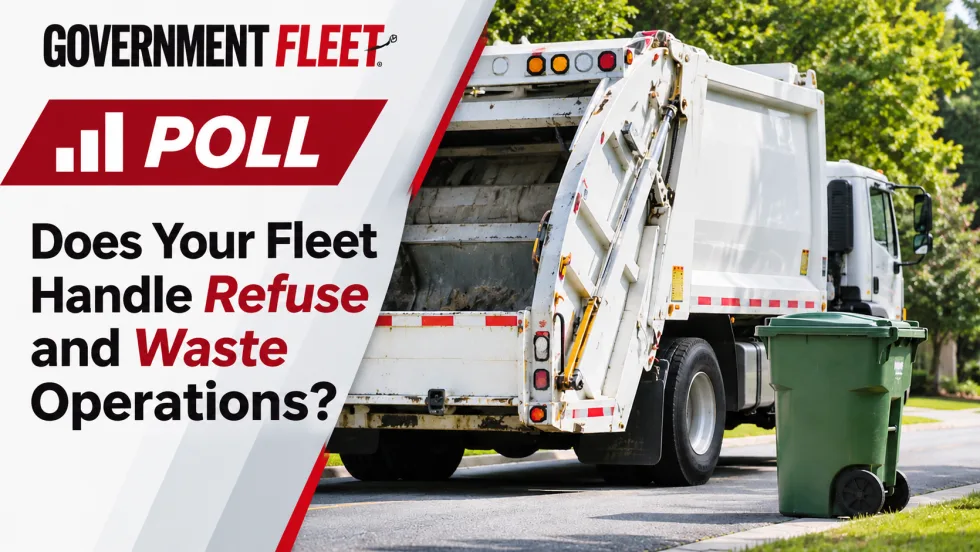
Does Your Government Fleet Handle Refuse and Waste Operations? Take Our Poll
Government Fleet wants to hear from public-sector fleet professionals about their responsibilities for refuse collection and waste management equipment.
Read More →
Fleet Replacement Decisions, Waste Fleet Technology and the GFX Deadline
Is your next vehicle the right fit, can your records settle a missed pickup dispute, and what could your fleet teach others at GFX 2027?
Read More →
Is Delaying Fleet Replacement Really Saving Money?
Could delaying replacement cost your fleet more than it saves? This week’s recap takes a closer look, plus an update on GFX 2027.
Read More →
What Government Fleets Are Missing About Their True Costs
What are fleet budgets missing, and how can agencies use the data they already collect to make a stronger case for change?
Read More →
Rethinking Fleet Decisions From the Budget Office to the Shop
This October we looked back at how public fleets are reconsidering familiar processes and using what they learn to make better decisions.
Read More →
Who Deserves Fleet Recognition and What Could You Teach at GFX?
Who helped shape your fleet career, and what have you learned that could help someone else?
Read More →
What’s Haunting Public Sector Fleets?
Public sector fleet challenges rarely happen in isolation, and addressing one often means understanding how it connects to another.
Read More →
Is Keeping Older Fleet Vehicles Really Saving Money?
Is keeping vehicles longer saving money, and what happens when a diagnostic test points to the wrong fix?
Read More →
How Smart Fleet Strategy Can Help Local Government Agencies Do More with Less
Keeping a vehicle longer may ease this year’s budget, but what does it cost the next one? A closer look at fleet decisions can reveal opportunities to reduce spending while protecting essential services.
Read More →
Connect with Government Fleet on LinkedIn
From industry news and fleet management strategies to conversations with peers, Government Fleet's LinkedIn page offers public-sector fleet professionals another way to stay informed and connected.
Read More →