





Enjoyed This Article? Read on How Government Fleets Can Reduce Distracted Driving: Key Takeaways
How AI Is Transforming Public Fleet Safety - Part 1
AI-powered safety systems are helping public fleets tackle distracted driving by delivering real-time coaching and measurable behavior change behind the wheel. In part one of our Q&A, Nauto CEO Stefan Heck explains how agencies can improve safety, reduce costs, and navigate implementation challenges with AI-driven technology.
April 6, 2026
Credit:
Government Fleet
6 min to read
- AI-powered safety systems enhance public fleet safety by providing real-time coaching to drivers, effectively reducing distracted driving.
- Utilizing these systems leads to measurable changes in driver behavior and helps lower operational costs.
- Nauto CEO Stefan Heck provides insights into overcoming challenges associated with implementing AI-driven technologies in fleet operations.
*Summarized by AI
As AI technology continues to advance at high speed, with state funding mechanisms and measurable safety improvements, it is increasingly important to incorporate into public fleet management.
We spoke with Stefan Heck, CEO of Nauto, to get an in-depth view of how AI is impacting the fleet industry and how public fleets can best position themselves to implement the technology to reduce distracted driving and improve safety outcomes.
This interview has been edited for length and clarity.
Q: How can AI-powered safety systems help public fleets reduce distracted driving incidents among municipal and state drivers?
Heck: Distracted driving is one of the leading causes of collisions, responsible for up to 70% of all collision losses. AI-powered safety systems help public fleets reduce distracted driving by identifying risky behaviors in real time and enabling immediate intervention.
Using computer vision, AI can detect actions such as phone use, eyes off the road, or other forms of inattention that traditional systems miss, and provide in-cab alerts so drivers can correct their behavior instantly.
Over time, this real-time feedback leads to sustained behavior change, as drivers become more aware and accountable.
For municipal and state fleets, this is especially important, as it not only improves safety outcomes but also reduces liability, protects public trust, and ensures more consistent service delivery across large and diverse driver populations.
Q: What types of public fleet operations (e.g., transit, utilities, public works) benefit most from this technology?
Heck: All public fleet operations benefit from AI-powered safety systems, from transit to utilities to public works. The more time the fleet spends driving, and the more urban the routes, the greater the benefit and financial return in terms of loss savings.
Ultimately, the goal is not just to improve drivers’ behavior, but to make roads safer for everyone, including pedestrians, cyclists, and other road users.
Q: How should government agencies evaluate the cost-benefit of AI safety systems within tight or fixed budgets?
Heck: Government agencies should evaluate AI safety systems by focusing on the total cost of safety rather than just the upfront cost. This includes reductions in collisions, claims, vehicle downtime, and administrative workload. The ROI becomes clear when considering both direct and indirect savings.
In practice, AI-driven safety systems like Nauto deliver significant returns by reducing at-fault collisions by up to 80%, in turn lowering insurance costs and minimizing operational disruption.
Fleets also benefit from improved efficiency, as in-cab coaching reduces the need for manual review and administrative effort.
Importantly, these benefits materialize quickly, with many fleets seeing measurable ROI within a couple of months, making AI not just a safety investment but also a near-term cost-reduction and performance-optimization solution.
If capital spending to install systems is a challenge, many leasing companies and some AI safety vendors offer leasing or “all-in” payment options that amortize hardware costs over time.
Q: Are there funding mechanisms, grants, or federal programs supporting the adoption of these technologies?
Heck: Yes, there are several federal and state funding mechanisms that support the adoption of AI-driven safety technologies.
In the U.S., programs like the Department of Transportation’s (DOT) SMART grants and ATTAIN program specifically fund advanced transportation technologies that improve safety and efficiency, including AI-based systems. These initiatives are backed by the infrastructure bill and allocate hundreds of millions of dollars toward smart mobility, connected vehicles, and safety innovation.
In addition, broader infrastructure and transportation grants, such as BUILD or other DOT discretionary programs, can be used by public agencies to invest in safety technology as part of larger modernization efforts.
Q: How are unions and public-sector drivers responding to AI-based monitoring systems?
Heck: Unions and public-sector drivers are often initially skeptical about AI, video, or any kind of real-time monitoring system, even if it does not record.
In our experience, it takes open dialogue, transparency about what the system does and does not do when recording, and how the data will be used. Dialogue about the impact on safety and privacy is critical.
It is also important to pick a system that is more focused on PREVENTION rather than RECORDING and coaching after the fact. Drivers and unions respond positively to systems that help them avoid collisions, get home safely to their families, and focus on safety.
It’s also critical to have an agreement with the union about how data will be used for coaching vs. discipline, who has access, and how long it’s retained. Oftentimes, coaching by a local safety supervisor of data kept for 1-2 weeks is fine, but using data for performance reviews or to build a long-term record is deeply concerning to unions.
Importantly, when these systems are positioned as tools that support drivers and help save lives rather than as tools that monitor them, adoption improves significantly. As a result, many drivers see them as helpful safety partners rather than a burden.
Q: How does AI-enabled coaching differ from traditional driver training programs used in public fleets?
Heck: AI-enabled coaching differs from traditional driver training by shifting from periodic, classroom-based instruction to continuous, real-time feedback “on the job”.
Traditional programs are typically reactive and infrequent, often delivered after an incident or on a scheduled basis, which limits their impact on day-to-day behavior.
In contrast, AI provides in-the-moment coaching inside the vehicle, alerting drivers to risky behavior as it happens so they can correct it immediately BEFORE it results in a collision or loss.
This makes learning more relevant and actionable. Over time, it leads to faster and more sustained behavior changes, as drivers build safer habits through consistent, real-world feedback rather than occasional training sessions.
Q: What measurable improvements in driver behavior are agencies seeing after implementation?
Heck: Agencies are seeing measurable improvements across key driver behavior indicators, particularly reductions in distracted driving, tailgating, and other high-risk actions, with a reduction of 80-90%.
With real-time coaching, many fleets observe a significant drop in these behaviors within the first few months of deployment.
Q: What are the biggest barriers public fleets face when deploying AI safety systems (e.g., procurement cycles, IT constraints, stakeholder alignment)?
Heck: The biggest barriers for public fleets are typically procurement complexity and stakeholder alignment. Lengthy procurement cycles can slow adoption, especially when introducing newer technologies like AI.
Most new systems are cloud-based, so IT integrations are typically not a constraint, since simple API integrations for vehicle asset tables and driver assignments can be easily implemented.
In Nauto’s case, these systems are designed to integrate easily and can be deployed quickly without major infrastructure changes. The more significant challenge is aligning multiple stakeholders, including leadership, operations, unions, and drivers.
Without clear communication and buy-in, even the best technology can face resistance.
Q: How might AI integrate with smart city infrastructure and connected vehicle initiatives?
Heck: AI will play a central role in connecting fleet safety to broader smart-city and connected-vehicle initiatives.
By combining in-vehicle data with infrastructure signals such as traffic lights, road conditions, and real-time traffic patterns, AI can provide a more complete view of risk and enable earlier, more precise interventions.
As cities invest in connected infrastructure, AI systems will be able to share insights across fleets and public systems, helping identify high-risk zones, improve traffic flow, manage parking and curb space, integrate AVs into cities, and support city-wide safety initiatives.
This creates a feedback loop in which both vehicles and infrastructure become smarter over time, ultimately leading to safer, more efficient urban mobility for everyone.
Subscribe to Our Newsletter
More Safety
New Partnership Aims to Expand Public Digital Hazard Alert System Statewide
The Hawai’i Department of Transportation (HDOT) is expanding advance digital hazard alerts for the public statewide.
Read More →
New York City Expands Safety Technologies Across Municipal Fleet
Executive Order 19 moves intelligent speed assistance and pedestrian alerts from pilot programs toward standard fleet equipment, offering other public fleets a look at how safety technology can be tested, measured, and scaled.
Read More →
Sponsored•August 10, 2026
Hidden in Plain Sight: Fleet Compliance Risks
Fleet compliance isn't just about having policies — it's about consistently enforcing them. This practical guide reveals six hidden compliance risks common in public sector and shared fleet operations and outlines proven strategies to improve visibility, accountability, and audit readiness.
Read More →
5 Days Left to Submit Your 2026 Fleet Safety Award Nomination
Know a government fleet, safety, or risk manager who deserves recognition for making fleet operations safer? Nominations are open through Aug. 15.
Read More →
How the First 24 Hours Can Shape a Fleet Crash Response
How a strong accident response process helps government fleets move from the initial report to recovery while building a clearer record for what needs to change next.
Read More →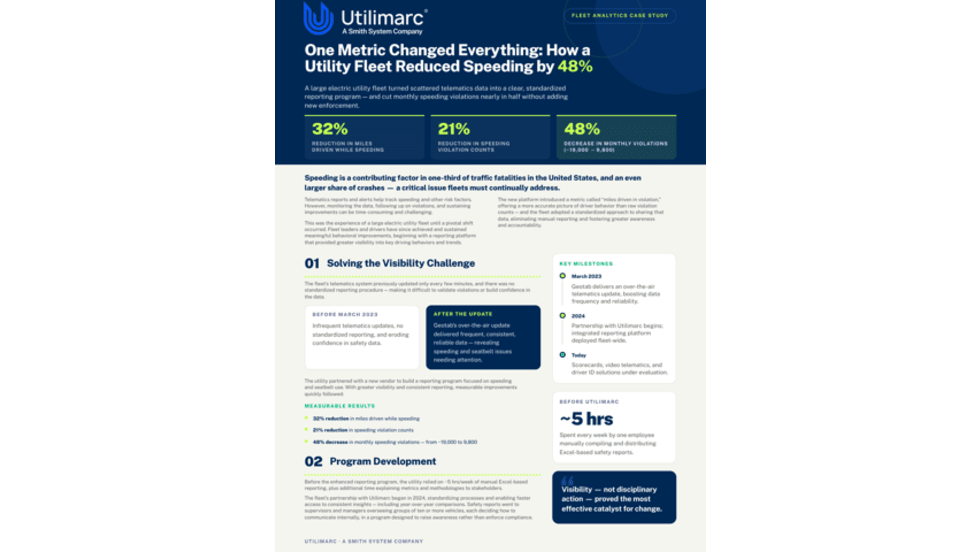
Sponsored•July 17, 2026
How Better Visibility Cut Speeding Violations by 48%
Fleet leaders don't need more data, they need clearer visibility into what the data is saying. This case study explores how one utility replaced speeding-event counts with a single metric — miles driven in violation — to strengthen safety and significantly reduce speeding violations.
Read More →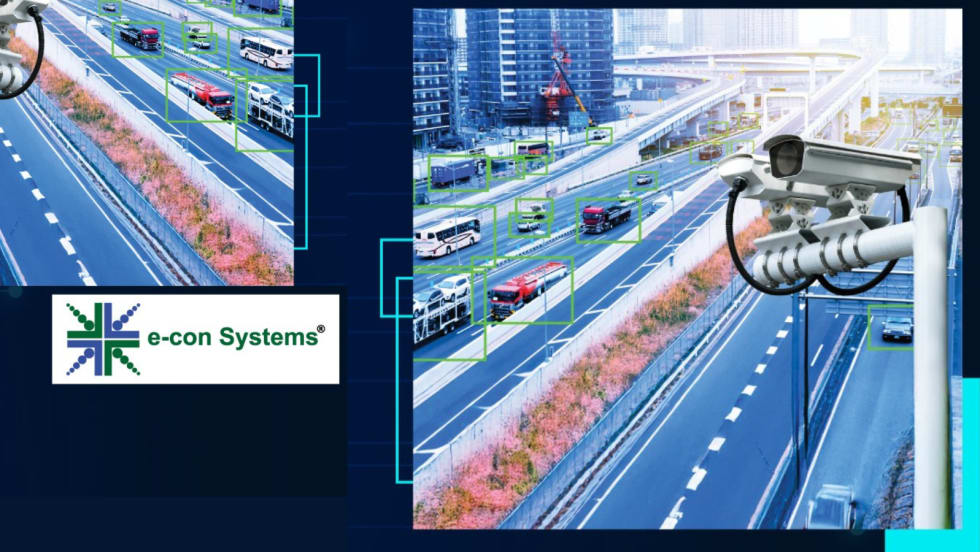
e-con Systems Expands AI Camera Tools for Traffic Monitoring
The systems support license plate recognition, traffic analytics, and video management for transportation agencies.
Read More →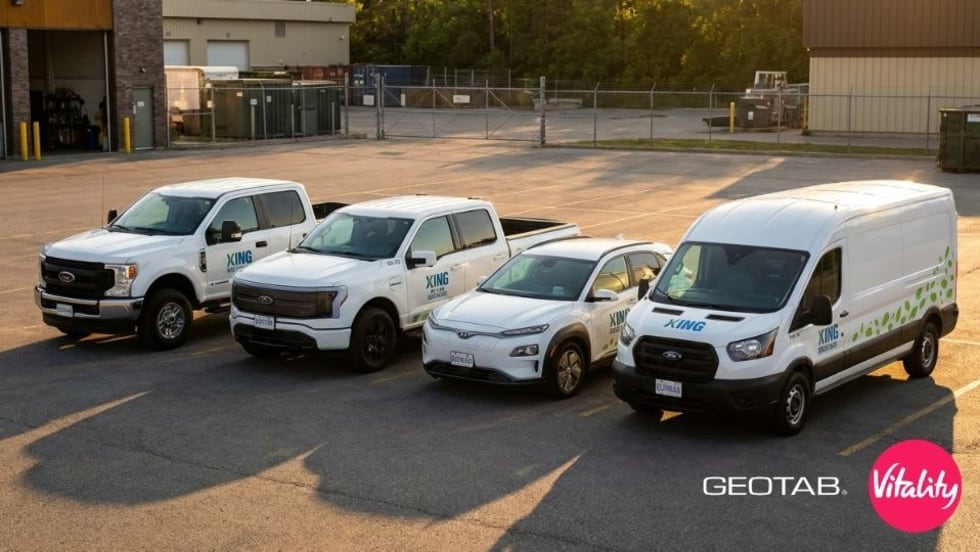
King Township Pilot Links Driver Feedback to Reduced Speeding
How King Township, a best-in-class municipal fleet, reduced speeding by 10.9% and demonstrated a projected 349% ROI by putting safety ownership directly in drivers' hands.
Read More →
Beyond the Fireline: The Critical Role of Public Fleets in Wildfire Response
Behind every wildfire response is a complex network of vehicles, data, and decisions that must work in sync under extreme pressure. Global heating trends require strong fleet coordination and reliable communications to keep crews safe and operations running smoothly.
Read More →
Reducing Risk and Improving Safety in Public Sector Fleets with Advanced Driver-Assist Technology
Public sector fleets face increasing pressure to improve safety, reduce liability, and operate efficiently. See how advanced vehicle technologies are helping agencies protect drivers, the public, and their budgets.
Read More →