




Keep Reading: 10 Things Drivers Should Do in Case of an Accident
How Government Fleets Can Reduce Distracted Driving: Key Takeaways
Crashes, near misses, and costly collisions still occur every day. How agencies can better protect their drivers, roadside workers, and communities.
by Judie Nuskey
December 11, 2025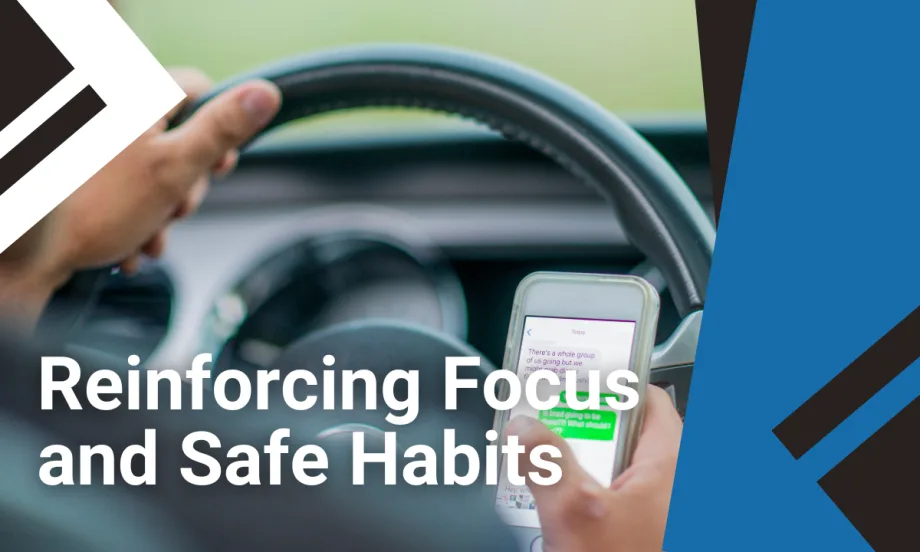
Crashes, near misses, and costly collisions still occur every day. How agencies can better protect their drivers, roadside workers, and communities.
Photo: Government Fleet
3 min to read
Distracted driving continues to be one of the most preventable risks facing government fleets, yet crashes, near misses, and costly collisions still occur every day. At this year’s Government Fleet Expo, a powerful panel of experts shared how agencies can better protect their drivers, roadside workers, and communities.
Here’s a quick breakdown of the most important insights and actions government fleets can take right now.
1. Use Connected-Vehicle Alerts to Cut Through Distraction
Tim Adams of HAAS Alert opened the session by showing just how disconnected most roadways really are. Work zones, emergency vehicles, and public-works crews operate with flashing lights and signs, but drivers buried in distraction often never see them.
His solution: real-time digital alerts delivered directly into vehicles.
These alerts give motorists 10–20 seconds of added awareness, dramatically reducing struck-by incidents and improving Move Over compliance. For agencies with roadside workers, the value is immediate: fewer risks, fewer injuries, fewer claims.
2. Pair Telematics With Clear Policies and Real Coaching
Former NYC Deputy Chief Fleet Officer Eric Richardson shared what worked in one of the nation’s largest municipal fleets.
His advice:
Telematics identifies risky behavior, but only if you act on it.
Mobile-device policies must be simple, specific, and enforceable.
Training isn’t annual, it’s ongoing.
NYC’s approach focused on a cycle: identify → coach → reinforce. This lowered collisions, improved driving habits, and helped the city build a stronger safety culture.
3. Understand the Human and Financial Stakes
Robert Martinez, retired NYPD Deputy Commissioner, reminded fleets that distracted driving crashes have consequences far beyond vehicle damage.
From NHTSA’s 2023 data:
3,275 people were killed in distracted-driving crashes
611 of them were pedestrians or cyclists
13% of all U.S. crashes involved distraction
He also highlighted the economic cost: distracted-driving crashes account for $98 billion in annual losses. For a 250-vehicle fleet, investing in training, telematics, and modern systems can yield a 19% ROI, proving safety is not an expense, but a strategic investment.
4. Bring Humanity Back Into Driver Training
The session closed with a reminder of why this work matters: behind every statistic is a story.
One example was the story of Jacy Good, whose parents were killed and who was permanently injured when a distracted driver triggered a catastrophic crash in 2008. Behind every statistic is a family that never gets to go back to how life was.
The discussion emphasized that:
Drivers change behavior when training includes an emotional connection.
Real stories make distracted driving feel personal, not theoretical.
Training, policies, and technology save lives only when leadership commits to
consistent reinforcement.
The final takeaway was that training is not expensive, it’s priceless, and distracted driving is preventable. Government fleets have the tools, data, and real-world examples needed to protect workers, drivers, and communities, but only action saves lives.
Subscribe to Our Newsletter
More Safety
New Partnership Aims to Expand Public Digital Hazard Alert System Statewide
The Hawai’i Department of Transportation (HDOT) is expanding advance digital hazard alerts for the public statewide.
Read More →
New York City Expands Safety Technologies Across Municipal Fleet
Executive Order 19 moves intelligent speed assistance and pedestrian alerts from pilot programs toward standard fleet equipment, offering other public fleets a look at how safety technology can be tested, measured, and scaled.
Read More →
Sponsored•August 10, 2026
Hidden in Plain Sight: Fleet Compliance Risks
Fleet compliance isn't just about having policies — it's about consistently enforcing them. This practical guide reveals six hidden compliance risks common in public sector and shared fleet operations and outlines proven strategies to improve visibility, accountability, and audit readiness.
Read More →
5 Days Left to Submit Your 2026 Fleet Safety Award Nomination
Know a government fleet, safety, or risk manager who deserves recognition for making fleet operations safer? Nominations are open through Aug. 15.
Read More →
How the First 24 Hours Can Shape a Fleet Crash Response
How a strong accident response process helps government fleets move from the initial report to recovery while building a clearer record for what needs to change next.
Read More →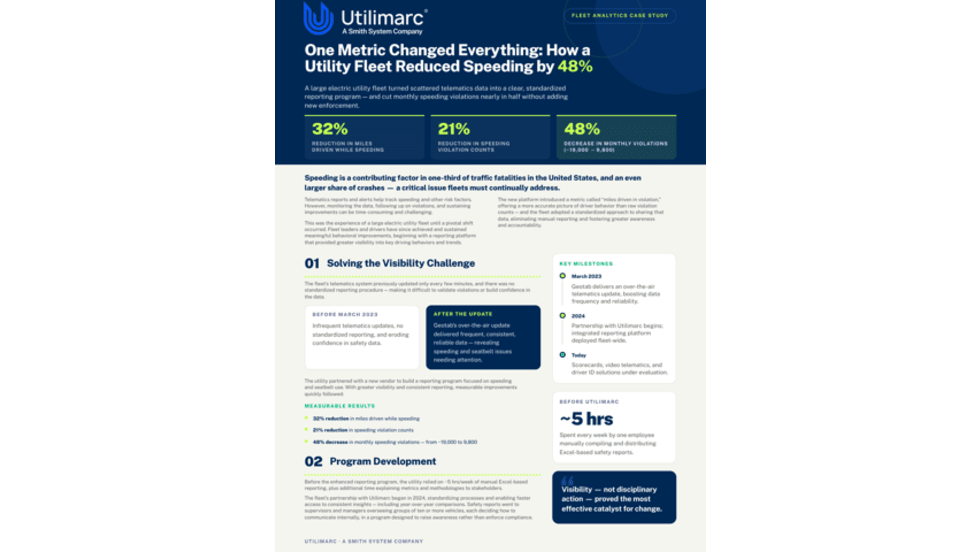
Sponsored•July 17, 2026
How Better Visibility Cut Speeding Violations by 48%
Fleet leaders don't need more data, they need clearer visibility into what the data is saying. This case study explores how one utility replaced speeding-event counts with a single metric — miles driven in violation — to strengthen safety and significantly reduce speeding violations.
Read More →
e-con Systems Expands AI Camera Tools for Traffic Monitoring
The systems support license plate recognition, traffic analytics, and video management for transportation agencies.
Read More →
King Township Pilot Links Driver Feedback to Reduced Speeding
How King Township, a best-in-class municipal fleet, reduced speeding by 10.9% and demonstrated a projected 349% ROI by putting safety ownership directly in drivers' hands.
Read More →
Beyond the Fireline: The Critical Role of Public Fleets in Wildfire Response
Behind every wildfire response is a complex network of vehicles, data, and decisions that must work in sync under extreme pressure. Global heating trends require strong fleet coordination and reliable communications to keep crews safe and operations running smoothly.
Read More →
How AI Is Transforming Public Fleet Safety - Part 1
AI-powered safety systems are helping public fleets tackle distracted driving by delivering real-time coaching and measurable behavior change behind the wheel. In part one of our Q&A, Nauto CEO Stefan Heck explains how agencies can improve safety, reduce costs, and navigate implementation challenges with AI-driven technology.
Read More →