




King Township Pilot Links Driver Feedback to Reduced Speeding
How King Township, a best-in-class municipal fleet, reduced speeding by 10.9% and demonstrated a projected 349% ROI by putting safety ownership directly in drivers' hands.


The three-month pilot produced measurable changes across several areas, with annualized projections used to support the case for expansion.
Geotab | King Township
Every marked municipal vehicle tells residents something about how their fleet is being managed.
For King Township, Ontario, that visibility made speeding more than a driver performance issue. With fleet vehicles moving through residential neighborhoods and school zones, Barry Budhu, manager of transportation, utilities, and fleet services, saw speeding as both a safety concern and a public accountability issue.
King Township manages more than 130 vehicles and more than 200 assets valued at over $37 million. Budhu oversees the fleet alongside one lead mechanic and one apprentice, while also managing responsibilities that include road operations and right-of-way permits.
Under Budhu’s leadership, King Township had increased compliance with core fleet safety requirements and maintained collision risk near best-in-class benchmarks. But with city-branded vehicles operating daily in public view, “near best-in-class” was not enough.
The Solution: A driver-facing engagement tool built on telematics data King Township already had
Optisolve, King Township’s fleet technology partner, has worked with Budhu over time to introduce and evolve multiple Geotab-driven technologies. Through that collaboration, the company understood King Township’s priorities around risk reduction, speeding, and driver engagement, and identified Geotab Vitality as a possible next step.
“Optisolve has been a strong partner for us. They understand how we operate, the challenges we’re trying to solve, and they bring forward ideas that actually make sense for our fleet. It’s not just about introducing new technology; it’s about finding the right fit and making sure it delivers value,” Budhu said.
Geotab Vitality is a driver enablement platform that layers onto Geotab’s existing telematics data. King Township used its existing telematics data to launch the program without changing daily operations. Drivers are scored daily across speeding, braking, acceleration, and cornering. Scores are visible in real time through the Geotab Vitality mobile app, creating a feedback loop between formal reviews.
Budhu worked closely with human resources to introduce the rewards-based program across the mixed workforce. The program was positioned as a driver support tool rather than a top-down monitoring system. Drivers could see their own scores and compare their performance against expectations, which helped frame the app as a tool for personal awareness rather than management oversight.
King Township rolled out the Geotab Vitality pilot to 21 drivers from multiple divisions. Any initial apprehension faded once drivers downloaded the app and saw their scores. Some found they were already performing well and now had data to support that.
Budhu noted that the shift came when drivers realized they were being recognized for positive behavior. Employees who previously heard from management primarily when something went wrong began setting their own standards.
“[Geotab] Vitality focuses on empowering the driver,” Budhu said. “Drivers are now the ones telling themselves to correct their speed, rather than waiting for that feedback to come from a supervisor.”
Impact: Sustained behavior change and measurable results
Budhu expected Geotab Vitality to reduce speeding. What he did not expect was how the program would change his view of driver engagement.
For Budhu, one of the most important moments came when a driver pulled him aside and said, “I didn’t realize how good a driver I was.” The comment pointed to what had been missing: not the data itself, but a feedback loop between performance and recognition. Instead of only identifying problems, Budhu had a tool that helped acknowledge what drivers were already doing well.
“So the technology essentially becomes another person or extension of me and my management style, which is always focused on positive reinforcement,” Budhu said. “Nobody wants to hear that you’re not doing a good job. It’s demoralizing. It’s demeaning and it’s deflating. So, this tool is the complete opposite of that.”
The three-month pilot produced measurable changes across several areas, with annualized projections used to support the case for expansion.
The pilot showed a projected 349% ROI, with $37,735 in net savings and $48,535 in gross savings based on 12-month annualized projections from three months of pilot data. Speeding improved 10.9% by the 30-day mark, addressing the Township’s primary pilot objective. Predictive collision risk declined 7%, while fuel efficiency improved 6.4%. Driver retention also improved 5%, a notable change for a lean fleet team managing more than $25 million in assets.
What surprised Budhu most was not the reduction in speeding, but the consistency of the improvement.
“So what surprised me was not the fact that it reduced speeding, but that it consistently stayed the same. That performance metric, once established, never changed,” he said.
That consistency matters beyond the safety metrics. Lower speeding can reduce fuel consumption, extend asset life, and provide King Township with behavioral data for insurance discussions. Municipalities face complex risk management challenges, and objective driver behavior data can support incident review and renewal conversations.
“If we can reduce risk, we are reducing costs. If we are reducing costs, we are making things more efficient every single day. It’s that continuous improvement we’re always looking for,” Budhu said.
Next steps: Full fleet adoption, budget integration, and resident accountability
King Township converted to a paid program on April 1, 2026, six weeks after it accepted a 2026 Geotab Innovation Award at Geotab Connect in Las Vegas.
Full fleet adoption is the next priority. Drivers not yet enrolled have asked when they can participate, and Budhu expects engagement to increase as more drivers join.
The pilot also supported a business case for the finance committee. King Township demonstrated a projected 349% ROI, showing that the program paid for itself before the pilot concluded. Budhu is taking the results into the Township’s next budget board meeting, using financial metrics and driver behavior data to support the case for full fleet expansion.
The Township also plans to use the program’s results to communicate accountability to residents. The data gives King Township a way to show how public services are being managed and how the fleet is working to reduce risk.
“I can just say, look, here’s the data. The data speaks for itself. I can do less talking and more showing of what we’re actually doing,” Budhu said.
More Safety
New Partnership Aims to Expand Public Digital Hazard Alert System Statewide
The Hawai’i Department of Transportation (HDOT) is expanding advance digital hazard alerts for the public statewide.
Read More →
New York City Expands Safety Technologies Across Municipal Fleet
Executive Order 19 moves intelligent speed assistance and pedestrian alerts from pilot programs toward standard fleet equipment, offering other public fleets a look at how safety technology can be tested, measured, and scaled.
Read More →
Hidden in Plain Sight: Fleet Compliance Risks
Fleet compliance isn't just about having policies — it's about consistently enforcing them. This practical guide reveals six hidden compliance risks common in public sector and shared fleet operations and outlines proven strategies to improve visibility, accountability, and audit readiness.
Read More →
5 Days Left to Submit Your 2026 Fleet Safety Award Nomination
Know a government fleet, safety, or risk manager who deserves recognition for making fleet operations safer? Nominations are open through Aug. 15.
Read More →
How the First 24 Hours Can Shape a Fleet Crash Response
How a strong accident response process helps government fleets move from the initial report to recovery while building a clearer record for what needs to change next.
Read More →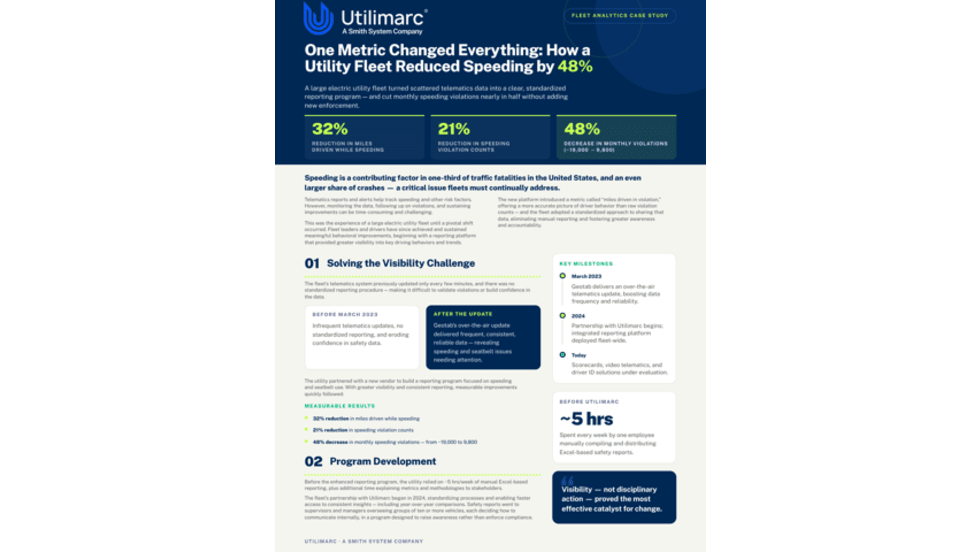
How Better Visibility Cut Speeding Violations by 48%
Fleet leaders don't need more data, they need clearer visibility into what the data is saying. This case study explores how one utility replaced speeding-event counts with a single metric — miles driven in violation — to strengthen safety and significantly reduce speeding violations.
Read More →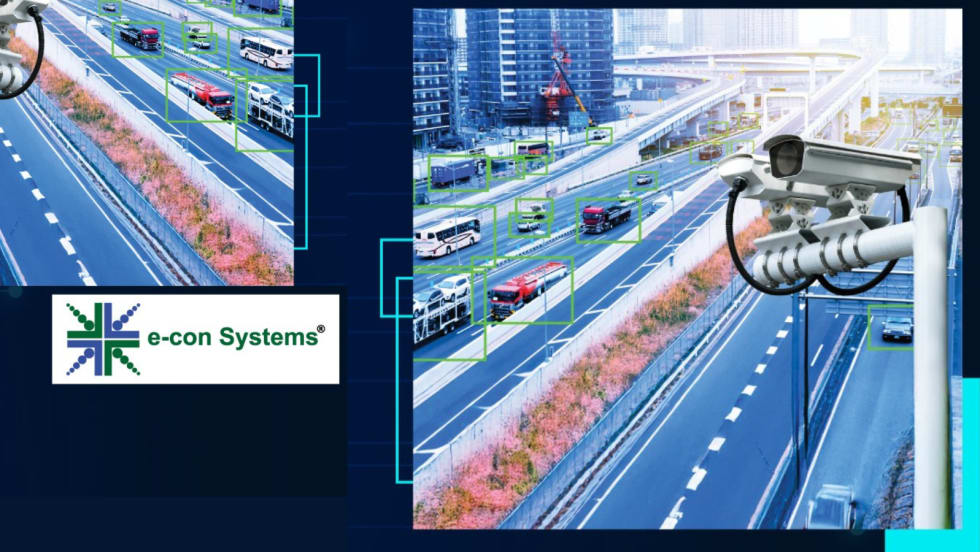
e-con Systems Expands AI Camera Tools for Traffic Monitoring
The systems support license plate recognition, traffic analytics, and video management for transportation agencies.
Read More →
Beyond the Fireline: The Critical Role of Public Fleets in Wildfire Response
Behind every wildfire response is a complex network of vehicles, data, and decisions that must work in sync under extreme pressure. Global heating trends require strong fleet coordination and reliable communications to keep crews safe and operations running smoothly.
Read More →
How AI Is Transforming Public Fleet Safety - Part 1
AI-powered safety systems are helping public fleets tackle distracted driving by delivering real-time coaching and measurable behavior change behind the wheel. In part one of our Q&A, Nauto CEO Stefan Heck explains how agencies can improve safety, reduce costs, and navigate implementation challenges with AI-driven technology.
Read More →
Reducing Risk and Improving Safety in Public Sector Fleets with Advanced Driver-Assist Technology
Public sector fleets face increasing pressure to improve safety, reduce liability, and operate efficiently. See how advanced vehicle technologies are helping agencies protect drivers, the public, and their budgets.
Read More →