





Miss This: Winterization, Distracted Driving, Upcoming Awards
Holiday Travel Surge: What Government Fleet Managers Need to Know About Increased Road Risks
As year-end travel reaches record levels, fleet managers must anticipate increased road congestion and safety challenges for government vehicles and drivers.
December 22, 2025
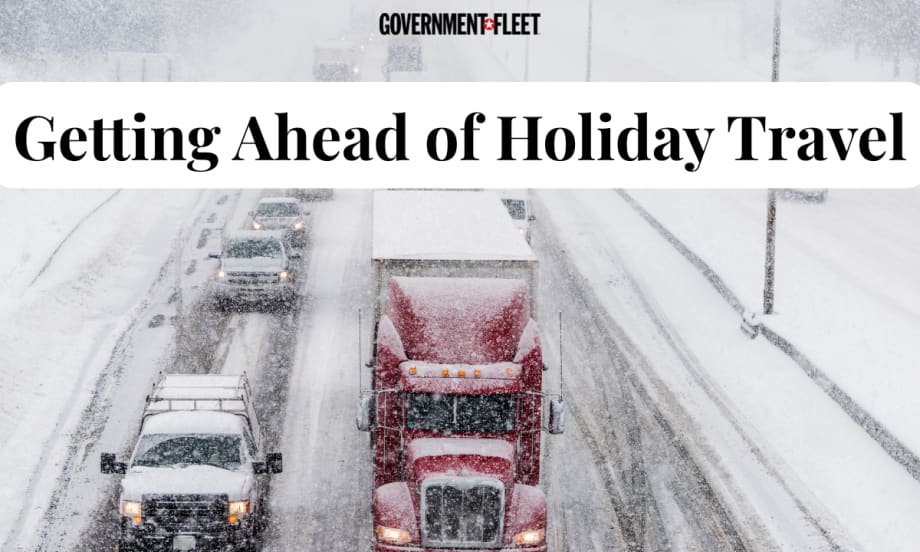
This holiday travel season is anticipated to bring full roads and traffic delays.
Credit: Government Fleet
3 min to read
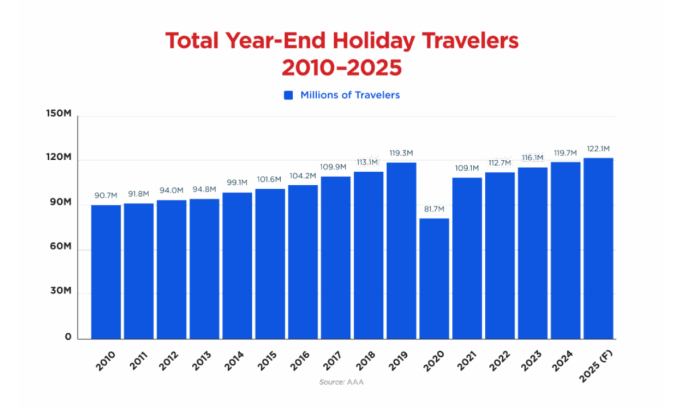
Credit: AAA
AAA forecasts that more than 122 million Americans will travel at least 50 miles between Dec. 20 and Jan. 1, marking a new travel volume high. Driving remains the dominant mode of transport, with over 109 million expected to hit the road.
Higher travel volumes mean increased congestion on major corridors, particularly:
The weekend before Christmas
Post-holiday return days such as Dec. 26–27
These peak periods may result in delays and increased crash exposure for fleet vehicles.
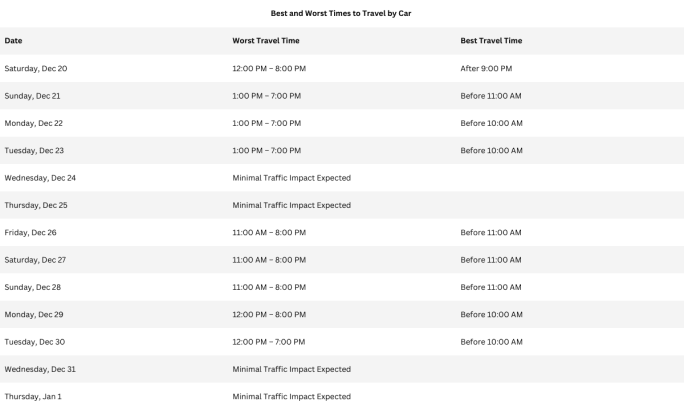
Credit: AAA
Holiday periods often coincide with winter weather systems that can quickly degrade road conditions. Snow, ice, and slush not only slow traffic but also increase the risk of vehicle incidents that require response from public safety fleets.
Best practice considerations for winter operations:
Maintain Your Vehicle: Check the battery, check your tires, check windshield wipers, keep your windows clear, and make sure your vehicle's fluids are all topped off (no-freeze windshield fluid, antifreeze, oil, etc.)
Make Sure You Bring: A flashlight, jumper cables, abrasive material in case you get stuck on ice (sand, kitty litter, even floor mats), shovel, snow brush and ice scraper, warning devices (like flares), and blankets. For long trips, ensure you have food and water, any necessary medication, and cell phone chargers.
Stopped or Stalled: Stay in your car! Put on your hazard lights, place bright markers on the antenna or windows, and shine a light into the dome. If you run your car, clear the exhaust pipe and run it only long enough to warm it.
Plan Your route: Allow plenty of time (check the weather and leave early if necessary), be familiar with the route, and let others know your expected arrival time.
Common Risk Factors During the Holidays
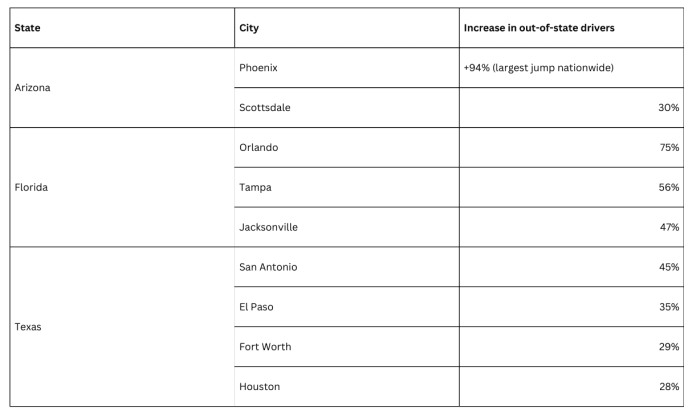
Source: Allstate
Traffic Congestion
Record travel means more cars on highways and urban arterial roads, particularly:
Major commuter corridors during peak departure windows
Interstates near metropolitan areas
Higher traffic density increases the chance of minor impacts and secondary collisions.
Driver Fatigue and Distraction
Holiday travel often translates to long trips, resulting in:
Increased driver fatigue
Heightened distraction rates (e.g., navigation, phones)
Tighter schedules lead to risky behaviors
These elements correlate with higher incident rates on congested, seasonal traffic.
Winter Weather Hazards
Cold season conditions like ice, snow, and sleet reduce traction and visibility — two contributors to winter collisions. Fleet operators should:
Check tire tread and pressure frequently
Ensure de-icing tools and safety gear are onboard
Train drivers on winter hazard avoidance techniques
Fleet Preparation Checklist for Safe Holiday Operations
To manage risks tied to record travel and winter weather, consider the following strategies:
Route and Timing Planning
Identify peak traffic days and avoid high-volume windows where possible
Use real-time traffic data to optimize dispatching
Communicate estimated arrival times to stakeholders
Driver Safety Protocols
Encourage regular breaks for long trips
Reinforce defensive driving best practices
Provide winter driving refreshers for newer drivers
Holiday travel is not only busier but also riskier. According to data collected by Allstate, holiday periods see a spike in roadside assistance events, with the busiest day being December 26th and the longest tow distances on Christmas Day.
Subscribe to Our Newsletter
More Safety
New Partnership Aims to Expand Public Digital Hazard Alert System Statewide
The Hawai’i Department of Transportation (HDOT) is expanding advance digital hazard alerts for the public statewide.
Read More →
New York City Expands Safety Technologies Across Municipal Fleet
Executive Order 19 moves intelligent speed assistance and pedestrian alerts from pilot programs toward standard fleet equipment, offering other public fleets a look at how safety technology can be tested, measured, and scaled.
Read More →
Sponsored•August 10, 2026
Hidden in Plain Sight: Fleet Compliance Risks
Fleet compliance isn't just about having policies — it's about consistently enforcing them. This practical guide reveals six hidden compliance risks common in public sector and shared fleet operations and outlines proven strategies to improve visibility, accountability, and audit readiness.
Read More →
5 Days Left to Submit Your 2026 Fleet Safety Award Nomination
Know a government fleet, safety, or risk manager who deserves recognition for making fleet operations safer? Nominations are open through Aug. 15.
Read More →
How the First 24 Hours Can Shape a Fleet Crash Response
How a strong accident response process helps government fleets move from the initial report to recovery while building a clearer record for what needs to change next.
Read More →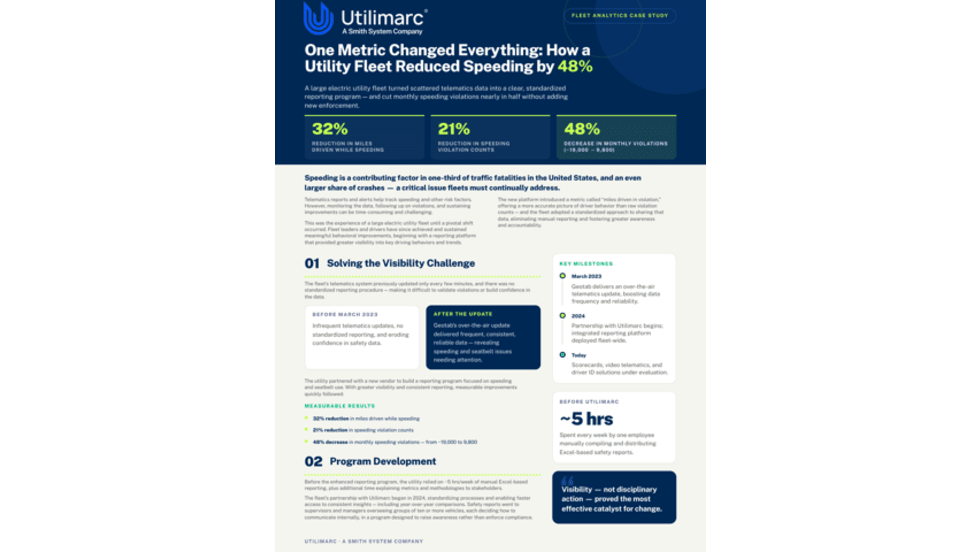
Sponsored•July 17, 2026
How Better Visibility Cut Speeding Violations by 48%
Fleet leaders don't need more data, they need clearer visibility into what the data is saying. This case study explores how one utility replaced speeding-event counts with a single metric — miles driven in violation — to strengthen safety and significantly reduce speeding violations.
Read More →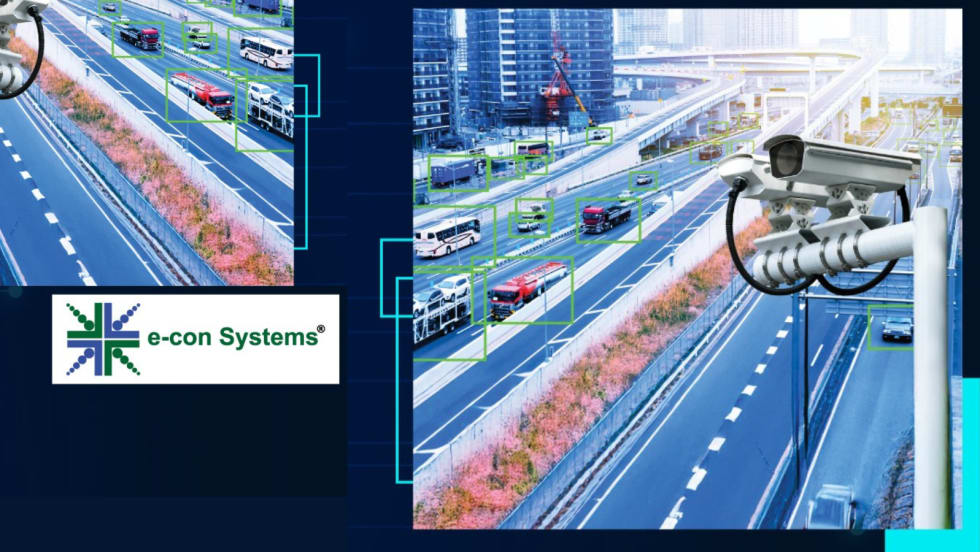
e-con Systems Expands AI Camera Tools for Traffic Monitoring
The systems support license plate recognition, traffic analytics, and video management for transportation agencies.
Read More →
King Township Pilot Links Driver Feedback to Reduced Speeding
How King Township, a best-in-class municipal fleet, reduced speeding by 10.9% and demonstrated a projected 349% ROI by putting safety ownership directly in drivers' hands.
Read More →
Beyond the Fireline: The Critical Role of Public Fleets in Wildfire Response
Behind every wildfire response is a complex network of vehicles, data, and decisions that must work in sync under extreme pressure. Global heating trends require strong fleet coordination and reliable communications to keep crews safe and operations running smoothly.
Read More →
How AI Is Transforming Public Fleet Safety - Part 1
AI-powered safety systems are helping public fleets tackle distracted driving by delivering real-time coaching and measurable behavior change behind the wheel. In part one of our Q&A, Nauto CEO Stefan Heck explains how agencies can improve safety, reduce costs, and navigate implementation challenges with AI-driven technology.
Read More →