




Want More? Here's a Deeper Look at Managing Safety in Increasingly Connected Cars.
Safety First: Curbing Distracted Driving in Your Fleet
Distracted driving can lead to a disruption in operations, cost thousands of dollars, and it can be fatal.

Christy Grimes・Former Senior Editor
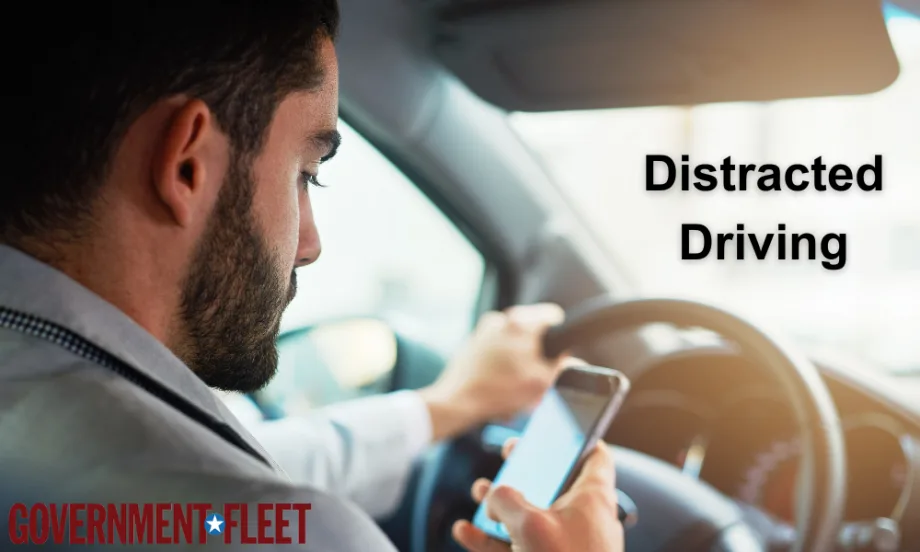
A 2019 report reveals that on average, a non-fatal injury crash at work that involves distraction costs an employer $100,000.
Photo: Canva/Government Fleet
4 min to read
The importance of distracted driving awareness cannot be overstated. It is a critical issue that fleet managers must address with their drivers. Every April, the National Safety Council (NSC) highlights the importance of eliminating distractions behind the wheel. According to NSC, at least eight people a day are killed in distracted driving crashes.
NSC's yearly campaign, Just Drive, is meant to help remind drivers to eliminate the distractions around them for their safety and for the safety of those around them.
According to the National Highway Traffic Safety Administration (NHTSA), four common driver distractions affecting safety include:
Talking or texting on the phone.
Eating and drinking.
Talking to people in the vehicle.
Fiddling with the stereo, entertainment, or navigation system.
According to NHTSA, sending or reading a text takes a driver's eyes off the road for 5 seconds. At 55 mph, that's like driving the length of an entire football field with your eyes closed.
Spreading Awareness About Distracted Driving
Fleet managers are encouraged to urge their drivers to remain focused on the road. Santa Clara County, California, Fleet Manager David Worthington is running a campaign for his fleet during the month of April to spread awareness about distracted driving. Some of the measures he is taking include:
A dedicated webpage with flyers, videos, graphics, statistics, and external webpage links related to distracted driving awareness.
Placing Distracted Driving flyers in vehicles and equipment that come into county maintenance facilities during the month of April.
The continued installation of decals discouraging phone use on all vehicle dashes during preventive maintenance and repairs.
A banner on the county's main webpage about Distracted Driving Awareness Month with a link to a page on the county fleet operations' website about the importance of avoiding distracted driving.
Banners at county fuel stations to remind drivers about Distracted Driving Awareness Month.
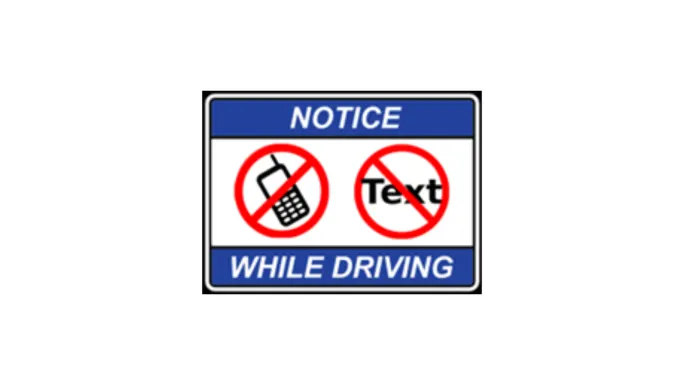
Santa Clara County fleet technicians are adding these stickers to county vehicles as they perform preventive maintenance on them.
Photo: David Worthington
The banners and flyers have QR codes on them that take people to the county fleet's website. The team is tracking how many people use the QR codes as an idication of the impact of its outreach efforts.
Additionally, Worthington has encouraged fleet team members to add the graphic below to their email signatures.
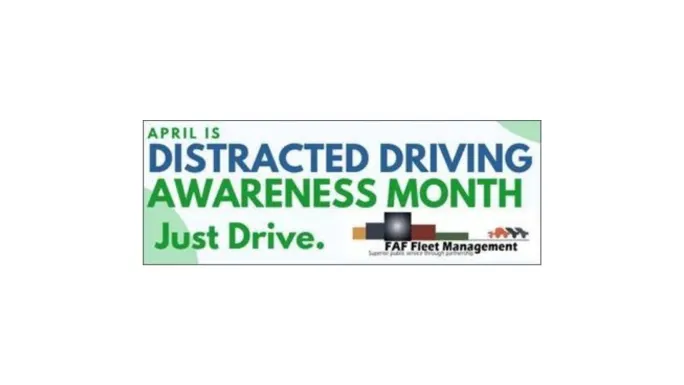
Santa Clara County fleet team members are encouraged to add this photo below their email signature to raise awareness about distracted driving.
Photo: David Worthington
Worthington says he hopes the campaign will spur conversations about the importance of focusing while driving.
"The County of Santa Clara employs approximately 22,000 employees and if each employee discussed the dangers of distracted driving with two friends or family members and they in turn communicate the dangers to two more people and this happened ten times, the message would reach over 45 million people. We don’t expect our campaign to reach 45 million people, but we do expect it to affect the behavior of people unaware of the risks of distracted driving," Worthington says.
The Center for Disease Control suggests several practices to prevent distracted driving, including banning all phone use, requiring workers to pull over in a safe location to look up directions, text, or to make or receive a call, using technology that detects and warns drivers of distracted driving, and other practices.
Staying Focused in Connected Vehicles
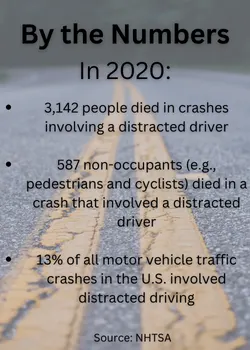
Photo: Canva
As vehicle technology evolves, drivers have begun to rely more on advanced driver-assistance systems (ADAS) to aid them in driving and parking functions. This can lead the driver to focus less when they're behind the wheel. As NSC states, "even the most advanced safety feature cannot replace a safe, focused driver in the car." Further, NSC calls the driver a vehicle's best safety feature.
NSC published a campaign alongside the University of Iowa Public Policy Center on ways to best interact with ADAS, with a website called MyCarDoesWhat.org. It uses videos, graphics, social media, and other resources to educate drivers on the latest safety features for vehicles and proper ways to use them. NSC is not discouraging drivers from using ADAS altogether. Rather, it is encouraging drivers to use the features wisely. The technology works well when paired with focused drivers. An NSC report estimates that existing technologies that comprise ADAS could save up to 10,000 lives per year.
The Cost of Distracted Driving
A 2019 report by the Network of Employers for Traffic Safety reveals that on average, a non-fatal injury crash at work that involves distraction costs an employer a whopping $100,000. In 2019 alone, U.S. traffic crashes cost employers $72.2 billion — up from $47.4 billion in 2013 — in direct crash-related expenses.
Work-related crashes can lead to increased insurance rates. They can also lead to time off the job for drivers and vehicles being put out of service, disrupting operations. But more importantly, distracted driving crashes can be fatal. According to NHTSA, In 2020:
3,142 people died in crashes involving a distracted driver.
587 non-occupants (e.g., pedestrians and cyclists) died in a crash that involved a distracted driver.
Additionally, 13% of all motor vehicle traffic crashes in the United States involved distraction in 2020.
Curbing distracted driving is crucial. As NSC puts it, "when you're behind the wheel, your only job is to drive."
Subscribe to Our Newsletter
More Safety
New Partnership Aims to Expand Public Digital Hazard Alert System Statewide
The Hawai’i Department of Transportation (HDOT) is expanding advance digital hazard alerts for the public statewide.
Read More →
New York City Expands Safety Technologies Across Municipal Fleet
Executive Order 19 moves intelligent speed assistance and pedestrian alerts from pilot programs toward standard fleet equipment, offering other public fleets a look at how safety technology can be tested, measured, and scaled.
Read More →
Sponsored•August 10, 2026
Hidden in Plain Sight: Fleet Compliance Risks
Fleet compliance isn't just about having policies — it's about consistently enforcing them. This practical guide reveals six hidden compliance risks common in public sector and shared fleet operations and outlines proven strategies to improve visibility, accountability, and audit readiness.
Read More →
5 Days Left to Submit Your 2026 Fleet Safety Award Nomination
Know a government fleet, safety, or risk manager who deserves recognition for making fleet operations safer? Nominations are open through Aug. 15.
Read More →
How the First 24 Hours Can Shape a Fleet Crash Response
How a strong accident response process helps government fleets move from the initial report to recovery while building a clearer record for what needs to change next.
Read More →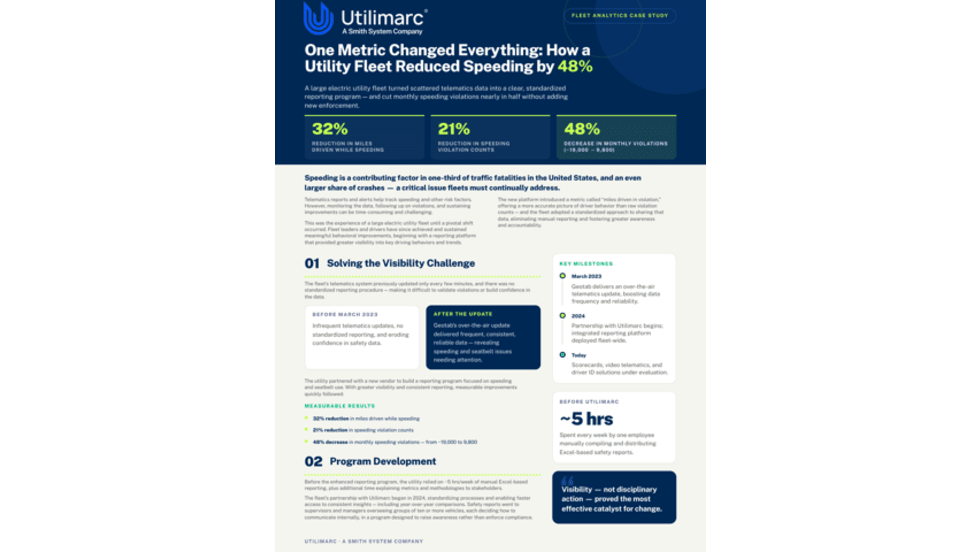
Sponsored•July 17, 2026
How Better Visibility Cut Speeding Violations by 48%
Fleet leaders don't need more data, they need clearer visibility into what the data is saying. This case study explores how one utility replaced speeding-event counts with a single metric — miles driven in violation — to strengthen safety and significantly reduce speeding violations.
Read More →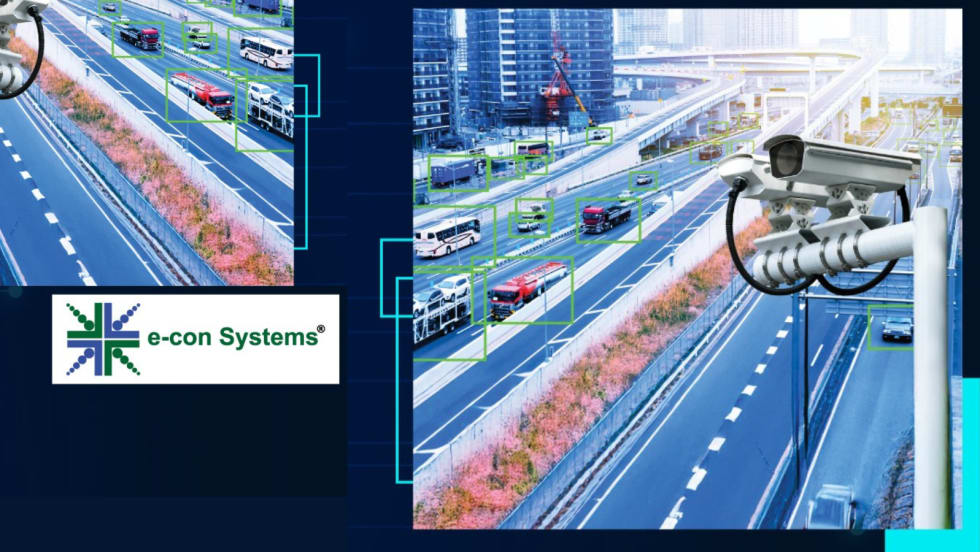
e-con Systems Expands AI Camera Tools for Traffic Monitoring
The systems support license plate recognition, traffic analytics, and video management for transportation agencies.
Read More →
King Township Pilot Links Driver Feedback to Reduced Speeding
How King Township, a best-in-class municipal fleet, reduced speeding by 10.9% and demonstrated a projected 349% ROI by putting safety ownership directly in drivers' hands.
Read More →
Beyond the Fireline: The Critical Role of Public Fleets in Wildfire Response
Behind every wildfire response is a complex network of vehicles, data, and decisions that must work in sync under extreme pressure. Global heating trends require strong fleet coordination and reliable communications to keep crews safe and operations running smoothly.
Read More →
How AI Is Transforming Public Fleet Safety - Part 1
AI-powered safety systems are helping public fleets tackle distracted driving by delivering real-time coaching and measurable behavior change behind the wheel. In part one of our Q&A, Nauto CEO Stefan Heck explains how agencies can improve safety, reduce costs, and navigate implementation challenges with AI-driven technology.
Read More →