





Up Next: Moving Government Fleets Beyond the Vehicle Purchase: EV as a Service
Turning a Bottleneck Into a Blueprint: How Tallahassee Rethought Police Fleet Readiness
For Tallahassee, finally receiving 87 delayed police cruisers created a new problem: how to get them on the road without creating a massive backlog. The solution would change more than the upfit process.
September 7, 2026
Credit:
Government Fleet
4 min to read
- Tallahassee faced a challenge when they received 87 delayed police cruisers and needed a strategy to integrate them into service efficiently.
- The city's approach to this logistical problem led to a transformation in their vehicle upfit process.
- The new strategy not only addressed the immediate backlog but also served as a model for future fleet management improvements.
*Summarized by AI
For the City of Tallahassee, a supply-chain problem became an operational challenge almost overnight.
“The problem was a supply-chain problem that quickly became an operational problem,” Shepard said. “Our hybrid police interceptor orders had been delayed, and we suddenly received three years of orders — 87 cruisers — in one year.”
After three years of supply chain delays, three years’ worth of hybrid police interceptor orders arrived in one year. Jeffery Shepard, director of Fleet Management for the City of Tallahassee, suddenly found himself with the 87 new cruisers he had been waiting for, and none of them were service-ready.
With each vehicle still needing upfitting before being assigned to an officer, their traditional approach to that process was not going to cut it. With that in mind, Tallahassee would shift focus and revamp the entire process.
Breaking the Bottleneck
Traditionally, preparing a vehicle for service was a “one-at-a-time” endeavor that, in this case, would have created a significant backlog.
They shifted their approach: instead of relying on a single vendor to take each cruiser through the process sequentially, they used four vendors and staged different portions of the upfit to occur simultaneously.
This did, however, introduce a new challenge: keeping the process moving in the right order.
“The biggest challenge wasn't necessarily the number of vehicles — it was coordinating everything around them,” Shepard said. “You have 87 vehicles arriving, multiple vendors, equipment deliveries, staging space, technicians, and installation schedules. If one part of that process gets out of sequence, everything behind it can stop.”
The team coordinated a production process that included establishing staging areas, scheduling vendors to work around one another, managing equipment deliveries, and delegating appropriate tasks to their technicians to maximize efficiency.
The result was a workflow that increased upfit capacity and productivity, leading to vehicles being serviceable faster and officers getting on patrol sooner.
Building Reserves
With the upfit challenge conquered, the next hurdle was vehicle availability.
“A police cruiser isn't just another municipal vehicle. It is a critical public-safety asset,” Shepard said. “With about 20 new officers being added each year, we couldn't afford to have new officers without vehicles.”
The Tallahassee Police Department adds about 20 officers a year, and they needed a way to maintain capacity. Rather than getting stuck waiting on incoming shipments, Shepard’s team looked at what was already available to them.
They refurbished retired cruisers, returned them to service, and created a reserve fleet to provide additional capacity while they waited for the purchased vehicles to arrive.
For Shepard, building that flexibility into the operation demonstrated how refurbishment and reserve vehicles could help bridge the gap when vehicle supply and the Police Department's operational needs did not line up.
New vehicles remain an important part of the replacement strategy, but they are no longer the city's only option for maintaining a sufficient number of cruisers.
Beyond 87
While the upfitting update delivered the result Tallahassee needed, Shepard knew that completing that project was only one measure.
Beyond the immediate backlog, Tallahassee considers vehicle availability, downtime, turnaround time, cost, technician productivity, and the speed at which vehicles can be returned to service. Those measures keep the focus on what an operational change accomplishes rather than whether it simply introduces a new process or technology.
“For us, the first measure was simple: Could we get those 87 police cruisers into service? We did that within the same year,” Shepard said. “Ultimately, I measure innovation by whether it improves the Police Department's ability to do its job.”
This experience has also changed how Shepard's team evaluates future improvements. Instead of beginning with a particular technology or product, the team first looks at the operational problem it needs to solve.
That means assessing what is slowing the operation down, what work can be handled internally, where vendors can provide greater value, and which steps can occur simultaneously rather than sequentially.
For Shepard, innovation doesn't have to mean purchasing another piece of equipment or adopting the latest technology. It can be as simple as reorganizing the resources already available to achieve better results.
“Sometimes innovation is taking the resources, people, and partnerships you already have and putting them together in a better way,” Shepard said.
Building Fleet Resilience
For Shepard, Tallahassee’s experience points to a broader challenge facing police fleets: maintaining readiness when vehicle supply and operational demand do not keep pace.
Facing an unprecedented influx of vehicles ultimately forced Shepard to reconsider processes that had worked under more predictable conditions. Rather than waiting for those conditions to return, the team adapted its operation to the reality in front of it, and the department is better for it.
Quick Answers
Tallahassee had to find a way to integrate 87 delayed police cruisers into their fleet without causing a massive backlog in the process.
*Summarized by AI
Subscribe to Our Newsletter
More Operations

Sponsored•October 14, 2026
A buyer's guide to fleet management software in 2027
Buying fleet management software in 2027 means looking beyond features and price. As fleet operations, technology and expectations evolve, this guide explores what today’s fleet professionals should consider when choosing a system that can deliver value now and adapt to what comes next.
Read More →
Hazard Alerts, Fleet Car Sales Rise and a New Shuttle Concept
Fleet car sales doubled, but the bigger picture tells a different story in this week’s roundup.
Read More →
How St. Johns County Turned Fleet Data Into Better Replacement Decisions
St. Johns County, Florida, had fleet data, but turning it into reliable decision guidance was another matter. Instead of starting over with a new fleet management system, the county connected existing tools and built a scoring system that gives managers an objective look at fleet health.
Read More →
Fleet Forward Conference Introduces One-Day Passes for 2026
New one-day registration lets fleet professionals attend Tuesday, Wednesday, or Thursday, with passes available for $249.
Read More →
ENC Unveils its ZAVIR Medium-Duty Shuttle
Two variants of the concept shuttles were revealed: a low-floor configuration and a high-floor configuration.
Read More →
Could Your Next Fleet Technician Start as an Intern?
What if your next technician hasn’t worked in a fleet shop yet? What fleets are doing to free up time.
Read More →
How Phoenix Is Building Its Next Generation of Fleet Technicians
With more than 8,000 vehicles and pieces of equipment to maintain, the City of Phoenix could not afford to wait for fully trained technicians to walk through the door. Instead, they revamped their entire workforce strategy and showed how public fleets can create their own talent pipeline while preparing existing employees for increasingly complex vehicles.
Read More →
What’s Slowing Your Fleet Down?
Could a change in how work gets done help your fleet return vehicles to service sooner?
Read More →
Can Public Fleets Trust the Data Driving Their Decisions?
Public fleets have more data than ever, but inconsistent records and missing information can still undermine maintenance, replacement, and cost decisions.
Read More →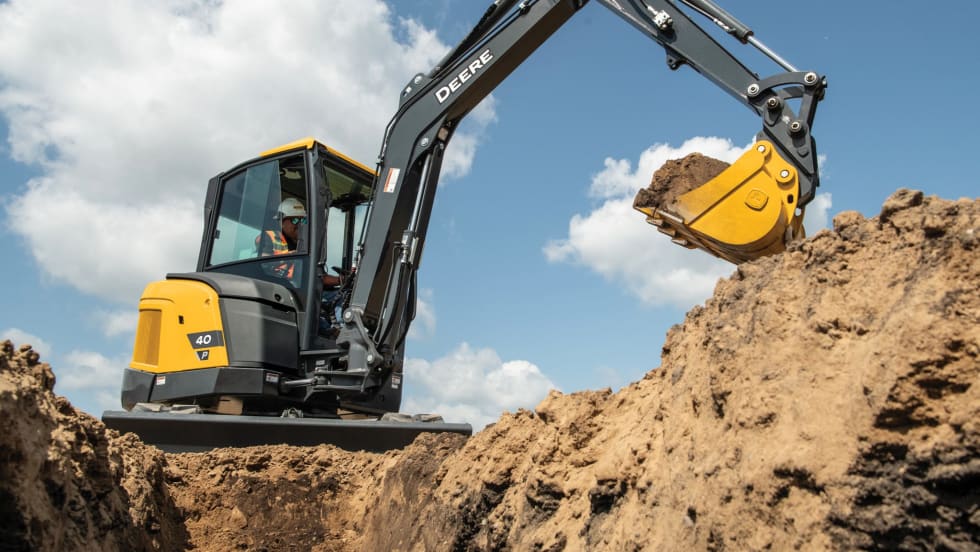
John Deere Introduces 40 P-Tier Compact Excavator
John Deere is adding a compact excavator designed for crews that need to move equipment between jobsites and handle multiple types of work with one machine. The 40 P-Tier weighs less than 10,000 pounds and offers configurable hydraulics, attachment options, and connected fleet-management capabilities.
Read More →