




Moving Government Fleets Beyond the Vehicle Purchase: EV as a Service
As fleets move beyond small EV pilots, Sustainability Partners CEO Adam Cain explains how EVaaS can address the infrastructure and long-term planning required for larger deployments.
August 26, 2026

Credit:
Government Fleet
8 min to read
A few years ago, the idea of creating a complete electric vehicle “package” for your fleet might have felt out of reach. Now, Electric Vehicles as a Service has moved beyond simply providing vehicles and toward supporting the full deployment.
The idea of EVaaS boils down to a growing need for fleets to keep up with new electrification mandates and a shift toward treating electrification as a complete operational system.
Government Fleet sat down with Sustainability Partners CEO Adam Cain to discuss how EVaaS is moving beyond pilot programs and what fleets should consider before beginning a larger deployment.
How EVaaS Fits Government Fleet Operations
Government fleet managers can inherit responsibility for hundreds of vehicles with limited information from the person who previously held the role. Cain said retirements and job changes often leave the next person to reconstruct how the fleet operates while still keeping vehicles available.
Traditional vehicle replacement may begin with replacing a unit that has reached the end of its useful life, while electrification introduces another consideration.
“Now you're not just buying a car, you need to actually think about supplying the fuel,” Cain said.
That means examining how each vehicle is used before selecting an electric replacement. Cain said the fleet must consider how far the vehicle travels each day and whether it can carry the required load. Those factors influence the appropriate battery size and the amount of power needed to support the vehicle.
Cain said one distinction is that the provider’s role continues after the vehicles are delivered. Depending on the agreement, EVaaS includes project funding as well as support during deployment and maintenance.
That continued involvement can become important when a vehicle is involved in an accident or affected by a recall. Cain said the service model is intended to provide operational continuity rather than leaving the fleet to coordinate each issue on its own.
For government agencies, vehicle availability is tied directly to public services. Cain noted that fleet vehicles transport employees to work sites and support departments responsible for maintaining community infrastructure. When those vehicles are unavailable, the work they support can also be delayed.
Cain pointed out how agencies “rely upon these fleets to get their work done. And if the fleets are down, things aren't getting done.”
The Operational Challenges Fleets Consider When Evaluating EVaaS
Resources are one of the first considerations when evaluating EVaaS, Cain said. A fleet must determine whether its facility has enough electrical capacity to support the planned number of vehicles without affecting the building’s other power needs.
“If you're going to start plugging in twenty to fifty vehicles every single day, you may not have enough power to run the building anymore,” Cain said.
Answering that question requires someone to evaluate the site before vehicles arrive. If the available power is insufficient, the project may require a new transformer and coordination with the local utility. Cain said this makes a larger deployment more complicated than purchasing a single EV and connecting it to an existing outlet.
The growing number of electric models presents a different challenge. Fleets now have more vehicle options from a wider range of manufacturers, but the newest platforms may be unfamiliar to the companies responsible for modifying them.
Upfitters have years of experience working with established models and, when a new electric vehicle enters the market, they must determine how to install equipment without interfering with the vehicle’s electrical system or other components. A police vehicle, for example, may need a light bar or a partition before it can enter service.
The fleet must then find a vendor capable of completing that work. It must also manage the procurement process and arrange for the vehicle to move from the dealer to the upfitter before reaching its final department.
“The amount of coordination and effort that takes is just huge,” Cain said.
These responsibilities can place additional pressure on a fleet team that is already managing its existing operation. Under an EVaaS agreement, the provider may assume some of that coordination, although the scope of support depends on the contract.
Comparing EVaaS Usage Fees with Long-Term Vehicle Ownership Costs
Does an EVaaS usage fee offer better long-term value than owning the vehicle outright? Cain said comparing the fee with the purchase price alone can overlook the infrastructure required to operate the EV. He said Sustainability Partners includes those infrastructure costs in its monthly fee because the vehicle and the system needed to operate it are treated as part of the same deployment.
The supporting infrastructure can include trenching and installing conduit before chargers are added. A site may also need new transformers to ensure the building has enough power. Depending on the project, the fee may account for additional power generation or energy storage as well.
Ongoing support is another part of the cost comparison with Cain giving the example of a fleet vehicle involved in a minor collision. Even when the damage can be repaired, the agency still has to find a vendor and make funding available. Someone must then monitor the work to make sure the repair is completed.
Cain said that process can be difficult for government fleet staff who are already responsible for keeping the rest of the operation running. In some cases, the damaged vehicle is moved to a storage lot and remains there until the agency’s next capital cycle. The fleet may then purchase a new vehicle rather than repair the one it already owns.
“The responsible thing would be ‘let's fix it.’ But the problem is their hands are tied on the process it takes to go get that vehicle fixed and all the other responsibilities they have,” Cain said.
Cain argued that leaving a repairable vehicle out of service is not the best use of taxpayer funding. Under an EVaaS agreement, the provider may coordinate the vendor and funding needed for the repair, then follow the work until the vehicle is returned to service.
Whether the monthly fee offers better long-term value depends on how it compares with everything the fleet would otherwise fund and manage through ownership. That calculation includes the initial vehicle cost, the infrastructure required to operate it, and the resources needed to keep it in service.
Who Carries the Risk When an EV Cannot Meet the Fleet’s Needs?
Cain used Sustainability Partners’ model as one example of how an EVaaS contract can divide financial risk. Under its agreements, he said payment is tied to whether the vehicles and supporting infrastructure are available for use. If the system does not perform as required, the agency is not charged for that use.
For fleets evaluating EVaaS, the broader consideration is how the contract defines availability. The agreement should make clear who bears the cost when a vehicle cannot operate and whether the payment changes during that period.
Cain contrasted the usage-based structure with infrastructure financed through a loan or bond. Under those arrangements, scheduled payments generally continue “regardless of whether or not it works, regardless of whether it's maintained.”
Not every type of risk transfers to the provider. The agency still controls who operates the vehicles and how they are used. If a driver damages a vehicle in a collision, Cain said responsibility for that damage remains with the agency.
The provider remains responsible for ensuring that the vehicles perform as specified and that the supporting infrastructure provides the power needed to operate them.
Fleets reviewing an EVaaS agreement should distinguish between downtime caused by the performance of the vehicle or supporting infrastructure and downtime caused by agency operations. That distinction determines which party bears the cost when a vehicle cannot be used.
Keeping Information at the Front of Fleet Decisions
“You need information, a lot of information,” Cain said, noting that such information may be difficult to find when a fleet manager inherits an operation without a complete handoff. He explained that some new managers do not know how far their vehicles travel or how many employees require assigned vehicles because those records were not preserved by their predecessors.
Establishing a broader objective can give the fleet a starting point. If an agency plans to transition 300 vehicles, for example, Cain said it should develop a master plan before beginning with the first unit.
Without that plan, the agency could install electrical infrastructure for one vehicle and then have to redo the work when more EVs are added. Cain said planning for the larger transition can prevent a fleet from repeatedly paying for infrastructure changes as the deployment grows.
Building the plan may require staff interviews and a review of historical logbooks to understand how vehicles have been used. That research can also show whether the fleet has selected the right vehicle type. In some cases, Cain said a sedan may be able to perform work previously assigned to a pickup.
Daily mileage should also inform battery selection. A vehicle traveling about 20 miles per day may not require the longest-range battery or the largest charging system. Matching the vehicle and supporting infrastructure to the actual duty cycle can reduce the cost of the deployment.
Cain said government fleets can be well suited to electrification when vehicles follow predictable daily patterns and return to a central location. That predictability gives the fleet a clearer basis for determining its charging schedule and the amount of infrastructure it will need.
“That comes with planning, engagement and a lot of information,” Cain said. “Not every application is right for everybody, but the government space is, I think, the biggest opportunity for growth in EV as a Service because it just makes sense for that use case.”
Subscribe to Our Newsletter
More Green Fleet
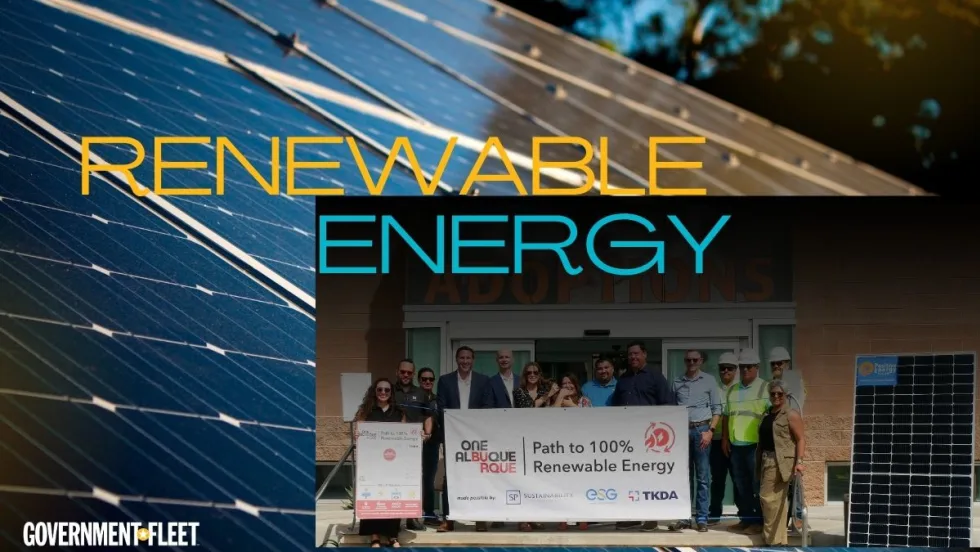
Sustainability Partners, Energy Systems Group Help Albuquerque Close the Gap on its 100% Renewable Energy Goal
The eight-site, 6 MW solar project has advanced the city toward 100% renewable energy for municipal operations.
Read More →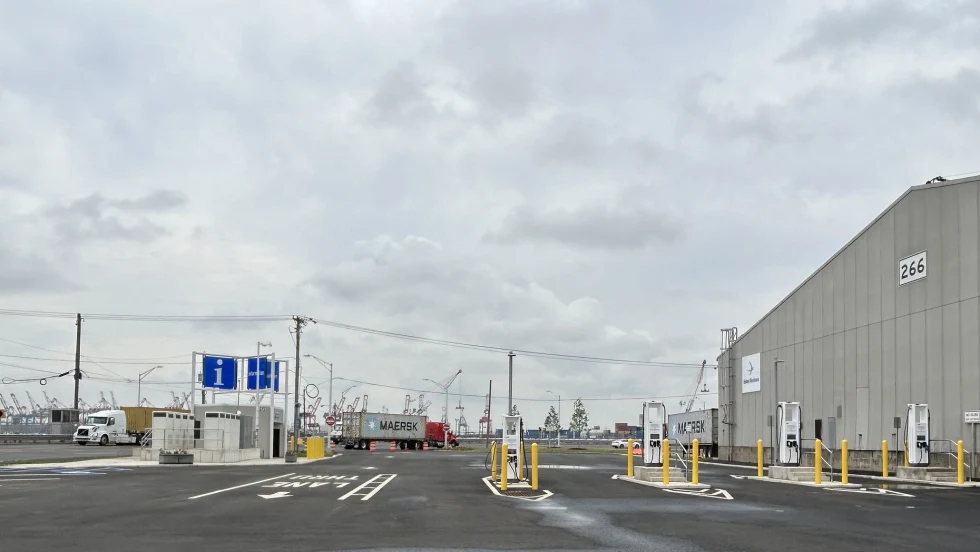
Port Authority and CALSTART Launch $45 Million Electric Truck and Charging Programs
The programs aim to boost sustainable operations across the East Coast's busiest seaport.
Read More →
Moving Government Fleets Beyond the Vehicle Purchase: EV as a Service
A discussion on how EVaaS is moving beyond pilot programs and what fleets should consider before beginning a larger deployment.
Read More →
Peterbilt Expands Sourcewell Partnership with Electric Vehicle Lineup
The agreement aims to provide streamlined procurement of Peterbilt trucks for government, education, nonprofit and tribal organizations across the United States and Canada.
Read More →
EV Adoption & Charging Challenges
Where is your fleet in the journey of vehicle electrification? If you're still looking for answers to fleet electrification you've come to the right place.
Read More →
Hawaii Passes Clean Fuel Policy
Hawaii lawmakers passed clean fuel legislation that could support renewable natural gas production, biogas-powered transportation, and lower-carbon fueling options for public and commercial fleets.
Read More →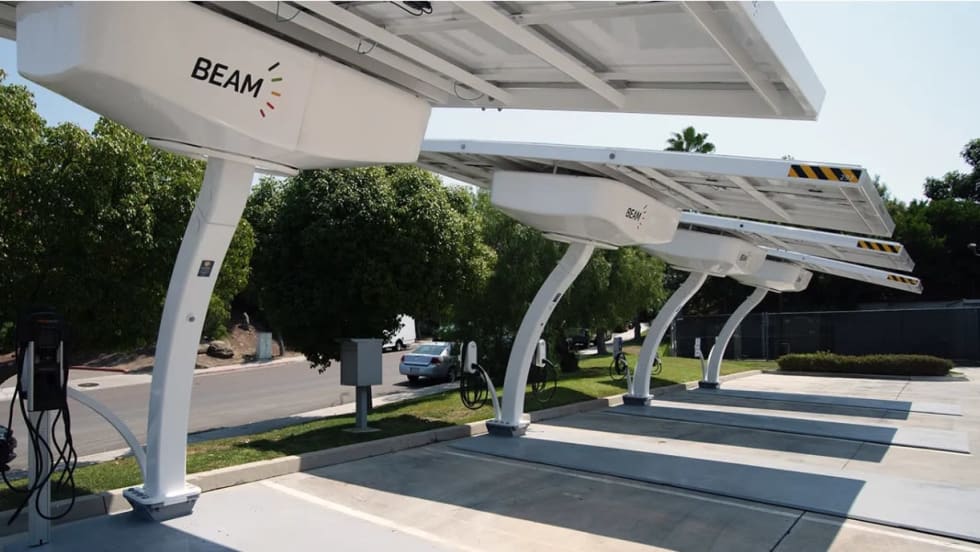
Stanislaus County Deploys Ten Beam Global EV ARC Systems to Support County Fleet Electrification
Stanislaus County deployed 10 off-grid solar-powered EV charging systems and a mobile charging trailer from Beam Global to support its electric fleet operations and emergency response flexibility.
Read More →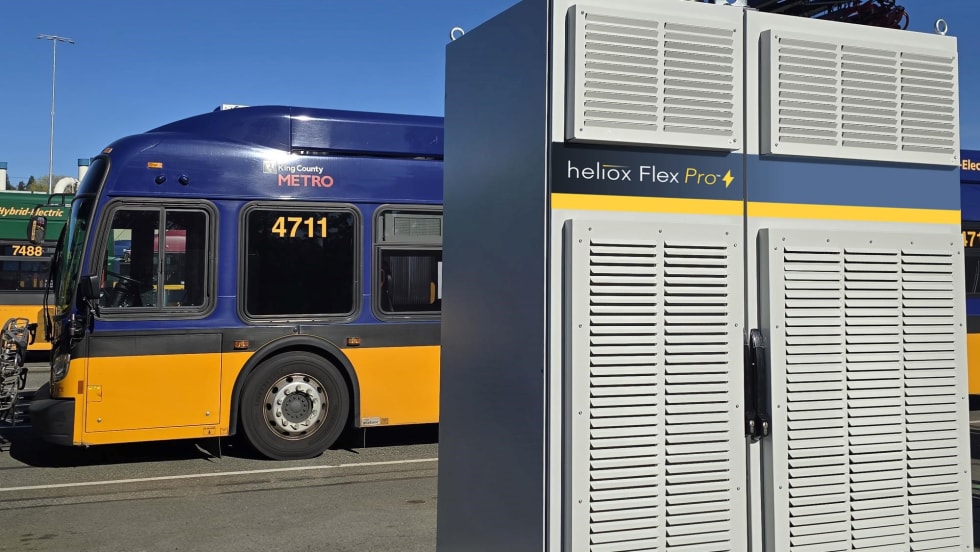
Heliox Pilots 480-kW Bus Charger with King County Metro
King County Metro is piloting Heliox’s new 480-kW Flex Pro charger to support expansion of its battery-electric bus fleet and depot charging infrastructure. The compact charging system supports pantograph and plug-in charging configurations for high-density transit operations.
Read More →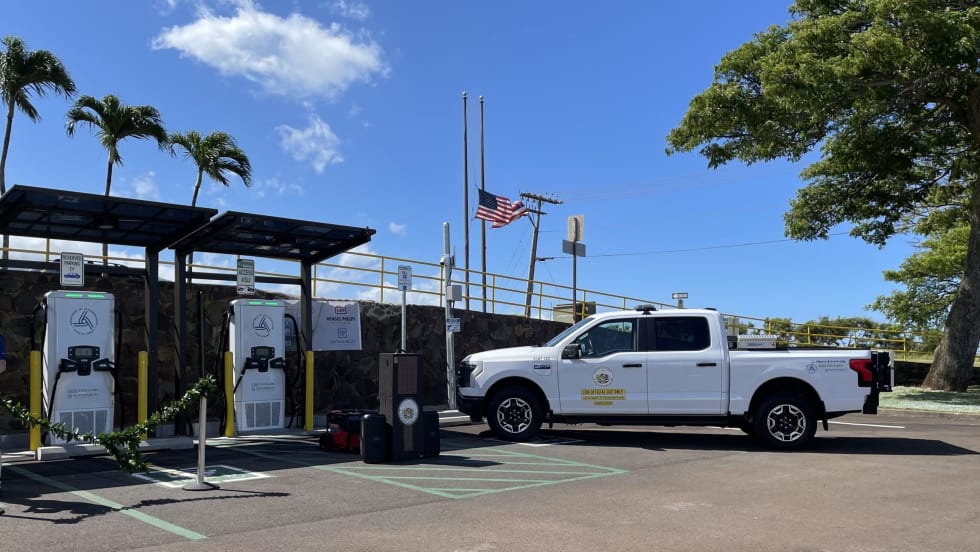
HDOT Commissions New NEVI Fast-Charging Site at Maui Kapalua Airport
HDOT, community leaders and project partners recently participated in a commissioning and blessing ceremony celebrating the opening of the new charging site.
Read More →