Is your agency too small to host its own technician trainings? Here’s a tip: partner up. Interagency collaboration can help you pull together the resources needed for quality training programs.
by Shelley Ernst
January 18, 2016
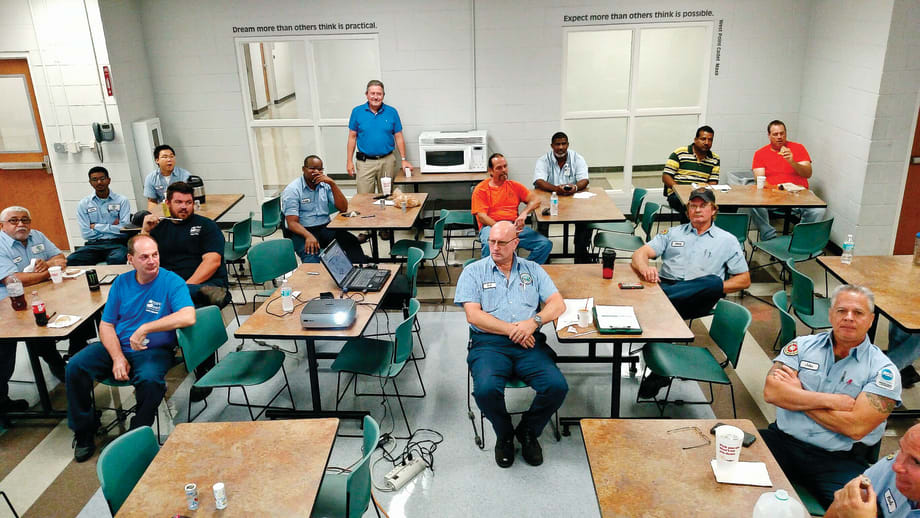
The Florida Association of Governmental Fleet Administrators has organized various training sessions on topics ranging from emergency vehicle training to diesel engine maintenance. Photo courtesy of FLAGFA
9 min to read
The Florida Association of Governmental Fleet Administrators has organized various training sessions on topics ranging from emergency vehicle training to diesel engine maintenance. Photo courtesy of FLAGFA
Is technician training a challenge for your agency? If so, you’re not alone. Many fleets have the need for and desire to provide training, but face difficulties such as cost, lack of access to instructors, or depleting the shop of technicians to meet minimum attendance requirements. Fortunately, the solution to these problems can be summed up in one word: collaboration.
At a Glance
Some ways to collaborate on fleet training include:
Partner with an agency that is committed to training
Create a professional development board
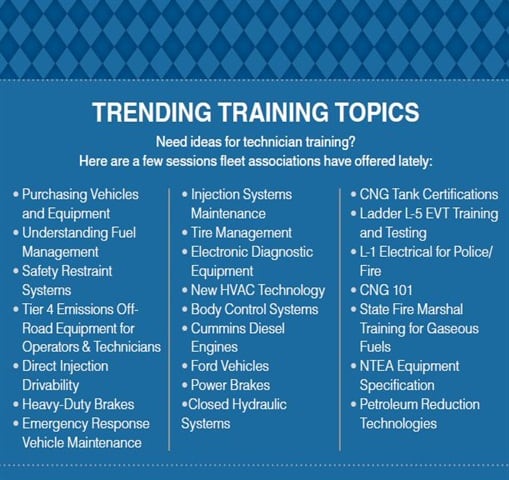
Make sure training topics are pertinent
See if vendors and manufacturers will provide training
Expand participants to keep cost low.
Today, several fleet associations provide training that is open to technicians from multiple fleet agencies throughout a state or region. But you don’t have to be a well-established fleet association to provide this type of inter-agency training. Even small fleet agencies can collaborate with their counterparts in neighboring areas to provide quality training opportunities for their technicians.
Ad Loading...
Members of the Ohio and Northern California branches of the Municipal Equipment Maintenance Association (MEMA), the Southeast Governmental Fleet Management Association (SGFMA), and the Florida Association of Governmental Fleet Administrators (FLAGFA) share the steps they take to provide inter-agency training — so fleets without associations nearby can create their own collaborative training opportunities.
1. Find Your Partners
If you’re a member of a local or regional fleet management association, your technicians may have access to free training provided as part of the membership fee. But if you don’t have access to such a resource, you can find your own partners with whom you can pool resources to provide technician training. Are there other fleets in your state or region that are as committed to technician training as you are? Start with those agencies.
“Be sure to select a partnering organization that has a demonstrated institutional/administrative commitment to the value of such training and partnerships,” recommended Garland Veasey, director, Research Farm Services, Clemson University, and SGFMA president. “Then, strongly consider an interagency memorandum of understanding (MOU) covering the scope of the training partnership.”
2. Identify Topics
Ideas for training topics can come from a wide variety of people.
At SGFMA, board members from different states and all levels of government provide input on training topics. Through discussion with these board members, as well as work colleagues and SGFMA vendors, the group’s professional development chairman is charged with identifying the most relevant topics. Tim Calhoun, fleet director, Palm Beach County Fire Rescue, and FLAGFA president said the Florida association operates a similar model, with four regional representatives who gather feedback on training from members in their regions.
Ad Loading...
Small fleets can follow this model, creating their own boards with members from neighboring agencies who source ideas on training topics from their respective teams.
Veasey said SGFMA also gets topic ideas from two more important sources: technicians and vendors. “We try to balance what techs say they want and need training on, current topics that surface, and topics on which our vendors have information and expertise to share with us.”
Kelly Reagan, chapter chair of MEMA Ohio and fleet administrator at the City of Columbus, agrees that technicians can be an important source to tap for relevant training topics. “The focus can be driven by new technologies staff encounter on the floor; it can also be influenced by new and incoming technicians,” he said.
Sharan Fosbinder, past president of FLAGFA from 1996 to 1998, warns against determining training topics without participant input, suggesting buy-in from both technicians and their supervisors is key. “Gauging interest is very important,” she says. “Be sure to vet the training for value. If the subject is not relevant, supervisors will not allow technicians to attend.”
Keith Leech, chief, Fleet Division and Parking Enterprise, Sacramento County, Calif., and Northern California MEMA (MEMA Norcal) vice chair, agrees, suggesting fleets “seek to obtain and share a syllabus or curriculum outline with potential fleet managers to solicit their feedback and suggestions to ensure the training is on target for meeting their greatest needs. It also helps to survey and confirm training priorities of those partnering in the collaborative training program to make sure you’re on target.”
Ad Loading...
3. Find Trainers
If you think finding qualified trainers will be difficult or cost prohibitive, think again. You may not have to look any further than the vendors and manufacturers with whom you already work.
Calhoun said vendors reach out to FLAGFA to offer classes and their services. SGFMA also relies on vendors for technical training. “We usually work with regional/area company reps who, in turn, put us in contact with their training specialists for a given topic. Our professional development chairman will discuss our needs for the topic, what we would like to have covered, and what the speaker’s availability to teach would be,” he said. “We also work with commercial vendors and review the training material, like handouts or PowerPoints, ahead of time to ensure it is true technical training information and not solely sales based.”
You may not have suppliers reaching out to you, but that doesn’t mean you can’t reach out to them. Ask these partners if they’re willing to provide training — you may be pleasantly surprised at how quickly they jump at the offer. “Maintain good communications with OEMs and offer to coordinate and/or host regional training opportunities,” Leech suggested. “Encourage neighboring agencies to specify OEM training that can be delivered more cost effectively with shared delivery to multiple fleet customers that purchase like equipment.” As Veasey warned, though, it’s important to vet the material so technicians don’t waste their time on what ends up being a sales pitch.
If the vendor path comes up short, Reagan suggested a tried and true method for finding the right resource: word of mouth. “By asking other fleet managers in the industry, we are able to find qualified instructors for central Ohio,” he said. “We also use vendors we may have contracted with in the past to develop technology-specific training for us. This has proven to be quite successful for us in the gaseous fuels arena.”
Fosbinder also advised a little research into the capabilities of the presenter. “Instructors have reputations,” she said. “If the material is good but poorly communicated, technicians won’t attend or retain information.”
Ad Loading...
Veasey agreed: “Having the right presenter for the topic is important for generating interest in future trainings.”
4. Consider Your Costs
In addition to supplying quality instructors, vendors may do so for little or no cost to you and your partner organizations — and they may offer sponsorship opportunities, too. “We rely heavily on our SGFMA vendors, so there is no cost to the members to attend our trainings during the year,” Veasey explained. “We seek sponsorships for lunches, breaks, and snacks. Our vendors have proven very gracious in providing speakers and training materials.”
Veasey says collaboration between agencies is a major benefit when seeking quality training from suppliers. “It would be difficult to near impossible to get vendors to provide low/no cost training that wasn’t strictly sales based if there were not multiple agencies represented.”
Ultimately, cost can be the underlying factor in determining the success of a training session. Fosbinder said cost is often directly correlated to attendance numbers. “FLAGFA tries to sponsor training to eliminate the cost to its members to get maximum attendance,” she said.
If you have to pay for training, interagency collaboration allows you to share the cost with other agencies to reduce the overall cost to train technicians, Leech said. “Sharing the risk of the upfront investment and recovering the costs through shared and reasonable participant registration fees help support ongoing participation and support for future training opportunities,” he said.
Ad Loading...
Calhoun noted that when paying for training, a little extra planning should be done up front. “If sharing the cost, I would make arrangements to iron out the payment first so the instructor is paid promptly,” he suggested. “It’s also wise to establish rules that if registered technicians don’t show up, the association has the authority to charge the member for the training.”
Splitting the costs has worked for Reagan’s fleet. “MEMA will typically partner with the City of Columbus — the association provides the food to feed their bellies, while our fleet budget provides the instructor to feed their minds,” he said.
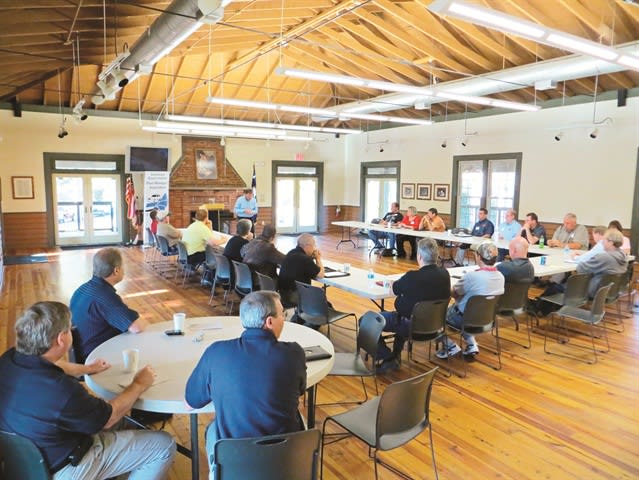
The Southeast Governmental Fleet Management Association has hosted training sessions on topics that include procurement, fuel management, and Tier 4 engines for offroad equipment. Photo courtesy of SGFMA
5. Find a Location
Choosing the right location ultimately goes back to costs. Because many training courses are offered for free, a fleet’s chief expense is travel. “For governmental entities, travel expense and allowing travel can be cost prohibitive in some cases,” Veasey said. “We try, based on the availability of a fee-free training location, to move the trainings around within our region to help them be available in close proximity to as many of our member agencies as possible.”
Leech agreed. “Look for training opportunities that can be hosted in a centralized location with a low-cost or no-cost venue that draws technicians from a reasonable driving distance of 1 hour or less,” he suggested. “This will help overcome travel restriction obstacles that may exist for some government fleets.”
If finding a place to host training seems cost prohibitive, go back to your partners — they may be able to host the training at one of their facilities for free or at a lower cost.
Ad Loading...
6. Time It Right
Scheduling training at a time when technicians will be available to attend is key to a successful training collaboration, and timing can depend on where the fleet is located. “Fleet ebbs and flows with the seasons. It is difficult to pull many technicians off the floor for programmed training during snow season, as a snow storm requires all hands on deck, so summer is ideal for our region,” Reagan explained.
When scheduling training for your state or region, think about when your own shop is busiest — then avoid those times.
It’s also important to schedule training far enough in advance so fleets have time to plan accordingly. “Give adequate lead time in scheduling the training so agencies can plan for technician attendance,” Veasey recommended. “Publicize the dates and locations of the training, so that as many technicians as possible can plan their schedules to attend.”
7. Don’t Forget to Follow Up
You’ve successfully collaborated with fellow fleet agencies to carry out technician training. Now what? Determine how well you did. You and your partners may feel the training was a success, but did everyone else?
Calhoun gathers feedback from multiple sources following a training session. “We follow up with fleet managers who sent technicians. We always ask how the training is, and some courses have a short survey completed at the end of the class,” he explained. “We solicit direct feedback from the attendees, the coordinator, and their supervision as well.”
Ad Loading...
SGFMA uses critique sheets for training sessions that are then used as planning tools for the next training. “We take the suggestions seriously and follow them up with changes as is reasonable,” Veasey said. “We, as SGFMA board members, also talk with the attendees during breaks/lunches to get direct verbal feedback.”
Following up with participants, supervisors, and fleet managers after every training event will reveal where you need to make progress and will help you continue to provide quality technician training.
8. Remember the Why
Providing technicians with training helps them do their jobs better. It can also potentially reduce downtime, save on outsourced repair expenses, improve customer satisfaction, and improve technician retention. But it’s also important to remember what it does for the technicians themselves.
“Employees love to be trained — it means their employer is willing to invest time and money in helping every technician be the very best they can be,” Reagan explained. “Working together to train is far more beneficial than working alone — we can do more with less and help one another.”
Keeping a vehicle longer may ease this year’s budget, but what does it cost the next one? A closer look at fleet decisions can reveal opportunities to reduce spending while protecting essential services.
From industry news and fleet management strategies to conversations with peers, Government Fleet's LinkedIn page offers public-sector fleet professionals another way to stay informed and connected.
Five fleets were honored at RTA Connect 2026 in Chicago for excellence across resource efficiency, intentional culture, risk management, and stakeholder satisfaction.
Buying fleet management software in 2027 means looking beyond features and price. As fleet operations, technology and expectations evolve, this guide explores what today’s fleet professionals should consider when choosing a system that can deliver value now and adapt to what comes next.
St. Johns County, Florida, had fleet data, but turning it into reliable decision guidance was another matter. Instead of starting over with a new fleet management system, the county connected existing tools and built a scoring system that gives managers an objective look at fleet health.