





Miss This? Follow the 4 Principles of Safe Driving
Lytx’s 2025 “Road Safety Report” Provides Insight on Road Risks and Trends
This year’s report notes that collision rates have been rising since 2023. While industry-wide collisions have increased 24%, severity and risky driving behaviors have decreased.
June 30, 2025
The insights for Lytx’s “2025 Road Safety Report” were collected from its global driving database, which consists of over 300 billion miles of processed data from more than 5.5 million drivers traveling across 90+ countries. In 2024, Lytx labeled and analyzed over 209 million new driving events and captured over 106 million driving behaviors with its DriveCam event recorders.
Photo: Government Fleet
4 min to read
Lytx Inc. has released its 2025 Road Safety Report (previously called “State of Data”), which analyzed over 300 billion miles of driving data to reveal critical insights on road safety.
This year’s report notes that collision rates have been rising since 2023. While industry-wide collisions have increased 24%, severity and risky driving behaviors have decreased.
Key Highlights Include:
Collision Rates and Severity
Despite a 24% increase in industry-wide collision rates per vehicle from Q3 2023 through Q4 2024, Lytx’s data shows a significant reduction in the more severe collision levels compared to 2023.
Level 1 (highest severity) collisions decreased 6%, while Level 2 (moderate severity) collisions dropped by 59%, demonstrating improved driver safety through proactive coaching and technology.
Also contributing to the drop in severity is a 4% reduction in overall risky behavior in 2024 among drivers equipped with Lytx technology.
Near Collisions
“Close calls” and near collisions also increased, up 52% when comparing Q4 2024 to Q4 2023, as roads have become increasingly congested.
Risky Driving Behaviors
Following too close, using a handheld device, not wearing a seat belt, and speeding continue to top the list of riskiest driving behaviors. Notable increases and decreases from 2023 to 2024 include:
Speed violation (+9%)
Food or drink (+7%)
No seat belt (-13%)
Handheld device (-9%)
Following Distance
Following distance (1-2 seconds) increased 2% from 2023 to 2024, while following distance (less than 1 second) rose by 19%, highlighting a need for companies to reinforce following distance policies through coaching and communication.
The Impact of Weather
Driving “too fast for conditions” made drivers 4x more likely to be in a Level 1 incident and was the top factor in severe inclement weather collisions.
Fog is the most dangerous weather condition, increasing Level 1 collision likelihood by 2.8x.
Due to unfavorable weather conditions, winter carries double the risk for collisions compared to other seasons.
Fuel Efficiency and Speeding: In 2024, Lytx clients showed an 8.7% reduction in time spent speeding per vehicle, which helped fleets decrease fuel costs.
Sustainability Impact: By driving more efficiently, Lytx clients saved an estimated $22 million in fuel in 2024 and prevented 110 million pounds of CO2 emissions. (These figures are based on the 2024 average $3.76 per gallon of diesel, according to the U.S. Energy Information Administration, and fuel saved through client reduction in unnecessary idling in 2024.)
Customer Impact: In 2024, Lytx fleet customers achieved several milestones, including:
Saved an estimated $1.8 billion on claims costs, including workers' compensation and insurance claims.
Realized an estimated $521 million in savings on vehicle maintenance. (Both figures are based on fuel saved through client reduction in unnecessary idling in 2024.)
Riskiest Days and Times to Drive + Holiday Insights
Tuesdays were the riskiest days to drive in the U.S. in 2024. Sundays are the safest.
Mid-week driving carries the most driving risk, while weekend driving is the safest.
Risks were elevated between 11 a.m. and 3 p.m., peaking at 2 p.m.
New Year’s Eve was 2024’s riskiest day (and holiday) to drive in the U.S.
Christmas Day (2023’s riskiest day and holiday to drive) was a close second.
Overall, there was a 12% increase in collisions on major U.S. holidays compared to the same day of the week across the rest of the year.
Top 10 Risky Driving Behaviors
Following distance (1-2 seconds from vehicle ahead)
Handheld device
No seat belt
Following distance (1 second or less from vehicle ahead)
Incomplete stop
Food or drink
Driver unbelted (roadway)
Failed to stop
Inattentive
Top 5 Riskiest States for Driving
| 2024 Ranking | Change from 2023 Ranking |
| 1.California | 0 |
| 2.Texas | +1 |
| 3.New York | -1 |
| 4.Florida | 0 |
| 5.New Jersey | +1 |
Top 5 Riskiest U.S. Cities/Districts for Driving
| 2024 Ranking | Change from 2023 Ranking |
| 1.New York, NY | 0 |
| 2.Los Angeles, CA | 0 |
| 3.Dallas/Fort Worth, TX | +3 |
| 4.Chicago, IL | -1 |
| 5.Washington, D.C. | +5 |
“The Lytx 2025 Road Safety Report is a powerful reminder that as our roads continue to see increased volumes of traffic, the nature of risk is evolving. What this data makes clear is that better understanding and proactive management of these new patterns of risk is critical. At Together for Safer Roads, we believe insights like these are key to shaping smarter, more responsive safety strategies for fleets, cities, and policymakers alike.” said Peter Goldwasser, Executive Director at Together for Safer Roads, according to a recent press release.
You can find the complete report here.
More Safety
New Partnership Aims to Expand Public Digital Hazard Alert System Statewide
The Hawai’i Department of Transportation (HDOT) is expanding advance digital hazard alerts for the public statewide.
Read More →
New York City Expands Safety Technologies Across Municipal Fleet
Executive Order 19 moves intelligent speed assistance and pedestrian alerts from pilot programs toward standard fleet equipment, offering other public fleets a look at how safety technology can be tested, measured, and scaled.
Read More →
Sponsored•August 10, 2026
Hidden in Plain Sight: Fleet Compliance Risks
Fleet compliance isn't just about having policies — it's about consistently enforcing them. This practical guide reveals six hidden compliance risks common in public sector and shared fleet operations and outlines proven strategies to improve visibility, accountability, and audit readiness.
Read More →
5 Days Left to Submit Your 2026 Fleet Safety Award Nomination
Know a government fleet, safety, or risk manager who deserves recognition for making fleet operations safer? Nominations are open through Aug. 15.
Read More →
How the First 24 Hours Can Shape a Fleet Crash Response
How a strong accident response process helps government fleets move from the initial report to recovery while building a clearer record for what needs to change next.
Read More →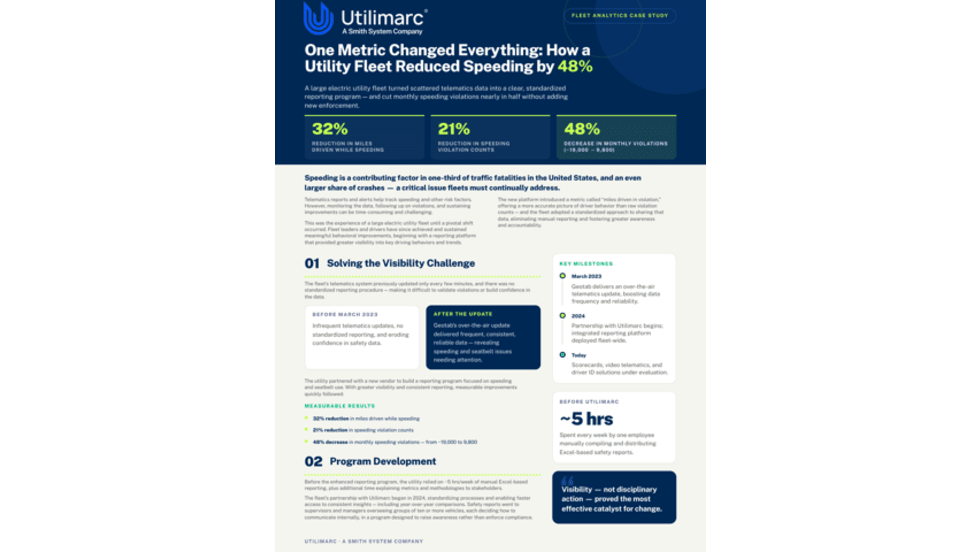
Sponsored•July 17, 2026
How Better Visibility Cut Speeding Violations by 48%
Fleet leaders don't need more data, they need clearer visibility into what the data is saying. This case study explores how one utility replaced speeding-event counts with a single metric — miles driven in violation — to strengthen safety and significantly reduce speeding violations.
Read More →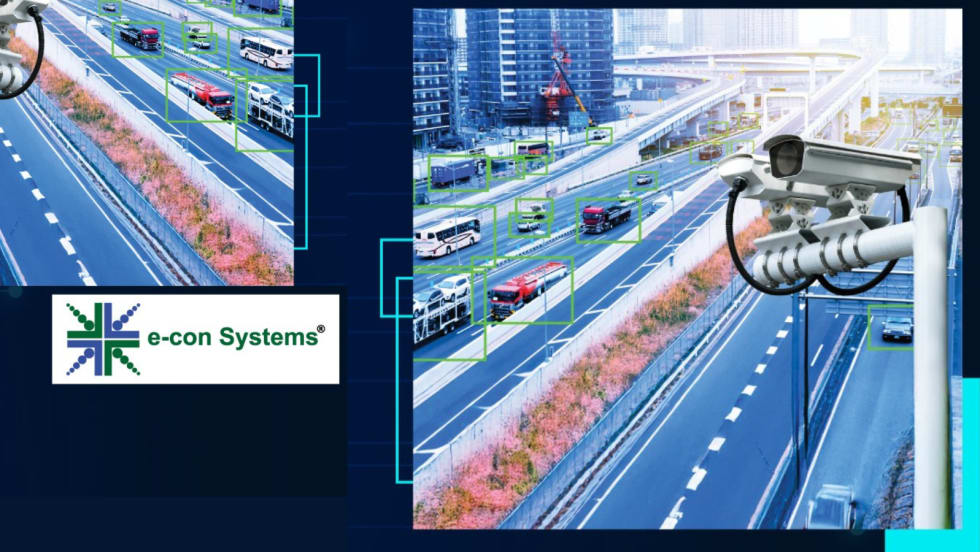
e-con Systems Expands AI Camera Tools for Traffic Monitoring
The systems support license plate recognition, traffic analytics, and video management for transportation agencies.
Read More →
King Township Pilot Links Driver Feedback to Reduced Speeding
How King Township, a best-in-class municipal fleet, reduced speeding by 10.9% and demonstrated a projected 349% ROI by putting safety ownership directly in drivers' hands.
Read More →
Beyond the Fireline: The Critical Role of Public Fleets in Wildfire Response
Behind every wildfire response is a complex network of vehicles, data, and decisions that must work in sync under extreme pressure. Global heating trends require strong fleet coordination and reliable communications to keep crews safe and operations running smoothly.
Read More →
How AI Is Transforming Public Fleet Safety - Part 1
AI-powered safety systems are helping public fleets tackle distracted driving by delivering real-time coaching and measurable behavior change behind the wheel. In part one of our Q&A, Nauto CEO Stefan Heck explains how agencies can improve safety, reduce costs, and navigate implementation challenges with AI-driven technology.
Read More →