





Tired of reading? Give us a listen! Check our Essential Podcasts for Professionals
Challenges Haunting Public Sector Fleets: Facing Fears Head-On
A breakdown of the challenges haunting public sector fleet managers today and some practical solutions to confront these fleet nightmares head-on.
October 22, 2025
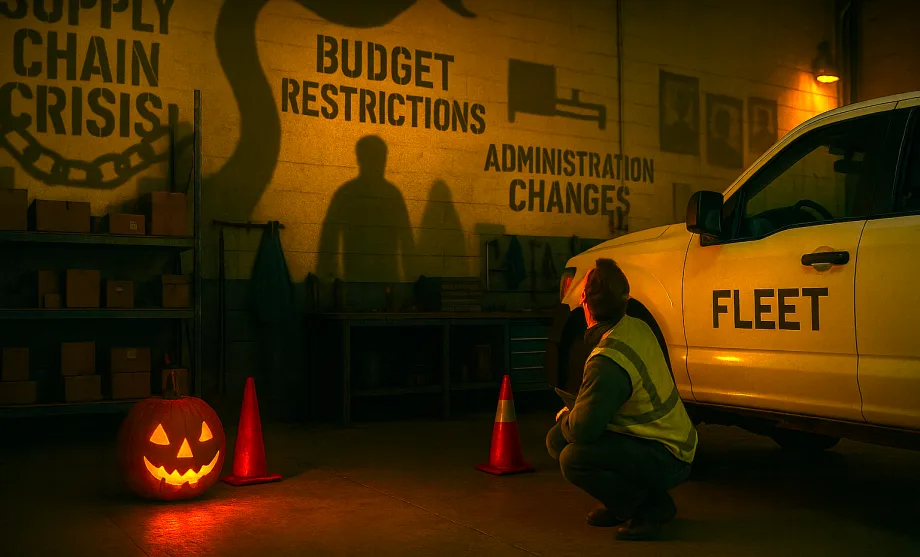
Fleet professionals face numerous real-life challenges that can be genuinely scary and difficult to navigate.
Photo: This is an AI-generated image. Refer to our Terms of Use.
9 min to read
It's Halloween season, and while most are thinking about things that go bump in the night, public sector fleet managers have real horrors to face. Imagine running out of technicians just as an emergency hits or discovering a major safety issue that could haunt your operations.
These are the real-life stories that fleet managers face every day—and we're here to rank them by their scare factor plus give you solutions and examples to help you within your own operation.
1. Technician Shortages and Finding Qualified Employees
The fleet industry relies heavily on skilled technicians to keep operations running smoothly. However, with a significant shortage of qualified candidates, fleet managers are often left scrambling to find and retain talent.
As experienced technicians retire and fewer new workers enter the trade, the challenge intensifies. Here, you’ll find resources and insights on recruiting, training, and retaining the skilled technicians your fleet needs to thrive.
Adapting to New Realities with Essential Management Skills for Fleet Success
Discover essential management skills to overcome modern fleet challenges and achieve operational success.
Recruit, Train, and Retain the Next Generation of Technicians
Technician recruiting and retention continues to be one of the biggest challenges in the fleet industry. Here are 13 tips to staff your shop by a fleet manager with decades of experience.
Rethinking the Formula – How Many Technicians are Needed?
Skilled technician shortages have troubled government fleets, but as technical education improves, public sector managers must rethink staffing formulas to address this dilemma.
The Technician Transformation
Technological advancements that have become available on vehicles have changed the way we look at fleet. It’s also changed the role of technicians and what people in those positions will need to learn to keep up with a rapidly evolving world.
Combating the Qualified Technician Shortage with Strategic Investments and Training
While the qualified technician shortage in the fleet industry is real, and it’s a challenge, that doesn’t mean fleets are powerless.
7 Types of Technician Training and Why They’re Worth It
Fleet managers can mix and match training to create the right plan for their shop.
2. Electrification and Building Out EV Infrastructure
With the push toward sustainable solutions, many fleets are beginning to incorporate electric vehicles into their operations. But adopting EVs means more than just purchasing new vehicles—it requires a robust infrastructure to support charging, as well as training for both drivers and maintenance teams. Transitioning to electric is a complex process, but the resources below will help guide you on everything from initial planning to long-term sustainability.
Keith Kerman Shares Lessons from Fleet Electrification
Keith Kerman shares what has worked for his fleet as they continue their electrification and sustainability efforts.
Optimizing Your EV Infrastructure for Efficient and Resilient Fleet Operations
Careful and detailed planning is critical to ensure your EV infrastructure installation is safe, reliable, and future proof.
How a County Fleet Began its Electrification Journey on a Shoestring Budget
As an early adopter, Cobb County was able to save thousands of dollars in its initial transition to EVs, as well as on its EV infrastructure installation. See how Fleet Services Director Al Curtis did it, and how you can bring stakeholders onboard with adopting EVs today.
A Tale of Two Cities: The EV Infrastructure Switch
Two experienced fleet managers share their insights and experiences in implementing green fleet initiatives in their respective cities, highlighting the challenges and opportunities they faced along the way.
Flavor of the Decade – The Current State of Play
A look at how the current state of play regarding electric vehicles has changed and how that landscape supports and/or underscores f

Challenges, such as hiring qualified techs, may be ongoing, so how do you deal with those issues when you have a fleet to run?
Photo: This is an AI-generated image. Refer to our Terms of Use.
uture proliferation of EVs and particularly BEVs in the marketplace today.
3. Adopting Telematics and Data Overload
Telematics technology promises to provide valuable insights into fleet operations, but with it comes a flood of data that can be overwhelming to manage. From tracking vehicle performance to monitoring driver behavior, fleet managers now need to sift through the data to make informed decisions.
Facing data overload or want to maximize the value of your telematics system? These articles offer strategies to help you streamline data management and leverage insights for operational success.
Telematics Brings Benefits to Fleets That Don’t ‘Plug it in and Walk Away’
Two government fleets are using telematics in areas such as predictive maintenance, but fleets should make sure to use the data so they get the most return on investment.
The Digitization of City & Local Government
A new era of management has begun to transition governments into a more digitized operating system. However, these changes go beyond simply telematics and encompass the day-to-day operations of what a fleet team does.
Telematics: Pulling Out all the Stops
Telematics systems are a powerful fleet management tool that improves efficiency, extends the life of fleet vehicles, and curbs unauthorized and abusive behavior by drivers.
Fine-Tuning Telematics: Four Case Studies of Effective Use
Telematics systems can seem overwhelming, but when put to good use, they can lead to more efficient operations, and cost savings. Four fleet managers shared their success stories at the 2022 Government Fleet Expo & Conference.
4. Planning Out Your Fleet's Budget
Effective budgeting is the backbone of any successful fleet operation, but it’s not without challenges. From fluctuating fuel prices to unexpected maintenance expenses, fleet managers have to anticipate a variety of costs that can impact financial stability. Explore the articles below for strategies to help you build a resilient, adaptable budget that supports both your immediate needs and long-term goals.
Taking a Forward-Thinking Approach with Your Fleet Budget
How the supply chain crisis has forced public sector fleet managers to look much further ahead when making financial decisions.
Consider Ways to Cut Back on Fleet Size Knowing What to Do with Old Vehicles
Oftentimes, being the best steward of the taxpayer dollar means finding ways to cut back where possible. The city of Greenville, South Carolina, is one of the fastest growing in the country. Despite this, the fleet manager was able to find ways to shrink his fleet.
6 Inflation-Fighting Fuel Management Strategies
If fuel management wasn’t already a priority, inflation and subsequent steep fuel prices have pushed it to the top of the list. The latest technology aids in the ongoing effort — and even helps “fuel management” for electric vehicles.
Managing Today's Fleet Budgets: Be Proactive, Not Reactive
In the final installment of a four-part series, Fort Wayne, Indiana, Fleet Manager Larry Campbell shares how he uses data to drive his budgetary decisions.

Buyer beware: vehicles age. The question is, does your fleet have a plan in place when it's time for new parts or a replacement?
Photo: This is an AI-generated image. Refer to our Terms of Use.
5. Dealing with Old Vehicles, Replacements
Aging vehicles can pose a serious challenge for fleets, impacting everything from maintenance costs to safety and reliability. Deciding whether to keep, sell, or repurpose older vehicles requires careful consideration of each asset's lifecycle and potential ROI. Below, you’ll find resources to help you assess the best course of action for your fleet’s aging vehicles, ensuring you get the most value while maintaining a safe and efficient operation.
How to Prepare Your Data for a Lifecycle Analysis
Effective lifecycle cost analysis can determine how long assets can remain in the fleet before the cost of ownership and operation are no longer cost-effective.
Advocating for Vehicle Replacements: Asking for What You Need
Go after the data, know your fleet operations, and be tenacious in advocating for sufficient vehicle fleet replacement funds.
How to Manage Aging Fleet Vehicles
With the ongoing supply chain crisis, fleet managers may be tempted to hold on to vehicles longer. But one fleet manager says, ‘not so fast.’
New Vehicles for the Same Old Budget…or Less
With aging vehicle fleets taking their toll, many local government agencies are learning that working with a professional fleet management company provides them with flexibility and control over their assets.
6. Being a New Fleet Manager and Managing a Team
Becoming a fleet manager comes with a steep learning curve, especially when it involves leading a team. New managers need to quickly understand fleet operations, build rapport with team members, and handle day-to-day responsibilities. The resources below offer straightforward tips to help new fleet managers gain confidence, develop their leadership skills, and manage their teams effectively.
Navigating the Challenges of Fleet Management: Insights from Industry Leaders
A compilation of insights from seasoned experts to shed light on the intricacies and strategies employed by fleet managers in various regions of Florida.
Fleet Management Evolution and Workforce Challenges
How the role of fleet manager has changed, what municipalities should do when bringing on new fleet hires, and how those in the fleet industry can stay better connected.
10 Do's and Don'ts of Fleet Management for Operational Success
Effective fleet management is essential for ensuring operational efficiency, reducing costs, and enhancing the safety and reliability of your fleet.
What Every New Fleet Manager Needs to Know
New to the job and have a lot of questions? Four fleet managers weigh in with advice for those who are new to the gig.
7. Staying On Top of All Things Maintenance
Keeping up with fleet maintenance is essential to avoid costly breakdowns and ensure safety, but it can be challenging to manage. From scheduling routine services to handling unexpected repairs, staying organized is key. The articles below provide practical guidance on streamlining your maintenance processes and staying on top of essential tasks to keep your fleet in optimal condition.
How to Implement a Fleet Preventive Maintenance Program
Incorporating a regular preventive maintenance program is essential for fleet management today. Be proactive in scheduling vehicle service before a breakdown occurs and keep good records to avoid negligent entrustment issues.
Maintenance Checklists Can Decrease Asset Downtime
Using customizable maintenance checklists can help fleets better track what type of maintenance is needed for which asset and when, including preventive, seasonal, and asset-specific maintenance.
Efficient Fleet Maintenance Means Few Communication Breakdowns
With fleet maintenance, projects can pop up at any time. However, communication is key when it comes to staying on top of what needs to be done and keeping the operation running smoothly.
Small Fixes for Future-Proofing Fleets
Sometimes it’s the little things. When it comes to fleet operations, specifically regarding the work technicians are performing, staying on top of day-to-day fleet needs is key. Ensuring small changes in the fleet shop can benefit vehicle liability down the road.
Was there anything we missed that you feel deserves to be included in this list? Drop a comment or send us an email HERE.
Additional Scares Your Fleet May Be Facing:
Navigating Crisis with Efficiency
From logistics to adaptability — how effective fleet management mitigates risks and ensures resilience in challenging times.
Asset Sharing Post-COVID
Social distancing restrictions may have eased, but another threat looms larger... Three years later, social distancing no longer dominates fleet decisions, but does that mean asset sharing is back to normal?
Supply Issues and Regulatory Mandates
With mandates on the horizon that could phase out gas vehicles in government fleets, OEMs are working toward aggressive goals in the EV arena.
Editor's Note: This article was originally published in October 2024 and reviewed for continued relevancy in October 2025.
Subscribe to Our Newsletter
More Operations

Is Keeping Older Fleet Vehicles Really Saving Money?
Is keeping vehicles longer saving money, and what happens when a diagnostic test points to the wrong fix?
Read More →
How Smart Fleet Strategy Can Help Local Government Agencies Do More with Less
Keeping a vehicle longer may ease this year’s budget, but what does it cost the next one? A closer look at fleet decisions can reveal opportunities to reduce spending while protecting essential services.
Read More →
Connect with Government Fleet on LinkedIn
From industry news and fleet management strategies to conversations with peers, Government Fleet's LinkedIn page offers public-sector fleet professionals another way to stay informed and connected.
Read More →
Town of Queen Creek Named Most Successful Fleet Award Winner of Inaugural RTA Fleet Success Awards
Five fleets were honored at RTA Connect 2026 in Chicago for excellence across resource efficiency, intentional culture, risk management, and stakeholder satisfaction.
Read More →
Sponsored•October 14, 2026
A buyer's guide to fleet management software in 2027
Buying fleet management software in 2027 means looking beyond features and price. As fleet operations, technology and expectations evolve, this guide explores what today’s fleet professionals should consider when choosing a system that can deliver value now and adapt to what comes next.
Read More →
Hazard Alerts, Fleet Car Sales Rise and a New Shuttle Concept
Fleet car sales doubled, but the bigger picture tells a different story in this week’s roundup.
Read More →
How St. Johns County Turned Fleet Data Into Better Replacement Decisions
St. Johns County, Florida, had fleet data, but turning it into reliable decision guidance was another matter. Instead of starting over with a new fleet management system, the county connected existing tools and built a scoring system that gives managers an objective look at fleet health.
Read More →
Fleet Forward Conference Introduces One-Day Passes for 2026
New one-day registration lets fleet professionals attend Tuesday, Wednesday, or Thursday, with passes available for $249.
Read More →
ENC Unveils its ZAVIR Medium-Duty Shuttle
Two variants of the concept shuttles were revealed: a low-floor configuration and a high-floor configuration.
Read More →
Could Your Next Fleet Technician Start as an Intern?
What if your next technician hasn’t worked in a fleet shop yet? What fleets are doing to free up time.
Read More →