




When the Roadblocks Hit, Where is Your Inspiration?
It can be easy to get caught up in the busy day-to-day of fleet, but when the problems pile up, that's when it's time to find the motivation to keep going.
April 29, 2026

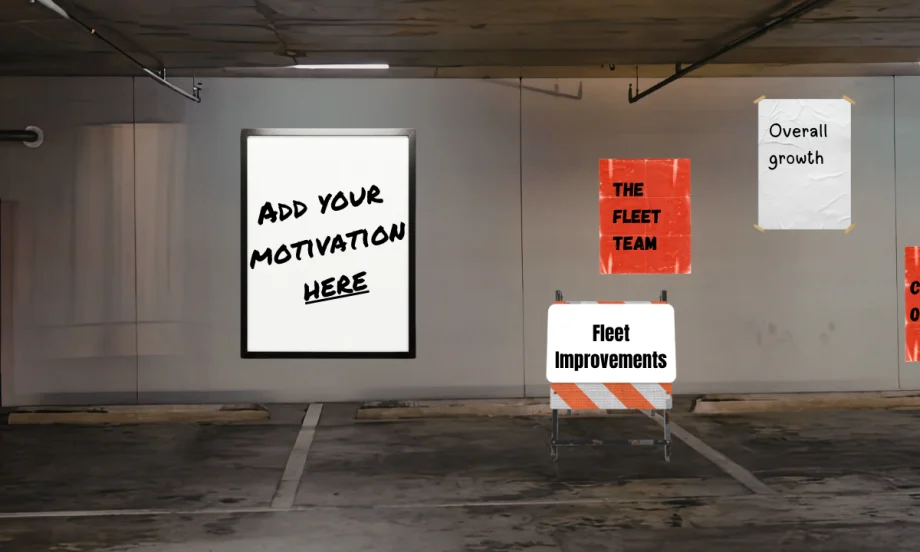
It can be easy to get caught up in the busy day-to-day of fleet, but when the problems pile up, that's when it's time to find the motivation to keep going.
Credit:
Government Fleet
3 min to read
Most of you probably remember those popular motivation posters that would show a sunrise over some mountains and the word "Passion" in bold or an eagle soaring through the sky with the word "Dare to Soar," always accompanied by more text giving a brief deep dive into each word of wisdom to carry you through the day.
While doubtfully quite as popular as they once were, the idea that something so singular could give you that extra boost made me think we all need something to keep us moving forward.
Of course, it would be ideal if one look at a kitten hanging from a tree and the words "Hang In There" provided enough morale to figure out the budget issues, find that new tech, and be named the number one Leading Fleet. However, we collectively understand that for most individuals, the solution to those problems requires much more.
But this is where I repeat my "however" in the sense of, however, everyone does need some kind of motivating force to keep working toward the goals in mind, and not losing hope entirely. I have spoken with so many passionate individuals who truly love what they and I coud imagine that when the challenges of fleet come barreling in through the shop doors, it can be disheartening when your efforts aren't seeing an outcome.
So, going back to the poster of a kitten hanging from a tree branch, what motives you? And I would avoid saying the “well, it’s my job and it needs to get done,” but why are you in the role you’re in? There have been plenty of fleet managers who have been in this industry for 20- 30-plus years and I know for a fact that they had plenty of days where they probably felt like throwing a wrench at a vehicle that was leaking money.
Nevertheless, there was something that kept them going. Maybe that’s for a future article; what I’m hoping is to encourage you, the reader, to find what motivates you, and if you have that big motivation, maybe it’s several metaphorical encouraging posters on your mindswall, to solidify that.
I could list a multitude of motivations, but that’s on you. What I suggest is that, once you do figure out your core motivation (or motivations), make sure it’s something you don’t forget. That might mean writing it on a sticky note, or maybe it’s time you framed it and hung it on a wall.
If there’s one thing fleet has taught me, it’s that there are plenty of roadbumps fleets have to get past. Nothing can beat a solid team, a laid-out budget,a full checklist, and a thought-out preventive maintenance plan, but having something that inspires you to keep moving forward can only help.
Subscribe to Our Newsletter
More Blog Posts

Understanding the Road to Improved Operations
Every fleet has goals, but meaningful progress depends on knowing where the operation stands and continuing forward when the path changes.
Read More →
Navigating the Crossroads of Data and New Technologies
As data volumes increase and emerging technologies advance, where do government fleets stand? Takeaways from Samasara Go Beyond Public Sector 2026.
Read More →
Is it Time for Change or Consistency?
Consistency can be good, but there comes a time when you have to step back and ask whether what you’re doing is the best approach.
Read More →
Blink and You’ll Miss It: Fleet Reflections from 2025
A note as we leave behind 2025 and plan for new ventures heading into 2026.
Read More →
It’s Far Worse Than a Technician Shortage…
A letter to government fleet leaders on the technician gap and how to rebuild the pipeline that keeps public services running.
Read More →
Public Perception of Your Fleet Changes
How fleet transitions shape public perception and how a well-managed rollout can influence your fleet's narrative.
Read More →
The Balancing Act: Stability vs. Shifting Leadership Priorities
With the revolving door of government leadership bringing new priorities fleets are expected to pivot, even if those pivots undermine long-term planning.
Read More →
How Technology is Driving Upgrades in the City of Columbus Fleet Operations
How the city of Columbus fleet has embraced change as a strategic driver, using technology to revolutionize how the fleet fuels, tracks, and measures performance across a 260-square-mile service area.
Read More →
At the End of the Day, Be Good to Yourself
When the stresses of your work life become too much, don't forget to prioritize yourself and find balance in each day.
Read More →
Leadership in the Wings
Tomorrow’s fleet leaders may not follow yesterday’s paths. Some are stepping in from outside the usual pipelines, with different experiences, but the same drive to lead.
Read More →