





Keep Reading: Turning Results Into Recognition: Government Fleet Awards
Is it Time for Change or Consistency?
Consistency can be good, but there comes a time when you have to step back and ask whether what you’re doing is the best approach.
January 13, 2026
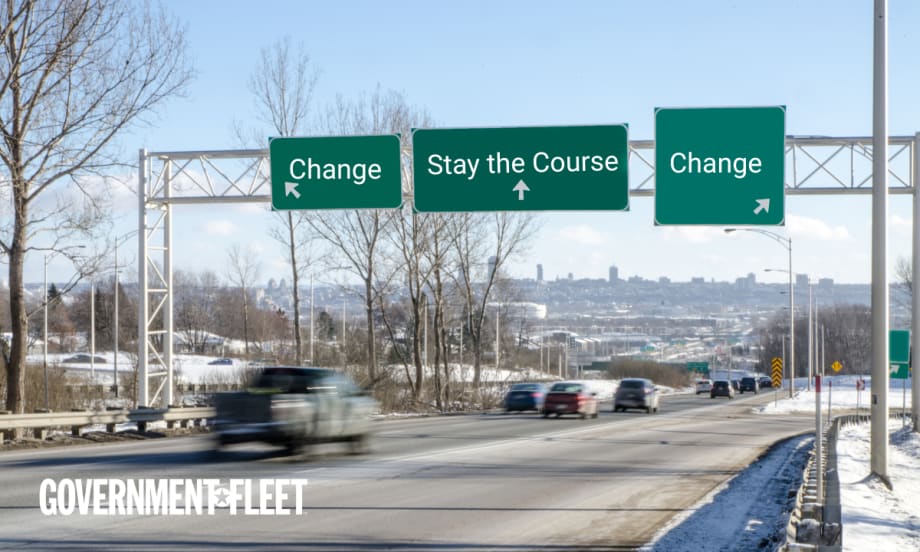
Consistency can be good, but there comes a time when you have to step back and ask whether what you’re doing is the best approach.
Photo: Government Fleet
3 min to read
"If it ain't broke, don't fix it."
It's something most of us have heard a lot, especially when it comes to keeping something running smoothly. It's the proven method that has stood the test of time and enabled people and operations to maintain that daily cadence. It's the thing you can point to when questioned about longevity.
"No risk, no reward."
Ah, the motto that feels like the phone wallpaper of entrepreneurs and someone ready to ascend K-2. This phrase promises something new, an intimidating journey, and the potential for great success. It begs the question: Are you brave enough to step out and do something different?
I’m probably being a little superfluous with the descriptions, but the point is this: there comes a time when you have to decide whether it’s time for change or time to stay consistent.
So here’s what I’m going to do. I’m going to break down what I’ve heard from you—the fleets—with the goal to identify where consistency is still serving you, and where a change in approach is starting to make more sense.
Time for Change?
It's easy to say it's time for change when something isn't working. But what do you do when the operation is running smoothly? Fleets that have that consistency seem to take that leap of faith into a new venture when there is pressure from administration or when they see an opportunity that could benefit the operation in the long run.
And when that happens, the best fleets aren’t changing for the sake of changing. They’re changing with intent. They’re looking at the next problem before it becomes a problem, whether that’s technician staffing,replacement cycles, or simply the expectations that keep rising year over year. The move is not always comfortable, but it’s calculated.
You can see that with our Leading Fleets. They understand when it's time to move the dial and they know how to start forming a plan when the time comes.
Time for Consistency?
Knowing the timing for consistency might not seem particularly challenging, but finding a cadence that delivers results can be difficult for an operation, especially in an industry with frequent external changes.
But how do you start that consistency and keep it?
From what I’ve heard, it comes down to getting the basics repeatable before you try to make them impressive. Consistency starts with a small set of standards that don’t move around.
Then it becomes about protecting the cadence. The fleets that stay consistent tend to do a few things well: they set a schedule and defend it, they track a handful of metrics that actually influence behavior, and they build processes that can survive turnover.
And there’s a mindset piece, too. Consistency is not “we’ve always done it this way.” It’s “we’ve proven this works, and we’re going to keep it working.” That means you don’t abandon what’s solid just because a new priority arises. You pressure-test it. You adjust around it. And if you do change something, you do so intentionally, with enough time and training for it to stick.
Subscribe to Our Newsletter
More Blog Posts
Understanding the Road to Improved Operations
Every fleet has goals, but meaningful progress depends on knowing where the operation stands and continuing forward when the path changes.
Read More →
Navigating the Crossroads of Data and New Technologies
As data volumes increase and emerging technologies advance, where do government fleets stand? Takeaways from Samasara Go Beyond Public Sector 2026.
Read More →
When the Roadblocks Hit, Where is Your Inspiration?
It can be easy to get caught up in the busy day-to-day of fleet, but when the problems pile up, that's when it's time to find the motivation to keep going.
Read More →
Blink and You’ll Miss It: Fleet Reflections from 2025
A note as we leave behind 2025 and plan for new ventures heading into 2026.
Read More →
It’s Far Worse Than a Technician Shortage…
A letter to government fleet leaders on the technician gap and how to rebuild the pipeline that keeps public services running.
Read More →
Public Perception of Your Fleet Changes
How fleet transitions shape public perception and how a well-managed rollout can influence your fleet's narrative.
Read More →
The Balancing Act: Stability vs. Shifting Leadership Priorities
With the revolving door of government leadership bringing new priorities fleets are expected to pivot, even if those pivots undermine long-term planning.
Read More →
How Technology is Driving Upgrades in the City of Columbus Fleet Operations
How the city of Columbus fleet has embraced change as a strategic driver, using technology to revolutionize how the fleet fuels, tracks, and measures performance across a 260-square-mile service area.
Read More →
At the End of the Day, Be Good to Yourself
When the stresses of your work life become too much, don't forget to prioritize yourself and find balance in each day.
Read More →
Leadership in the Wings
Tomorrow’s fleet leaders may not follow yesterday’s paths. Some are stepping in from outside the usual pipelines, with different experiences, but the same drive to lead.
Read More →