




About the Author: Kelly Reagan is Fleet Administrator for the City of Columbus Division of Fleet Management. The Division manages all aspects related to acquisition, disposition including but not limited to fueling operations, vehicle maintenance, and sustainability initiatives across the city’s municipal fleet.
How Technology is Driving Upgrades in the City of Columbus Fleet Operations
How the city of Columbus fleet has embraced change as a strategic driver, using technology to revolutionize how the fleet fuels, tracks, and measures performance across a 260-square-mile service area.
by Kelly Reagan, City of Columbus Fleet Management
September 5, 2025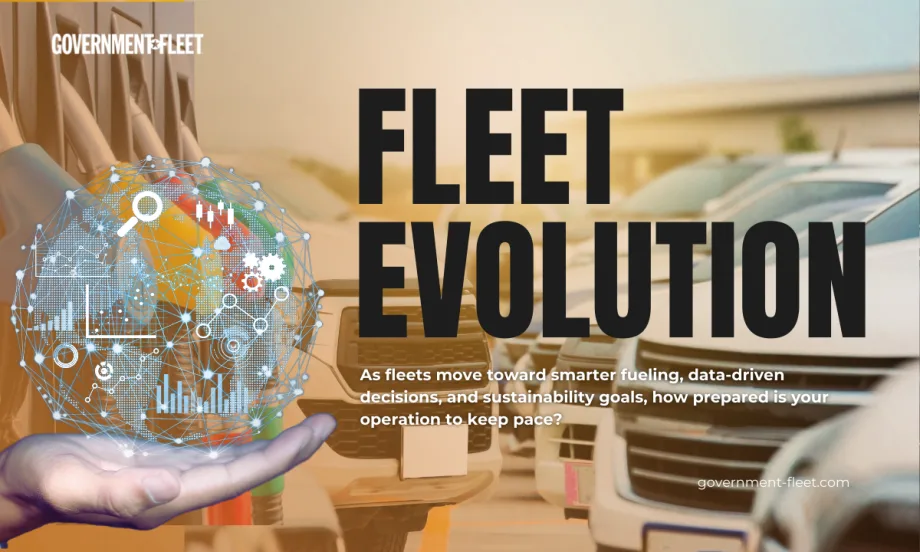
By adopting tools like tank monitoring, automated fuel access, and emissions tracking, fleets can cut waste, improve accuracy, and deliver measurable results.
Photo: Government Fleet
4 min to read
For many fleet managers, 'change' can feel like a six-letter swear word. In reality, change should be viewed as progress — an opportunity to modernize operations, streamline workflows, and deliver better service to the agencies we support.
In the city of Columbus Division of Fleet Management, we’ve embraced change as a strategic driver, using technology to revolutionize how we fuel, track, and measure performance across our 260-square-mile service area.
Our latest initiatives — from remote fuel monitoring, to a digital key-fob fueling system, to a greenhouse gas (GHG) emissions dashboard — represent a transformation in how we operate, how we manage data, and how we deliver results.
Remote Fuel Tank Monitoring: Eliminating Guesswork, Reducing Risk
The Division of Fleet manages and maintains nearly 130 fuel tanks, including 35 fueling sites (petroleum and CNG) across the city and hundreds of generators at city facilities.
For decades, each end-user agency monitored and ordered its own fuel — often relying on manual calculations and rough estimates. This system was inefficient, inconsistent, and frequently led to last-minute emergencies, over-ordering, or fuel shortages.
To solve this, Columbus implemented “citywide remote tank monitoring” with satellite connectivity. This new system allows Fleet to take full responsibility for monitoring all fuel levels within the city, anticipating needs based on consumption history, and scheduling timely deliveries.
The result?
No more weekend emergencies or running out of fuel in critical moments.
No more training non-fleet staff on manual “stick-the-tank” measurements.
No more administrative hours lost to juggling surplus fuel between sites.
Fleet personnel have been fully trained to install, program, and manage monitoring devices across all sites, ensuring uninterrupted service for every agency. This upgrade transformed a decades-old pain point into a seamless, data-driven process.
From Two-Card Fueling to Digital Key Fobs: Streamlining and Securing Access
The city’s previous two-card fueling system — one card per vehicle and one per employee, for over 5,500 employees and 6,500 vehicles/equipment — had been in place for decades and plagued by inefficiencies.
Each fueling transaction required manual mileage entry by the driver, often leading to inaccurate data in the fleet management information System (FMIS). Lost or malfunctioning cards meant producing 12–20 replacement cards per week. Incorrect fuel types were occasionally dispensed in the wrong vehicles, resulting in costly repairs.
This antiquated system was recently replaced with a single, vehicle‑assigned digital key fob. Each fob is:
Permanently assigned to a specific vehicle.
Programmed to allow only the correct fuel type.
Synced to GPS data to automatically record accurate odometer readings into the FMIS.
By eliminating over 5,500 employee and 4,200 vehicles cards from circulation, fleet has improved data accuracy, reduced administrative burden, and eliminated misfueling incidents.
GHG Dashboard: Tracking the Impact of Every Gallon
Since 2010, Columbus Fleet has reported annually on greenhouse gas (GHG) reductions as part of its Green Fleet Action Plan (GFAP). Our sustainability-focused fueling strategies — including biodiesel, propane, ethanol, EVs, and CNG — have collectively reduced the city’s carbon footprint by more than 34% in the last 10 years.
However, until recently, leadership could not easily determine which fuel type generated the greatest greenhouse gas reduction per mile driven.
To address this, fleet partnered with our benchmarking firm to develop a GHG Dashboard that isolates the emission reductions attributable to each specific fuel type and mile driven. The dashboard, refined over the past year, now allows us to:
Accurately measure GHG reductions by fuel type and mile driven.
Inform leadership of the most cost-effective strategies.
Demonstrate fleet’s direct contribution to citywide sustainability goals by fuel type.
Data-Driven Solutions for Maximum Efficiency
Fleet management in Columbus is now defined by proactive decision-making, real-time data, and technology-enabled processes.
By adopting advanced solutions — from tank monitoring to automated fuel access to emissions tracking — we’ve reduced waste, improved accuracy and provided reliable, measurable results to our leadership and 32 end‑user agencies.
These upgrades are more than operational improvements — they’re a cultural shift. We’ve moved from reactive problem‑solving to proactive system management, aligning with our mission to deliver safe, efficient, and sustainable transportation solutions for the City of Columbus.
Subscribe to Our Newsletter
More Blog Posts
Understanding the Road to Improved Operations
Every fleet has goals, but meaningful progress depends on knowing where the operation stands and continuing forward when the path changes.
Read More →
Navigating the Crossroads of Data and New Technologies
As data volumes increase and emerging technologies advance, where do government fleets stand? Takeaways from Samasara Go Beyond Public Sector 2026.
Read More →
When the Roadblocks Hit, Where is Your Inspiration?
It can be easy to get caught up in the busy day-to-day of fleet, but when the problems pile up, that's when it's time to find the motivation to keep going.
Read More →
Is it Time for Change or Consistency?
Consistency can be good, but there comes a time when you have to step back and ask whether what you’re doing is the best approach.
Read More →
Blink and You’ll Miss It: Fleet Reflections from 2025
A note as we leave behind 2025 and plan for new ventures heading into 2026.
Read More →
It’s Far Worse Than a Technician Shortage…
A letter to government fleet leaders on the technician gap and how to rebuild the pipeline that keeps public services running.
Read More →
Public Perception of Your Fleet Changes
How fleet transitions shape public perception and how a well-managed rollout can influence your fleet's narrative.
Read More →
The Balancing Act: Stability vs. Shifting Leadership Priorities
With the revolving door of government leadership bringing new priorities fleets are expected to pivot, even if those pivots undermine long-term planning.
Read More →
At the End of the Day, Be Good to Yourself
When the stresses of your work life become too much, don't forget to prioritize yourself and find balance in each day.
Read More →
Leadership in the Wings
Tomorrow’s fleet leaders may not follow yesterday’s paths. Some are stepping in from outside the usual pipelines, with different experiences, but the same drive to lead.
Read More →