





Read More: Aging Vehicles Bring Increased Focus on Budgets, Technology
What Do Fleet Tools Look Like in 2025?
Six tools — from the time-tested to the recently developed — modern-day fleet managers rank high on their must-have lists
February 24, 2025
Six tools — from the time-tested to the recently developed — modern-day fleet managers rank high on their must-have lists
Photo: This utilizes an AI-generated image. Refer to our Terms of Use.
7 min to read
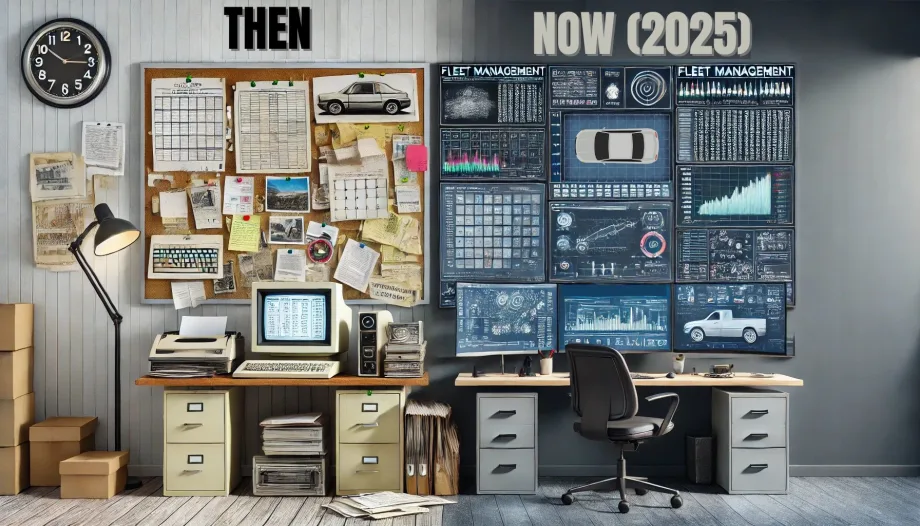
Think back to the turn of the millennium. What tools were you using to manage your fleet in the year 2000? (That is, if you were even in the fleet industry at that time.)
Now snap back to today. With a quarter of the century behind us, are fleet managers using the same tools they did 25 years ago? Are they using better versions of those tools? How about new tools?
The answer to all is, “yes.”
Telematics to Monitor and Analyze Data
Telematics — devices and software systems that use GPS and onboard diagnostics to monitor and analyze vehicle data — was big news in the early 2000s. In many ways, telematics technology revolutionized fleet management, giving fleet leaders access to vehicle data and reporting mechanisms that help them better manage maintenance, fuel, safety, routing, dispatching, and more.
Today, the technology is used widely to optimize and streamline fleet operations, lower costs, curtail emissions, and reduce crashes. It is also used to track assets both powered and non-powered and large and small, from toolboxes to cranes and hydraulic lifts.
Beth Casillas, CAFM, Fleet Manager for the city of Buckeye, Arizona, leverages telematics as a tool to enhance driver safety and protect the City from legal action.
“We have come to rely upon our GPS system. We have created a driver scorecard, which allows us to see areas that potentially put the City at risk for liability,” she explained. “By making these changes we have been able to bring awareness to operators about risks and have seen improvements with our driving habits, which lower the probability of having accidents and reduces the risk to the City.”
Next in Line: Video Telematics
Video telematics — commonly referred to as dashcams — was the next iteration of telematics, helping fleet managers root out unsafe drivers, coach them, understand the circumstances of crashes, and protect their company from false claims and nuclear verdicts.
Matthew Case, CEM, is the Fleet Division Manager for Manatee County Government, which uses dashcams on public safety vehicles. “They protect two things: One is our people and equipment, and the other is protection from a legal standpoint,” he said. “It has really helped us.”
Continued Developments with OEM Telematics
One of the latest telematics developments is OEM telematics: Vehicles that come off the line with telematics devices already embedded. Purchasers of those vehicles get access to a platform that allows them to see where their vehicles and equipment are located as well as track and report on the data they collect.
Case leverages OEM telematics for the fleet’s heavy equipment and Ford and GM vehicles.
“Caterpillar and John Deere have amazing systems,” he said. “We have landfill face equipment including landfill dozers and compactors. Those constant telematics updates are really important because I need to see by the minute if a machine is down what the problem is. And then the OEMs send their people out to look at it. That is very important for high-profile, high-priority machines.”
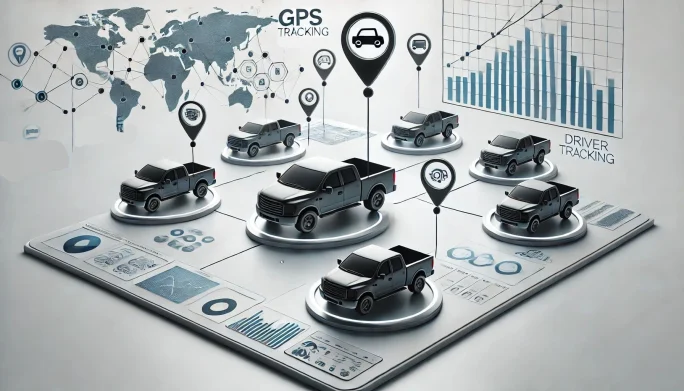
Telematics has evolved from basic GPS tracking to a comprehensive fleet intelligence tool, enabling real-time operational insights and proactive management strategies.
Photo: This utilizes an AI-generated image. Refer to our Terms of Use.
Fleet Management Information System (FMIS)
Fleet management information systems (FMIS) are another tool frequently used by today’s fleets. Long-time fleet professionals will remember the days of tracking data with pencil and paper or Excel spreadsheets. Fleet management information systems replace manual data tracking with digital data collection and storage.
“The fleet management information system is the key business tool for capturing, storing, and analyzing objective, quantitative data on all fleet management activities,” said Tony Yankovich, Director of Fleet Consulting for RTA: The Fleet Success Company. “The FMIS allows an organization to centralize fleet related data, automate processes, and provide data-driven insights that improve-decision making.”
An FMIS can aid fleets with asset management, maintenance and repair management, and parts management. They can also be used to track technician and driver requirements, crash management, shared-use vehicle and equipment pools, and more. These days, an FMIS can also integrate with other systems, including telematics, fuel management, HR, payroll, and accounting.
“The FMIS eliminates data silos and improves data accuracy and data consistency,” Yankovich continued. “Every fleet would benefit from a fleet management information system, regardless of the number of vehicles, size of the organization, or whether they perform maintenance and repair tasks in-house or utilize commercial vendors for these services.”
One of the tools Manatee County leverages is a fuel management system, which captures meter data Case uses to track preventive maintenance and utilization. Each week, data from the fuel management system automatically uploads into the County’s FMIS. The County also uses the FMIS to track all maintenance activities, like costs, forecasted maintenance, and scheduled maintenance.
“We capture all data in our fleet management information system,” Case said. “It really is the lifeblood of a modern, efficient fleet.”
An FMIS does more than house data; it allows fleet managers to generate reports that help them make data-based decisions that improve operations.
“During the process of changing our FMIS system, we revamped our Patrol PM program from miles to hours. We had started documenting engine hours and saw that should be the driving factor, not mileage, because based upon this data, our units weren’t being maintained properly,” Casillas said. “This review of Patrol units helped us to realize that our PM program was not meeting the needs of some of the newer technology as well, which led to the entire PM Program being rebuilt.”
Learning the language of the people you're trying to influence can help to beef up your storytelling skills.
Photo: This utilizes an AI-generated image. Refer to our Terms of Use.
Driving Change in Fleet with Storytelling
While you might not think of storytelling as a tool, it can be incredibly useful for influencing leadership and driving change for your fleet — think asking for funding or advocating for new technology.
Case recommends learning the language of the people you're trying to influence to beef up your storytelling skills. One way to do so is enrolling in continuing education courses like finance and other basic business topics.
“You have to leave the shop talk and field talk behind to tell a good story,” Case said. “I've taken accounting classes just to learn more about how to talk to CFOs. They don't care that you've been in this business a long time. You have to be able to tell a story in a way they can understand it to sell yourself and your ideas.”
An FMIS can also be a very helpful storytelling tool by providing data support your argument.
“At some point in time, the leaders in an organization are going to want to know the costs of owning and operating their fleet, the performance of the maintenance and repair organization, and other data related to vehicle and equipment management,” Yankovich said. “The data captured and stored in your FMIS will provide the information to provide this type of information.”
People: The First Stop for Knowledge
Before fleet technology, before the internet, before software, there were people. To this day, their knowledge still stands as one of the best fleet tools around.
“In addition to making sure fleet managers are highly proficient in the use and application of any FMIS, they need to engage with their peers more frequently,” Yankovich said. “The human capital that is available to share experiences, expertise, and knowledge is an untapped resource that will provide ongoing value.”
Casillas experienced what a powerful resource people can be when her team was asked to establish a new off-site location with pool vehicles. She considered using technology to manage them, but for the number of vehicles involved, it was too expensive. So she turned to the IT Department and they built a reservation system with Microsoft Power Apps, which gave them all the functionality they needed to manage the vehicles during phase one.
“We have worked together to get this app out to staff and now we have plans to expand the app and increase the functionality for our internal staff in the future,” Casillas said. “Don’t forget to collaborate with your internal departments. May times they may be able to solve the task at hand.”
Case makes it a priority to learn from his peers by talking to fellow Floridian fleet managers three times a week.
“We're always bouncing ideas off each other,” he said.
Case also emphasized the importance of attending national conferences to speak with people who manage fleets of different types and sizes.
“When I’m networking at a national conference and hear a great idea, I’ll tell the person, ‘I’m stealing that idea and taking it back to Manatee.’ Then I’ll bring it back and mold it to our fleet.”
Subscribe to Our Newsletter
More Operations

Is Keeping Older Fleet Vehicles Really Saving Money?
Is keeping vehicles longer saving money, and what happens when a diagnostic test points to the wrong fix?
Read More →
How Smart Fleet Strategy Can Help Local Government Agencies Do More with Less
Keeping a vehicle longer may ease this year’s budget, but what does it cost the next one? A closer look at fleet decisions can reveal opportunities to reduce spending while protecting essential services.
Read More →
Connect with Government Fleet on LinkedIn
From industry news and fleet management strategies to conversations with peers, Government Fleet's LinkedIn page offers public-sector fleet professionals another way to stay informed and connected.
Read More →
Town of Queen Creek Named Most Successful Fleet Award Winner of Inaugural RTA Fleet Success Awards
Five fleets were honored at RTA Connect 2026 in Chicago for excellence across resource efficiency, intentional culture, risk management, and stakeholder satisfaction.
Read More →
Sponsored•October 14, 2026
A buyer's guide to fleet management software in 2027
Buying fleet management software in 2027 means looking beyond features and price. As fleet operations, technology and expectations evolve, this guide explores what today’s fleet professionals should consider when choosing a system that can deliver value now and adapt to what comes next.
Read More →
Hazard Alerts, Fleet Car Sales Rise and a New Shuttle Concept
Fleet car sales doubled, but the bigger picture tells a different story in this week’s roundup.
Read More →
How St. Johns County Turned Fleet Data Into Better Replacement Decisions
St. Johns County, Florida, had fleet data, but turning it into reliable decision guidance was another matter. Instead of starting over with a new fleet management system, the county connected existing tools and built a scoring system that gives managers an objective look at fleet health.
Read More →
Fleet Forward Conference Introduces One-Day Passes for 2026
New one-day registration lets fleet professionals attend Tuesday, Wednesday, or Thursday, with passes available for $249.
Read More →
ENC Unveils its ZAVIR Medium-Duty Shuttle
Two variants of the concept shuttles were revealed: a low-floor configuration and a high-floor configuration.
Read More →
Could Your Next Fleet Technician Start as an Intern?
What if your next technician hasn’t worked in a fleet shop yet? What fleets are doing to free up time.
Read More →