




How Dakota County Built a More Structured Fleet Operation
Kevin Schlangen shares how Dakota County’s fleet moved from reactive repairs and limited oversight to a more structured approach built around planning, training, and long-term cost control.
July 27, 2026

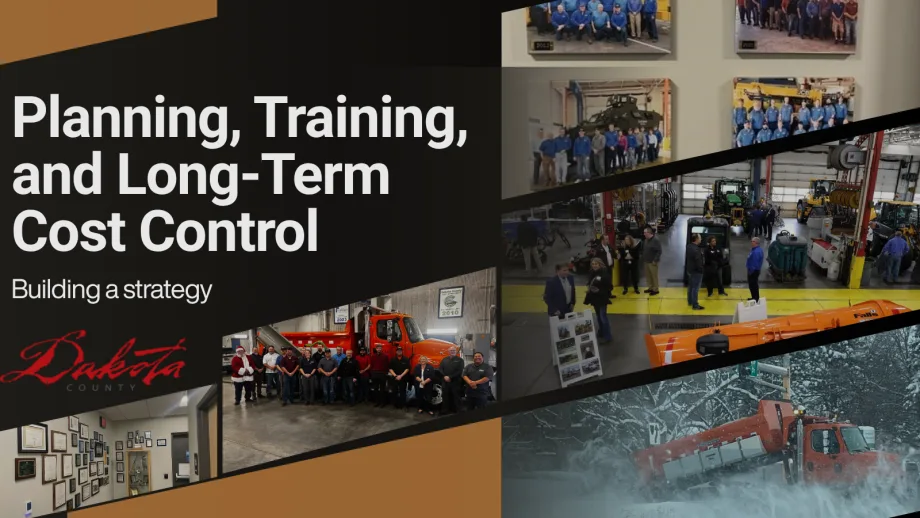
Dakota County’s fleet moved moved from reactive repairs and limited oversight to a more structured approach built around planning, training, and long-term cost control.
Credit:
Dakota County
10 min to read
When Kevin Schlangen, CPFP, CAFM, CEM, first walked into Dakota County’s fleet shop in 1990, he was not sure he would last a year
Schlangen, who was hired as fleet manager after working as a service manager for a heavy equipment distributor, said he accepted the job before seeing the facility. What he found was a shop that needed more than minor improvement.
"It was pretty horrible," Schlangen said. "I mean, the shop was disgusting."
The problems went beyond appearances. Schlangen said there was little tracking, limited paper documentation, equipment that was not properly registered, and no formal preventive maintenance program. The work, he said, was reactive.
"Everything was [this]: you ran around and put out fires all day long, that is all you did," he said.
Vehicles and equipment also showed signs of neglect. Schlangen recalled walking around the fleet and seeing broken springs, tires with cords showing, and other safety concerns. At that point, he said he questioned whether he wanted to stay unless the county was willing to support meaningful change.
"I told him that I was seriously considering quitting," Schlangen said, referring to county engineer Dave Everds, who hired him and became an important mentor. "I said, if we're not gonna get some kind of support to change this, then I don't see the point in being here."
Everds’ response? "Well, don't do that."
From there, Schlangen said Everds supported the changes he believed were needed and allowed the fleet operation to begin working within its existing budget to address the most immediate problems.
That support became the starting point for what Schlangen described as a more than 30-year transition. The first several years required investment. Schlangen said he told county leadership the changes would cost money at first, but that the fleet would eventually reduce its maintenance spending.
"We spent a little extra. By year three, we were down spending less money than the year that I started to maintain the fleet," he said.
Building Support Over Time
Dakota County’s fleet operation did not transform all at once. Schlangen said the early years involved improving conditions, addressing neglected infrastructure, and proving that fleet investment could produce measurable results.
The county eventually built its current site in 2002. Schlangen said the campus has grown over time and now includes about 230,000 square feet. Additional expansion is planned, including heated space, cold storage, office space, automatic vehicle wash, and other improvements.
That growth followed years of working out of older facilities that Schlangen described as difficult and outdated.
"There wasn't any climate control in the old buildings and there were rodents all over the place...everything you can imagine when you're in a horrible situation, that's what our shops were like," he said.
The larger change came when Dakota County consolidated fleet responsibilities that had been spread across multiple departments. Schlangen said the county merged two unions, non-union staff, 16 department budgets, and separate capital programs into one fleet operation.
The transition met resistance from departments that were being asked to relinquish control of their individual budgets, Schlangen said.
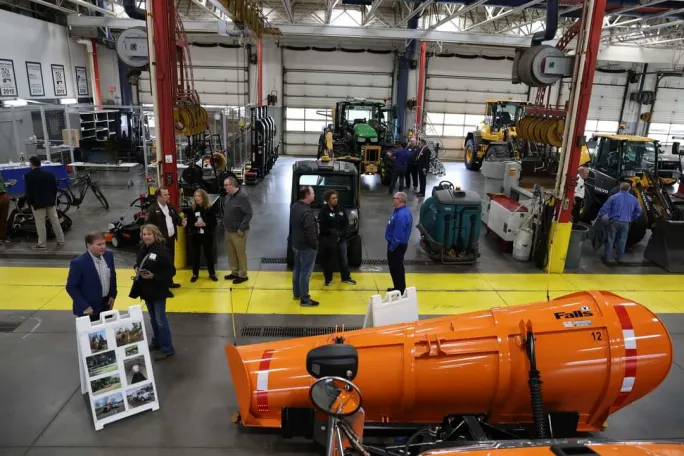
Dakota County’s fleet transformation began with a push for change, but Schlangen said it took a team to carry that work forward.
Credit:
Dakota County
The consolidation also created an opportunity. Before fleet had its own budget, Schlangen said training and education were limited because fleet was part of a public works department where money was directed elsewhere. Once fleet had its own budget, those resources became available.
"Then I had money for training and education that they previously said wasn’t available because it was being used elsewhere." he said.
Before that, Schlangen said he had paid for some of his own professional development, including certification-related costs, because the county did not have a training and education budget for fleet.
Applying Best Practices Across the County
Schlangen said the operation reached a point where it had improved what it controlled, but could not move much further until the county brought the rest of its fleet activity under one group.
Once that happened, fleet had more user groups, more resources, and a better ability to make decisions across the county. That also allowed the department to share resources differently and remove equipment that was not being used enough to justify keeping it.
"We literally got rid of millions of dollars worth of equipment that were underutilized," he said.
The results, according to Schlangen, were tied to lower long-term costs. He pointed to the sheriff’s office fleet as one example, saying that after fleet took over those assets, the county was spending about 32% less, adjusted for inflation, than it had been 15 years earlier.
"Everything we've done is connected with safety and saving them money," he said.
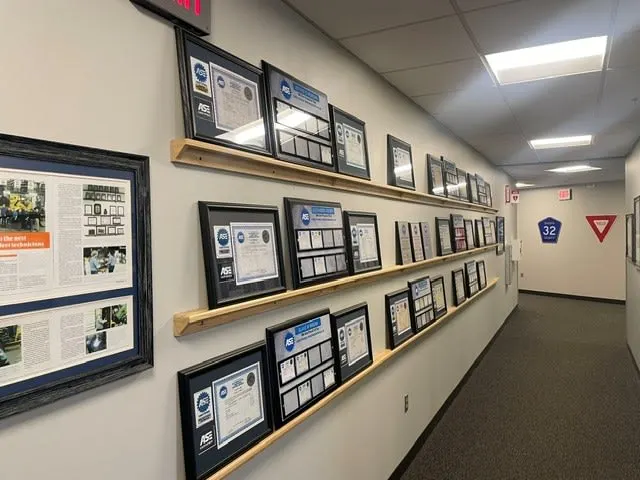
Awards, certifications, and fleet recognition line the wall at Dakota County’s fleet facility, reflecting the department’s focus on training, efficiency, and continuous improvement.
Credit:
Dakota County
That same approach shaped the county’s work around emissions and fuel use. Schlangen said the county board supports greenhouse gas reductions, but not at any cost. Projects still need to show a return on investment.
From 2005 to now, Schlangen said Dakota County has reduced greenhouse gas emissions by more than 40% without treating battery-electric vehicles as the only path forward. The county has used a combination of approaches, with each decision still tied to cost effectiveness and return on investment.
"We did that without saying, we're going to go with 100% battery electric," he said.
Turning Recognition Into a Management Tool
Dakota County’s fleet has also received consistent recognition through fleet award programs. Schlangen said the county began applying after he received a fleet manager award from the local APWA chapter and was encouraged to pursue broader fleet recognition.
Since then, he said, Dakota County has placed every time it has applied for a fleet award.
"If we applied, we won," Schlangen said. "It may not have been number one, but we placed."
For Schlangen, the value of award programs is not only the recognition. He said applying forces a fleet operation to examine its work, compare it against best practices, and identify where it can improve.
"Every time you apply, it just makes you better because you can have that conversation with your group about 'what we should do, what have we done, can we do something different, can we do better?'" he said.
He also said fleet awards are different from some other types of public-sector recognition because they are usually connected to efficiency, savings, and better use of resources.
"Every award that's given out in fleet is not for spending money, it's for saving money and being efficient," Schlangen said.
The recognition has also helped build support with county leadership. Schlangen said elected officials responded positively when fleet brought back awards, and that support helped the department continue improving its facilities, programs, and equipment.
Advice for Fleets Starting From Square One
For fleet managers facing similar conditions, Schlangen said the first step is to identify the changes that will have the greatest impact and understand which priorities matter most to decision-makers.
A fleet manager may have dozens of things they want to fix, but Schlangen said not every item will have the same effect or the same level of support.
"Try to look at those things and see what is going to have the greatest impact for you to get the other things on your list done also," he said.
He said fleet managers also need to understand what matters to the departments they serve. If a sheriff’s office needs support with camera systems or another operational priority, helping solve that issue can build support for fleet’s own needs.
"When you stand up there, they're sitting there fighting beside you for resources and things to help you to get what you need because they know what you provide is important to them," Schlangen said.
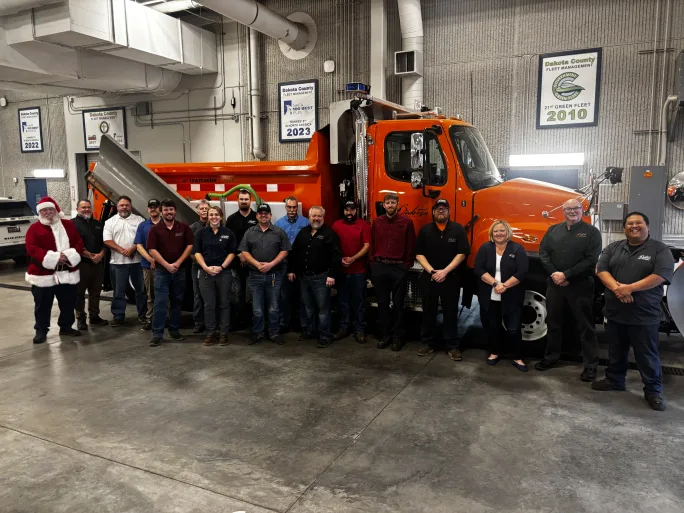
Dakota County fleet staff have supported the department’s long-term transition from reactive maintenance to a more structured, countywide fleet operation.
Credit:
Dakota County
Training and professional development are another priority. Schlangen said fleet managers should maintain relationships with local colleges, invest in staff development, and continue pursuing education and certifications.
"You have to prove that you are the subject matter expert," he said.
That includes industry certifications such as ASE credentials, CPFP, CAFM, and CEM, which Schlangen said help build credibility over time.
He also encouraged fleet managers to attend industry events with the expectation that they will learn something.
"If you go to it with an open mind, you shouldn't come away without learning something," Schlangen said.
Sometimes, he said, the lesson is a new idea. Other times, it is confirmation that the fleet is already following a recognized best practice.
The People Side of Fleet
Looking back, Schlangen said one thing he would have pursued earlier was education focused on communication and interpersonal skills. Early in his career, he focused heavily on technology and repair work. Over time, he said, he learned that the people side of fleet management was often more difficult.
"People are more difficult than the equipment," Schlangen said.
He said fleet managers need to learn how to ask better questions, understand what user departments are really trying to accomplish, and avoid becoming only an adversary when they have to say no.
A no, he said, can still be a no. But it needs to come with an explanation.
"You have to learn what it is, you have to learn what they're looking for, and you have to be a part of their team, not just an adversary," Schlangen said.
He credited Everds with helping him understand the importance of relationships and communication. Schlangen said that kind of training would have made some of the earlier changes less difficult.
What Dakota County Is Working on Now
Dakota County’s fleet operation still has a long list of projects underway.
Schlangen said the county has about $25 million in expansion work planned at its current site, including a 52,000-square-foot heated expansion expected to break ground next year and additional cold storage planned later.
The county is also building its second recycling zone in a joint venture with a local county. Schlangen said the facility will be the county’s first site where all equipment is battery electric.
"There'll be no you know petroleum on the site," he said.
That includes battery-electric forklifts and a battery-electric front-end loader, which Schlangen said remains uncommon in Minnesota.
Other projects include a new fuel island, replacement of in-ground lifts that are more than 24 years old, a new checkout and key management system for pool vehicles, additional EV charging, and updated fleet job descriptions and performance evaluations.
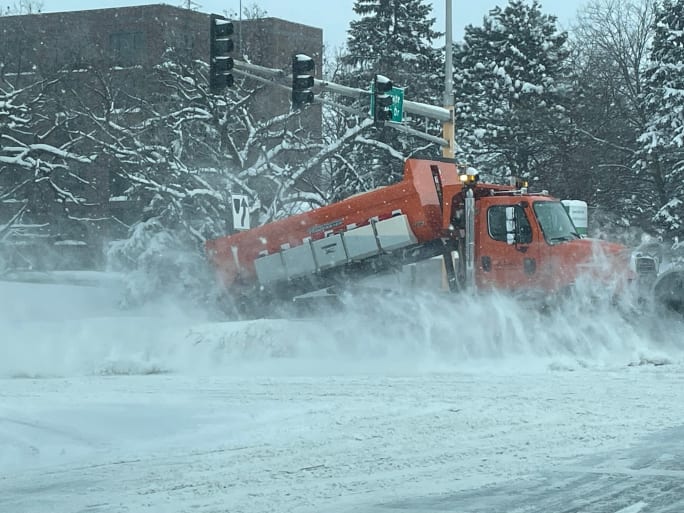
Dakota County’s equipment fleet is managed through the centralized operation Schlangen helped develop over more than 30 years.
Credit:
Dakota County.
Dakota County already has 54 charging plugs, which Schlangen said is a strong number for a Minnesota county. The county is also expanding charging access in other locations, including greenway trail parking lots and areas that support electric bikes.
Even with recent recognition, Schlangen said the department is still working through improvements in reporting, parts operations, staffing structure, and long-term facility planning.
"Even though we've been winning here, we have a pretty long list still of things that we wanna do," he said.
Planning Reduces Stress
Managing that work requires planning, communication, and perspective, Schlangen said.
He keeps written lists of projects and priorities so he can quickly explain what fleet is working on when directors or elected officials ask questions. That preparation, he said, helps reduce stress because the department has already thought through its needs.
"If somebody comes into my office, I have less stress involved because I have planned for it," he said.
Schlangen said fleet leaders also need to anticipate challenges and remain steady for their teams.
"If you're not there that you can't be that pillar, your whole team is always gonna be on edge," he said.
He acknowledged that the work is stressful, especially as counties face budget pressure. But he said staying organized, understanding elected officials’ priorities, and maintaining relationships all help fleet managers keep moving projects forward.
One Person Can Make a Difference
Schlangen said fleet work can be overwhelming because the department is often interrupted to solve problems for others. But he said those requests also show that other departments trust fleet to help.
"You've got to stop what you're doing to help somebody else, and so often it's outside of your wheelhouse," he said. "Consider it a compliment and try to work with them."
He encouraged fleet professionals to build relationships across the industry so they have people to call when they face new challenges. Those connections, he said, can reduce stress and help fleets learn from one another’s successes and mistakes.
"You don't have to have a hundred staff to be successful," Schlangen said. "You can have three, you can have five. You've got to start someplace. Improve your own world."
For Schlangen, that is the broader lesson from Dakota County’s progress. A fleet operation can start with poor facilities, limited staffing, little data, and no training budget, but still improve if it can build support, prove results, and keep working through the list.
"One person can't do it all," he said. "But one person can make a difference."
Subscribe to Our Newsletter
More Operations
Is Keeping Older Fleet Vehicles Really Saving Money?
Is keeping vehicles longer saving money, and what happens when a diagnostic test points to the wrong fix?
Read More →
How Smart Fleet Strategy Can Help Local Government Agencies Do More with Less
Keeping a vehicle longer may ease this year’s budget, but what does it cost the next one? A closer look at fleet decisions can reveal opportunities to reduce spending while protecting essential services.
Read More →
Connect with Government Fleet on LinkedIn
From industry news and fleet management strategies to conversations with peers, Government Fleet's LinkedIn page offers public-sector fleet professionals another way to stay informed and connected.
Read More →
Town of Queen Creek Named Most Successful Fleet Award Winner of Inaugural RTA Fleet Success Awards
Five fleets were honored at RTA Connect 2026 in Chicago for excellence across resource efficiency, intentional culture, risk management, and stakeholder satisfaction.
Read More →
Sponsored•October 14, 2026
A buyer's guide to fleet management software in 2027
Buying fleet management software in 2027 means looking beyond features and price. As fleet operations, technology and expectations evolve, this guide explores what today’s fleet professionals should consider when choosing a system that can deliver value now and adapt to what comes next.
Read More →
Hazard Alerts, Fleet Car Sales Rise and a New Shuttle Concept
Fleet car sales doubled, but the bigger picture tells a different story in this week’s roundup.
Read More →
How St. Johns County Turned Fleet Data Into Better Replacement Decisions
St. Johns County, Florida, had fleet data, but turning it into reliable decision guidance was another matter. Instead of starting over with a new fleet management system, the county connected existing tools and built a scoring system that gives managers an objective look at fleet health.
Read More →
Fleet Forward Conference Introduces One-Day Passes for 2026
New one-day registration lets fleet professionals attend Tuesday, Wednesday, or Thursday, with passes available for $249.
Read More →
ENC Unveils its ZAVIR Medium-Duty Shuttle
Two variants of the concept shuttles were revealed: a low-floor configuration and a high-floor configuration.
Read More →
Could Your Next Fleet Technician Start as an Intern?
What if your next technician hasn’t worked in a fleet shop yet? What fleets are doing to free up time.
Read More →