





Want more? Check out What Every New Fleet Manager Needs to Know
Your Go-To Guide for Understanding Fleet Industry Terms
Check out this comprehensive resource for understanding industry terminology to successfully navigate the fleet world and enhance communication.
June 5, 2024
Navigate the language of fleet management with our comprehensive guide to all things fleet related.
Photo: Government Fleet
10 min to read
Understanding fleet management goes beyond just being savvy with the technical details — it's about getting how people fit into the picture. From working together as a team to keeping things running smoothly, it's about connecting with the team around you.
Part of that connection starts with speaking the same language, literally. That's where this guide comes in handy. In our latest installment of Government Fleet Fundamentals, we've rounded up the most common acronyms and slang terms you'll run into in the world of public sector fleet management.
Think of this as a go-to guide for navigating the ins and outs of fleet management no matter where you are in your fleet journey. Make sure to click on any term to read an article where that term or acronym is used and learn more about it. Now, let's dive in!
General Fleet Management Acronyms
AV (Autonomous Vehicle): A vehicle capable of driving without human intervention, using sensors, AI, and other technology.
CNG (Compressed Natural Gas): A type of fuel used in vehicles that is less polluting than gasoline or diesel.
EV (Electric Vehicle): A vehicle powered entirely by electricity, often using batteries.
FMIS (Fleet Management Information System): Software that helps manage a fleet's operations, maintenance, and other aspects.
FMS (Fleet Management Software): A digital solution that helps organizations manage vehicle fleets through tracking, maintenance, fuel management, and driver monitoring.
FTA (Federal Transit Administration): Provides financial and technical assistance to local public transit systems.
GSA (General Services Administration): Manages government buildings and real estate and provides products and services to support the operations of federal agencies.
GVW (Gross Vehicle Weight): The total weight of a vehicle, including its cargo and passengers.
ICE (Internal Combustion Engine): An engine that generates power by burning fuel (such as gasoline or diesel) inside the engine itself. This is the most common type of engine in traditional vehicles.
LEED (Leadership in Energy and Environmental Design): A certification for environmentally friendly building practices.
OEM (Original Equipment Manufacturer): The original producer of a vehicle's components.
RFP (Request for Proposal): A document soliciting proposals from potential vendors for a service or product.
RFQ (Request for Quote): A document used to solicit price quotes from potential vendors.
TCO (Total Cost of Ownership): The comprehensive cost of owning and operating a vehicle over its lifespan.
VMT (Vehicle Miles Traveled): A measure of the total miles driven by all vehicles in a specific area over a given period.
AVL (Automatic Vehicle Location): Technology that uses GPS to track the location of vehicles in real time.
FLEET (Flexible Low Emission Enterprise Transportation): Programs aimed at reducing emissions through flexible vehicle use and management.
TSP (Traffic Signal Priority): Technology that allows transit vehicles to communicate with and receive priority at traffic signals.
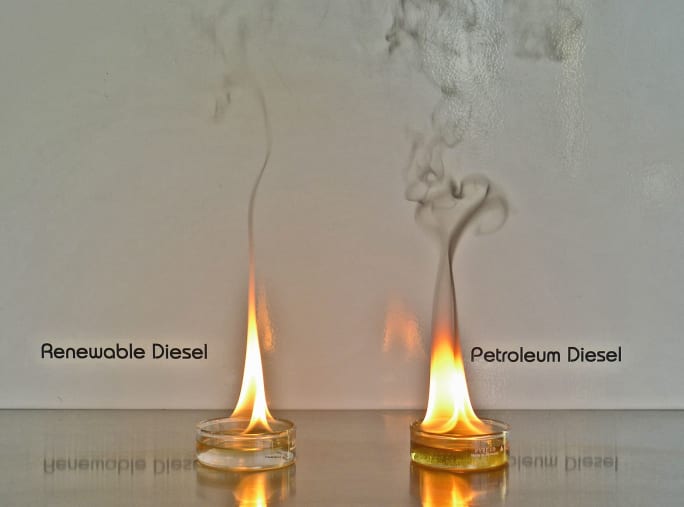
Renewable diesel burns cleaner than regular diesel, releasing less carbon, as shown in this photo.
Photo: Eugene Water & Electric Board
Fuel and Energy Acronyms
AFV (Alternative Fuel Vehicle): A vehicle that runs on fuel other than traditional petroleum fuels (e.g., ethanol, electricity).
B20: A blend of 20% biodiesel and 80% petroleum diesel.
BEV (Battery Electric Vehicle): A vehicle powered solely by rechargeable batteries.
FFV (Flexible Fuel Vehicle): A vehicle that can run on multiple fuel types, typically gasoline blended with either ethanol or methanol.
HEV (Hybrid Electric Vehicle): A vehicle that combines a conventional internal combustion engine with an electric propulsion system.
HOV (High-Occupancy Vehicle): A vehicle with multiple passengers, often given access to special lanes.
LNG (Liquefied Natural Gas): Natural gas that has been cooled to a liquid state for storage and transportation.
PHEV (Plug-in Hybrid Electric Vehicle): A hybrid vehicle with batteries that can be recharged by plugging into an external source of electric power.
ULEV (Ultra-Low Emission Vehicle): A vehicle that emits very low levels of pollutants.
E85: A blend of 85% ethanol and 15% gasoline, used in flexible fuel vehicles.
H2 (Hydrogen): Refers to hydrogen fuel used in fuel cell electric vehicles (FCEVs).

Fleets can use historical service and inspection data to create PM checklists and schedules that more precisely meet asset needs.
Photo: Fleetio
Maintenance and Operations Acronyms
ASE (Automotive Service Excellence): The National Institute for Automotive Service Excellence certifies automotive professionals and shops to improve the quality of vehicle repair and service.
CMMS (Computerized Maintenance Management System): Software that centralizes maintenance information and facilitates maintenance operations.
CVOR (Commercial Vehicle Operator's Registration): A registration required for commercial vehicle operators in some jurisdictions to ensure compliance with safety standards.
DVIR (Driver Vehicle Inspection Report): A formal record drivers use to document vehicle inspections before and after trips.
GPS (Global Positioning System): A satellite-based system used for navigation and tracking vehicles.
MPG (Miles Per Gallon): A measure of how far a vehicle can travel on one gallon of fuel.
PM (Preventive Maintenance): Routine maintenance performed on equipment to lessen the likelihood of it failing.
RTS (Road Traffic Safety): Measures and practices aimed at preventing road accidents and protecting road users.
VIN (Vehicle Identification Number): A unique code used to identify individual motor vehicles.
HMI (Human-Machine Interface): Systems that allow humans to interact with machines, such as vehicle dashboards and control panels.
LTL (Less Than Truckload): Shipping method for relatively small freight, where multiple shipments are combined in one truck.

Regulatory changes come with regulatory terms.
Photo: Atahan Demir
Regulatory and Compliance Acronyms
CARB (California Air Resources Board): A state agency that regulates air quality and emissions in California.
CSA (Compliance, Safety, Accountability): A FMCSA program designed to improve the safety of commercial motor vehicles.
EPA (Environmental Protection Agency): A federal agency that enforces environmental protection standards.
FMCSA (Federal Motor Carrier Safety Administration): A federal agency focused on regulating and providing safety oversight of commercial motor vehicles.
OSHA (Occupational Safety and Health Administration): A federal agency that ensures safe and healthful working conditions by setting and enforcing standards.
ELD (Electronic Logging Device): A device used by commercial drivers to record driving time and ensure compliance with hours of service (HOS) regulations.
Slang and Informal Terms
Big Iron: Refers to large trucks or heavy machinery used in fleet operations.
Book: A manual or guide, typically for maintenance or operational procedures.
Deadhead: Operating a vehicle without any passengers or cargo.
Hot Shot: An expedited delivery or transport service.
Line Haul: Long-distance transport of goods.
Mudflaps: Informal term for trucks, named after their mudguards.
Rig: A large truck or tractor-trailer.
Yard: The area where fleet vehicles are parked or stored.
Bobtail: Refers to a truck operating without its trailer.
Cabover: A truck design where the cab is located above the engine, commonly used in urban delivery.
Chicken Coop: Slang for a weigh station.
Jake Brake: An engine braking mechanism that helps slow down large trucks.
P&D (Pickup and Delivery): Term used for local or regional freight transportation.
Rubbernecking: Refers to drivers slowing down to look at an accident or roadside event.
Sleeper: A truck cab equipped with a bed for long-haul drivers.
Straight Truck: A truck with all its axles attached to a single frame, as opposed to a tractor-trailer combination.
Fleets not only need to know how to recruit the right people but provide the needed training, including what fleet terms they'll run into.
Photo: Government Fleet
Technician and Shop Terms
OTA (Over-the-Air Updates): Remote software updates for vehicles, commonly used in EVs to handle recalls and improvements.
MSRP (Manufacturer's Suggested Retail Price): The price recommended by the manufacturer for selling the vehicle.
AWD (All-Wheel Drive): A drivetrain system that powers all four wheels of a vehicle.
4WD (Four-Wheel Drive): A system that powers all four wheels for improved off-road and all-weather capability.
FWD (Front-Wheel Drive): A drivetrain system that powers the front wheels of a vehicle.
RWD (Rear-Wheel Drive): A drivetrain system that powers the rear wheels of a vehicle.
EVOC (Emergency Vehicle Operator Course Series): Training programs for operators of emergency vehicles.
DVOC (Defensive Vehicle Operator Course Series): Training programs focused on defensive driving techniques.
ADAS (Advanced Driver Assistance Systems): Electronic systems in vehicles that assist drivers in driving and parking functions.
DEF (Diesel Exhaust Fluid): A fluid used in diesel engines to reduce harmful emissions.
DTC (Diagnostic Trouble Code): Codes generated by a vehicle's onboard diagnostics system when an issue is detected.
EGR (Exhaust Gas Recirculation): A system used to reduce nitrogen oxide emissions in diesel engines.
TPMS (Tire Pressure Monitoring System): A system that monitors the air pressure inside pneumatic tires.
Certifications
CAFS (Certified Automotive Fleet Specialist): Certification for professionals specializing in fleet management.
CAFM (Certified Automotive Fleet Manager): Certification for advanced fleet management professionals.
CEM (Certified Equipment Manager): Certification for professionals managing public works and construction equipment.
CPFP (Certified Public Fleet Professional): Certification for fleet managers in the public sector.
EVT (Emergency Vehicle Technician): Certification for professionals who maintain and repair emergency vehicles.
LRT (Light Repair Technician): Certification for technicians specializing in light vehicle repairs.
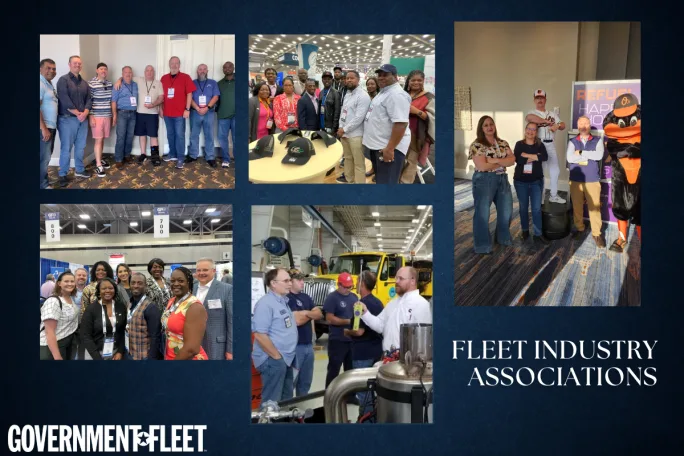
Fleet industry associations serve as a meeting of the minds to help fleet professionals better their operations.
Photo: Government Fleet/Exavious Farley/Kathy Wellik/MEMA Ohio/Canva
Regional and National Public Sector Fleet Industry Associations
American Public Works Association (APWA) - Association of public works agencies, private companies, and individuals dedicated to promoting professional excellence and public awareness across all aspects of public works
FLAGFA (Florida Association of Governmental Fleet Administrators): Organization of local government fleet management professionals in the U.S. representing most cities, counties, and state agencies within Florida
FleetPros: Public fleet association serving fleet professionals through education, networking, and resources; spanning five states including: Arizona, Colorado, Nevada, Texas, and Utah
MEMA (Munipical Equipment Maintenance Association): Association of public sector fleet professionals dedicated to improving the quality of service within the industry. Three regional chapters: NorCal, SoCal, and Ohio
MFMA (Municipal Fleet Managers Association): Organization dedicated to creating a space for municipal fleet managers to communicate, promoting cost-effective fleet management policies, procedures, and techniques through technical and managerial education
NASUF (National Alliance of State and University Fleets): Originally founded as NCSFA, this organization is dedicated to supporting fleet administrators from state governments and universities
PFMA (Public Fleet Managers Association): Association created to provide networking, assistance, and training to public sector fleet managers; initially called Pacific Northwest Public Fleet Managers Association but member organizations now represent agencies from across the U.S.
PFSA (Public Fleet Supervisors Association): Organization which provides a meeting ground for public employees whose principal responsibility is the management and/or supervision of the acquisition, repair, and maintenance of a motor vehicle fleet. Private organizations, businesses, and others may, at the discretion of the regular membership, participate in these activities, without the privilege of voting on policy or procedures. Serves the greater San Francisco Bay area and Northern California
SGFMA (Southeast Governmental Fleet Management Association): Association that serves professional public fleet managers, with the goal of providing training sessions and networking opportunities to members throughout the year. Initially created for South Carolina fleets, but expanded to include the entire Southeast
General Fleet Management Industry Associations
AEMP (Association of Equipment Management Professionals): Organization representing fleet professionals who work in construction, government, utilities, energy, mining, and any other industry that requires the effective deployment of heavy equipment
AFLA (Automotive Fleet and Leasing Association): Organization that promotes growth, expansion, and professionalism within the fleet industry by providing education, research, technical standards, representation and advancement of member interests
BFN (Black Fleet Network): Organization of professionals driving the fleet industry forward, comprised of people from diverse backgrounds and the shared experience of being Black within the professional context. Includes fleet directors, logistics pros, insurance mavens, technologists, students, suppliers, EV specialists, entrepreneurs, public works leaders, telematics experts, sales managers, and more
NAFA (National Association of Fleet Administrators): Association of individuals who manage the vehicular fleet and mobility responsibilities for their employers, both public and private. Provides industry certification programs, education, advocacy, and more
WIFM (Women in Fleet Management): Membership program open to all corporate fleet professionals dedicated to supporting women in fleet
ASE (Automotive Service Excellence): An organization that certifies automotive professionals and shops to improve the quality of vehicle repair and service.
NTEA (National Truck Equipment Association): An association supporting the work truck industry.
NADA (National Automobile Dealers Association): An organization representing franchised new-car dealers in the U.S.
Federal Agencies
NTSB (National Transportation Safety Board): An independent federal agency responsible for investigating transportation accidents and promoting safety.
FMCSA (Federal Motor Carrier Safety Administration): A federal agency focused on regulating and providing safety oversight of commercial motor vehicles.
USDOT (United States Department of Transportation): The federal department responsible for transportation infrastructure, policy, and safety.
FAA (Federal Aviation Administration): The federal agency responsible for regulating and overseeing civil aviation in the U.S.
FTA (Federal Transit Administration): Provides financial and technical assistance to local public transit systems.
NHTSA (National Highway Traffic Safety Administration): A federal agency responsible for ensuring the safety of vehicles on U.S. roads through regulations and safety standards.
We hope this guide helps you out in your fleet journey. If there's anything we missed or you've got some thoughts to share, we're all ears. After all, it's by working together and sharing what we know that we can make things better for everyone. So, don't hesitate to drop us a line at nichole.osinski@bobit.com.
Subscribe to Our Newsletter
More Operations

Is Keeping Older Fleet Vehicles Really Saving Money?
Is keeping vehicles longer saving money, and what happens when a diagnostic test points to the wrong fix?
Read More →
How Smart Fleet Strategy Can Help Local Government Agencies Do More with Less
Keeping a vehicle longer may ease this year’s budget, but what does it cost the next one? A closer look at fleet decisions can reveal opportunities to reduce spending while protecting essential services.
Read More →
Connect with Government Fleet on LinkedIn
From industry news and fleet management strategies to conversations with peers, Government Fleet's LinkedIn page offers public-sector fleet professionals another way to stay informed and connected.
Read More →
Town of Queen Creek Named Most Successful Fleet Award Winner of Inaugural RTA Fleet Success Awards
Five fleets were honored at RTA Connect 2026 in Chicago for excellence across resource efficiency, intentional culture, risk management, and stakeholder satisfaction.
Read More →
Sponsored•October 14, 2026
A buyer's guide to fleet management software in 2027
Buying fleet management software in 2027 means looking beyond features and price. As fleet operations, technology and expectations evolve, this guide explores what today’s fleet professionals should consider when choosing a system that can deliver value now and adapt to what comes next.
Read More →
Hazard Alerts, Fleet Car Sales Rise and a New Shuttle Concept
Fleet car sales doubled, but the bigger picture tells a different story in this week’s roundup.
Read More →
How St. Johns County Turned Fleet Data Into Better Replacement Decisions
St. Johns County, Florida, had fleet data, but turning it into reliable decision guidance was another matter. Instead of starting over with a new fleet management system, the county connected existing tools and built a scoring system that gives managers an objective look at fleet health.
Read More →
Fleet Forward Conference Introduces One-Day Passes for 2026
New one-day registration lets fleet professionals attend Tuesday, Wednesday, or Thursday, with passes available for $249.
Read More →
ENC Unveils its ZAVIR Medium-Duty Shuttle
Two variants of the concept shuttles were revealed: a low-floor configuration and a high-floor configuration.
Read More →
Could Your Next Fleet Technician Start as an Intern?
What if your next technician hasn’t worked in a fleet shop yet? What fleets are doing to free up time.
Read More →