





Continue Reading: NHTSA Proposes New Fuel Economy Standards for MY2027 Vehicles and Beyond
NHTSA Issues Initial Decision on Defective Air Bag Inflators, Prompting Urgent Recall
The National Highway Traffic Safety Administration has initiated a recall of particular air bag inflators made by ARC and Delphi, impacting around 52 million inflators.
October 7, 2023
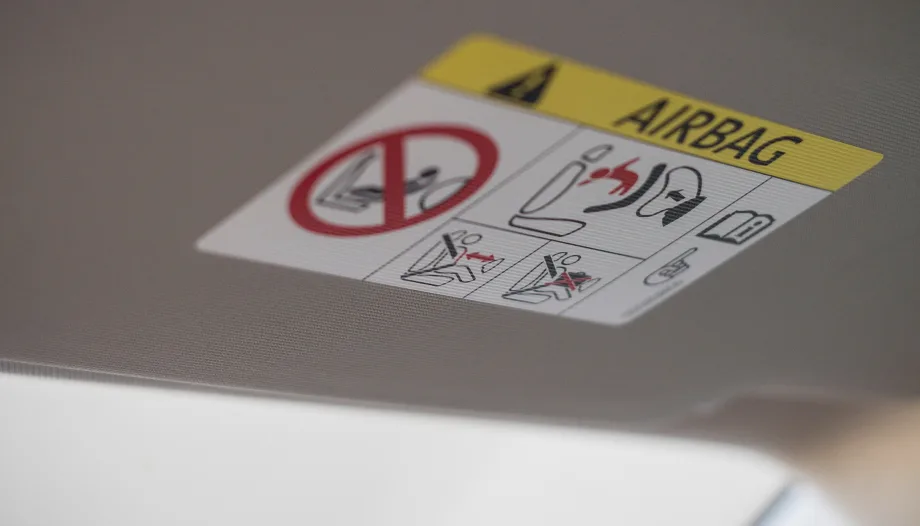
The National Highway Traffic Safety Administration has initiated the recall citing a safety issue that can lead to ruptures during regular air bag deployments.
Photo: Markus Spiske
3 min to read
Update: Oct. 20, 2023
On Thursday, Oct. 5, U.S. National Highway Traffic Safety Administration (NHTSA) officials told a public hearing that the government should recall certain frontal driver and passenger air bag inflators manufactured by ARC and Delphi through January 2018 citing risk of explosion and the potential ejection of metal fragments into a car's interior, even in relatively minor collisions.
Delphi Automotive manufactured approximately 11 million of the inflators through 2004 under a licensing agreement with ARC, which manufactured the remaining 41 million inflators, according to Reuters. This would mean a total of 52 million air bag inflators would be recalled.
The National Highway Traffic Safety Administration (NHTSA) issued a new filing in early September, signaling its determination to address the issue. The agency deemed the inflators produced by ARC Automotive, based in Tennessee, and its licensee Delphi Automotive Systems, as fundamentally defective.
The agency stated that the rupturing air bag inflator poses an unreasonable risk of serious injury or death to vehicle occupants. At least seven people have been injured and one person has been killed by these rupturing air bag inflators within the U.S., according to the NHTSA's records.
The NHTSA initially called for a voluntary recall back in May, but ARC Automotive declined to comply. Instead, the company accused the regulator of exceeding its authority and dismissed the inflator ruptures as "occasional or isolated failures." The NHTSA, however, maintains its stance that approximately 52 million air bag systems manufactured by ARC Automotive and Delphi Automotive pose a potential danger to vehicle occupants and necessitate a recall.
Aftermath of an Eight-Year Investigation
Following an extensive eight-year investigation, the NHTSA has officially declared the air bag inflators produced by ARC and Delphi as defective. This marks the initial step in the agency's process to compel both companies to recall these automotive components. Subsequently, NHTSA officials have scheduled a public hearing for October 5 to delve deeper into the inflator issue and can then proceed to pursue a court-ordered recall.
Affected vehicles equipped with these potentially hazardous air bag systems range from models manufactured between 2000 and 2018 by prominent automakers such as BMW, Ford, GM, Hyundai, Kia, Maserati, Mercedes-Benz, Porsche, Stellantis, Tesla, Toyota, and Volkswagen, according to NHTSA documents.
The NHTSA stated, "These air bag inflators may rupture when the vehicle's air bag is commanded to deploy, causing metal debris to be forcefully ejected into the passenger compartment of the vehicle." Consequently, the agency concluded that a rupturing air bag inflator presents an unreasonable and severe risk of injury or death to vehicle occupants.
Government Fleet has reached out to ARC for comment.
Editor's Note: This story was updated on Oct. 10, 2023 with new information regarding the hearing.
More Safety
New Partnership Aims to Expand Public Digital Hazard Alert System Statewide
The Hawai’i Department of Transportation (HDOT) is expanding advance digital hazard alerts for the public statewide.
Read More →
New York City Expands Safety Technologies Across Municipal Fleet
Executive Order 19 moves intelligent speed assistance and pedestrian alerts from pilot programs toward standard fleet equipment, offering other public fleets a look at how safety technology can be tested, measured, and scaled.
Read More →
Sponsored•August 10, 2026
Hidden in Plain Sight: Fleet Compliance Risks
Fleet compliance isn't just about having policies — it's about consistently enforcing them. This practical guide reveals six hidden compliance risks common in public sector and shared fleet operations and outlines proven strategies to improve visibility, accountability, and audit readiness.
Read More →
5 Days Left to Submit Your 2026 Fleet Safety Award Nomination
Know a government fleet, safety, or risk manager who deserves recognition for making fleet operations safer? Nominations are open through Aug. 15.
Read More →
How the First 24 Hours Can Shape a Fleet Crash Response
How a strong accident response process helps government fleets move from the initial report to recovery while building a clearer record for what needs to change next.
Read More →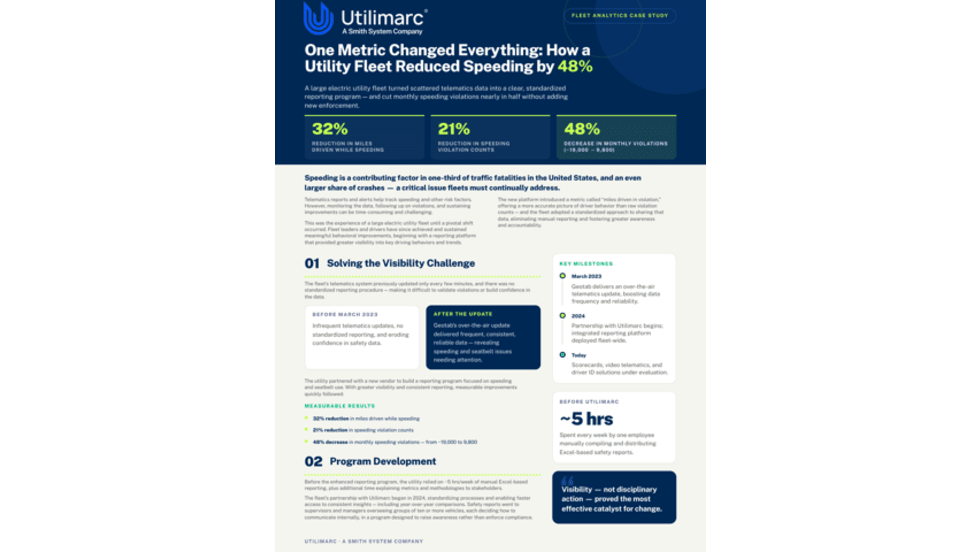
Sponsored•July 17, 2026
How Better Visibility Cut Speeding Violations by 48%
Fleet leaders don't need more data, they need clearer visibility into what the data is saying. This case study explores how one utility replaced speeding-event counts with a single metric — miles driven in violation — to strengthen safety and significantly reduce speeding violations.
Read More →
e-con Systems Expands AI Camera Tools for Traffic Monitoring
The systems support license plate recognition, traffic analytics, and video management for transportation agencies.
Read More →
King Township Pilot Links Driver Feedback to Reduced Speeding
How King Township, a best-in-class municipal fleet, reduced speeding by 10.9% and demonstrated a projected 349% ROI by putting safety ownership directly in drivers' hands.
Read More →
Beyond the Fireline: The Critical Role of Public Fleets in Wildfire Response
Behind every wildfire response is a complex network of vehicles, data, and decisions that must work in sync under extreme pressure. Global heating trends require strong fleet coordination and reliable communications to keep crews safe and operations running smoothly.
Read More →
How AI Is Transforming Public Fleet Safety - Part 1
AI-powered safety systems are helping public fleets tackle distracted driving by delivering real-time coaching and measurable behavior change behind the wheel. In part one of our Q&A, Nauto CEO Stefan Heck explains how agencies can improve safety, reduce costs, and navigate implementation challenges with AI-driven technology.
Read More →