





How to Calculate the Right Vehicle-to-Technician Ratio
Staffing your shop appropriately isn’t as simple as knowing the number of vehicles in your fleet; other factors are part of the equation, too.
June 15, 2023

Senior Fleet Technician Adam Kasel at the Dakota County fleet facilities.
Photo: Dakota County
10 min to read
Employing the right number of technicians to have in your shop is important: Too many technicians means you’re paying for unproductive labor hours. Too few increases downtime — or worse, having to rush through jobs could lead to mistakes that jeopardize safety.
How do you get it just right for your fleet’s size and demands? Three experienced fleet managers share the factors their calculations take into consideration.
Is “Vehicle-to-Technician” a Problematic Ratio?
Typically, determining the right number of technicians to have in your shop is referred to as the “vehicle-to-technician ratio.” But all three fleet managers agreed that only using the number of vehicles in the fleet to determine your technician needs won’t get you to the right number.
“I would not use the vehicle-to-technician ratio as a sole mechanism to determine your technician needs because it's very general,” said Sara Burnam, MSL, CAFM, director, Fleet Management Palm Beach County, Florida. “Every fleet is different in makeup and composition, so by just using the vehicle-to-technician ratio, you’re doing yourself a disservice because it doesn't account for the intricacies.”
Kevin L. Schlangen, CPFP, CAFM, CEM, fleet manager, Dakota County, Minnesota, said that vehicle-to-technician ratio only works if you operate a limited number of vehicle types, which is typically not the case for government fleets.
“So often when you have conversations on this subject, people ask how many pieces of equipment you have and how many technicians you have. As soon as those questions are asked, I know that person doesn't really understand government fleets, because there's a massive difference between how many techs you need if you have a tandem axle snowplow truck, or if you have a law enforcement vehicle or if you have a sedan or a pickup,” Schlangen said. “How many pieces of equipment you have, and the techs you have, that is not a ratio. That's a horrible indicator because there's so much more to it than that.”
Charlotte Ashcraft, director, Fleet Management, Franklin County Commissioners, Columbus, Ohio, also cited vehicle type as one of the top factors that must be accounted for.
“Some vehicle types take more time to do routine repairs. An unmarked detective vehicle can be serviced in an hour. A marked cruiser takes about 2 hours to get serviced because there are many more elements to inspect and check on a cruiser than an unmarked unit,” she said. “So with that there is no one way to calculate vehicle to tech ratios using strictly the number of vehicles. You have the same thing with regular duty pickup trucks and trucks with specialized equipment attached. You have vehicles with generators. You have a lot of different types of vehicles and vehicle use applications to take into consideration.”
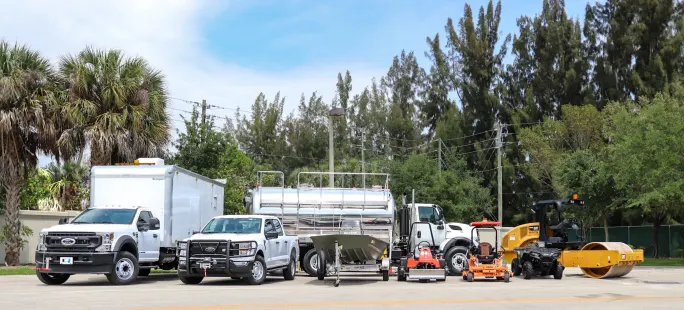
A vehicle’s daily or monthly mileage accumulation tells a lot about whether its maintenance needs will be low or high.
Photo: Palm Beach County
Which Calculation Is More Accurate?
If basing the number of technicians on the number of vehicles in the fleet isn’t an accurate calculation, what is?
Burnam says the best place to start is calculating maintenance repair units (MRU) or vehicle equivalency units (VEU). “The most common way to look at it is by doing a vehicle equivalency unit analysis, which is pretty much the same as the maintenance repair unit. This entails normalizing the fleet into categories and determining the number of hours you need based on those categories to then determine how many technicians you need,” she said.
Burnam said this type of analysis includes the following steps:
Put vehicles into categories or classifications based on the level of maintenance they require, e.g., dump trucks, refuse trucks, busses, light-duty trucks, marked cruisers, and sedans.
Once you’ve determined the categories, calculate the average number of maintenance hours the vehicles in each category require.
Each category now has a number of maintenance hours associated with it.
Now, calculate the number of hours available per technician. This can be done in many ways, but Burnam said available hours should be based on actual hours for your organization and how technicians’ schedules are set up, i.e., whether they get an hour or half hour lunch, the number of holidays, vacation time, how many working days there are in a month, etc.
Once you know the number of vehicles in each class you can then multiply that by the average time it takes to repair each vehicle and then divide that by the number of available hours per technician to arrive at the number of technicians you need.
Ashcraft calculates her technician needs in a similar manner.
“We looked at the previous year’s work orders and came up with a weight for cruisers, a weight for plain LE vehicles, a weight for Animal Control vans, a weight for regular use vehicles, plus more, with the weight being per vehicle in that assignment. Then we calculated that weight into the number of labor hours the fleet would require for maintenance and other routine repairs (tires, wipers, headlamps, etc.),” she said.
“We then looked at the non-routine repairs and attempted to find a metric that we could use, but many of these types of repairs were one offs of unusual circumstances so that was difficult to find a usable metric. So, we took the total number of labor hours for those type of repairs, divided by 12 months, and just added it to the calculated one. Once we got that number, we divided that by the number of working days in a standard month. From there we have the number of work hours needed per workday in a standard month, divide that by 8 hours per day, and that should tell you how many people you need to make that work.”
Of course, performing these calculations requires historical data about vehicle maintenance needs to be accurate.
“If you're not tracking anything, and if you don't have a good fleet information systems database, it's almost impossible for you to determine what your needs really should be, and it's for sure impossible to communicate those needs to decision makers,” Schlangen said. “You have to be able to explain how you calculate it in order to determine what your needs are and determine what sales pitch you're going to give to upper management levels and finance and elected officials about meeting the resource needs that you have to maintain the fleet.”
What happens, then, if you don’t have the data – whether because you don’t have a means of tracking it, or you’re bringing on a new segment of vehicles?
“It's best to use historical data as available. But say you’re looking at adding fire trucks to your fleet, and that's not something that you've ever maintained before. You may want to reach out to an expert in the field, the manufacturer or even a peer to get those historic ticket hours,” Burnam said.
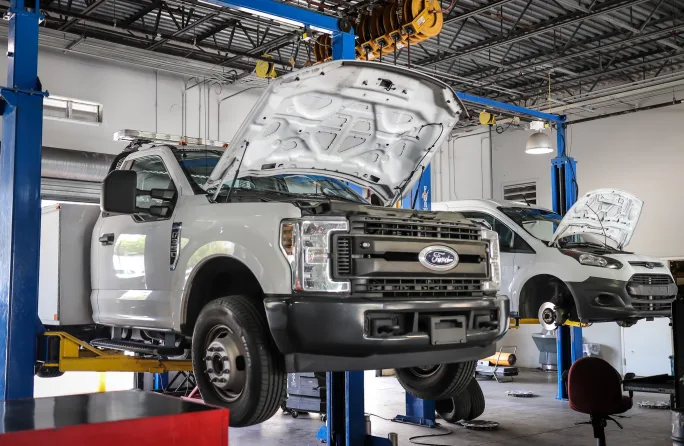
The way your maintenance shop operates and who is doing the work can affect how quickly the work gets done.
Photo: Palm Beach County
Other Factors to Consider
Anyone who has managed a fleet knows that the vehicle type and/or application aren’t the only factors that influence a vehicle’s maintenance needs. As you determine maintenance classifications and VEUs/MRUs, these factors can also make a difference:
Mileage
A vehicle’s daily or monthly mileage accumulation tells a lot about whether its maintenance needs will be low or high.
“If you have a group of vehicles that travel 2,000 miles each a month, have one factor for those calculations. But if you have another group of vehicles that travel 8,000 miles a month, that puts lots more hours into the calculation,” Ashcraft said.
Operating Conditions: Climate, Geography, and Severity of Use
The conditions vehicles operate under can also greatly influence their maintenance needs. For instance, fleet vehicles that operate in very hot or very cold weather, drive on gravel roads or steep inclines, or whose application put greater demands on the engine than normal.
“Say you're up north and you’re adding snowplows, you are definitely going to want to add additional time to maintain them and for repairs than you would in a warmer climate,” Burnam said. “You will want to consider the ancillary equipment, whether the geography is hilly or mountainous, if vehicles operate in dusty conditions — all of that can go into considering how many techs you need. Some manufacturers have criteria that determine what is considered a ‘severe-maintenance vehicle,’ which affects how often vehicles are maintained. A lot of times, those criteria apply to fleet vehicles just because of the types of use. Excessive idling, towing, gravel, and a lot of different types of driving that fleets experience often make them severe maintenance vehicles. And so that could increase the maintenance needs of your fleet.”
Outsourced work
If you outsource a portion of your maintenance and repairs, that will lessen the load on your in-house technicians. Do you need to understand how many hours those technicians are putting in?
Schlangen says yes. “You need to know what your numbers are because if, all of a sudden, you decide to bring that work back in house, you have to be able to spell out your need for another staff member,” he said. “So, say you outsource 30% of your labor force, but bring in work to get down to 15%, you can show that you can do it cheaper and you can add a technician.”
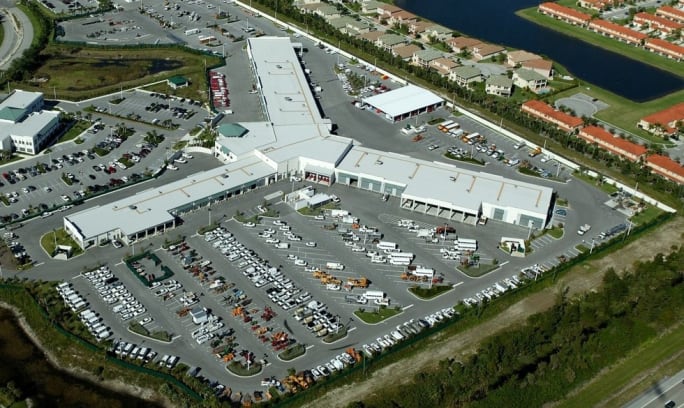
And aerial view of the Palm Beach County fleet facilities with a 4,800-unit fleet and 33 technicians employed.
Photo: Palm Beach County
So how do you calculate outsourced labor?
“The outside vendor can be used to calculate that,” Ashcraft said. “But it’s the same work getting done, by a mechanic, just not in your shop, so all the same factors can be used.”
Shop Roles and Technician Expertise
The way your maintenance shop operates and who is doing the work can affect how quickly the work gets done.
“Are your technicians doing administrative work? Because in some places, when you're a larger shop, the tech only does tech work. They don't have to order any parts. They don't stock any parts. They don't unload any deliveries. They don’t transfer vehicles from one place to another. There are other people doing that type of work,” Schlangen said. “So, if that work is being figured into your ratio for a technician, you have to slice that out of it. You have to spell out that the technician shouldn't be doing that work and that you should have a different position to do it.”
The amount of experience technicians have can also influence your technician ratio.
“The skill level of your techs will change the number you need. As you get staff and they get experience and training, their abilities get better and they can do more work so they can handle more vehicles,” Ashcraft said. “But don’t let that blind you to the need to plan for a lower level. When your top mechanic retires, you are not going to get someone off the street with those skills so you have to start over. Don’t box yourself into a corner with a ratio strictly based on the skills of your top techs, plan for turnover and starting over.”
For Burnam, who manages a 4,800-unit fleet and employs 33 technicians, factoring in technician expertise over complicates the equation.
“That would be really hard to account for and would be too much into the weeds. That's why I look at average hours,” she said. “If you're a smaller fleet, though, and you have variances and expertise, then that's something you should consider.”
How Do You Know If You’ve Gotten It Right?
Once you’ve performed the calculations and staffed your shop accordingly, how do you know you’ve gotten it right?
“Smooth predictive scheduling is to me a view of a good ratio. If you have to postpone scheduling a vehicle for a routine service because you don’t have a mechanic available and their vehicle is overdue for service, then your ratio is not right,” Ashcraft said. “Having the ability to keep the mechanics up-to-date on training and attend training they want is also a signal. When you are shorthanded and you have more work than your current staff can keep up with, the first thing that gets pushed aside is training. It may sound odd, but having a clean and tidy shop is indicative of the right ratio. If your tech has time to clean up his bay between work, then he is less stressed at this job. This means we are scheduling work in as needed but not one on top of another trying to catch up or stay caught up.”
Schlangen aims for 70-75% of direct labor or billable hours as a good target to hit, among other factors. He also sends shop data to a third party that benchmarks his fleet with other municipal fleets.
Burnam said paying significant overtime on a consistent basis is a red flag to review your staffing levels.
The Final Factor: Fleet Intelligence
While many factors can influence how many technicians you need, you don’t have to build your calculation from the ground up.
There are just so many different ways to slice it, but there are so many people within the fleet industry who are willing to share their stories and the ideas they've poured their hearts into,” Schlangen said. “They put a lot of time into developing a formula to be able to do this and they're willing to share. It makes a big difference; you don't have to be on an island by yourself.”
Subscribe to Our Newsletter
More Operations

Is Keeping Older Fleet Vehicles Really Saving Money?
Is keeping vehicles longer saving money, and what happens when a diagnostic test points to the wrong fix?
Read More →
How Smart Fleet Strategy Can Help Local Government Agencies Do More with Less
Keeping a vehicle longer may ease this year’s budget, but what does it cost the next one? A closer look at fleet decisions can reveal opportunities to reduce spending while protecting essential services.
Read More →
Connect with Government Fleet on LinkedIn
From industry news and fleet management strategies to conversations with peers, Government Fleet's LinkedIn page offers public-sector fleet professionals another way to stay informed and connected.
Read More →
Town of Queen Creek Named Most Successful Fleet Award Winner of Inaugural RTA Fleet Success Awards
Five fleets were honored at RTA Connect 2026 in Chicago for excellence across resource efficiency, intentional culture, risk management, and stakeholder satisfaction.
Read More →
Sponsored•October 14, 2026
A buyer's guide to fleet management software in 2027
Buying fleet management software in 2027 means looking beyond features and price. As fleet operations, technology and expectations evolve, this guide explores what today’s fleet professionals should consider when choosing a system that can deliver value now and adapt to what comes next.
Read More →
Hazard Alerts, Fleet Car Sales Rise and a New Shuttle Concept
Fleet car sales doubled, but the bigger picture tells a different story in this week’s roundup.
Read More →
How St. Johns County Turned Fleet Data Into Better Replacement Decisions
St. Johns County, Florida, had fleet data, but turning it into reliable decision guidance was another matter. Instead of starting over with a new fleet management system, the county connected existing tools and built a scoring system that gives managers an objective look at fleet health.
Read More →
Fleet Forward Conference Introduces One-Day Passes for 2026
New one-day registration lets fleet professionals attend Tuesday, Wednesday, or Thursday, with passes available for $249.
Read More →
ENC Unveils its ZAVIR Medium-Duty Shuttle
Two variants of the concept shuttles were revealed: a low-floor configuration and a high-floor configuration.
Read More →
Could Your Next Fleet Technician Start as an Intern?
What if your next technician hasn’t worked in a fleet shop yet? What fleets are doing to free up time.
Read More →