




Want More? The Value in Building a Strong Fleet Safety Strategy
TxDOT Demos Connected Vehicle Technology to Provide Work Zone Alerts to Drivers
TxDOT work trucks will be outfitted with connected vehicle technology so that when a work truck sets up on the side of the road or blocks a lane for highway repairs, the truck automatically sends out an alert that an active work zone is ahead.

Christy Grimes・Former Senior Editor
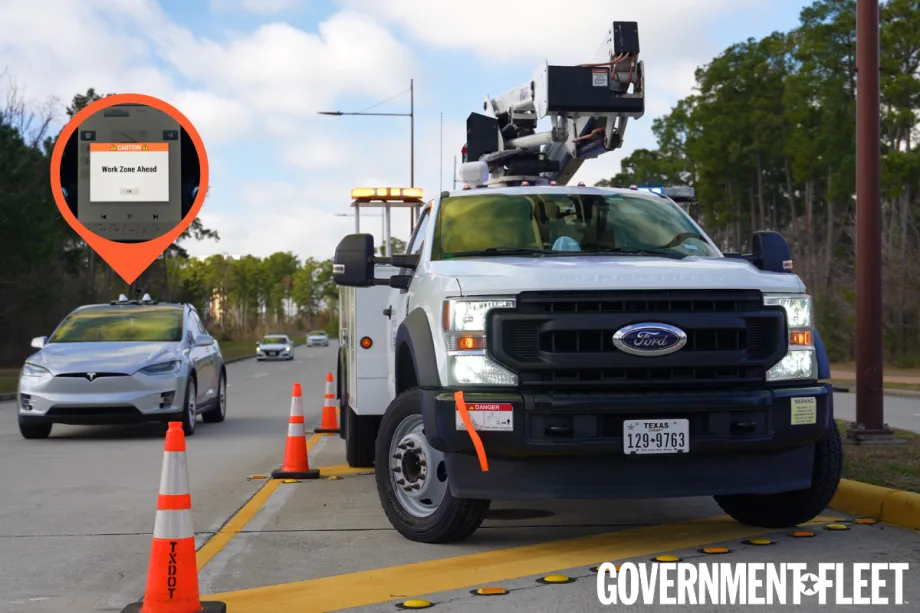
Active work zone alerts are sent to various apps and systems including TravelSafely, Waze, and HAAS Alert Safety Cloud. Applied Information also provides work truck, active school zone, and emergency vehicle preemption to these systems.
Photo: TxDOT/Applied Information/Government Fleet
2 min to read
The Texas Department of Transportation (TxDOT) is using connected vehicle technology to alert oncoming motorists to active work zones. TxDOT is partnering with Applied Information, Paradigm Traffic Systems, HAAS Alert, and Audi on the technology.
The safety solution was demonstrated at the recent Connected Vehicle Showcase in Houston.
How the Technology Works
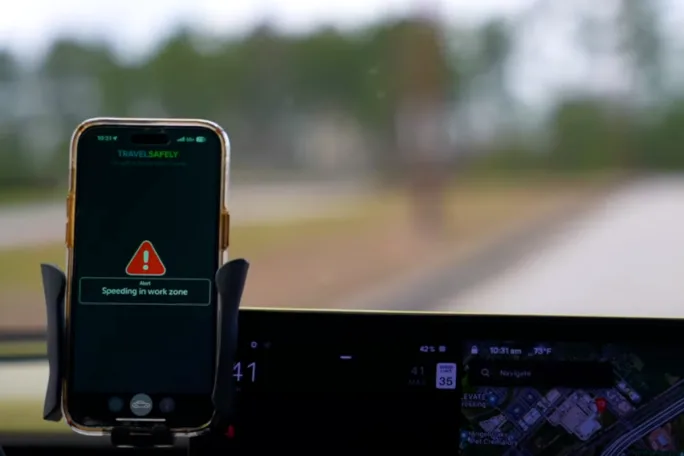
In addition to alerting drivers to active work zones, the technology can also warn them if they travel too fast in the work zone.
Photo: Applied Information
TxDOT demoed the technology on one of its vehicles, but plans to expand the capability to its entire fleet over time, an Applied Information spokesperson told Government Fleet.
TxDOT work trucks will be outfitted with connected vehicle technology so that when a work truck sets up on the side of the road or blocks a lane for highway repairs, the truck automatically sends out a cellular-vehicle-to-everything (C-V2X) signal broadcasting that an active work zone is ahead. The alert can also warn drivers if they travel too fast in the work zone.
"Work zone safety is a priority for TxDOT as speeding and inattentive driving is the leading cause of crashes in work zones. Alerting drivers that a work zone is ahead and slowing down can help make work zones safer for drivers and roadside workers," TxDOT Houston Project Coordinator Steve Chiu said.
Of the 190 traffic fatalities in Texas work zones in 2023, 77% were drivers or their passengers. In addition, two roadside workers were killed. The other victims included pedestrians and bicyclists.
Speeding, driver inattention, and unsafe lane changes were among the leading causes of work zone crashes, according to TxDOT.
The implementation process was streamlined through Applied Information's collaboration with TxDOT's fleet department. It involves the strategic placement of antennas and the integration of technology capable of broadcasting tailored safety messages based on dynamic road conditions.
Once the Applied Information devices are online, the safety applications are enabled and will begin communicating safety messages automatically.
The alerts are sent to various apps and systems including TravelSafely, Waze, and HAAS Alert Safety Cloud. Applied Information also provides work truck, active school zone, and emergency vehicle preemption to these systems.
More Safety
New Partnership Aims to Expand Public Digital Hazard Alert System Statewide
The Hawai’i Department of Transportation (HDOT) is expanding advance digital hazard alerts for the public statewide.
Read More →
New York City Expands Safety Technologies Across Municipal Fleet
Executive Order 19 moves intelligent speed assistance and pedestrian alerts from pilot programs toward standard fleet equipment, offering other public fleets a look at how safety technology can be tested, measured, and scaled.
Read More →
Sponsored•August 10, 2026
Hidden in Plain Sight: Fleet Compliance Risks
Fleet compliance isn't just about having policies — it's about consistently enforcing them. This practical guide reveals six hidden compliance risks common in public sector and shared fleet operations and outlines proven strategies to improve visibility, accountability, and audit readiness.
Read More →
5 Days Left to Submit Your 2026 Fleet Safety Award Nomination
Know a government fleet, safety, or risk manager who deserves recognition for making fleet operations safer? Nominations are open through Aug. 15.
Read More →
How the First 24 Hours Can Shape a Fleet Crash Response
How a strong accident response process helps government fleets move from the initial report to recovery while building a clearer record for what needs to change next.
Read More →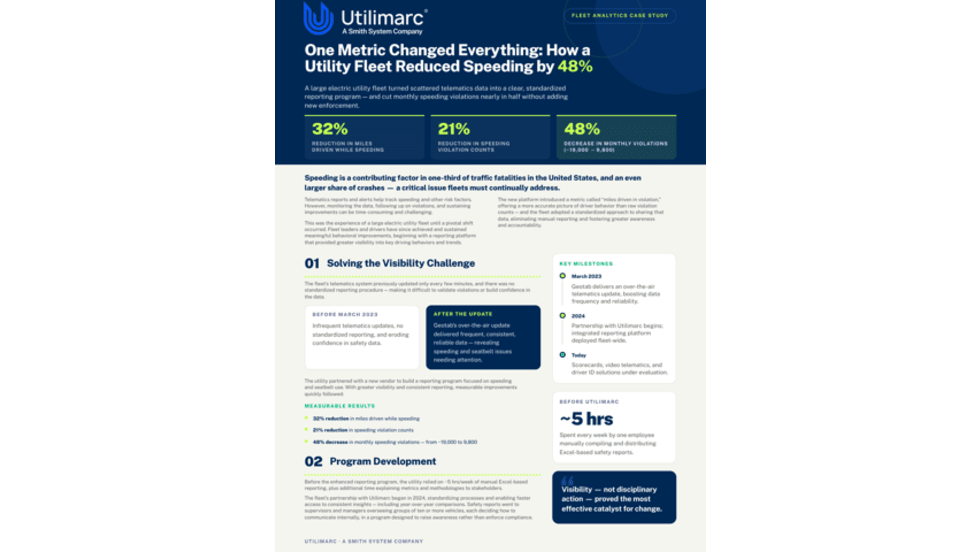
Sponsored•July 17, 2026
How Better Visibility Cut Speeding Violations by 48%
Fleet leaders don't need more data, they need clearer visibility into what the data is saying. This case study explores how one utility replaced speeding-event counts with a single metric — miles driven in violation — to strengthen safety and significantly reduce speeding violations.
Read More →
e-con Systems Expands AI Camera Tools for Traffic Monitoring
The systems support license plate recognition, traffic analytics, and video management for transportation agencies.
Read More →
King Township Pilot Links Driver Feedback to Reduced Speeding
How King Township, a best-in-class municipal fleet, reduced speeding by 10.9% and demonstrated a projected 349% ROI by putting safety ownership directly in drivers' hands.
Read More →
Beyond the Fireline: The Critical Role of Public Fleets in Wildfire Response
Behind every wildfire response is a complex network of vehicles, data, and decisions that must work in sync under extreme pressure. Global heating trends require strong fleet coordination and reliable communications to keep crews safe and operations running smoothly.
Read More →
How AI Is Transforming Public Fleet Safety - Part 1
AI-powered safety systems are helping public fleets tackle distracted driving by delivering real-time coaching and measurable behavior change behind the wheel. In part one of our Q&A, Nauto CEO Stefan Heck explains how agencies can improve safety, reduce costs, and navigate implementation challenges with AI-driven technology.
Read More →