




Work-From-Home Perks
Can the flexibility of working from home be used as a recruiting incentive for fleet office workers?


Photo: Unsplash/Djurdjica Boskovic
Public fleet employees rarely work from home. Obviously, technicians and tech supervisors are required to come into work. But as the pandemic spread, more government fleet organizations began allowing office staff to work from home, a new policy for most.
I’ve been working from home for more than two years, and while it was a big adjustment at first, I am often thankful I can do so. I don’t spend two hours of my day driving to and from work, a change that allowed me time to take a community college class in the evenings. And with the rise in popularity of video meetings, face-to-face time (one of my bigger complaints) is becoming easier.
A Potential Recruiting Tool
With technology, it’s possible to get out of the nine-to-five office work mentality.
Mario Guzman, CAFM, director of support services for the City of West Palm Beach, Fla., sees this change as a major advantage.
“I’m a proponent. I think given government structure and the limited amount [we can pay workers], to compete with the private sector, we can give these kinds of fringe benefits,” he said. “This has a zero-cost implication. We’re paying them the same salary, but I’ve exponentially made their lives easier, and they’re saving on gas.”
Ron Lindsey, CAFS, fleet management director for San Bernardino County, Calif., used to commute two hours each way to work. While he doesn’t do this anymore, and he doesn’t like working from home himself, he agrees that for those with commutes, it can be a big incentive.
Specific Circumstances & The Right Workers
I recall occasional work-from-home days, before I began doing it full-time, and I found it limiting. My tiny personal laptop didn’t have the right programs, my dining room table wasn’t comfortable, and there was this sense that I could finish this work the next day, back at the office. Full-time work-from-home meant a better set-up and more accountability — any work you didn’t get done just didn’t get done.
Guzman, who occasionally works from home during the pandemic, said that with the correct set-up and with no distractions (kids or otherwise), working from home can be more productive — as productive as coming in on a Saturday.
Whether or not it works also depends on the worker. Some prefer to come into the office, and there often must be trust that the employee is actually working.
Some ways these fleet professionals monitor those working from home: asking them to fill out activity logs, tracking work such as invoices processed, or having daily status updates with a supervisor.
Guzman said he tries to be empathetic with his employees. If someone is dealing with kids, he knows he might not get an answer to an e-mail right away, but the employee will respond late at night.
“You have to work with people. I think people will remember how you treated them after this whole thing’s over,” he said.
A Permanent Change?
Some tech companies are changing their work-from-home policies. Google and Facebook extended work-from-home until the end of the year, while Twitter said its employees can work from home forever.
For Guzman, office staff members are working from home two days a week for what he predicts will be a while, perhaps until a vaccine for the novel coronavirus is available. And afterward, he might use it as recruitment tool.
Lindsey said that while it’s harder for leadership to work from home, that’s not the case for many office workers. “I believe there are opportunities for some folks to do this long term, to never come back [to the office],” he said. “Technology is so readily available now, and those folks work well from home.”
What were your biggest challenges in having employees work from home, and have you considered permanently changing your work-from-home policies?
More Blog Posts
Understanding the Road to Improved Operations
Every fleet has goals, but meaningful progress depends on knowing where the operation stands and continuing forward when the path changes.
Read More →
Navigating the Crossroads of Data and New Technologies
As data volumes increase and emerging technologies advance, where do government fleets stand? Takeaways from Samasara Go Beyond Public Sector 2026.
Read More →
When the Roadblocks Hit, Where is Your Inspiration?
It can be easy to get caught up in the busy day-to-day of fleet, but when the problems pile up, that's when it's time to find the motivation to keep going.
Read More →
Is it Time for Change or Consistency?
Consistency can be good, but there comes a time when you have to step back and ask whether what you’re doing is the best approach.
Read More →
Blink and You’ll Miss It: Fleet Reflections from 2025
A note as we leave behind 2025 and plan for new ventures heading into 2026.
Read More →
It’s Far Worse Than a Technician Shortage…
A letter to government fleet leaders on the technician gap and how to rebuild the pipeline that keeps public services running.
Read More →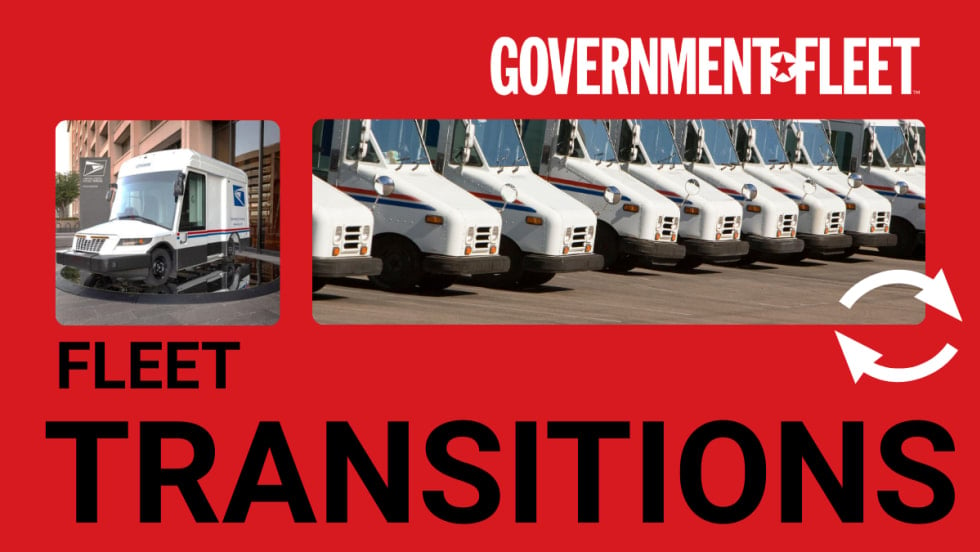
Public Perception of Your Fleet Changes
How fleet transitions shape public perception and how a well-managed rollout can influence your fleet's narrative.
Read More →
The Balancing Act: Stability vs. Shifting Leadership Priorities
With the revolving door of government leadership bringing new priorities fleets are expected to pivot, even if those pivots undermine long-term planning.
Read More →
How Technology is Driving Upgrades in the City of Columbus Fleet Operations
How the city of Columbus fleet has embraced change as a strategic driver, using technology to revolutionize how the fleet fuels, tracks, and measures performance across a 260-square-mile service area.
Read More →
At the End of the Day, Be Good to Yourself
When the stresses of your work life become too much, don't forget to prioritize yourself and find balance in each day.
Read More →