




How to Make the Most of an Old Fleet Facility
Advice from a fleet manager running a successful operation out of a 70-year-old facility.

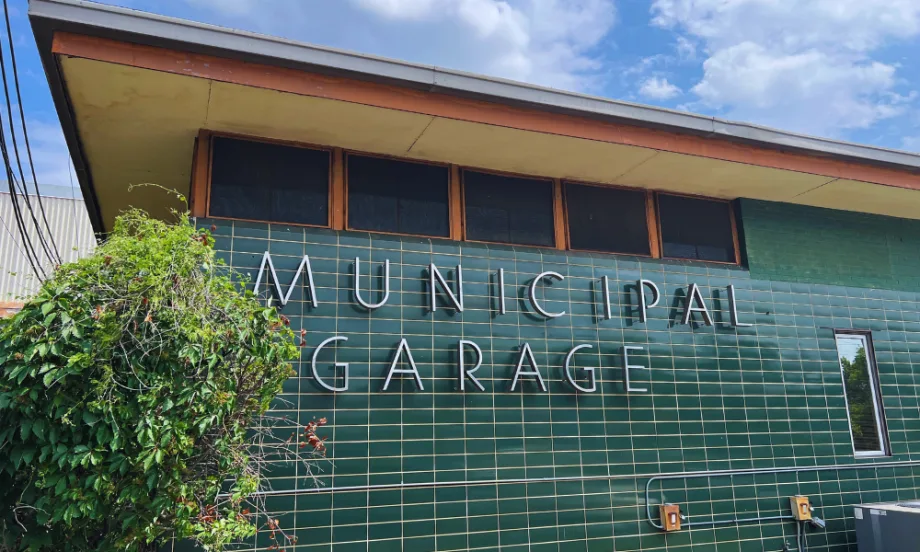
With a fleet of 2,300 mobile assets — including 122 off-road vehicles — and an additional 950 component items like small equipment on top of that — the city of Birmingham's fleet department needs to have a space to work as efficiently as possible.
Photo: Government Fleet
Public sector fleet managers are well aware that old facilities are the norm for fleet operations, and for many governmental operations in general.
While you may not have an opportunity to move into a new facility anytime soon, there are ways you can make the most of the old building you’re in.
Cedric Roberts, CAFM, director of equipment management for the city of Birmingham, Alabama, recommends making the best use of the space you do have, coming up with systems to make your technicians’ workflows run more efficiently, and modernizing your facility.
Working With What You’ve Got
The fleet facility for the city of Birmingham was built in 1953, making it 70 years old. While it’s far from new, the facility itself has been updated in many ways. Some of the major renovations include:
Removing all in-ground lifts and replacing them with portable Rotary lifts.
Creating a two-level parts room with additional storage for overstock, as well as an elevator to ease the movement of large parts.
Creating a two-level office space for more employees.
Installing emergency generators; the fleet building has the city’s largest fueling facility for its vehicles. This allows for fueling, even during power failures and storms — which Birmingham gets a lot of.
Replacing steel fuel tanks with double wall fiberglass tanks.
Adding overhead cranes to several work areas to assist with picking up equipment as needed.
Adding a battery room and core area outside of the parts room to keep them separated from parts personnel.
Installing oil/water separators in all work areas.
Building a car wash so vehicles don’t have to be taken offsite to be cleaned.
The main building at the fleet facility is 56,525 sq. ft., and the smaller building is 6,140 sq ft.
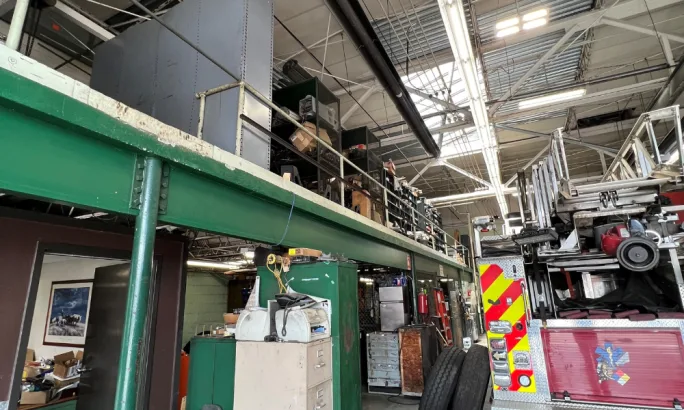
The fleet facility has a two-level parts room with additional storage for overstock.
Photo: Government Fleet
Creating a More Efficient Workspace
With a fleet of 2,300 mobile assets — including 122 off-road vehicles — and an additional 950 component items like small equipment on top of that — Roberts’ department needs to have a space to work as efficiently as possible.
An acronym the city of Birmingham uses across its various departments is “CEETA,” which stands for Customer Service, Effectiveness, Efficiency, Transparency and Accountability.
“Efficiency is a requirement here,” Roberts said of his department. “We took some lessons from the business magnate himself — Henry Ford — and created specialized areas,” he added.
Each vehicle and piece of equipment for the city of Birmingham has a specific area in the facility where it is always serviced.
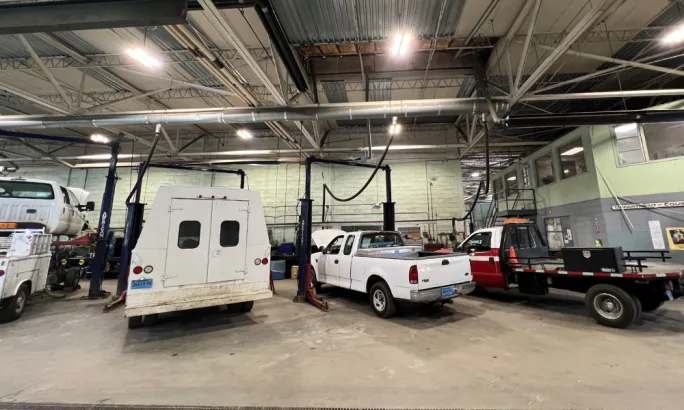
Birmingham's fleet department has 50 bays that can be used to maintain vehicles and equipment. Each bay services only a specific type of equipment or vehicle.
Photo: Government Fleet
Here are some of the sections Roberts’ team came up with in compartmentalizing the facility:
Seasonal equipment.
Truck Shop: for Ford F-550 trucks and heavier.
Motorcycles, ATVs, and EVs.
Fire vehicles and Advanced Life Support units.
Fire Apparatus with a small area for the Birmingham Fire Department’s small equipment like mowers, fans, saws, Jaws of Life, etc.
Pumper shop, which also maintains all mobilized public safety command centers.
Heavy equipment, trailers, non-public safety cars, and Ford F-450 trucks and smaller.
Frontend alignment.
The department has 50 bays that can be used to maintain vehicles and equipment. As mentioned, each bay services only a specific type of equipment or vehicle.
Additionally, Roberts’ team stocks as many parts as possible to help keep vehicles and equipment running. The parts room used to be in an old conference room, but the department quickly outgrew that. Now, there is a two-level parts room.
Working in an Older Building: Things to Consider
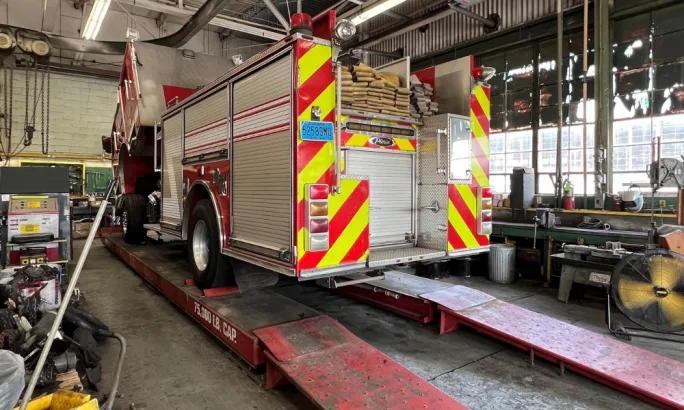
Concrete was repoured in the Fire and Truck Shop to accomodate for larger fire apparatus.
Photo: Government Fleet
There are some things fleet managers must keep in mind when they are working in an older facility. Changes need to be made to accommodate more modern vehicles. Roberts’ team brought in consultants and contractors to help modernize the facility.
For example, concrete was repoured in the Fire and Truck Shop; modern-day fire apparatus are much heavier than those from the 1950s. Additionally, engineers were brought into give approval for the installation of cranes due to the lifting capacity in the Fire Shop since the building was not originally built to accommodate them.
In another example, Wi-Fi capabilities were expanded throughout the entire facility to accommodate technicians’ diagnostic tools.
Running a More Sustainable Operation
Roberts’ department has made small changes to be more sustainable, which can have a huge impact in the long run. One of those changes included converting all facility lighting to LED lighting, which is more efficient, free of toxic chemicals, and durable than its fluorescent predecessor.
Additionally, the fleet department car wash uses recycled water.
In its restrooms, the department has low-flush toilets, which use significantly less water than traditional high-flow toilets.
The decision to replace the in-ground lifts with portable ones was also made with sustainability in mind; Roberts said they tended to leak fluids into the soil.
“We could have easily just continued to add fluid. From an environmental stance and just the desire to do the right thing, we had them removed,” Roberts said.
The lifts, which were powered by hydraulic fluid stored underground in large tanks, were also a constant source of questions from the Alabama Department of Environmental Management.
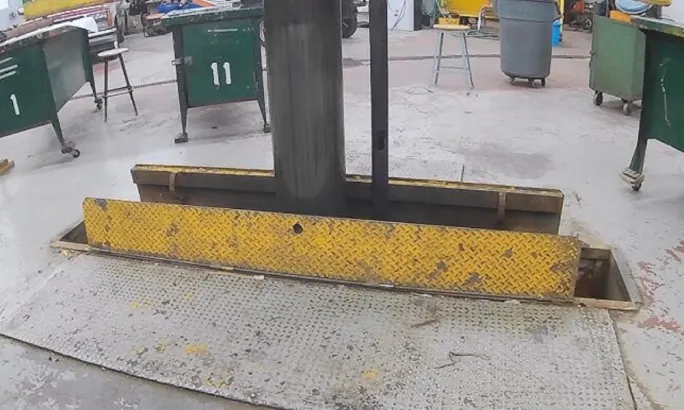
The fleet department replaced its in-ground lifts, one of which is pictured here, with portable ones. The in-ground lifts tended to leak fluids into the soil.
Photo: City of Birmingham
Roberts’ Advice for Other Fleet Managers
One of Roberts’ biggest pieces of advice for fleet managers with older facilities is to remember who the number one asset is: your employees. Safety is always important.
“This includes making sure they are as cool and hydrated as possible in the summer, and warm in the winter. Get those breakrooms air conditioned,” Roberts said.
Roberts recommends creating an employee steering committee for shop improvements so that employees are kept updated about ongoing improvement projects, and so they can offer feedback on what they’d like to see added or changed.
Take a Note from the Rolling Stones
Roberts’ final piece of advice? He urges fleet managers to remember that they will not be able to develop the best work process overnight.
“But once you lay out and implement that initial plan, constantly allow comments from everybody on improvements,” Roberts added. The lyrics of a song by The Rolling Stones seems to fit in this situation: ‘you can't always get what you want.’ You want that new shop. ‘But if you try sometime,’ i.e., make incremental process improvements, then ‘you get what you need.’”
More Operations

Is Keeping Older Fleet Vehicles Really Saving Money?
Is keeping vehicles longer saving money, and what happens when a diagnostic test points to the wrong fix?
Read More →
How Smart Fleet Strategy Can Help Local Government Agencies Do More with Less
Keeping a vehicle longer may ease this year’s budget, but what does it cost the next one? A closer look at fleet decisions can reveal opportunities to reduce spending while protecting essential services.
Read More →
Connect with Government Fleet on LinkedIn
From industry news and fleet management strategies to conversations with peers, Government Fleet's LinkedIn page offers public-sector fleet professionals another way to stay informed and connected.
Read More →
Town of Queen Creek Named Most Successful Fleet Award Winner of Inaugural RTA Fleet Success Awards
Five fleets were honored at RTA Connect 2026 in Chicago for excellence across resource efficiency, intentional culture, risk management, and stakeholder satisfaction.
Read More →
A buyer's guide to fleet management software in 2027
Buying fleet management software in 2027 means looking beyond features and price. As fleet operations, technology and expectations evolve, this guide explores what today’s fleet professionals should consider when choosing a system that can deliver value now and adapt to what comes next.
Read More →
Hazard Alerts, Fleet Car Sales Rise and a New Shuttle Concept
Fleet car sales doubled, but the bigger picture tells a different story in this week’s roundup.
Read More →
How St. Johns County Turned Fleet Data Into Better Replacement Decisions
St. Johns County, Florida, had fleet data, but turning it into reliable decision guidance was another matter. Instead of starting over with a new fleet management system, the county connected existing tools and built a scoring system that gives managers an objective look at fleet health.
Read More →
Fleet Forward Conference Introduces One-Day Passes for 2026
New one-day registration lets fleet professionals attend Tuesday, Wednesday, or Thursday, with passes available for $249.
Read More →
ENC Unveils its ZAVIR Medium-Duty Shuttle
Two variants of the concept shuttles were revealed: a low-floor configuration and a high-floor configuration.
Read More →
Could Your Next Fleet Technician Start as an Intern?
What if your next technician hasn’t worked in a fleet shop yet? What fleets are doing to free up time.
Read More →