





Read More: Editor's Picks of the Top 2023 Government Fleet Stories
Navigating 2024: Key Considerations for Public Sector Fleets Based on Industry Trends
Based on ongoing trends and potential future developments, the following are issues that public sector fleet managers should consider for 2024.
January 1, 2024
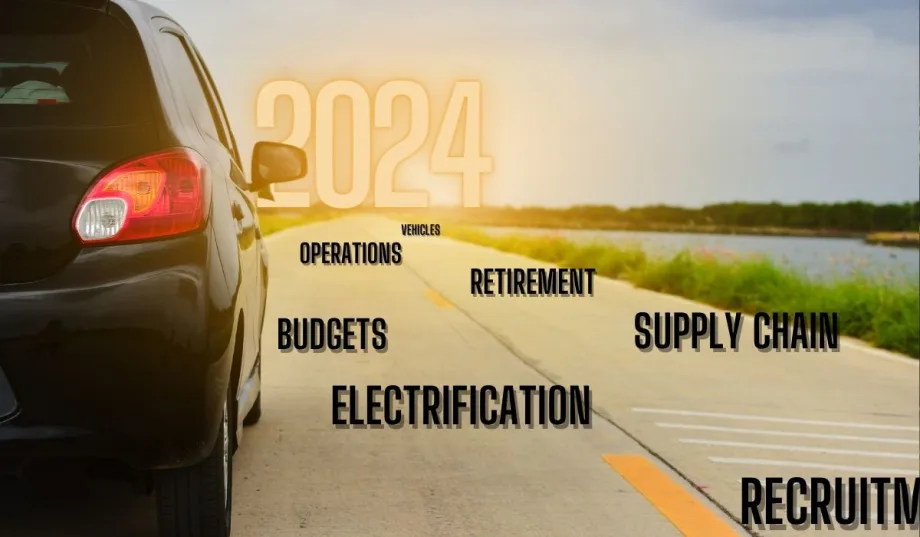
What are you most focused on for 2024? For many fleets, it's more than one thing.
Photo: Government Fleet via Canva.com
5 min to read
As public sector fleet managers gear up for 2024, it's crucial to consider evolving trends and potential challenges that may shape the landscape. Insights gleaned from 2023 articles, including the Government Fleet Industry Handbook, offer valuable perspectives on the upcoming year.
Based on ongoing trends and potential future developments, the following are some issues that public sector fleet managers may encounter in 2024.
Shifting Dynamics in 2023: Outsourcing, Salary Trends, and Workforce Composition
In 2023, outsourcing trends witnessed a notable shift, emphasizing body and paint work, towing, and glass services. Unlike previous years, aging fleets and replacement budgeting emerged as top concerns. Despite this, nearly 40% of respondents maintained a focus on green initiatives. Fleet managers should strategically adapt to these changes for effective planning.
Trends from the previous year continued dominance of experienced fleet managers, with Baby Boomers and Generation X comprising the majority. The reported average salary of $105,080.65 marked a 6.45% increase from 2021. Varied salary ranges were observed, emphasizing the importance of understanding industry benchmarks for compensation to ensure workforce satisfaction.
Planning for What's Ahead and Who Will Take Up the Mantle
Succession planning remains paramount, especially as approximately 59% of respondents plan to retire within the next decade. While 70% of fleets have a succession plan in place or in progress, challenges persist in identifying internal successors. Active training and detailed documentation, as outlined in the 2023 Industry Handbook, provide valuable strategies for smooth leadership transitions.
While the majority of fleets have succession plans in place, challenges persist in identifying internal successors. To address this, fleets should invest in active training programs and detailed documentation to facilitate smooth leadership transitions.
Proactive recruitment strategies, such as partnerships with educational institutions and participation in job fairs, can further ensure a continuous influx of quality candidates. By combining robust training, mentorship programs, and strategic recruitment efforts, fleets can better prepare for retirements and maintain operational excellence.
Maintaining and Improving the Fleet Operation
Fleet sizes have seen fluctuations, with a reported 12% increase from 2021 to 2023. However, the overall trend since 2017 suggests relative stability. Remarketing methods showed minimal change, with approximately 14% of fleets engaging more in online remarketing. Understanding these shifts is essential for effective fleet management.
To navigate the fluctuations in fleet sizes and capitalize on the reported 12% increase from 2021 to 2023, public sector fleets should focus on agile management strategies. Embracing data analytics can provide valuable insights into usage patterns, enabling fleets to right-size their operations and allocate resources efficiently.
Additionally, leveraging online remarketing channels, as observed in the 14% increase, can enhance the disposal process, reaching a broader audience and maximizing returns. By embracing technology-driven solutions and staying adaptable to changing trends, public sector fleets can not only maintain but also improve their operations for long-term sustainability and efficiency.
Sustainability in Fleet Management in the Face of Global Challenges
Sustainable goals are often dismissed as too expensive, but the energy transition demands fleets embrace diversified energy sources. Fleet managers should consider the following sustainability practices:
Alternative Fuels: Encourage the adoption of electricity, biodiesel, natural gas, or hydrogen to reduce emissions.
Vehicle Efficiency: Select fuel-efficient models with advanced technologies, aerodynamic designs, and low rolling resistance tires.
Route Optimization: Use GPS technology and advanced algorithms for fuel-efficient route planning, reducing consumption and emissions.
Maintenance and Telematics: Monitor vehicle health through telematics for optimal fuel efficiency, and implement driver training programs for eco-friendly habits.
Renewable Energy Sources: Utilize solar, wind, or hydroelectric power for charging stations and alternative fuels, reducing the carbon footprint.
Lifecycle Management: Consider eco-friendly manufacturing, recycling, and proper disposal for holistic sustainability.
Continuing to Adapt to Supply Chain Challenges
The surge in vehicle demand, coupled with production limitations, has created a unique dilemma for fleet managers. With OEMs facing challenges in meeting this demand for vehicles, fleet orders have experienced cancellations and delays, compelling fleet managers to reassess inventory, extend vehicle lifecycles, and actively manage the fallout from unpredictable supply chains.
Communication is Key
Transparent communication between OEMs and fleet managers is essential to mitigate the impact of disruptions. Inconsistent information and lack of communication can strain long-term relationships between fleet managers and OEMs. Fleet managers must apply sustained pressure on OEMs, ensuring the continuous flow of vehicle orders and maintaining open lines of communication to foster collaboration and understanding during these challenging times.
Inventory Management Strategies
Facing uncertainties in vehicle deliveries, fleet managers are adopting proactive inventory management strategies. Increasing parts inventory levels, exploring aftermarket sources, and utilizing online platforms for parts procurement are key tactics. Building a robust parts inventory helps minimize downtime, allowing fleets to swiftly address maintenance needs without being overly reliant on the unpredictable supply chain.
Empowering Maintenance Practices
To counteract the challenges posed by extended vehicle lifecycles, fleet managers are emphasizing driver education on optimal maintenance practices. Educating operators on preventive maintenance and fostering a culture of care for fleet assets can decrease wear and tear, ultimately contributing to extended vehicle longevity.
A Call for Patience and Collaboration
While OEMs navigate the needs of fleets, they advocate for patience from fleet managers. Collaborative efforts between OEMs and fleet managers remain paramount to collectively address the impact of supply chain disruptions. These challenges underscore the need for shared solutions, resilience, and adaptability within the fleet management community.
As supply chain uncertainties persist, fleet managers continue to explore innovative solutions, from proactive inventory management to strategic communication, to ensure the resilience and sustainability of their fleets in the face of ongoing disruptions.
Navigating Challenges in 2024: Adapting to Shifts and Ensuring Resilience
As public sector fleet managers prepare for 2024, it's important to look back at 2023. Shifting dynamics in outsourcing, salary trends, and workforce composition demand strategic adaptation. Succession planning is crucial as a significant percentage plans to retire, requiring active training and recruitment efforts.
Improving fleet operations involve agile strategies, data analytics, and sustainability practices. Adapting to supply chain challenges requires transparent communication, proactive inventory management, and empowering maintenance practices. But as fleets have seen in the past, change can happen quickly and having a plan is place is vital in order to get through to the other end.
Subscribe to Our Newsletter
More Operations

What’s Haunting Public Sector Fleets?
Public sector fleet challenges rarely happen in isolation, and addressing one often means understanding how it connects to another.
Read More →
Is Keeping Older Fleet Vehicles Really Saving Money?
Is keeping vehicles longer saving money, and what happens when a diagnostic test points to the wrong fix?
Read More →
How Smart Fleet Strategy Can Help Local Government Agencies Do More with Less
Keeping a vehicle longer may ease this year’s budget, but what does it cost the next one? A closer look at fleet decisions can reveal opportunities to reduce spending while protecting essential services.
Read More →
Connect with Government Fleet on LinkedIn
From industry news and fleet management strategies to conversations with peers, Government Fleet's LinkedIn page offers public-sector fleet professionals another way to stay informed and connected.
Read More →
Town of Queen Creek Named Most Successful Fleet Award Winner of Inaugural RTA Fleet Success Awards
Five fleets were honored at RTA Connect 2026 in Chicago for excellence across resource efficiency, intentional culture, risk management, and stakeholder satisfaction.
Read More →
Sponsored•October 14, 2026
A buyer's guide to fleet management software in 2027
Buying fleet management software in 2027 means looking beyond features and price. As fleet operations, technology and expectations evolve, this guide explores what today’s fleet professionals should consider when choosing a system that can deliver value now and adapt to what comes next.
Read More →
Hazard Alerts, Fleet Car Sales Rise and a New Shuttle Concept
Fleet car sales doubled, but the bigger picture tells a different story in this week’s roundup.
Read More →
How St. Johns County Turned Fleet Data Into Better Replacement Decisions
St. Johns County, Florida, had fleet data, but turning it into reliable decision guidance was another matter. Instead of starting over with a new fleet management system, the county connected existing tools and built a scoring system that gives managers an objective look at fleet health.
Read More →
Fleet Forward Conference Introduces One-Day Passes for 2026
New one-day registration lets fleet professionals attend Tuesday, Wednesday, or Thursday, with passes available for $249.
Read More →
ENC Unveils its ZAVIR Medium-Duty Shuttle
Two variants of the concept shuttles were revealed: a low-floor configuration and a high-floor configuration.
Read More →