





Watch for more: The Future of Government Fleet Technicians with Mike Cleary
2026 Government Fleet Salary Study: Pay Holds Strong as Workforce Pressures Mount
Government fleet managers report steady salary growth and expanding responsibilities, but an aging workforce, technician shortages, and rising technology demands are creating new long-term challenges.
March 23, 2026

Government fleet pay is rising, but agencies face growing pressure from labor gaps, aging workforces, and expanding responsibilities.
Credit:
Government Fleet
3 min to read
- Government fleet managers are experiencing steady salary growth amidst expanding responsibilities.
- An aging workforce and technician shortages pose significant challenges to the sector.
- Increased technology demands are adding to the long-term challenges faced by fleet managers.
*Summarized by AI
Public sector fleet managers continue to see stable salary growth and expanding responsibilities, but concerns about workforce sustainability and evolving technology are beginning to shape the long-term outlook.
This year's salary survey data revealed a compensation landscape that is largely steady but increasingly complex.
Note: this information was collected during a joint Government Fleet, Work Truck, and Automotive Fleet salary survey.
Salaries Remain Strong Across Public Sector Fleets
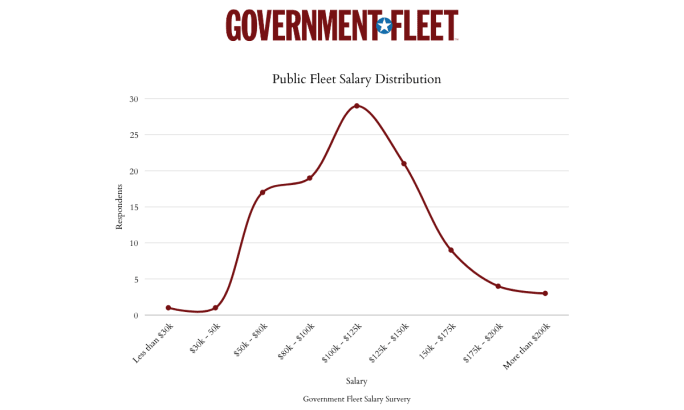
Public sector fleet salaries cluster heavily between $100,000 and $150,000, reflecting strong mid-to-upper-tier compensation across government operations.
Credit:
Government Fleet
Most government fleet managers report salaries between $100,000 and $175,000, with many earning above $175,000 and several exceeding $200,000.
Entry- and mid-level roles remain on the lower end, particularly between $50,000 and $100,000, with the exact amount depending on experience, fleet size, and organizational scope.
Year-over-year, compensation is trending upward:
- Most respondents reported salary increases at their current organization
- Most raises fell between 1% and 6%
- A smaller group saw increases of 7% or more
Together, the data suggest that public sector fleet compensation is keeping pace with inflation and market expectations.
Experience, Scale, and Expanding Responsibilities
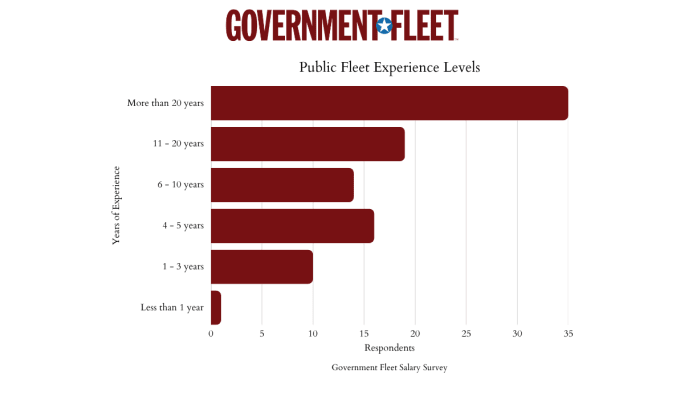
Experience levels among government fleet managers skew heavily toward long-tenured professionals, with the largest segment reporting more than 20 years in the role.
Credit:
Government Fleet
Government fleet leadership continues to be dominated by highly experienced professionals.
Most respondents reported:
- Over 10 years of experience, with many exceeding 20 years
- Responsibility for fleets of more than 1,000 vehicles
- Oversight of teams of five or more employees
These roles are full-time, specialized positions with most managers devoting 76% to 100% of their time to fleet operations.
Additionally, the data shows that fleet managers are no longer focused solely on vehicle acquisition and maintenance.
The modern fleet manager’s responsibilities include:
- Strategic Planning and Coordination
- Facilities Management
- Budgeting and Procurement
- Electrification Transition Initiatives
Electrification is one of the most frequently cited responsibilities across respondents.
Compensation structures, however, have not caught up.
Most fleet managers report insufficient compensation or rewards specifically for achieving sustainability or EV-related goals.
Succession Concerns and Compensation Gaps
Unlike some private-sector operations, government fleets continue to rely heavily on internal teams. Full-scale outsourcing is rare, with most respondents reporting outsourcing less than 20% of their fleet responsibilities.
While compensation remains steady, responses reveal deeper concerns about the future of the workforce, with several highlighting challenges tied to an aging labor pool and lack of incoming talent.
One fleet manager noted:
“The ever-changing technology is making it hard for this 64-year-old Fleet Maintenance Manager to keep current… I often think, ‘who’s going to take over when our generation retires?’”
Recruiting and retaining skilled technicians is becoming increasingly difficult.
Another respondent emphasized the mismatch between job demands and pay:
“The pay scale really needs to be adjusted to attract more talent… they are finding other trades that pay more and require less.”
As vehicles become more complex, particularly with electrification, the need for highly trained technicians is outpacing compensation in some areas.
Technology and Budgets
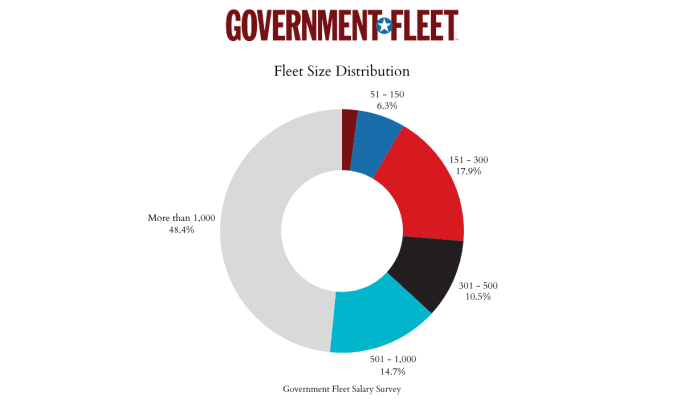
Public sector fleet operations are defined by scale, with large fleets requiring significant resources, staffing, and strategic oversight.
Credit:
Government Fleet
Rapid technological change is also reshaping expectations for fleet managers.
From EV systems to advanced diagnostics, staying current requires continuous learning and adaptation.
As one respondent put it:
“I’m constantly educating myself on all the new technologies out there so I don’t become a dinosaur.”
Despite ongoing discussions around government spending and policy shifts, most respondents report little to no direct impact on compensation or staffing from recent budget cuts or external pressures.
The Road Ahead
The 2026 Government Fleet Salary Study paints a picture of a profession that is:
- Stable in compensation
- Expanding in scope
- Facing mounting workforce challenges
While salaries continue to rise modestly, the long-term health of the industry depends on addressing several key issues:
- Building a stronger talent pipeline
- Aligning compensation with evolving responsibilities
- Supporting workforce development amid rapid technological change
For now, government fleet management remains a rewarding and influential career path, but one that is entering a period of significant transition.
Quick Answers
Government fleet managers are reporting steady salary growth, indicating resilience in pay despite other challenges in the sector.
*Summarized by AI
Subscribe to Our Newsletter
More Operations

Is Keeping Older Fleet Vehicles Really Saving Money?
Is keeping vehicles longer saving money, and what happens when a diagnostic test points to the wrong fix?
Read More →
How Smart Fleet Strategy Can Help Local Government Agencies Do More with Less
Keeping a vehicle longer may ease this year’s budget, but what does it cost the next one? A closer look at fleet decisions can reveal opportunities to reduce spending while protecting essential services.
Read More →
Connect with Government Fleet on LinkedIn
From industry news and fleet management strategies to conversations with peers, Government Fleet's LinkedIn page offers public-sector fleet professionals another way to stay informed and connected.
Read More →
Town of Queen Creek Named Most Successful Fleet Award Winner of Inaugural RTA Fleet Success Awards
Five fleets were honored at RTA Connect 2026 in Chicago for excellence across resource efficiency, intentional culture, risk management, and stakeholder satisfaction.
Read More →
Sponsored•October 14, 2026
A buyer's guide to fleet management software in 2027
Buying fleet management software in 2027 means looking beyond features and price. As fleet operations, technology and expectations evolve, this guide explores what today’s fleet professionals should consider when choosing a system that can deliver value now and adapt to what comes next.
Read More →
Hazard Alerts, Fleet Car Sales Rise and a New Shuttle Concept
Fleet car sales doubled, but the bigger picture tells a different story in this week’s roundup.
Read More →
How St. Johns County Turned Fleet Data Into Better Replacement Decisions
St. Johns County, Florida, had fleet data, but turning it into reliable decision guidance was another matter. Instead of starting over with a new fleet management system, the county connected existing tools and built a scoring system that gives managers an objective look at fleet health.
Read More →
Fleet Forward Conference Introduces One-Day Passes for 2026
New one-day registration lets fleet professionals attend Tuesday, Wednesday, or Thursday, with passes available for $249.
Read More →
ENC Unveils its ZAVIR Medium-Duty Shuttle
Two variants of the concept shuttles were revealed: a low-floor configuration and a high-floor configuration.
Read More →
Could Your Next Fleet Technician Start as an Intern?
What if your next technician hasn’t worked in a fleet shop yet? What fleets are doing to free up time.
Read More →