





Slow and Steady: Queen Creek's Blueprint for Success
The Town of Queen Creek, Arizona, was named a Police Fleet Innovator at GFX 2025. Read and find out how.
July 30, 2025
We spoke to Gwen Black of Queen Creek, Arizona, to learn more about how they achieved a top spot as one of the 2025 Government Fleet's Police Fleet Innovators Award.
Photo: Government Fleet
3 min to read
They say that “necessity is the mother of invention,” and that rings true for the team at Queen Creek.
Faced with supply chain disruptions, Queen Creek implemented changes that propelled them into success, earning them a 2025 Police Fleet Innovators Award at this year’s Government Fleet Conference and Expo.
We spoke to Gwen Black, Fleet Analyst for the town of Queen Creek, Arizona, to find out more about how their innovations moved the needle on their fleet operations.
Planning for the Long-Term
The team at Queen Creek attributes the bulk of its success to its proactive, long-range approach to planning and procurement. “As our Town continues to experience rapid growth, we’ve implemented multi-year forecasting strategies to align fleet acquisitions with departmental expansion—most notably through a two-year vehicle purchasing plan tied directly to the police department’s five-year hiring forecast. By anticipating future needs and preparing in advance, we avoid supply chain bottlenecks and support the Town’s evolving demands,” said Black.
Part of this long-range plan included developing and executing a two-year procurement plan to combat supply chain disruptions. This $10 million initiative allowed Queen Creek to align vehicle purchases with anticipated office hires. With this system in place, Queen Creek would pre-order police-rated vehicles and upfit them before use.
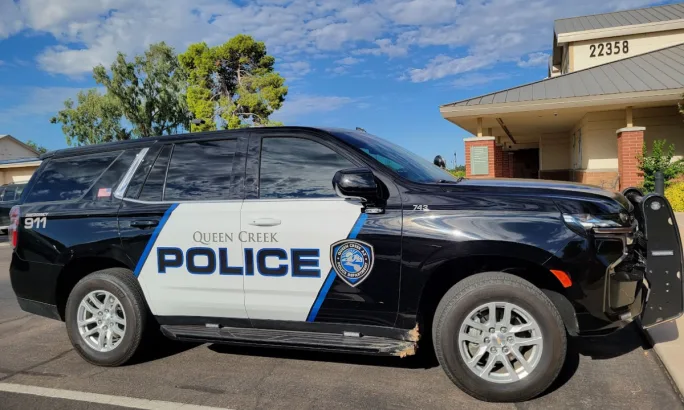
Battling supply chain disruptions, Queen Creek has implemented alternative vehicles, when necessary, to ensure vehicles are available when needed.
Photo: The Town of Queen Creek, Arizona
Gwen Black added, “We also diversified our sourcing methods—partnering with out-of-state vendors, leveraging cooperative contracts, and pursuing direct-sale agreements to overcome local inventory constraints.”
While long-range planning has been transformative to Queen Creek’s efficiency, collaboration has also been crucial. Queen Creek’s partnership with police leadership has allowed them to align fleet growth with staffing projections.
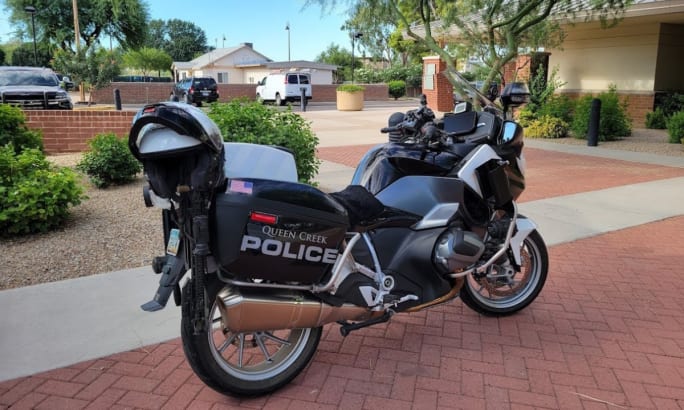
Queen Creek also implemented staggered upfitting and predictive maintenance strategies, which allowed them to ensure that every officer had a fully equipped vehicle while staying within the budget.
Photo: The Town of Queen Creek, Arizona
This partnership ensures that vehicles are procured ahead of office onboarding. It allows Queen Creek to work closely with procurement, finance, and IT to streamline ordering, stay within the budget, and support overall Town goals by keeping all stakeholders informed and aligned with objectives.
Technology and Beyond
Tackling supply-chain disruptions is at the center of Queen Creek’s approach to increasing efficiency and productivity, and that has also influenced its technological improvements. They have incorporated predictive analytics, structured maintenance schedules, and fleet software. These additions have improved vehicle uptime and vehicle longevity. They have also given Queen Creek a plethora of data on their vehicles and operations, allowing them to make informed decisions surrounding preventive maintenance and vehicle replacement cycles.
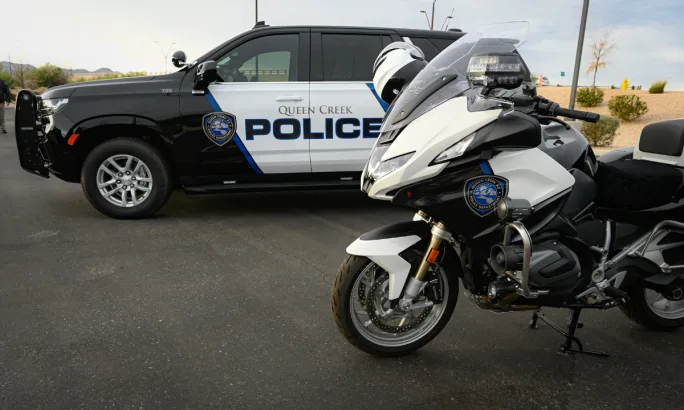
Looking further into the future, Queen Creek plans to explore fleet electrification opportunities.
Photo: The Town of Queen Creek, Arizona
“While Chevrolet Tahoe PPVs remain our core platform due to performance and safety considerations, we’ve added flexibility by integrating alternative vehicles when necessary, ensuring readiness despite production delays,” said Black.
Queen Creek is in the final stages of a new, state-of-the-art fleet maintenance facility. With additional bays and expanded storage, this new space is expected to improve service capabilities and capacity exponentially.
They are also continuing to scale their mobile technician program, which allows for servicing police vehicles off-site and reducing downtime. Looking further ahead, they plan to integrate data analytics to enhance decision-making and long-term sustainability.
When asked what advice Queen Creek would give to other small to mid-sized fleets looking to innovate on a limited budget, Gwen Black shared the following:
“Start with long-term planning—think in years, not months. Even small steps toward predictive procurement can yield big returns. Focus on scalable solutions like staggered upfitting or mobile maintenance to reduce downtime and stretch limited resources. Don’t be afraid to look beyond traditional vendors—expanding your supplier network and use agreements that can offer flexibility and cost savings. Finally, invest in your people and processes—strategic staffing and improved workflows can drive efficiency.”
Subscribe to Our Newsletter
More Operations

Is Keeping Older Fleet Vehicles Really Saving Money?
Is keeping vehicles longer saving money, and what happens when a diagnostic test points to the wrong fix?
Read More →
How Smart Fleet Strategy Can Help Local Government Agencies Do More with Less
Keeping a vehicle longer may ease this year’s budget, but what does it cost the next one? A closer look at fleet decisions can reveal opportunities to reduce spending while protecting essential services.
Read More →
Connect with Government Fleet on LinkedIn
From industry news and fleet management strategies to conversations with peers, Government Fleet's LinkedIn page offers public-sector fleet professionals another way to stay informed and connected.
Read More →
Town of Queen Creek Named Most Successful Fleet Award Winner of Inaugural RTA Fleet Success Awards
Five fleets were honored at RTA Connect 2026 in Chicago for excellence across resource efficiency, intentional culture, risk management, and stakeholder satisfaction.
Read More →
Sponsored•October 14, 2026
A buyer's guide to fleet management software in 2027
Buying fleet management software in 2027 means looking beyond features and price. As fleet operations, technology and expectations evolve, this guide explores what today’s fleet professionals should consider when choosing a system that can deliver value now and adapt to what comes next.
Read More →
Hazard Alerts, Fleet Car Sales Rise and a New Shuttle Concept
Fleet car sales doubled, but the bigger picture tells a different story in this week’s roundup.
Read More →
How St. Johns County Turned Fleet Data Into Better Replacement Decisions
St. Johns County, Florida, had fleet data, but turning it into reliable decision guidance was another matter. Instead of starting over with a new fleet management system, the county connected existing tools and built a scoring system that gives managers an objective look at fleet health.
Read More →
Fleet Forward Conference Introduces One-Day Passes for 2026
New one-day registration lets fleet professionals attend Tuesday, Wednesday, or Thursday, with passes available for $249.
Read More →
ENC Unveils its ZAVIR Medium-Duty Shuttle
Two variants of the concept shuttles were revealed: a low-floor configuration and a high-floor configuration.
Read More →
Could Your Next Fleet Technician Start as an Intern?
What if your next technician hasn’t worked in a fleet shop yet? What fleets are doing to free up time.
Read More →