





Keep Reading: The Technician Transformation
Program Aims to Introduce More Women to Diesel Technology Careers
The Wallace State Community College Diesel Technology program's Women in Diesel initiative is geared toward increasing the number of women and adult learners in diesel technology training.
April 5, 2023
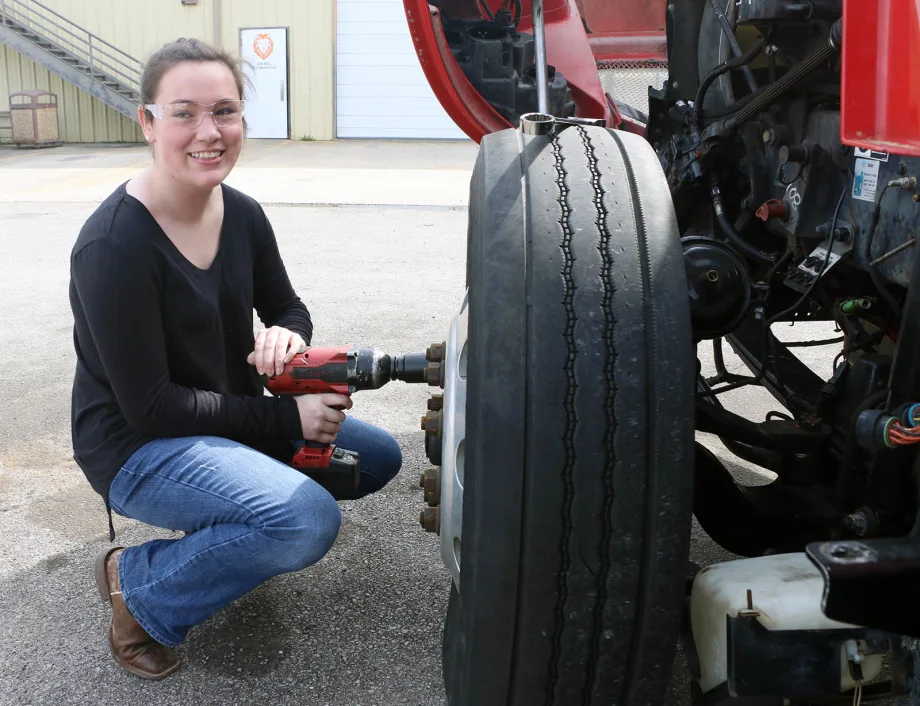
Megan Tucker of Holly Pond is a Dual Enrollment student in the Wallace State Community College Diesel Technology program. She will be on hand for the online Women in Diesel Meet and Greet on April 25 at 5 p.m., for anyone interested in learning more about the WSCC Diesel Technology program.
Photo: Wallace State Community College
2 min to read
Megan Tucker, a current Dual Enrollment student in the Diesel Technology program at Wallace State Community College, Alabama, is excited to complete her degree this summer. Tucker stumbled upon the program online and decided to sign up on a whim. Besides enjoying the program's support from instructors and other students,Tucker has benefited from paid apprenticeship opportunities that have given her valuable on-the-job training to supplement her coursework at Wallace State.
The Women in Diesel initiative is aimed at increasing the number of women and adult learners in diesel technology training and is supported by a grant from the National Science Foundation. Wallace State has partnered with the National Institute of Women in Trades, Technology, and Sciences to increase the diversity of students entering the Diesel Technology program, ultimately providing more opportunities and jobs for women and other adult learner populations under-represented in the diesel technology field.
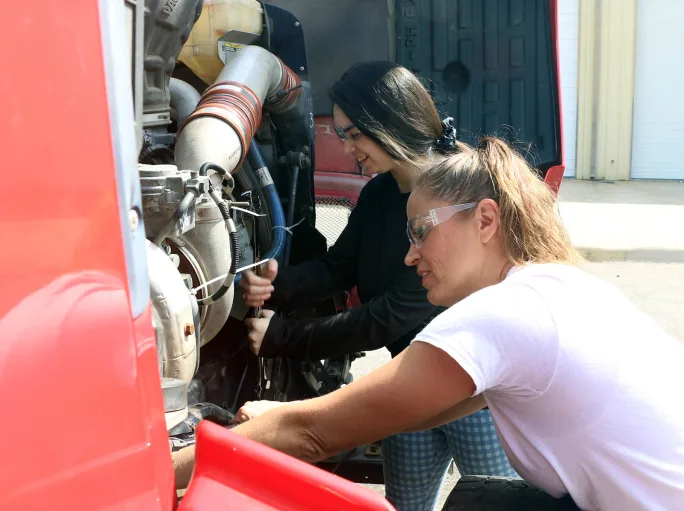
Mary Beth Dudley and Dusty Batemon are two of five women currently enrolled in the Wallace Sate Diesel Technology program. Since 2021, nine women have earned at least one short-term certificate from the program after the introduction of the Women in Diesel initiative.
Photo: Wallace State Community College
In the year before the Women in Diesel initiative began, the WSCC Diesel Technology program had no women enrolled, according to a press release. Since then, nine women have received at least a short-term certificate, and currently, there are five women enrolled in the program. Diesel by Distance coordinator Anna Beard encourages potential female students not to be discouraged by worries about physical strength.
“There are tools that all diesel technicians, men and women, use every day to help with jobs such as moving large tires or engines,” Beard says. “There are many ways technicians can adapt tasks to make completing them a little bit easier.”
According to Wallace State, other highlights of the program and career include:
95% of graduates with a Diesel Technology degree go on to work in positions with a starting pay of $16 to $24/hour, and master technicians can make up to $100,000.
Wallace State Diesel Technology students are receiving job offers before they complete their degree due to high employer demand.
The education program ranges from four months to 2 years, with day, evening, and weekend classes available.
Scholarships and financial aid are available to pay for most students' tuition.
No diesel technology experience is required.
Tucker is happy to see more women joining the diesel technology field, saying, “Diesel technology is not just a man’s field anymore.”
The Wallace State Community College Diesel Technology program will host a Women in Diesel Meet and Greet at the end of April for anyone interested in learning more about the program and what the career outlook is for this industry.
To learn more, visit wallacestate.edu/womenindieselinfo
More Operations
Who Deserves Fleet Recognition and What Could You Teach at GFX?
Who helped shape your fleet career, and what have you learned that could help someone else?
Read More →
What’s Haunting Public Sector Fleets?
Public sector fleet challenges rarely happen in isolation, and addressing one often means understanding how it connects to another.
Read More →
Is Keeping Older Fleet Vehicles Really Saving Money?
Is keeping vehicles longer saving money, and what happens when a diagnostic test points to the wrong fix?
Read More →
How Smart Fleet Strategy Can Help Local Government Agencies Do More with Less
Keeping a vehicle longer may ease this year’s budget, but what does it cost the next one? A closer look at fleet decisions can reveal opportunities to reduce spending while protecting essential services.
Read More →
Connect with Government Fleet on LinkedIn
From industry news and fleet management strategies to conversations with peers, Government Fleet's LinkedIn page offers public-sector fleet professionals another way to stay informed and connected.
Read More →
Town of Queen Creek Named Most Successful Fleet Award Winner of Inaugural RTA Fleet Success Awards
Five fleets were honored at RTA Connect 2026 in Chicago for excellence across resource efficiency, intentional culture, risk management, and stakeholder satisfaction.
Read More →
Sponsored•October 14, 2026
A buyer's guide to fleet management software in 2027
Buying fleet management software in 2027 means looking beyond features and price. As fleet operations, technology and expectations evolve, this guide explores what today’s fleet professionals should consider when choosing a system that can deliver value now and adapt to what comes next.
Read More →
Hazard Alerts, Fleet Car Sales Rise and a New Shuttle Concept
Fleet car sales doubled, but the bigger picture tells a different story in this week’s roundup.
Read More →
How St. Johns County Turned Fleet Data Into Better Replacement Decisions
St. Johns County, Florida, had fleet data, but turning it into reliable decision guidance was another matter. Instead of starting over with a new fleet management system, the county connected existing tools and built a scoring system that gives managers an objective look at fleet health.
Read More →
Fleet Forward Conference Introduces One-Day Passes for 2026
New one-day registration lets fleet professionals attend Tuesday, Wednesday, or Thursday, with passes available for $249.
Read More →