




USPS Tests Virtual Driver, Safety Training
The Virtual Hazard Detection course is designed for experienced drivers who need to focus on decision making and recognizing hazards. The simulator led to a 7% decrease in accidents for one USPS district.

The VHD simulator comes with a monitor, wheel, pedals, and other hardware. Photo courtesy of VDI.
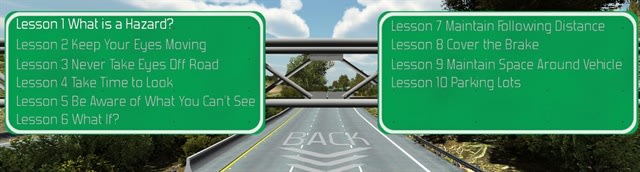
Created by California-based tech company Virtual Driver Interactive, VHD is “designed for adults to focus on their decision making, recognizing hazards, and understanding how to predict, anticipate, and react to everyday hazards.” Photo courtesy of VDI.
Some U.S. Postal Service (USPS) districts are taking a more realistic, hands-on approach to their driver safety training via a virtual simulation that places drivers in various hazardous situations.
First adopted in 2015 by the Queens, New York/Triboro branch of USPS, Virtual Hazard Detection (VHD) is a complete safety training system, featuring a computer monitor, a wheel, pedals, and program software.
Andrea Maddicks, former transportation manager for USPS Queens/Triboro district in New York, implemented the virtual training in her district to help prevent future accidents and give veteran drivers a chance to sharpen their skills.
The VHD simulator led to a 7% decrease in accidents during 2016, one year after it was purchased, Maddicks said.
Created by California-based tech company Virtual Driver Interactive (VDI), VHD is “designed for adults to focus on their decision making, recognizing hazards, and understanding how to predict, anticipate, and react to everyday hazards,” according to company founder and CEO Bob Davis.
The program only takes an hour to complete and features different lessons designed to train and refresh drivers on various hazardous conditions. There are lessons devoted solely to distractions, inattention blindness, parking lots, and extreme weather, such as ice and snow storms.
Davis said the virtual setting helps drivers retain training because it’s more realistic and can cause emotional reactions.
“It's a terrible example, but somebody tells you about running over a dog,” he said. “That's a terrible thing to hear. But if you were driving and you actually did that, emotionally it would be scarring…you would remember it way more than somebody telling you about how bad they felt. And so in simulation… they have the ability if they look the wrong way or they get distracted, they might hit a pedestrian in our virtual world. Well, that really leaves an emotional impact and therefore people learn better.”
Davis said it's important to note that VHD is not the same as virtual reality (VR). Aside from the physical differences — VR users wear headsets — VHD is much better for driver retention because the driver physically goes through the motions of turning, stopping, etc., rather than simply watching the vehicle do it.
Additionally, VR use can lead to nausea and sickness due to the immersion intensity, he said.
While drivers who have completed the training like the real-word feel of the simulation, Maddicks, who now serves as manager of transportation and networks for the USPS Suncoast district in Tampa, Fla., said that many veteran drivers were initially reluctant to try it.
“I guess a lot of people really don’t want to get on it because they’re afraid,” she said. “Because then it shows that their driving abilities are not as good as they thought they were, because they figure they’ve been truck drivers for years.”
A former truck driver, Maddicks said she completed the training herself and that it can help remind drivers to stay alert prior to any accidents.
Avoiding accidents saves the district a lot of money, Davis said. Once an accident occurs, drivers typically have to go through a training session that can take up to a day to complete.
“Imagine...taking a person who normally delivers mail for an entire day and now you're [going to] put them in a classroom to give a refresher training for driver training,” Davis said. “The cost is not just the cost of the training. The cost is having them away from their job for the entire period of training.”
Although she couldn't remember the exact amount, Maddicks said the VHD prgram cost her department between $9,000 and $13,000.
While the simulation itself only takes an hour to complete, Maddicks said she will still require drivers who have been in an accident to complete the regular 40-hour training session in addition to VHD.
Doing this allows Maddicks to better track a driver's progress and accuracy.
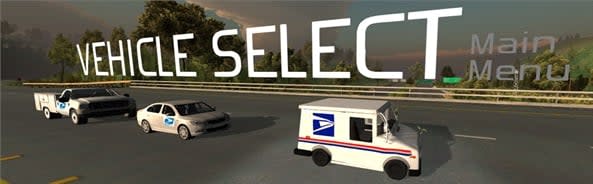
First adopted in 2015 by the Queens, New York/Triboro branch of USPS, Virtual Hazard Detection (VHD) is a complete safety training system, featuring a computer monitor, a wheel, pedals, and program software. Photo courtesy of VDI.
“What [drivers] do wrong out on the obstacle course, they won't come back and tell management,” she said, noting that drivers and driver safety instructors will cover for each other to management. “[VHD] shows you everything that they do through the courses, the time that they have been through that, if they crash. I can print that out and see how they did…Once I see you don't pass that first course I make you go back and start all over again.”
Maddicks started requiring drivers in the Suncoast district to train with VHD in July; she said there hasn’t been a single accident since.
VHD is slated to be expanded to other USPS districts in Florida, including Orlando, Seminole County, and Ft. Meyers.
More Safety
New Partnership Aims to Expand Public Digital Hazard Alert System Statewide
The Hawai’i Department of Transportation (HDOT) is expanding advance digital hazard alerts for the public statewide.
Read More →
New York City Expands Safety Technologies Across Municipal Fleet
Executive Order 19 moves intelligent speed assistance and pedestrian alerts from pilot programs toward standard fleet equipment, offering other public fleets a look at how safety technology can be tested, measured, and scaled.
Read More →
Hidden in Plain Sight: Fleet Compliance Risks
Fleet compliance isn't just about having policies — it's about consistently enforcing them. This practical guide reveals six hidden compliance risks common in public sector and shared fleet operations and outlines proven strategies to improve visibility, accountability, and audit readiness.
Read More →
5 Days Left to Submit Your 2026 Fleet Safety Award Nomination
Know a government fleet, safety, or risk manager who deserves recognition for making fleet operations safer? Nominations are open through Aug. 15.
Read More →
How the First 24 Hours Can Shape a Fleet Crash Response
How a strong accident response process helps government fleets move from the initial report to recovery while building a clearer record for what needs to change next.
Read More →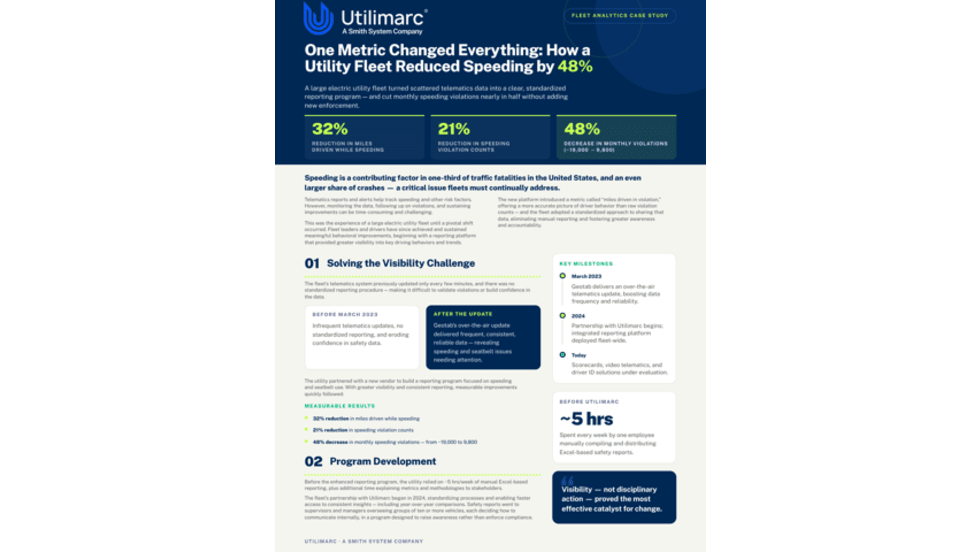
How Better Visibility Cut Speeding Violations by 48%
Fleet leaders don't need more data, they need clearer visibility into what the data is saying. This case study explores how one utility replaced speeding-event counts with a single metric — miles driven in violation — to strengthen safety and significantly reduce speeding violations.
Read More →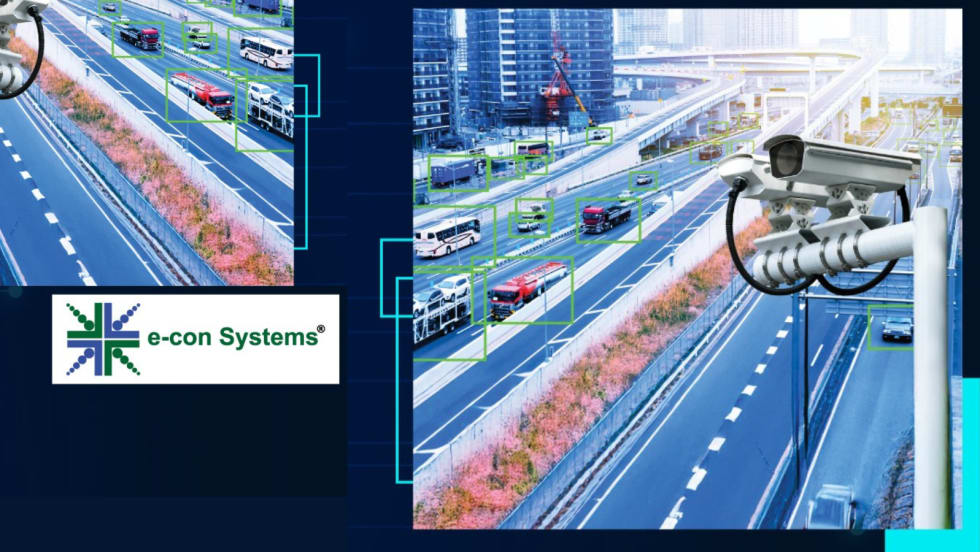
e-con Systems Expands AI Camera Tools for Traffic Monitoring
The systems support license plate recognition, traffic analytics, and video management for transportation agencies.
Read More →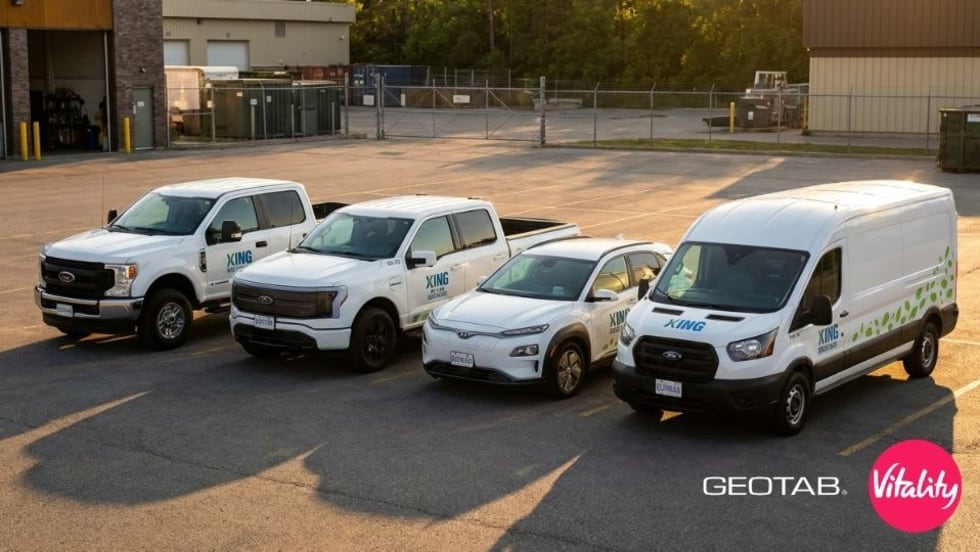
King Township Pilot Links Driver Feedback to Reduced Speeding
How King Township, a best-in-class municipal fleet, reduced speeding by 10.9% and demonstrated a projected 349% ROI by putting safety ownership directly in drivers' hands.
Read More →
Beyond the Fireline: The Critical Role of Public Fleets in Wildfire Response
Behind every wildfire response is a complex network of vehicles, data, and decisions that must work in sync under extreme pressure. Global heating trends require strong fleet coordination and reliable communications to keep crews safe and operations running smoothly.
Read More →
How AI Is Transforming Public Fleet Safety - Part 1
AI-powered safety systems are helping public fleets tackle distracted driving by delivering real-time coaching and measurable behavior change behind the wheel. In part one of our Q&A, Nauto CEO Stefan Heck explains how agencies can improve safety, reduce costs, and navigate implementation challenges with AI-driven technology.
Read More →