





Related: How to Start a Motor Pool
Q&A with Kevin Myose: How Carsharing Saved San Joaquin County $1.7M
When San Joaquin County, Calif., set out to automate its motor pool, the fleet saw improved utilization, better inventory control, and $1.7 million in cost avoidance.
August 17, 2018
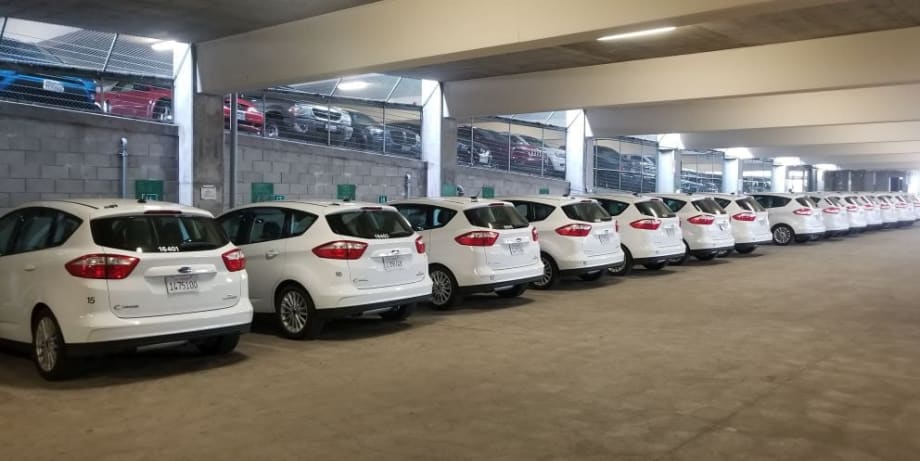
The majority of the compact and intermediate cars in the San Joaquin County, Calif., carsharing program are hybrids, and it's transitioning to plug-in hybrid electric vehicles.
Photo courtesy of San Joaquin County
3 min to read
In 2010, San Joaquin County, Calif., set out to automate its motor pool, turning it into a more effective carshare program. Kevin Myose, fleet manager, said the shift has allowed for improved utilization, better inventory control and reduced paperwork, and $1.7 million in cost avoidance. It now consists of an online reservation system, eight rental locations, and 240 vehicles, processing about 40,000 rentals annually.
With 20% of its fleet pooled, it has one of the highest municipal carsharing rates, according to its provider INVERS.
Myose will be speaking about carsharing at the Fleet Forward Conference on Oct. 9. He spoke with Government Fleet to provide a preview of why the program was started and the implementation process. The Q&A below was edited for length and clarity.
Q: Why did you automate the motor pool?
A: When we had the old motor pool system, cars were checked out once a day. It was a paper-based system. You couldn’t figure out inventory — you had to walk to the garage and look to see what cars were there. We’d get a rush of people who were worried about availability, and they’d check out a car and park it around the corner. Now you can see availability and condition of the vehicle. It’s more flexible and we can get up to four turns in a day. We get on average about twice the use out of the same vehicles.
Q: How do your rates work?
A: We have a fixed cost and a mileage cost. We’re constantly making sure it’s cost-effective. Every six months or so, I check prices against Uber, using a common route. One-way, Uber will beat me, costing $11. But for two ways, my car costs $17, so there is a cost advantage.
Q: What are some challenges you encountered in setting up the system?
Infrastructure was a challenge in the beginning, making sure it would work with our IT department. The rental system uses a lot of bandwidth, and we needed a reliable connection.
Selling it to our user departments was another challenge. We did some training and rolled out a pilot program with Public Works with six vehicles. We figured the engineers in the department were techie and would get it, and it worked out well. When we rolled it out to the larger user base, initially a lot of people were fretting about it. But after the first couple of months, we stopped having to do any training — they were teaching each other.
Q: What are the biggest advantages so far?
Higher utilization allowed us to reduce our fleet by 58 vehicles. That amounts to $1.7 million in replacement cost avoidance. And we’re definitely getting better use of our vehicles. People can’t hold inventory like they used to in the past.
Q: What’s next?
Right now, the rental rate varies based on mileage, but we have a class-based fixed rate system. We want to change that in the future. We’re also looking to get some equipment into the system, like dump trucks and backhoes. There’s a lot of stuff that’s seasonal, some of the stuff we don’t need as much. We can keep it, or sell it, or share it if two departments don’t need it at the same time.
Learn more about the benefits of carsharing, how to start or expand it in your own fleet, and how technology can improve customer mobility at the Fleet Forward Conference, which takes place Oct. 8-10 in San Francisco. Myose will be joining Alan Woodland from INVERS and Thi Dao from Government Fleet in a discussion, “Transforming the Motor Pool to a Shared Fleet – A Municipal Fleet Case Study,” on Oct. 9.
More Operations

How St. Johns County Turned Fleet Data Into Better Replacement Decisions
St. Johns County, Florida, had fleet data, but turning it into reliable decision guidance was another matter. Instead of starting over with a new fleet management system, the county connected existing tools and built a scoring system that gives managers an objective look at fleet health.
Read More →
Fleet Forward Conference Introduces One-Day Passes for 2026
New one-day registration lets fleet professionals attend Tuesday, Wednesday, or Thursday, with passes available for $249.
Read More →
ENC Unveils its ZAVIR Medium-Duty Shuttle
Two variants of the concept shuttles were revealed: a low-floor configuration and a high-floor configuration.
Read More →
Could Your Next Fleet Technician Start as an Intern?
What if your next technician hasn’t worked in a fleet shop yet? What fleets are doing to free up time.
Read More →
How Phoenix Is Building Its Next Generation of Fleet Technicians
With more than 8,000 vehicles and pieces of equipment to maintain, the City of Phoenix could not afford to wait for fully trained technicians to walk through the door. Instead, they revamped their entire workforce strategy and showed how public fleets can create their own talent pipeline while preparing existing employees for increasingly complex vehicles.
Read More →
What’s Slowing Your Fleet Down?
Could a change in how work gets done help your fleet return vehicles to service sooner?
Read More →
Can Public Fleets Trust the Data Driving Their Decisions?
Public fleets have more data than ever, but inconsistent records and missing information can still undermine maintenance, replacement, and cost decisions.
Read More →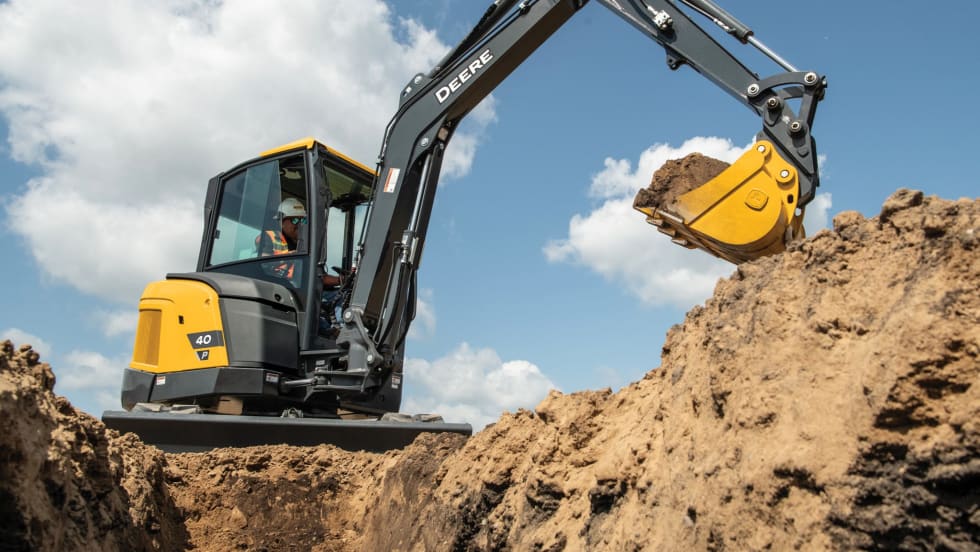
John Deere Introduces 40 P-Tier Compact Excavator
John Deere is adding a compact excavator designed for crews that need to move equipment between jobsites and handle multiple types of work with one machine. The 40 P-Tier weighs less than 10,000 pounds and offers configurable hydraulics, attachment options, and connected fleet-management capabilities.
Read More →
How Leading Fleets Improve and Why Business Plans Matter
This week, we look at what past Leading Fleet winners can teach us about making progress, plus how to build a business plan your fleet will actually use.
Read More →
Nominate a Fleet Leader for the 2027 Public Fleet Hall of Fame
Do you know a fleet leader who has made a lasting impact on the industry? Nominate this fleet professional for the 2027 Public Fleet Hall of Fame.
Read More →