




Lynchburg Names Ken Lett Director of Fleet Services
Veteran public sector fleet leader Ken Lett brings more than 20 years of experience in strategic planning, financial oversight, and technology-driven operations to his new role leading the City of Lynchburg’s fleet program.
April 23, 2026

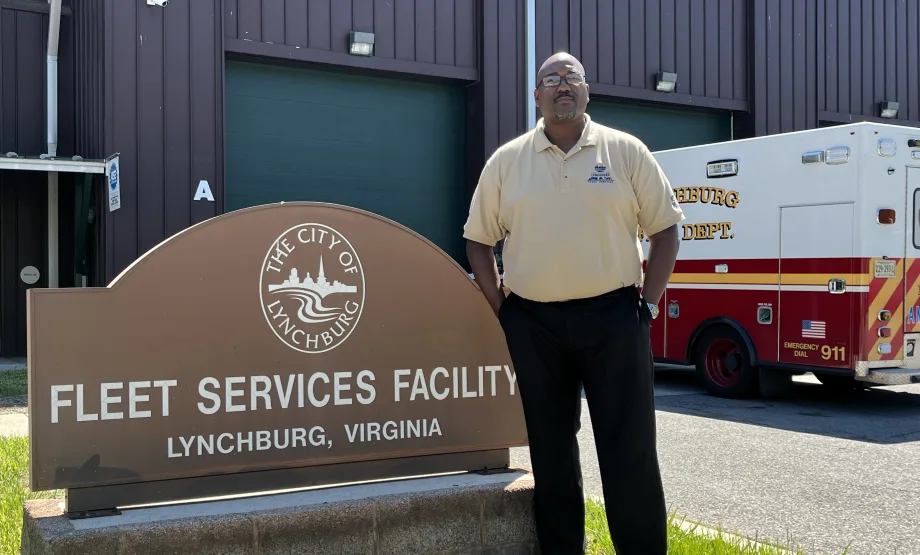
Veteran public sector fleet leader Ken Lett brings more than 20 years of experience in strategic planning, financial oversight, and technology-driven operations to his new role leading the City of Lynchburg’s fleet program.
Credit:
Ken Lett
4 min to read
Ken Lett has taken over as director of Fleet Services for the City of Lynchburg, Virginia, bringing more than two decades of experience in public sector fleet management to the role.
Before joining Lynchburg, Lett served in Alexandria, Virginia, as Program Administrator, Fleet Acquisitions Manager, and Deputy Division Chief, where he oversaw long-range fleet planning and managed a vehicle replacement program of more than $60 million across a fleet of more than 1,300 assets.
He also worked on expanding EV adoption, improving motor pool utilization, and integrating telematics and fuel monitoring systems.
Early Career and the Journey to Lynchburg
Prior to Alexandria, Lett worked as a management analyst with Arlington County Government, where he handled procurement processes, financial and variance analysis, capital improvement planning, and grant compliance.
Earlier in his career, he worked for the Metropolitan Washington Airports Authority, where his responsibilities included project management, operational coordination, and emergency response planning.
He holds an MBA in Human Resource Management from Strayer University and a bachelor’s degree in Aviation and Business Management from Hampton University. He is also pursuing his Certified Automotive Fleet Manager designation through NAFA.
Lett said taking on the position at Lynchburg stood out because it offered the chance to take a more direct role in shaping a fleet operation.
“Lynchburg represents the right balance of opportunity and impact. I was looking for a role where I could take full ownership of a fleet operation while still being hands on in shaping strategy, culture, and long-term planning. The city’s commitment to improving operations and investing in its fleet was very appealing. It felt like a place where my experience in building structure, strengthening financial management, and modernizing fleet practices could make an immediate and meaningful difference.”
Planning Now for the Road Ahead
As he begins in Lynchburg, Lett said his first step is to assess the operation, the team, and the needs of the departments the fleet serves. He said that process will shape his near-term priorities.
“My first priority is to listen and assess to capture a clear understanding of the current operation, the team, and the needs of the departments we support,” he said.
From there, Lett plan to focus on four key areas:
- Ensuring the fleet is reliable and meeting service expectations.
- Strengthening financial visibility and lifecycle planning.
- Supporting and developing the team.
- Establish trust, both within the division and with our stakeholders.
He said his time in Alexandria reinforced the importance of planning ahead, staying disciplined financially, and keeping communication with stakeholders consistent. It also shaped his view of how fleet operations connect to larger organizational goals.
“In Alexandria, I learned the value of data driven decision making and proactive planning. Managing a large, complex fleet requires strong financial discipline, clear replacement strategies, and consistent communication with stakeholders. I also saw how important it is to align fleet operations with broader organizational goals, whether that’s sustainability, cost control, or service delivery,” he said. “I also learned that investing in people such as giving staff the tools, training, and support they need has a direct impact on overall operational success of the department.”
Looking ahead, Lett said Lynchburg’s biggest opportunity lies in taking a more structured approach to long-term fleet management. He pointed to replacement planning, data use, and cost efficiency as areas where the city can build momentum.
“The greatest opportunity at this time is in building a more structured, forward-looking approach to fleet management. That includes refining replacement planning, leveraging data to improve decision making through technology such as telematics, and identifying opportunities for cost savings and efficiency,” he said. “There’s also an opportunity to strengthen communication with departments so the fleet operation is seen not just as a service provider but as a strategic partner that will assist in their success.”
Defining Success in a New Operational Role
For Lett, success after the first year would mean a fleet operation that is more consistent and easier for departments and city leadership to rely on.
“Success, a year from now, is an operation that is structured, transparent, and consistently delivering. Decision making is data driven, financial planning is clear and proactive, and departments trust the fleet to meet their needs,” he said. “The Fleet department team is engaged, supported, and operating with a strong sense of ownership and accountability on a daily basis.”
He also acknowledged that Lynchburg already has a strong base to build from, noting the city’s past national recognition, including a ranking of 16th in NAFA’s 100 Best Fleets. His focus now is on reviewing current practices, identifying areas for improvement, and expanding the use of technology where it makes sense.
Subscribe to Our Newsletter
More Operations

Is Keeping Older Fleet Vehicles Really Saving Money?
Is keeping vehicles longer saving money, and what happens when a diagnostic test points to the wrong fix?
Read More →
How Smart Fleet Strategy Can Help Local Government Agencies Do More with Less
Keeping a vehicle longer may ease this year’s budget, but what does it cost the next one? A closer look at fleet decisions can reveal opportunities to reduce spending while protecting essential services.
Read More →
Connect with Government Fleet on LinkedIn
From industry news and fleet management strategies to conversations with peers, Government Fleet's LinkedIn page offers public-sector fleet professionals another way to stay informed and connected.
Read More →
Town of Queen Creek Named Most Successful Fleet Award Winner of Inaugural RTA Fleet Success Awards
Five fleets were honored at RTA Connect 2026 in Chicago for excellence across resource efficiency, intentional culture, risk management, and stakeholder satisfaction.
Read More →
Sponsored•October 14, 2026
A buyer's guide to fleet management software in 2027
Buying fleet management software in 2027 means looking beyond features and price. As fleet operations, technology and expectations evolve, this guide explores what today’s fleet professionals should consider when choosing a system that can deliver value now and adapt to what comes next.
Read More →
Hazard Alerts, Fleet Car Sales Rise and a New Shuttle Concept
Fleet car sales doubled, but the bigger picture tells a different story in this week’s roundup.
Read More →
How St. Johns County Turned Fleet Data Into Better Replacement Decisions
St. Johns County, Florida, had fleet data, but turning it into reliable decision guidance was another matter. Instead of starting over with a new fleet management system, the county connected existing tools and built a scoring system that gives managers an objective look at fleet health.
Read More →
Fleet Forward Conference Introduces One-Day Passes for 2026
New one-day registration lets fleet professionals attend Tuesday, Wednesday, or Thursday, with passes available for $249.
Read More →
ENC Unveils its ZAVIR Medium-Duty Shuttle
Two variants of the concept shuttles were revealed: a low-floor configuration and a high-floor configuration.
Read More →
Could Your Next Fleet Technician Start as an Intern?
What if your next technician hasn’t worked in a fleet shop yet? What fleets are doing to free up time.
Read More →