




Police Fleets Impressed with Police Interceptor Features
LAS VEGAS - Dozens of U.S. and Canadian police fleet managers introduced to Ford's Police Interceptor at the Las Vegas Motor Speedway event last week were impressed by the vehicle's power, safety features, and ergonomics, according to POLICE magazine.
LAS VEGAS- Dozens of U.S. and Canadian police fleet managers introduced to Ford's Police Interceptor at the Las Vegas Motor Speedway event last week were impressed by the vehicle's power, safety features, and ergonomics, according to POLICE magazine.
"This car integrates a lot of stuff that's been missing that we've needed," said Sgt. Martin Bronisz, fleet manager of the Erie County Sheriff's Office covering the most populous county in western New York. "A lot of the stuff I see answers complaints from my guys," he told POLICE.
The vehicle is available with Ford's EcoBoost engine, a 3.5L, V-6 twin-turbocharged, direct-injection engine that will deliver 365 hp and 350 ft.-lb. of torque across a broad rpm range (from 1,500 to 5,200).
The vehicle can reach 60 mph from a dead stop in the 5-second range, said POLICE Editor David Griffith, who rode in the vehicle.
Using computer-designed crush zones, Ford will build the unibody frame using Boron steel - the strongest in auto manufacturing, according to the company-on a new "D 3" plaform that was used for the 2010 Taurus sedan. As a result, the vehicle has been given a five-star crash rating by the National Highway Traffic Safety Administration (NHTSA).
"The safety improvements are very important, especially the crush zones," said Scott Lindsey, fleet manager of the Peel Regional Police in Ontario, Canada. "They will help the occupants walk away from accidents."
With the EcoBoost engine, the vehicle gets 28 percent better gas mileage than the CVPI, and the engine has 75 new or redesigned parts. The automaker is applying diesel-engine technology to achieve this improvement on the all-wheel drive version.
"We're just applying it to a gasoline engine," said Corey Weaver, EcoBoost engine engineer.
Bronisz and other fleet managers from the Eastern seaboard said they were excited by an all-wheel drive Ford patrol car that could be more effective during colder months with snow-covered roads. Others said a front-wheel-drive car will work once officers receive training on it. With this type of vehicle, a driver can lose steering during quick accelleration from stop.
"The problem with front-wheel drive is that officers are not trained for it," said Wyatt Earp, fleet director of the Marion County (Fla.) Sheriff's Office. Once we're trained for it and used to it, it will be OK."
One of Ford's tests involved driving the vehicle over 8-inch curbs.
The vehicle has been designed to make installation of electronic equipment easier, and the rear door swings out 71 degrees, which is "exceptionally good for prisoner transport," Earp added.
More Safety
New Partnership Aims to Expand Public Digital Hazard Alert System Statewide
The Hawai’i Department of Transportation (HDOT) is expanding advance digital hazard alerts for the public statewide.
Read More →
New York City Expands Safety Technologies Across Municipal Fleet
Executive Order 19 moves intelligent speed assistance and pedestrian alerts from pilot programs toward standard fleet equipment, offering other public fleets a look at how safety technology can be tested, measured, and scaled.
Read More →
Hidden in Plain Sight: Fleet Compliance Risks
Fleet compliance isn't just about having policies — it's about consistently enforcing them. This practical guide reveals six hidden compliance risks common in public sector and shared fleet operations and outlines proven strategies to improve visibility, accountability, and audit readiness.
Read More →
5 Days Left to Submit Your 2026 Fleet Safety Award Nomination
Know a government fleet, safety, or risk manager who deserves recognition for making fleet operations safer? Nominations are open through Aug. 15.
Read More →
How the First 24 Hours Can Shape a Fleet Crash Response
How a strong accident response process helps government fleets move from the initial report to recovery while building a clearer record for what needs to change next.
Read More →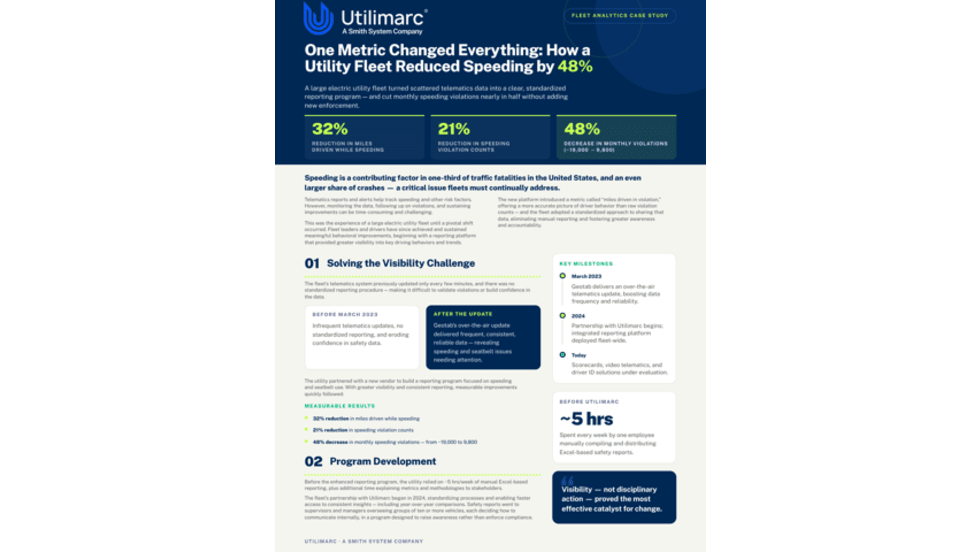
How Better Visibility Cut Speeding Violations by 48%
Fleet leaders don't need more data, they need clearer visibility into what the data is saying. This case study explores how one utility replaced speeding-event counts with a single metric — miles driven in violation — to strengthen safety and significantly reduce speeding violations.
Read More →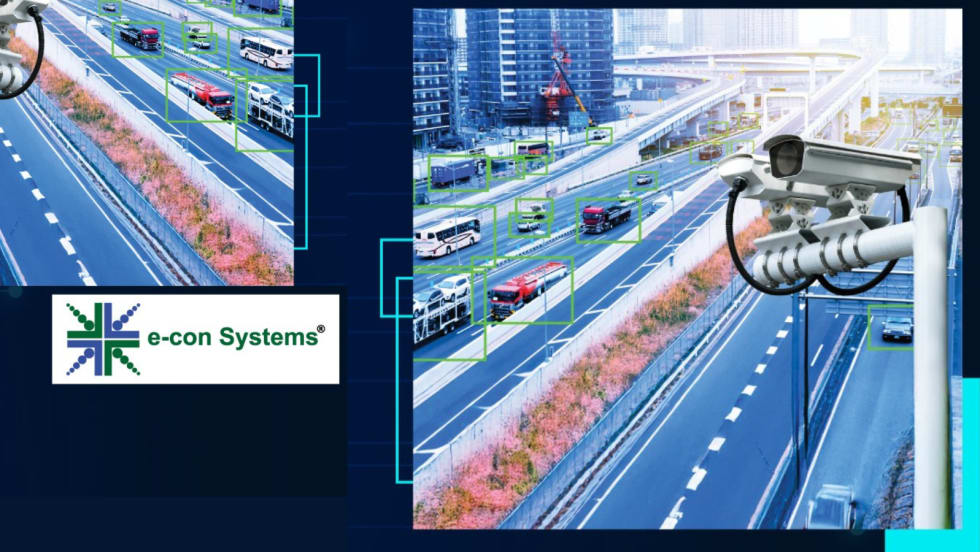
e-con Systems Expands AI Camera Tools for Traffic Monitoring
The systems support license plate recognition, traffic analytics, and video management for transportation agencies.
Read More →
King Township Pilot Links Driver Feedback to Reduced Speeding
How King Township, a best-in-class municipal fleet, reduced speeding by 10.9% and demonstrated a projected 349% ROI by putting safety ownership directly in drivers' hands.
Read More →
Beyond the Fireline: The Critical Role of Public Fleets in Wildfire Response
Behind every wildfire response is a complex network of vehicles, data, and decisions that must work in sync under extreme pressure. Global heating trends require strong fleet coordination and reliable communications to keep crews safe and operations running smoothly.
Read More →
How AI Is Transforming Public Fleet Safety - Part 1
AI-powered safety systems are helping public fleets tackle distracted driving by delivering real-time coaching and measurable behavior change behind the wheel. In part one of our Q&A, Nauto CEO Stefan Heck explains how agencies can improve safety, reduce costs, and navigate implementation challenges with AI-driven technology.
Read More →