




Mitsubishi Caterpillar Forklift America Introduces Jungheinrich Warehouse Navigation System Technology for North America
HOUSTON – The system uses transponder radio frequency identification (RFID) technology to control guided Jungheinrich very narrow-aisle lift trucks within the aisles of a warehouse.
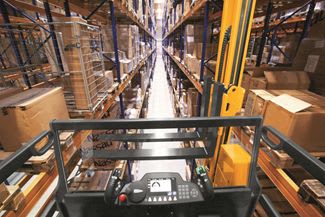
The system uses transponder RFID technology to control narrow-aisle lift trucks within the aisles of a warehouse. Photo by MCFA.
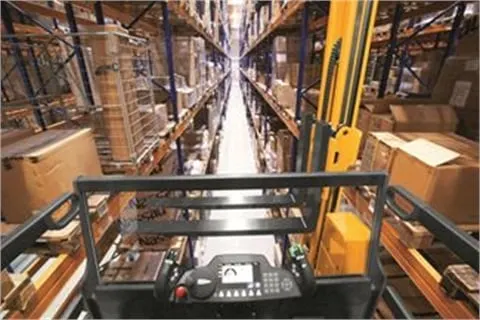
The system uses transponder RFID technology to control narrow-aisle lift trucks within the aisles of a warehouse. Photo by MCFA.
HOUSTON – Mitsubishi Caterpillar Forklift America Inc. (MCFA), a leading provider of forklift trucks in the United States, Canada, and Mexico, introduced the Jungheinrich Warehouse Navigation system technology to the North American market. The system, which is designed to increase efficiency and productivity in narrow-aisle applications, uses transponder radio frequency identification (RFID) technology to control guided Jungheinrich very narrow-aisle lift trucks within the aisles of a warehouse. Utilizing the system, customers can expect an up to 25% increase in productivity, depending on the application environment.
“Jungheinrich’s Warehouse Navigation technology is the first of its kind available in North America,” said Michael Wiesenegg, product line manager of warehouse systems for MCFA. “The Jungheinrich brand is recognized worldwide for its innovative warehouse material handling products and solutions, and it’s exciting that customers in North America now have access to a system that is proven to significantly boost productivity, reduce logistics costs and improve flexibility.”
The Warehouse Navigation system is a semi-automatic approach to reaching pallet positions within the aisles of a warehouse. Transponders are placed in the warehouse floor at specific distances and are used to communicate with a RFID reader / writer in the lift truck to identify warehouse aisle locations and distances. Armed with this information and the forklift’s height measuring capability, the system knows its location within the aisles at all times and can be programmed to reach specific pallet positions by selecting the most efficient combination of traveling and lifting.
The customer can choose to integrate the system with the existing warehouse management system (WMS), allowing for seamless transmission of orders to the operator’s RF terminal that is installed on the forklift. Once the order is received, the operator can activate the accelerator and the lift truck will drive to the designated pallet position. The lift truck can then store/retrieve a pallet automatically, or stop, allowing the operator to pick from the current pallet location.
Key features and benefits of the Jungheinrich Warehouse Navigation system include:
Increased productivity by up to 25%. The lift truck selects the optimum combination of driving and lifting to reach a pallet position in the fastest and most efficient way possible. The system also helps reduce product damage, because lifting and putting away of the pallet is controlled by the forklift in most instances, not the operator.
High order picking and stacking accuracy. When the lift truck arrives at the designated pallet position, a spotlight (optional) illuminates the picking position, showing the operator which side of the aisle and which location to pick from. During pallet retrieval and put-away, the Warehouse Navigation system helps to ensure the correct pallet is moved based on the order received from the customer’s WMS.
Improved operator safety and control. The Warehouse Navigation system relies on orders from the customer’s WMS to operate in a semi-automatic mode, selecting the most efficient path based on the items included on the order. However, the operator can deactivate the Warehouse Navigation system to manually operate the truck when needed.
Adjustable warehouse layout. Warehouse Navigation is adaptable to future changes in the warehouse structure, allowing for maximum flexibility. While some navigation systems rely on integration of magnets or reflective markers, the use of transponder technology offers complete freedom. If a rack row changes or if more racking bays are added, the transponders are simply reprogrammed and the new configuration is stored in the controller. Changes are made using a laptop, and new layouts can be adjusted within minutes. The transponder is also easy to install and cost effective.
More Equipment
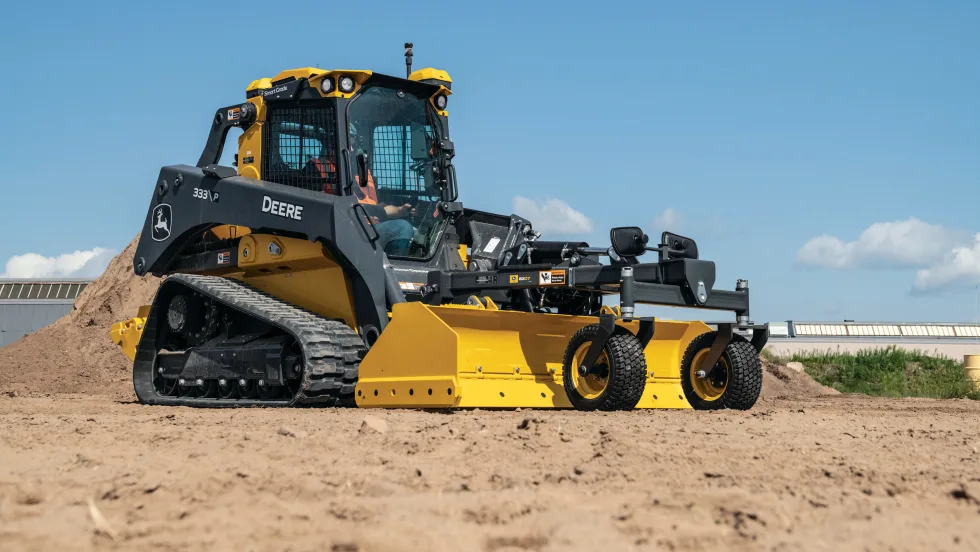
John Deere Adds SmartGrade Box Blades, Fire Suppression Option
John Deere is expanding the capabilities of its compact track loaders with new grading attachments and an equipment protection option. The additions include two SmartGrade box blades for the 333 and 335 P-Tier models and an integrated fire suppression system for large-frame machines.
Read More →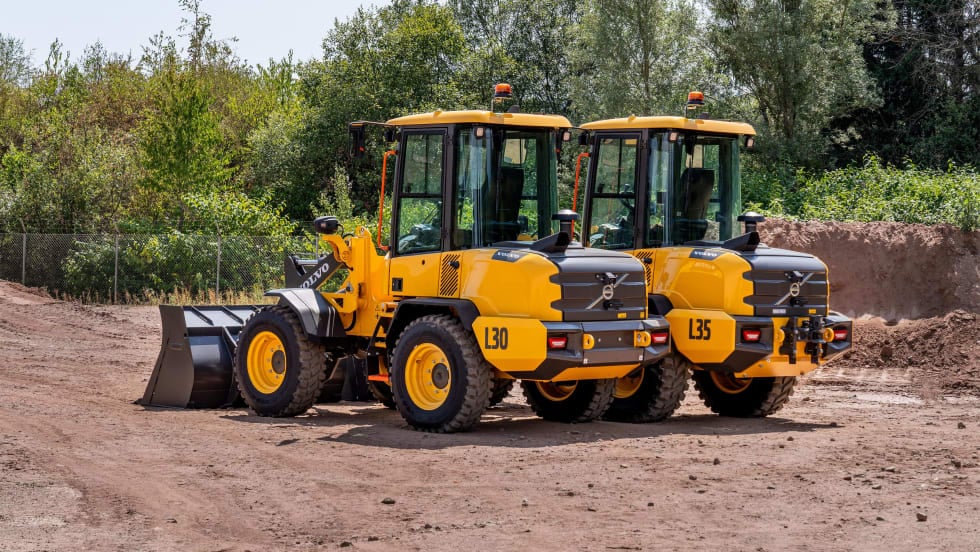
Volvo Updates L30 and L35 Compact Wheel Loaders With Redesigned Rear Frame
The updates aim to provide customers with more flexibility to use the machines for different jobs while improving service access and everyday operation.
Read More →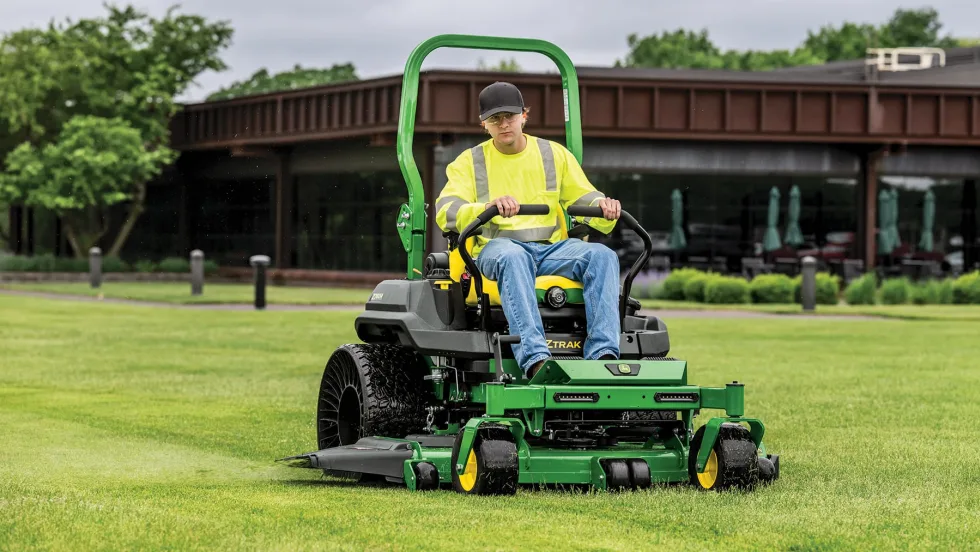
John Deere Updates Z700 ZTrak Commercial Mower Lineup
Public agencies responsible for maintaining large properties have several updated mower options from John Deere. The refreshed Z700 ZTrak lineup adds upgraded engines, transmissions, mower decks, and operator features across four models.
Read More →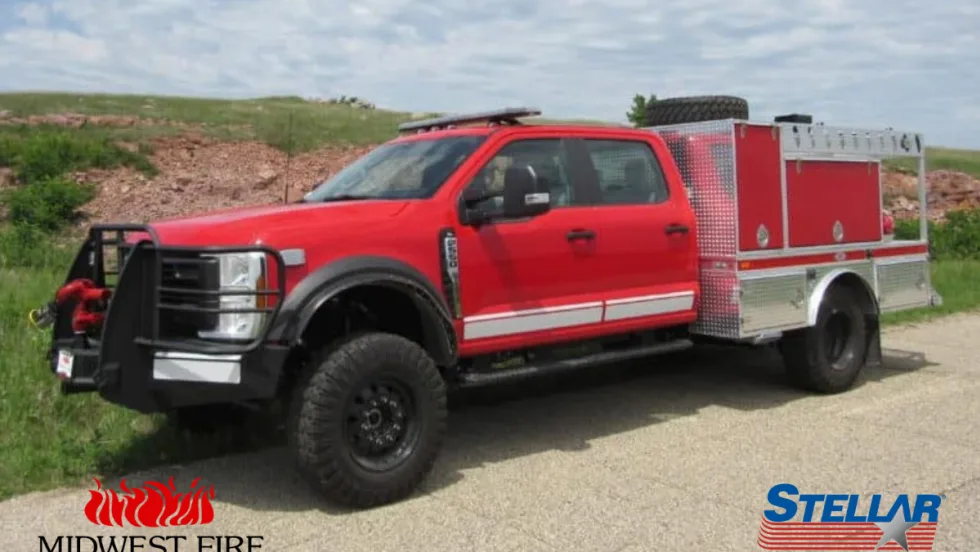
Stellar Industries Acquires Midwest Fire
The acquisition brings a manufacturer of custom fire apparatus under Stellar Industries, expanding the work-truck manufacturer into the fire and emergency response market. Midwest Fire will continue operating from its existing Minnesota headquarters as a distinct company.
Read More →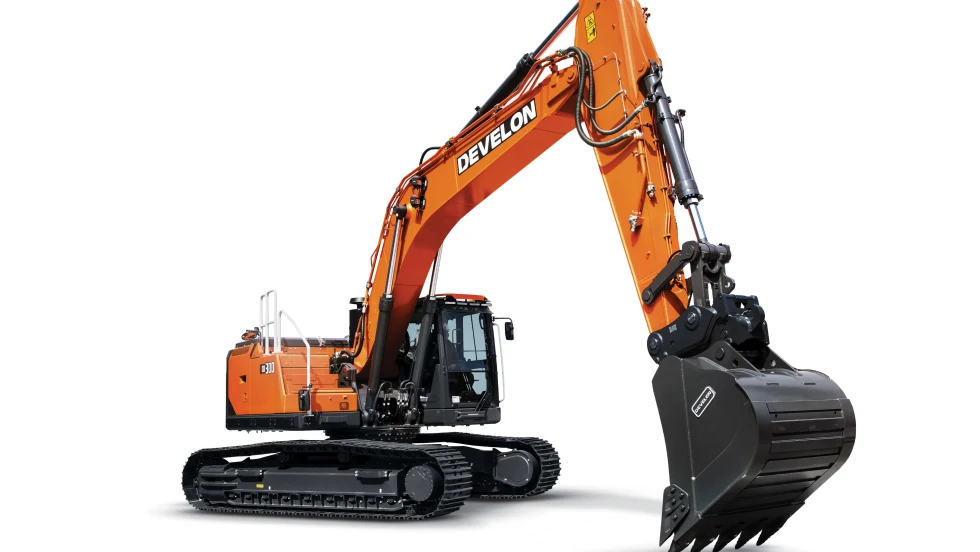
DEVELON Adds DX300LC-9 Excavator to -9 Series
For public works operations handling infrastructure, road, and utility projects, DEVELON has added a new 33-metric-ton excavator to its equipment lineup. The DX300LC-9 combines updated controls with technology designed to address operator safety, equipment monitoring, and machine operation.
Read More →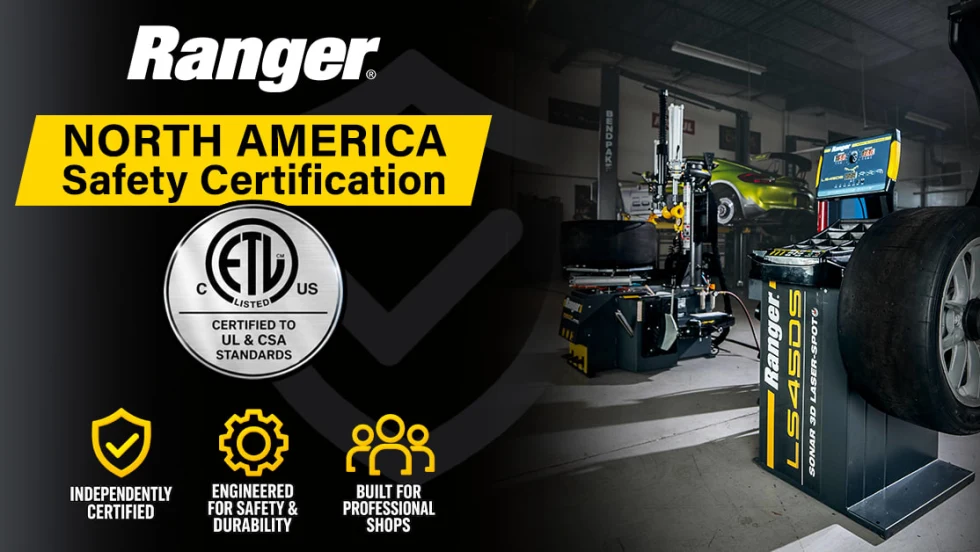
BendPak Ranger Wheel Service Equipment Receives Safety Certification
Equipment used every day in fleet maintenance shops comes with its own set of safety considerations. Following an 18-month redesign and testing process, BendPak's Ranger tire changers and wheel balancers have received certification to applicable U.S. and Canadian safety standards.
Read More →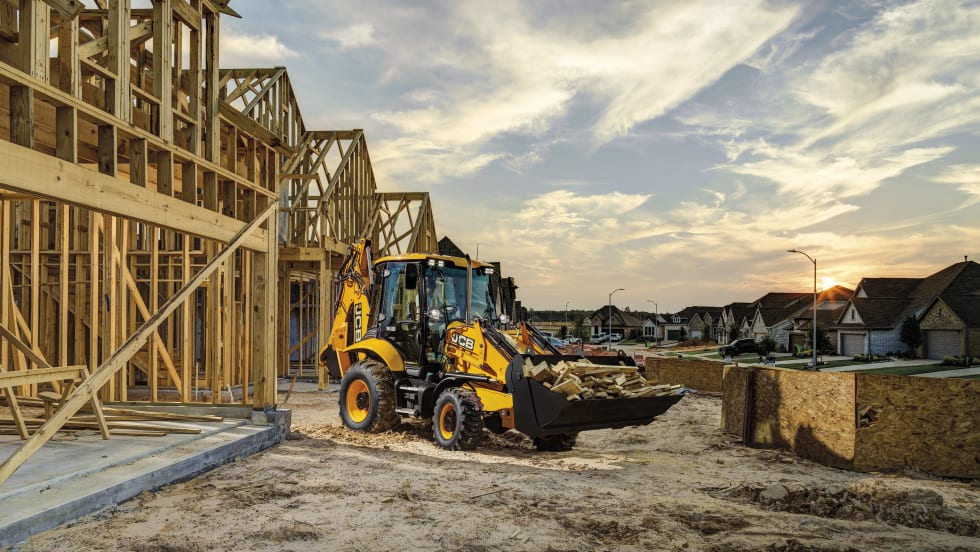
JCB Introduces Dual Drive System for Backhoe Loaders
Public works operators traditionally switch positions and controls each time they reposition a backhoe during excavation. JCB's new Dual Drive system is designed to allow operators to move the machine while remaining at the excavator controls.
Read More →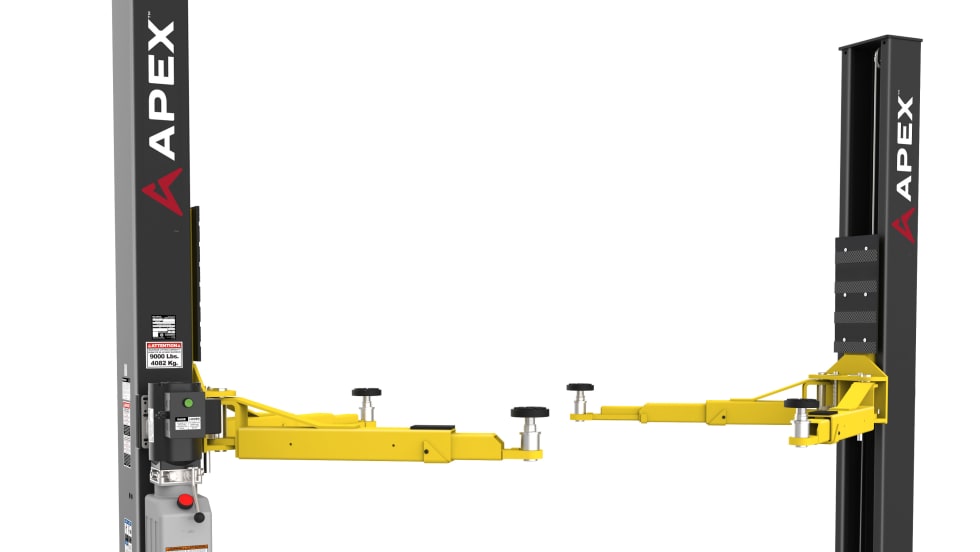
APEX by BendPak Launches AL9LC Two-Post Lift
The new low-ceiling floorplate car lift is designed to maximize overhead clearance for fleets.
Read More →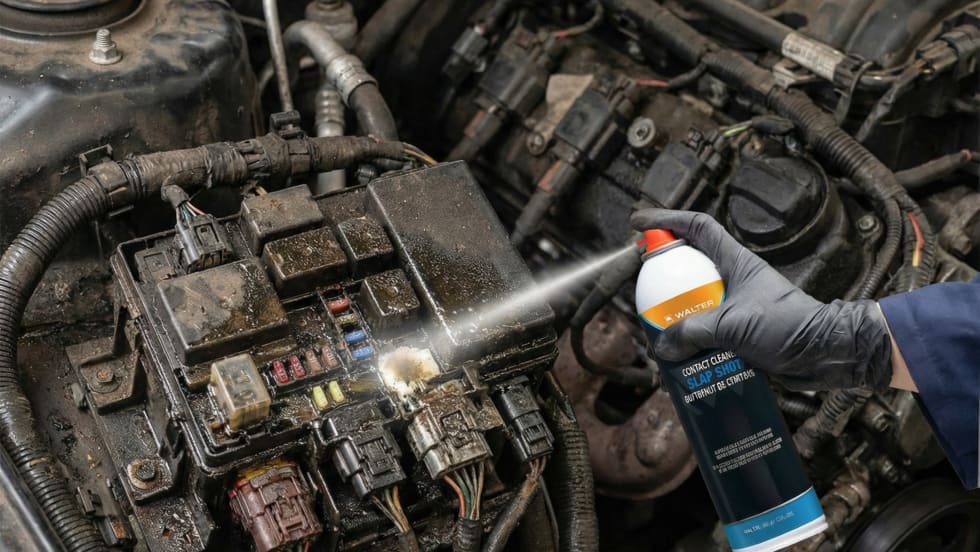
New Slap Shot Contact Cleaner: Heavy-Duty Cleaning Power Without the Residue
Slap Shot Contact Cleaner combines fast contaminant removal, rapid evaporation, moisture displacement, no-wipe cleaning, non-conductive performance, and residue-free cleaning into a single solution.
Read More →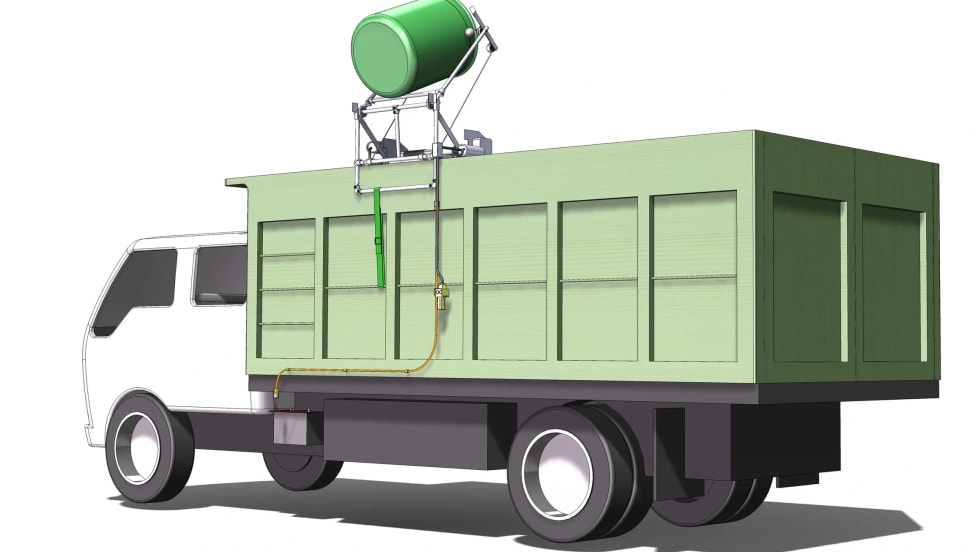
New Powered Carry Barrel Lift Helps Crews Dump Heavy Barrels Into Trucks With Less Manual Lifting
The Carry Barrel Lift is a new truck-mounted attachment designed to help landscape and municipal crews lift and dump heavy 60-gallon barrels more efficiently while reducing manual strain.
Read More →