




What Every Fleet Manager Should Know About EV Charging Rates
Understand the key differences between rates, plus what they are, when they happen, and why they happen to help reduce or ideally eliminate massive utility costs.

Don't wait for your first bill to learn about demand charges.
Photo: Government Fleet
“What’s your demand charge rate?” This is a question I have been asking countless fleet managers for many years. Usually, the responses I get are very similar: “Well, our off-peak rates are a few pennies per kWh, and our on-peak kWhs aren’t much more.”
I agree that is accurate, but if you are a fleet manager charging a vehicle on commercial utility rate (fleet shop, city hall, public works, library, you name it), you are likely paying a demand charge or may be one day. There are key differences between these rates and knowing what they are, when they happen, and why they happen will help reduce or ideally eliminate these massive utility costs.
There are two primary components of your commercial utility bill: consumption and demand. Consumption is what you consume throughout the billing period during those on-peak and off-peak periods. On the other hand, demand is the maximum peak amount of energy you consume within a billing period, usually measured in 15- or 30-minute intervals.
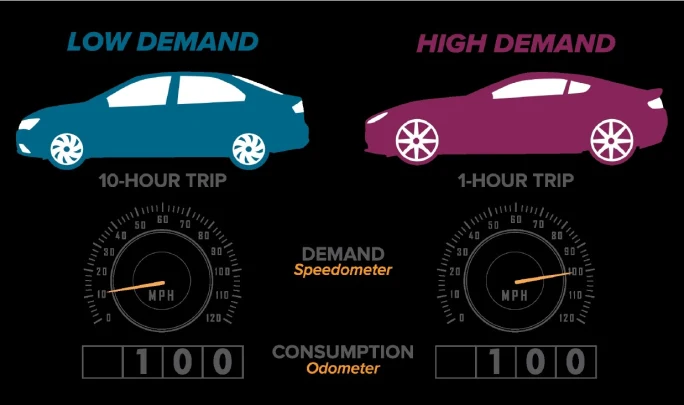
To clarify a bit, think about your vehicle’s odometer vs speedometer. During that 100-mile drive, your odometer will register 100 miles regardless of the max speed driving during that time; think of this as the consumption for that billing period.
Timing is everything when it comes to charging your EVs; not getting this right could destroy your EV total cost of ownership.
Photo: Sumner-Cowley
Now imagine your odometer needle going up and down during your drive as your speed changes, but as you push your speed higher and higher, your max speed (think of this as your demand) will be recorded for that drive and then reset once the drive is complete. This process repeats every billing cycle. Timing is everything when it comes to charging your EVs; not getting this right (every month) can destroy your EV total cost of ownership.
The Financial Impact of Demand Charges
Please sit down for this part, it’s about to get scary and complicated — scary complicated!
Demand charge kW rates can be significantly more expensive than your consumption kWh rates.
In this example below (the complicated part), during the billing period, a total “energy charge” of 57,829.00 kWh was consumed at $0.0451 plus an additional $0.01276 per kWh bringing the total of kWh consumption-related charges to $2,805.99.
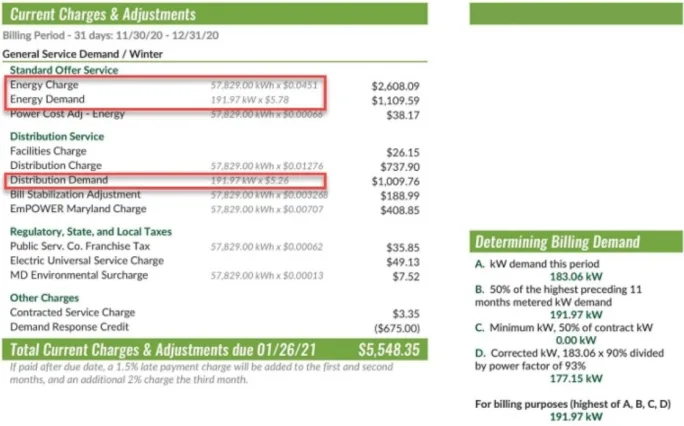
In this example below (the complicated part), during the billing period, a total “Energy Charge” of 57,829.00 kWh was consumed at $0.0451 plus an additional $0.01276 per kWh bringing the total of kWh consumption-related charges to $2,805.99.
Photo: Facundo Tassara
Now, if you look at the “energy demand” of 191.97 kW at $5.78 plus an additional distribution demand of $5.26 per kW, you are at a demand charge of $11.04 per kW and a total of $2,119.35, racked up in just 15 or 30 minutes. A significant part of your monthly bill, and often the most expensive, occurs within that 15 to 30-minute peak demand event.
I have seen demand charges as high as $40-50 per kW in parts of the country. Now let’s connect the dots (the scary part). Assume you go out and buy some fresh new electric vehicles and land some DC fast chargers along with those vehicles. Assume you get 6 DC fast chargers, and those puppies can crank out 150 kW; if they are all humming at the same time, they can create a demand of 900 kW.
Using the sample utility bill above, with a demand charge of $11.06 per kW, that charging session could land you a demand charge of $9,954 for the month and an added cost of $1,659 per vehicle to fill up that day. If you are not careful about this, you could trigger a similar event every month.
On top of this, there is a demand ratch in some areas during certain times of the year that can be even more expensive during the summer or winter months, depending on when most energy is in demand.
As Amy Dobrikova, vice president of Fleet Solutions at Rexel Energy Solutions, shared with me, “Fleet managers usually learn about demand charges after the first bill.”
Real-World Examples and Lessons Learned
Since I have already scared you, I’d like to continue. David Renschler, founder of EVSE Answers, said the issue of unknown demand charges is just the tip of the iceberg. Renschler told me, “I spoke with a transit agency that installed some high power overhead chargers for their buses; when they received their first bill, they had a $25,000 demand charge.”
Renschler, who is passionate about helping fleets understand the actual total cost of EV ownership if mismanaged, continued to make a great point, “a decent size city with a variety of buildings of different ages and shapes and sizes are all on different rate structures and will have different demand charges. While not all utilities have demand charges because of a temporary grace period, if that goes away and demand charges reappear, demand charges will run wild.”
Ok, this may have been a lot to read through, and hopefully, I still have your attention because here is what matters: nearly every organization, sooner or later, will get into EVs, but given the complexity and variable cost of the fuel, getting it right at the start is critical.
Here are some key takeaways for you:
Charge Management. Charge management is available within the vehicle settings (usually on newer vehicles) or external charger software. Having said that, not all software can protect you from incurring demand charges, so be sure to check with your current or potential supplier, and have them explain exactly how they protect you from demand charges.
Free chargers are not free, especially the DC Fast Chargers. I have been there and was dazzled by the shiny new object and moved as fast as I could to get them installed without asking about potential demand charge costs (my demand charges at the time were over $15 per kW…ouch!).
What is your real fuel cost? Ask your partners providing you with chargers and EV charging software how they capture the true cost of the “fuel” factoring in demand charges.
Don’t forget about a fuel markup. As David Renschler reminded me, “You have to maintain gasoline and diesel fueling infrastructure; charging infrastructure and associated programs are no different. You also need a markup to help capture these costs, and these won’t be pennies.”
New technology. Consider exploring technology that can leverage your EV as stored energy when it’s not in use, but make sure you understand the difference. Vehicle-to-grid technology is one thing, and vehicle-to-building technology is totally different. That technology can make significant impact, but it’s not a one size fits all….in fact, there are several key characteristics that have to align for this to make sense, with vehicle utilization and duty cycles being one of them.
As you likely know by now, fleet management is an industry in which we are all here to help each other and our communities. Don’t be shy to ask for help and to learn from the mistakes others have made…and all of us have made plenty when it comes to EVs. I am happy to help connect you with others or help answer any questions you may have.
More Blog Posts

Now What Should We Do? Looking Beyond the Pinpoint Test
When a pinpoint test leads to a replacement that doesn’t fix the problem, technicians need to look beyond the instructions.
Read More →
The Missing Link in Fleet Safety: Turning Data into Behaviour Change
Every municipal vehicle tells residents something about how their fleet is being managed. For King Township, Ontario, that visibility made speeding more than a driver performance issue.
Read More →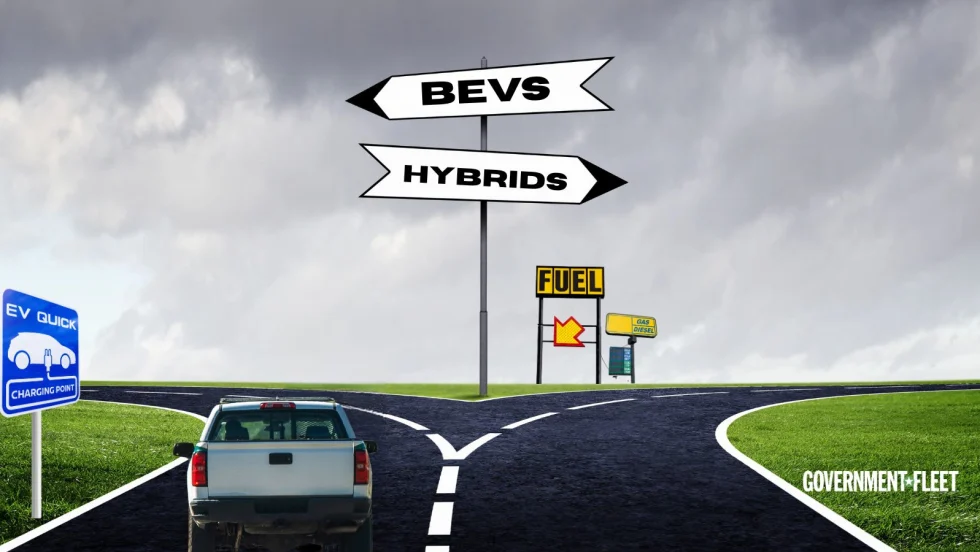
Flavor of the Decade: The End
As automakers pivot toward hybrids and extended-range models, the costly slowdown in battery-electric vehicle adoption raises questions about what comes next for the Big Three and government fleets.
Read More →
Why Technician Development Is a Retention Strategy
Clear development opportunities can help fleets show technicians how their skills and careers may progress within the organization.
Read More →
Building a Cross-Department Fleet Data Standard: What to Agree on First
As municipalities expand their use of fleet technology, the challenge is less about collecting data and more about making that data usable.
Read More →
7 Tips for Smarter Fleet Management
The potential to manage your fleet effectively while ensuring the safety of both employees and the community can often go untapped, but there are certain habits you can adopt to get to that point.
Read More →
Why Now Is the Time to Return to Government Fleet Expo
For fleet professionals who haven't attended GFX in a while, this year's event provides more than just education sessions and networking opportunities. From emerging leaders and innovative fleet strategies to industry recognition and peer-to-peer discussions, GFX 2026 reflects the changing landscape of public fleet operations.
Read More →
What to Expect at GFX
The Government Fleet Expo & Conference can be overwhelming in the best way possible. Whether you’re a first-time attendee or a returning fleet professional, these practical tips will help you plan ahead, stay energized, maximize networking opportunities, and make the most of every moment at GFX 2026 in Long Beach.
Read More →
How to Get the Most From an Industry Conference
A new strategy in how to present conference attendance justification for you and even for your staff and how you and they can benefit and even thrive in the conference environment.
Read More →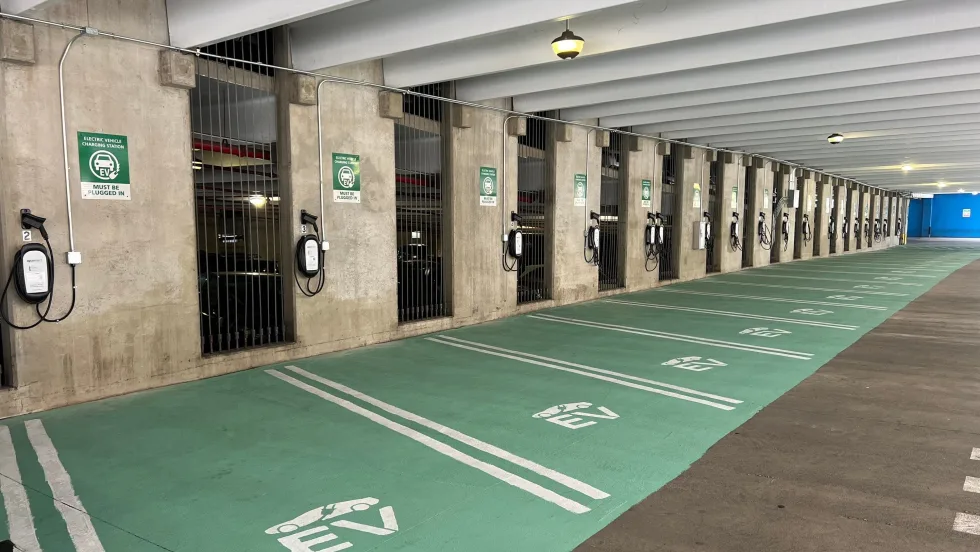
How Electric Vehicles as a Service Could Reshape Public Fleets
How the EV model can address concerns about meeting state mandates, cost, emissions and range anxiety.
Read More →