




Flavor of the Decade: The End
As automakers pivot toward hybrids and extended-range models, the costly slowdown in battery-electric vehicle adoption raises questions about what comes next for the Big Three and government fleets.
August 12, 2026

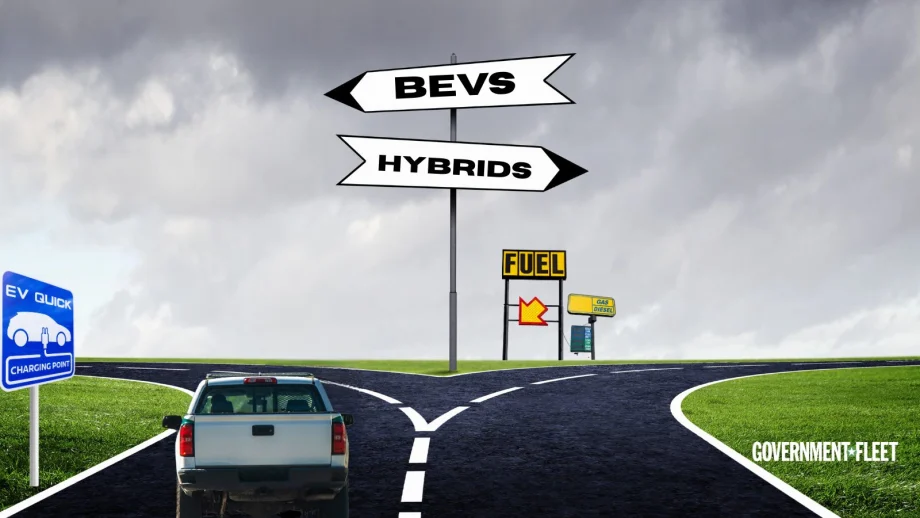
Government fleets are weighing battery-electric vehicles against hybrid and extended-range alternatives as the vehicle market shifts.
Credit:
Government Fleet
6 min to read
Four years ago in Automotive Fleet magazine, I posed these questions:
- What if BEVs are not the expected replacement for fossil fuels?
- What if BEVs do not prove to be the anticipated solution to climate change?
- What if the automotive market becomes too saturated with expensive BEVs, and demand dries up due to the lack of an affordable BEV?
- What if the general public fails to accept an expensive BEV that, even years from now, will only travel 300 miles, or less, without a recharge?
- What if electricity is only a “bridge” fuel placeholder until a more environmentally friendly, longer-range alternative presents itself?
- Is it less likely that BEVs, a currently trendy strategy employed by every OEM on the planet, will be in everyone’s future and more likely just one of many fueling alternatives as the “bloom” comes off the rose when BEVs fail to satisfy or be embraced by the masses?
In other words, what if BEVs are simply the Flavor of the Decade? Anyone with even a passing interest in cars, given the events of the past eight months, can answer these questions for themselves.
The state of play for domestically produced BEVs is now completely on pause. Thousands of Cybertrucks remain unsold, while Hyundai/Kia alone enjoys a positive position as having the best electric platforms in the US that are not affiliated with Tesla and, in the minds of many, are not associated with Tesla’s founder in any way.
We have all witnessed the ghastly and staggeringly high EV write-offs suffered by the Big Three since last December, now totaling roughly $50 billion. Such an amount is hard for us mere consumers to comprehend. How does an industry recover after having written off what amounts to Uruguay's total annual output? If you spent $1 million every single day, it would take you 137 years to spend $50 billion.
Meanwhile, 75% of new BEV production worldwide comes from China. China’s global BEV market share is soaring, driven by wildly popular vehicles. It is only due to the 100% tariffs levied on Chinese BEVs that the US is not inundated with them...yet.
Despite the US tariffs, BEVs from Chinese manufacturers BYD and Geely are lurking close by; however, both are sold in Canada and Mexico. Even Ford’s CEO, Jim Farley, has labeled BYD the “best in the business” and predicts it will enter the US market in the next decade. Their entry will likely be much sooner than Farley predicts.
So…where does all this leave the Big Three today?
Ford EREV: Replacing the canceled F-150 Lightning, Ford has promised a less expensive pickup that is currently being tested, with availability targeted for next year.
It will feature EREV technology, essentially electric motors driving the wheels while an on-board gasoline-powered generator recharges the battery pack. Ford’s overall strategy features a low-cost universal EV platform that will underpin many of its new models while pushing out more hybrids and extended-range electric vehicles (EREVs), like the pickup.
Hyundai will also introduce EREV technology in its Santa Fe in 2027.
General Motors’ strategy, named Empower 2026, takes a slightly different approach from Ford's by concentrating more on hybrids to match consumer demand and reinvesting in gasoline-powered models with new ICE engine technology.
Stellantis announced a global strategy called FaSTLAne 2030 featuring an aggressive roll-out of new models, which, as with GM, includes a pivot to hybrids and even V-8 gasoline engines. Stellantis will offer an EREV Ram pickup and perhaps other extended range models.
The advent of EREVs and other gasoline-powered offerings seems to indicate that fossil fuels will be with us for a long time.
Meanwhile, the rapid deployment of chargers, seen early in this decade, has slowed for a multitude of reasons, not the least of which is diminished consumer demand for EVs.
Gaps in charging infrastructure persist in rural areas, and charger reliability continues to plague the marketplace.
To date, fears that the national power grid might be compromised as EV adoption increases electricity demand have largely been unrealized.
However, a greater risk is presented by the massive electricity demand created by data center deployment nationwide. Can the power grid absorb data center electricity demand in parallel (pardon the pun) with gradual increases in EV recharging requirements too?
According to Duke University’s Nicholas Institute, thegrid can handle both if demand is managed, flexible resources are leveraged, and infrastructure is upgraded in line with growth. These are big “ifs” that will require better management of charging availability and even limiting it to certain times of the day.
It is predicted that sanctions on Russia may affect the global nickel market, raising battery prices and slowing EV adoption worldwide.
Hopefully, new technology and sourcing will mute any shortages of critical raw materials from Russia or Africa.
Given these conditions, the future of EVs in the United States is, at best, clouded by these questions and others:
- Will EREV technology eliminate EV range anxiety among consumers?
- Will EREV technology be more or less costly to maintain?
- Will the next generation of EVs engender greater consumer confidence and lower entry costs as promised, and jump-start EV adoption?
- Can the power grid supply the demands created by data centers and EVs?
- Will EREV technology, coupled with broad adoption of hybrids, reduce or eliminate the need for remote, stand-alone recharging stations?
- Is the 100% tariff policy on Chinese EVs sustainable or even a wise economic policy, given it blocks US consumers from the best EV technology and features?
The good news for government fleets? They have always been better suited for both EV and hybrid deployment.
Adding future EVs promised to be less expensive than this first generation of EVs will add value to governments’ EV charging infrastructure investments. Further, by adopting hybrids, government fleets will add value to their legacy refueling infrastructure in support of this technology.
BEVs, as originally conceived, have unfortunately become the “Flavor of the Decade.” What now remains, particularly for the Big Three legacy automakers, is whether their failed, misguided, and costly BEV rollout of the 2020s will become anything more than a footnote in their history.
Has enough been learned to ensure against a repeat of their most costly mistakes, and, even more importantly, can they truly compete in a global market that has an enormous head start in scale, production capacity, and technology?
Let’s be clear: the automakers of the world did not become so EV-dominant worldwide without help. They benefited from incentives and investment strategies supported both legislatively and financially by their governments.
US automakers are and have always been, on their own (with the exception of the bailouts during the financial crisis).
Presidential hopeful Mitt Romney, the Michigan-born son of an auto industry executive, argued in a 2008 New York Times op-ed that the Big Three should enter managed bankruptcy and rebuild on firmer footing.
“The federal government,” Romney wrote, “should invest substantially more in basic research — on new energy sources, fuel-economy technology, materials science and the like — that will ultimately benefit the automotive industry.”
Perhaps Romney’s advice came twenty years too soon.
Ford’s production partnership in Spain with Chinese EV maker Geely may actually be a hint of what’s to come.
Regardless, the US auto industry may be on life support. During the financial crisis, they were described as being “too big to fail.” The question may now be, are they too big to succeed?
It may not be too late to wash the distaste for the Flavor of the Decade from our economic reality. It is for sure the Big 3 are hoping their next iterations are sweeter.
This article was authored and edited according to Government Fleet editorial standards and style. Opinions expressed may not reflect those of GF.
Subscribe to Our Newsletter
More Blog Posts
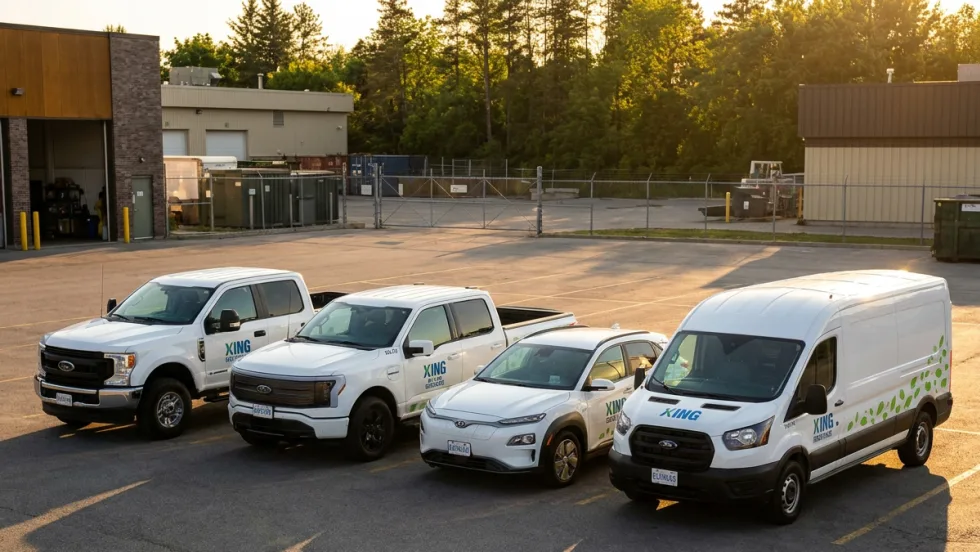
The Missing Link in Fleet Safety: Turning Data into Behaviour Change
Every municipal vehicle tells residents something about how their fleet is being managed. For King Township, Ontario, that visibility made speeding more than a driver performance issue.
Read More →
Why Technician Development Is a Retention Strategy
Clear development opportunities can help fleets show technicians how their skills and careers may progress within the organization.
Read More →
Building a Cross-Department Fleet Data Standard: What to Agree on First
As municipalities expand their use of fleet technology, the challenge is less about collecting data and more about making that data usable.
Read More →
7 Tips for Smarter Fleet Management
The potential to manage your fleet effectively while ensuring the safety of both employees and the community can often go untapped, but there are certain habits you can adopt to get to that point.
Read More →
Why Now Is the Time to Return to Government Fleet Expo
For fleet professionals who haven't attended GFX in a while, this year's event provides more than just education sessions and networking opportunities. From emerging leaders and innovative fleet strategies to industry recognition and peer-to-peer discussions, GFX 2026 reflects the changing landscape of public fleet operations.
Read More →
What to Expect at GFX
The Government Fleet Expo & Conference can be overwhelming in the best way possible. Whether you’re a first-time attendee or a returning fleet professional, these practical tips will help you plan ahead, stay energized, maximize networking opportunities, and make the most of every moment at GFX 2026 in Long Beach.
Read More →
How to Get the Most From an Industry Conference
A new strategy in how to present conference attendance justification for you and even for your staff and how you and they can benefit and even thrive in the conference environment.
Read More →
How Electric Vehicles as a Service Could Reshape Public Fleets
How the EV model can address concerns about meeting state mandates, cost, emissions and range anxiety.
Read More →
14 Metrics Government Fleets Should Track
The metrics government fleets should track to get a full understanding of their fleet operation.
Read More →
Pick One: Hire a Technician or a Data Analyst
Short on techs and drowning in data, which single hire moves your fleet farther—a technician or a data analyst—and how does AI change the calculus?
Read More →