




Adapting to New Realities with Essential Management Skills for Fleet Success
Discover essential management skills to overcome modern fleet challenges and achieve operational success.

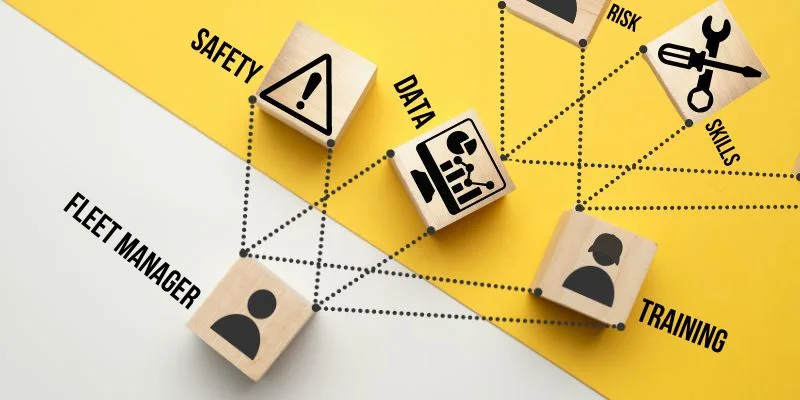
Understanding where you need to improve as a fleet manager, and acting on those changes, will help improve your operation.
Photo: Government Fleet
“We will face so many defeats, but don't ever let yourself be defeated,” Bob Stanton told attendees at the 2024 Government Fleet Expo & Conference.
During his session titled “10 Essential Management Skillsets Required for Success in the Digital Age,” Stanton addressed the diverse challenges that fleets encounter. While some issues, such as technician recruitment, remain longstanding, fleet managers now face an additional array of new challenges.
Understanding Past Challenges and What Those Issues Look Like Now
Stanton, now an independent fleet consultant, spent 25 years in government fleet management, beginning his career in 1992. Reflecting on his early years, he noted several hot-button issues: technician productivity, outsourcing, economic viability, competitive technician rates, vehicle utilization, and replacement strategy. He emphasized that balancing shop productivity, financial management, and key performance indicators (KPIs) like PM compliance and service level agreements were critical. Achieving a vehicle availability rate of 95% and earning peer respect were significant milestones.
“This was the formula for success. You get your shop productivity right; you get your direct and your indirects balanced out in the right way,” he said. “You get your financials right … making sure the revenue’s right along with your asset depreciation and your parts. That was all very important.”
Fleets also needed to establish relationships with peers and earn their respect. This earned fleet managers a “seat at the table,” so to speak, allowing them to move forward with the operation.
“It's not exactly the same today, but it doesn't differ that greatly,” Stanton said.
Understanding Technician Recruitment and Retention
Technician recruitment and retention have been persistent issues, according to Stanton who highlighted the long-standing challenge of finding quality technician training. He noted that this problem is expected to worsen due to the upcoming "enrollment cliff."
This term, coined by college admissions officers, refers to a predicted drop in college and technical school enrollments starting in 2025, following a 15% birth rate decline in 2008. As a result, the pool of high school graduates entering technical schools and blue-collar jobs is expected to shrink, exacerbating the technician shortage.
“The technician shortage as bad as it is now, it's going to be worse,” Stanton warned.
Stanton works with HR departments in government to make new hire requirements less rigid and to expand benefits like flexible time off. He stressed the need for governments to be competitive by reassessing salaries and benefits.
“Governments can be competitive if they can get out of their own way, if they can take a look at their salaries, if they can make their time off less rigid because there are a lot of things that in government that can be very beneficial,” Stanton said.
Safety, Risk Management, and Data Analytics
Stanton predicted that fleet managers and risk management officers will work more closely as their responsibilities increasingly overlap. Effective safety and risk management practices are essential to maintaining operational efficiency and reducing liability, he explained.
“Both of these things are in your job description or they should be and I think, going forward, your job and the risk management manager's job, whoever that happens to be, are going to become more closely knit because of how your two responsibilities mesh with one another,” Stanton said.
Data analytics is another area of growing importance, according to Stanton, who emphasized the need for quality Fleet Management Information Systems (FMIS) and suggested that fleets include data scientists on their teams, adding that this role should be separate from the fleet manager’s position.
Stanton suggested going a step further and utilizing the information provided by diagnostic tools, such as Noregon or Diesel Laptops. If this hasn’t been done, he noted that it’s a good idea to leverage this into purchasing.

Citing how far fleet has come, Stanton showed this image of his early laptop computer, which weighed 33 pounds.
Photo: Bob Stanton
Continuous Skillset Improvements for a Changing Industry
Stanton believes head versus technician knowledge will become even more important over the next five to 10 years.
“When I came into the business, it was very common for the most skilled mechanic to become the fleet manager. This would happen in both the public and private sectors. That's no longer the case,” he said. “Instead, what fleets need and what employers are looking for is more head knowledge than what you can do with your hands.
Stanton also advised being efficient with asset utilization, not only in how the assets are brought in but also in how they are cared for before they are disposed of. Stanton recommended fleet managers use the International Organization for Standardization (ISO) 55000 as a roadmap for asset care, acquisition, and disposal.
“It does follow a lot of what we already do in government,” he said. “It could actually help you reinforce some of the things that you think should be done and probably shouldn't be done with your vehicle or assets.”
Stanton said fleets also need to be aware of environmental issues, noting that electric vehicles have been a hot topic and will continue to be a hot topic. Fleets should be knowledgeable about the 2027 EPA rules and what this means for future operations.
“If you were around in 2010 when we got selective catalytic reduction in our diesel engines you get to go through it again in 2027 if you're still in the industry, only this time, I think it's going to be worse,” he said. “They say that private fleets especially are going to begin pre-buying to try to get ahead of that deadline next year and that the order banks for vehicles that you purchase are going to be harder to come by because the order banks are going to fill up very quickly.
Stanton said that, unlike the 2010 EPA changes, the 2027 regulations specifically reference government trucks, such as refuse vehicles.
In conclusion, Stanton urged fleet managers to become as knowledgeable as possible to leverage their expertise for a seat at the table in their organizations. Referencing John Wooden’s Pyramid of Success, compiled in the 1940s, Stanton stated that “success is never final, failure is never fatal.”
“You’re going to make mistakes, but it's what you do with that information and how courageous you are that counts,” he said, adding “Be more concerned with your character than your reputation. Character is the kind of thing that you do when no one is watching. Because your character is what you really are. And your reputation is merely what others think you are.”
More Operations

Is Keeping Older Fleet Vehicles Really Saving Money?
Is keeping vehicles longer saving money, and what happens when a diagnostic test points to the wrong fix?
Read More →
How Smart Fleet Strategy Can Help Local Government Agencies Do More with Less
Keeping a vehicle longer may ease this year’s budget, but what does it cost the next one? A closer look at fleet decisions can reveal opportunities to reduce spending while protecting essential services.
Read More →
Connect with Government Fleet on LinkedIn
From industry news and fleet management strategies to conversations with peers, Government Fleet's LinkedIn page offers public-sector fleet professionals another way to stay informed and connected.
Read More →
Town of Queen Creek Named Most Successful Fleet Award Winner of Inaugural RTA Fleet Success Awards
Five fleets were honored at RTA Connect 2026 in Chicago for excellence across resource efficiency, intentional culture, risk management, and stakeholder satisfaction.
Read More →
A buyer's guide to fleet management software in 2027
Buying fleet management software in 2027 means looking beyond features and price. As fleet operations, technology and expectations evolve, this guide explores what today’s fleet professionals should consider when choosing a system that can deliver value now and adapt to what comes next.
Read More →
Hazard Alerts, Fleet Car Sales Rise and a New Shuttle Concept
Fleet car sales doubled, but the bigger picture tells a different story in this week’s roundup.
Read More →
How St. Johns County Turned Fleet Data Into Better Replacement Decisions
St. Johns County, Florida, had fleet data, but turning it into reliable decision guidance was another matter. Instead of starting over with a new fleet management system, the county connected existing tools and built a scoring system that gives managers an objective look at fleet health.
Read More →
Fleet Forward Conference Introduces One-Day Passes for 2026
New one-day registration lets fleet professionals attend Tuesday, Wednesday, or Thursday, with passes available for $249.
Read More →
ENC Unveils its ZAVIR Medium-Duty Shuttle
Two variants of the concept shuttles were revealed: a low-floor configuration and a high-floor configuration.
Read More →
Could Your Next Fleet Technician Start as an Intern?
What if your next technician hasn’t worked in a fleet shop yet? What fleets are doing to free up time.
Read More →