





Similar Content: The Upsides to In-House Fleet Services
Striking a Balance Between In-House & Outsourced Work
Just because you can service something in house doesn't mean you should.
February 28, 2022
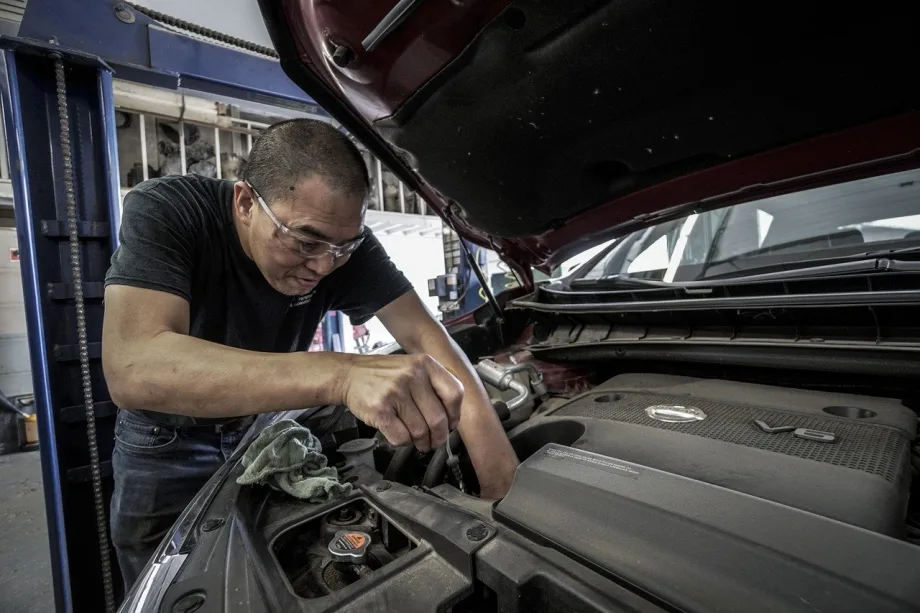
There is an understandable need to justify a department’s existence and work, and to keep staff employed.
Photo: Pixabay
3 min to read
Many fleet managers don’t like to hear about outsourcing. They take pride in their teams doing their own work and even being able to perform work for other public entities. Their technicians are well trained, quick, and make few mistakes — so why would they send their work somewhere else?
It’s understandable. Outsourcing can be an existential threat — if all fleet maintenance and repair is sent to a private company, what’s left for the fleet maintenance team to do?
Several years ago, a couple of very well-regarded fleet operations were outsourced or underwent managed competition. Government Fleet covered both cases extensively, and the fleet community was spooked. If these outstanding fleets that had won awards and done all the right things could be privatized, what’s to stop that from happening to them? I couldn’t provide any concrete examples at the time.
We often hear about data as one way to proactively counter the threat of privatization. If you can prove your operation is cheaper and more effective than other providers, showing higher-ups labor rates, time savings, expertise in a variety of equipment, etc., and you can whip it out at the first whiff of outsourcing, you might be able to stop discussions from going any further.
The City of Ventura, California, fleet operation faced this issue during the pandemic, and its management team had to make presentations to the right people to show why its in-house operation was better and was simply sorely lacking in resources.
The Forest Preserve District of DuPage County, Illinois, has also taken a proactive approach to in-house fleet services. A new maintenance facility allowed it to bring alternative-fuel repairs and conversions in house, and it also became a Ford warranty repair shop, allowing fleet technicians to do more work than they could previously. Not always the best solution
There is an understandable need to justify a department’s existence and work, and to keep staff employed. Oftentimes, if you consider travel and coordination time in sending out a repair, in-house work can be the better solution.
Highlighting Successful In-House Work Doesn’t Mean the Alternative is a Bad Idea
I understand the need to justify your department’s existence and work, and to keep your staff employed. Oftentimes, if you consider travel and coordination time in sending out a repair, in-house work can be the better solution.
You might think we advocate for more internal fleet work. But just because we highlight successful in-house work doesn’t mean the alternative is always a bad idea.
Towing is one example — fleet consultant Bob Stanton made a case for outsourcing towing in a 2019 article for this magazine. We also highlighted a city fleet’s case of outsourcing weekend towing for cost savings.
Numerous fleet operations have outsourced their parts management, and I’ve only heard good things afterward. Specialized or time-consuming work — such as electric vehicle servicing and engine rebuilds — are often successfully sent out. As is work that staff members can’t take on promptly due to workload.
When it comes down to it, just because you can service something in house doesn’t mean you should.
In my work, I find outsourcing certain tasks a necessity. Want to write for us? Proofread the magazine? Edit a video? Handle a portion of planning for our event? Yes, please! This frees our staff up for other duties, whether that’s going more in-depth on other articles we’re writing or focusing on the content of a video rather than the technical aspects of editing. If we’re talking about outsourcing all editing and content work entirely, well, that’s a different matter!
What do you think? When’s the last time you evaluated the work your team does, and did you make any changes after the evaluation?
Subscribe to Our Newsletter
More Blog Posts
Understanding the Road to Improved Operations
Every fleet has goals, but meaningful progress depends on knowing where the operation stands and continuing forward when the path changes.
Read More →
Navigating the Crossroads of Data and New Technologies
As data volumes increase and emerging technologies advance, where do government fleets stand? Takeaways from Samasara Go Beyond Public Sector 2026.
Read More →
When the Roadblocks Hit, Where is Your Inspiration?
It can be easy to get caught up in the busy day-to-day of fleet, but when the problems pile up, that's when it's time to find the motivation to keep going.
Read More →
Is it Time for Change or Consistency?
Consistency can be good, but there comes a time when you have to step back and ask whether what you’re doing is the best approach.
Read More →
Blink and You’ll Miss It: Fleet Reflections from 2025
A note as we leave behind 2025 and plan for new ventures heading into 2026.
Read More →
It’s Far Worse Than a Technician Shortage…
A letter to government fleet leaders on the technician gap and how to rebuild the pipeline that keeps public services running.
Read More →
Public Perception of Your Fleet Changes
How fleet transitions shape public perception and how a well-managed rollout can influence your fleet's narrative.
Read More →
The Balancing Act: Stability vs. Shifting Leadership Priorities
With the revolving door of government leadership bringing new priorities fleets are expected to pivot, even if those pivots undermine long-term planning.
Read More →
How Technology is Driving Upgrades in the City of Columbus Fleet Operations
How the city of Columbus fleet has embraced change as a strategic driver, using technology to revolutionize how the fleet fuels, tracks, and measures performance across a 260-square-mile service area.
Read More →
At the End of the Day, Be Good to Yourself
When the stresses of your work life become too much, don't forget to prioritize yourself and find balance in each day.
Read More →