





Read More: Larry Campbell Retires After Decades in Public Fleet
Sacramento County’s Keith Leech to Retire, Looks Back on Career
After more than 29 years with the city of Sacramento, and almost a decade with Sacramento County, Keith Leech, the county's Fleet Division & Parking Enterprise chief, will be retiring.
August 9, 2023
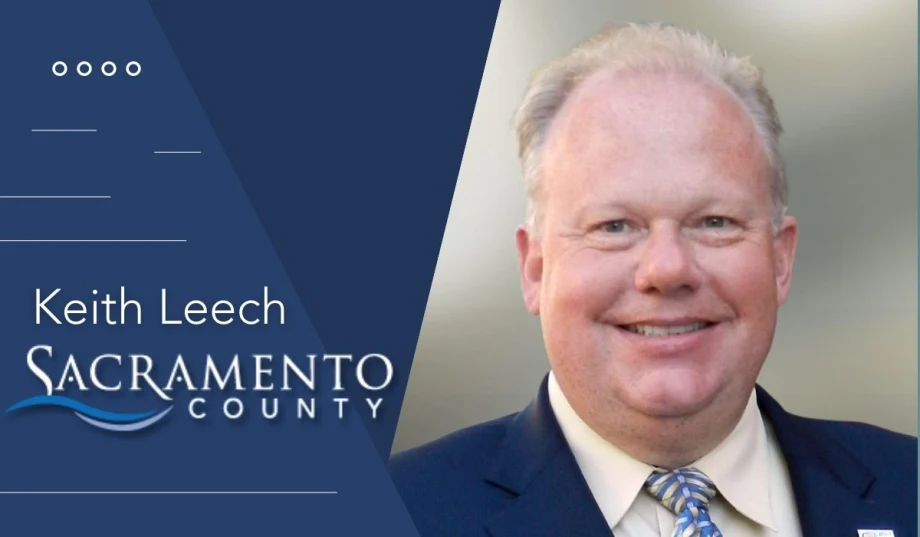
Keith Leech has served as Sacramento County's fleet division & parking enterprise chief for almost a decade.
Photo: Keith Leech/Canva.com
6 min to read
After more than 29 years with the city of Sacramento, and almost a decade with Sacramento County, Keith Leech, the county's Fleet Division & Parking Enterprise chief, will be retiring.
Leech, whose last day in his role as chief will be August 18, 2023, is a Hall of Fame inductee who has helped usher both his teams to be named a Leading Fleet, among other recognitions.
Looking back at his time in fleet management, Leech noted that what he enjoyed most about the job was educating customers, stakeholders, and decision-makers about the complexities and challenges associated with fleet management.
However, despite a longstanding desire to see the fleet and its team succeed, Leech’s career wasn’t always set down the path of fleet management.
Finding a Career in Fleet Operations
Surprisingly, Leech’s only direct experience in fleet services was as a limousine driver while attending college and working part-time as a bank teller. As a chauffeur, he quickly learned the importance of unit availability as well as meeting or exceeding his customers’ expectations.
After spending several years in banking, Leech pursued positions in accounting, finance, and budget administration. He transitioned into fleet operations management after spending 15 years serving in progressively responsible business operations and fiscal management positions at the city of Sacramento.
His role as fiscal officer for the city of Sacramento’s Department of Public Works provided him with the opportunity to support the city’s fleet manager at the time on a wide variety of projects including developing a strategic business plan, rate modeling, fleet asset replacement plans, annual budget preparation, and a fleet management information system upgrade project.
“This experience provided me tremendous insight into the magnitude of the city’s overall fleet costs and the importance of data-driven decision-making, fleet operations performance management, and best fleet management practices to control those costs,” Leech recalled.
Changes in the Industry Since First Starting
One of the most noticeable changes Leech has seen during his career is diminishing resources in local government operations resulting in budgetary pressures to control costs and establish performance metrics that establish transparency and accountability for the fleet operations.
Most recently, he points to the emphasis on fleet sustainability, and climate action planning to reduce greenhouse gasses and other harmful emissions from the fleet.
As for challenges that the public sector is still facing?
“CARB’s Advance Clean Fleet Rule and the transition to electrification of everything in California is a tremendous challenge for California public fleet managers,” he pointed out.
Advice for Incoming Feet Managers Leech encourages people new to the fleet manager role to develop strategic partnerships with the fleet’s stakeholders and create a network of lifelong friends and colleagues by joining Clean Cities and fleet professional associations such as the National Association of Fleet Administrators (NAFA) and the Municipal Equipment Maintenance Association (MEMA).
He also advises fleet managers to attend and contribute to these associations’ conferences and events and take advantage of their numerous educational opportunities to continue to learn and grow.
“Don’t reinvent the wheel. Take advantage of the networking opportunities to learn what works and what doesn’t. Use the Leading Fleets and 100 Best Fleets contests as a foundation for setting goals and objectives with your team to continuously improve,” he explained.
Leech added that he hopes more young people will choose training and education to pursue a career as a fleet professional and that elected leaders will become aware of the practicality, feasibility, and financial impacts to the taxpayers and ratepayers that will result from the electrification regulations and mandates impacting California public fleets.
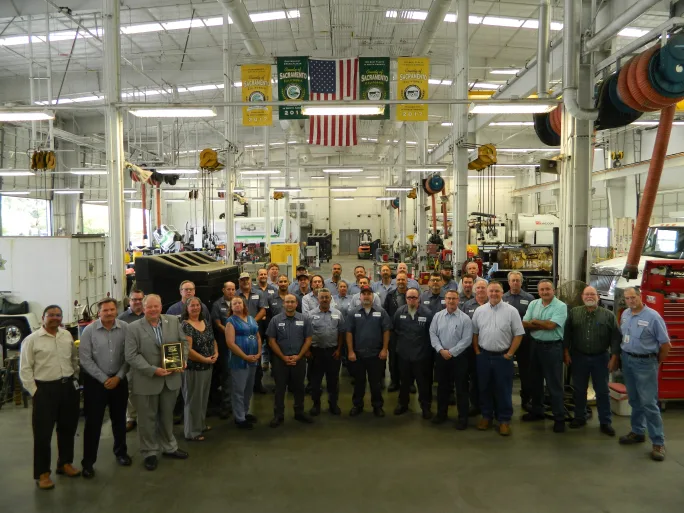
Keith Leech with the Sacramento County team.
Photo: Keith Leech
Achievements, Clear Goals, and Innovation within the Fleet
Asked about what he is most proud of during his time with the Sacramento County Fleet Services Division Leech does not hesitate to go into detail. He first looks at the county’s commitment to sustainability by actively reducing greenhouse gas emissions and adopting alternative and zero-emission fuels.
“They have made remarkable progress in transitioning their fleet to alternative, renewable, and zero-emission vehicles, successfully converting over 60% of their vehicles,” he stated. “With this impressive achievement, they are on track to meet their ambitious goal of operating 75% of the entire county fleet on renewable fuels or advanced technologies by the end of 2023. This aligns with the County & Climate Action Plan Phase 2B, which aims for a complete conversion to zero-emission vehicles (ZEVs) by 2035.”
According to Leech, having clear policies and goals in place has given the fleet team a strong position to collaborate with customer departments to transition to ZEVs. For Leech, this highlights a forward-thinking approach to fleet management, aiming to provide timely and cost-effective services while embracing innovative and environmentally-sound technologies such as equipment sharing and full-service leases.
“Sacramento County fleet is an impressive showcase of alternative and renewable fuels,” he noted.
With 117 heavy-duty CNG vehicles, 40 heavy-duty LNG vehicles, and 40 electric BEVs (including forklifts and manlifts), they are making significant strides in reducing carbon footprints. The fleet is also equipped with 612 hybrid electric vehicles and four hydrogen fuel cell units.
But the commitment to greener fuels doesn’t stop at the vehicle level – all CNG and LNG consume Renewable Natural Gas (RNG) and RLNG, and all diesel units run on R99 renewable diesel. Working with the Sacramento Clean Cities Coalition, the county actively engages with local utilities and organizations to collaborate on developing a regional electrification blueprint for medium- and heavy-duty trucks.
The ultimate goal is to inspire confidence in other regional fleets that the necessary ZEV infrastructure will be available when they make the transition to zero-emission transport equipment, according to Leech.
“Their dedication to sustainability is evident through various past and ongoing initiatives. Notably, they received the #1 Green Fleet awards in 2018, ranked #3 in NAFA’s 100 Best Government Fleets in 2022, and were recognized as a leading public fleet at the 2022 ACT Expo,” Leech stated.
The fleet management team actively participates in fleet and community organizations, including the Sacramento Clean Cities Coalition, MEMA, and NAFA Government Affairs Committee, further demonstrating their commitment to sustainable practices and community engagement.
“Sacramento County’s fleet management team recognizes the importance of strategic partnerships partnerships in driving significant change.”
In May 2021, they took a crucial step by signing an MOU with the Sacramento Municipal Utility District (SMUD) to become the inaugural participant in the eFuel program.
Through this “Charging as a Service” (CaaS) business model, they aim to overcome the up-front capital costs associated with fleet electrification. This partnership, in collaboration with AECOM, Cadmus Group, Green Lots, and eIQ mobility, is dedicated to accelerating the county’s efforts in transitioning to electric vehicles. The eFuel project is set to bring substantial improvements to the charging infrastructure.
In turn, this is expected to expand the number of chargers from 18 Level II chargers to 42 Level II chargers, as well as introduce two DCFC chargers near the fleet and an additional 12 Level II chargers in a downtown parking structure.
“This expansion in charging solutions will make electric fleet adoption more accessible and attractive for the county, further propelling their electrification efforts,” Leech explained.
Leaving the Fleet in Good Hands and Looking Forward
Fleet Advance Planning & Sustainability Manager Ronald Wirth and Light Duty Fleet Manager Joe Trujillo will rotate as acting division chief until a recruitment and permanent selection is made.
As the fleet moves into a new era, Leech is putting together his plans for retirement: He intends to continue voluntarily serving as the president of the Sacramento Clean Cities Coalition; he wants to spend more time with his wife and family, including their two grandchildren and family members who live close by. There’s even talk about hitching up the fifth wheel, hitting the road, and taking a tour across the country.
Subscribe to Our Newsletter
More Operations

Is Keeping Older Fleet Vehicles Really Saving Money?
Is keeping vehicles longer saving money, and what happens when a diagnostic test points to the wrong fix?
Read More →
How Smart Fleet Strategy Can Help Local Government Agencies Do More with Less
Keeping a vehicle longer may ease this year’s budget, but what does it cost the next one? A closer look at fleet decisions can reveal opportunities to reduce spending while protecting essential services.
Read More →
Connect with Government Fleet on LinkedIn
From industry news and fleet management strategies to conversations with peers, Government Fleet's LinkedIn page offers public-sector fleet professionals another way to stay informed and connected.
Read More →
Town of Queen Creek Named Most Successful Fleet Award Winner of Inaugural RTA Fleet Success Awards
Five fleets were honored at RTA Connect 2026 in Chicago for excellence across resource efficiency, intentional culture, risk management, and stakeholder satisfaction.
Read More →
Sponsored•October 14, 2026
A buyer's guide to fleet management software in 2027
Buying fleet management software in 2027 means looking beyond features and price. As fleet operations, technology and expectations evolve, this guide explores what today’s fleet professionals should consider when choosing a system that can deliver value now and adapt to what comes next.
Read More →
Hazard Alerts, Fleet Car Sales Rise and a New Shuttle Concept
Fleet car sales doubled, but the bigger picture tells a different story in this week’s roundup.
Read More →
How St. Johns County Turned Fleet Data Into Better Replacement Decisions
St. Johns County, Florida, had fleet data, but turning it into reliable decision guidance was another matter. Instead of starting over with a new fleet management system, the county connected existing tools and built a scoring system that gives managers an objective look at fleet health.
Read More →
Fleet Forward Conference Introduces One-Day Passes for 2026
New one-day registration lets fleet professionals attend Tuesday, Wednesday, or Thursday, with passes available for $249.
Read More →
ENC Unveils its ZAVIR Medium-Duty Shuttle
Two variants of the concept shuttles were revealed: a low-floor configuration and a high-floor configuration.
Read More →
Could Your Next Fleet Technician Start as an Intern?
What if your next technician hasn’t worked in a fleet shop yet? What fleets are doing to free up time.
Read More →