





Keep Reading: Why Leadership Retention is Critical for Public Sector Success
Hall of Famer Michael Brennan on Preparation, People, and Purpose
Honored as a 2024 Hall of Fame inductee, Michael Brennan shares the lessons, challenges, and values that shaped his career in fleet.
May 8, 2025
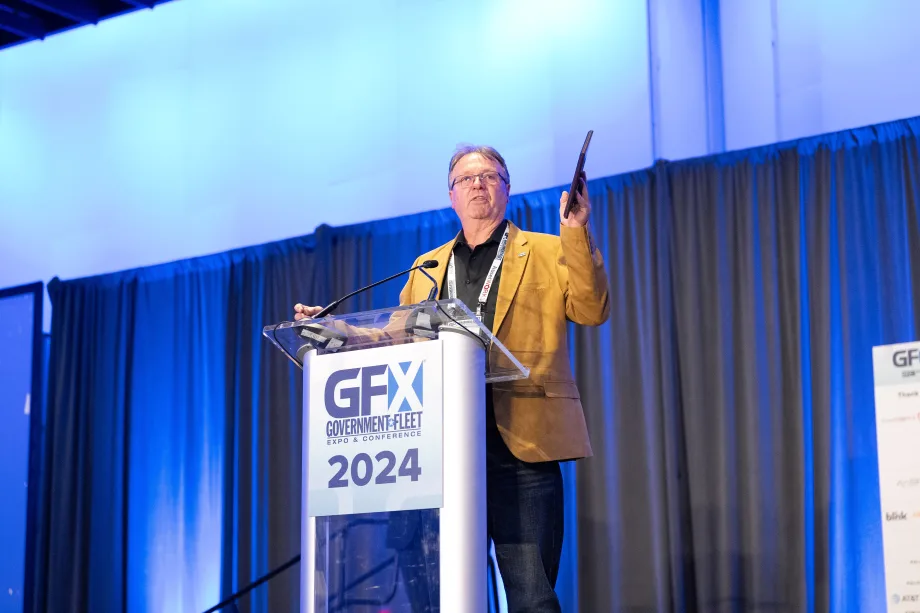
Honored as a 2024 Hall of Fame inductee, Michael Brennan shares the lessons, challenges, and values that shaped his career in fleet.
Photo: Ross Stewart Photography
13 min to read
“You need to expect the unexpected, because it will happen and you need to be ready,” Michael Brennan said, looking back on his fleet career.
With more than 40 years in fleet, it’s something Brennan focused on during his time as a fleet manager and now advises fleets on as a consultant.
The 2024 Hall of Famer, who retired from his role with Manatee County Government in 2018, emphasizes the importance of fleets being more proactive, encouraging leadership to consider potential outcomes before making a decision, especially when planning policies.
So, where do fleet managers start? For Brennan, it’s about continuously being proactive.
“And I try to be continuously more proactive, like I said, you know, and looking at things, and doing a little, making sure you analyze all aspects before you move,” he explained. “That's one of the things that actually makes you more successful, because you've got all that stuff rolling ahead of time, and you kind of know.”
He pointed to the realities of working in government, where leadership changes can mean immediate shifts in direction.
“In government fleet, things change. You get a change in elected officials, and a lot of times there's a shift in policy. That will definitely change fleet operations. You have to be prepared for that. You've got to know who's coming in, what's going on, what are the potential changes, and how are we going to address that long before it gets there.”
More than six years into retirement, Brennan now shares that mindset with his consulting clients — many of whom reach out when they’re already in crisis mode.
That mindset — staying ahead of problems and helping agencies course-correct before it’s too late — has carried over into Brennan’s work as a mentor, too.
“I like to help people,” he said.
When he visits operations or talks things through with them, his advice is often the same: "You’re doing the right stuff. Keep going. Don’t worry about that."
“One of the biggest pitfalls I see is that fleet managers worry too much about what other people are doing, what other fleets are doing,” Brennan said. “Don’t worry about that. Concentrate on your own fleet. Sure, pay attention to what others are doing, they might have good ideas or initiatives you can use, but focus on your agency, your numbers, your benchmarks.”
He added that this is something he emphasizes through his work with NAFA as well. The goal, he said, isn’t to copy others, but to learn from them while staying grounded in your own operation.
“There’s not a single agency out there that’s identical. Not one. Different governing boards, different policies, procedures, environments, the whole nine yards. There’s no comparison.”
Planning for the challenge of Succession Planning
While Brennan continues to focus on mentoring and developing others, he’s quick to point out the most pressing issue he sees across the industry.
“I see the biggest challenge, and it’s been around for a while, but it’s only going to get worse, is succession planning,” he said. “And succession planning includes technicians, onboarding, training… the whole nine yards. It’s all rolled into one.”
The concern, Brennan explained, starts with a wave of retirements from experienced fleet leaders, and a talent pipeline that isn’t always equipped to fill those roles.
“You’ve got the exodus of a lot of long-term, experienced fleet managers, and there’s just not enough people to fill those shoes. So agencies will bring someone in from finance, operations, procurement, and that’s fine, they might be a great manager, but they don’t know the fundamentals of fleet. And sometimes, they won’t see a problem developing until it’s already a problem.”
That same gap, he said, exists for those rising through the ranks too quickly, without enough time in supervisory roles or without strong mentoring from senior fleet leaders. And when that happens, small problems can grow fast.
“That’s one of the biggest things I try to talk about at every conference or event, we’ve got to keep teaching and preaching the fundamentals of fleet management,” he said.
Brennan’s message is clear: you can outsource almost anything, but not responsibility.
“You can outsource parts, outsource your heavy equipment maintenance, outsource the whole thing if you want. But you can never outsource the responsibility. You need to have eyes and ears on the ground watching what’s going on, because as a fleet manager, you’re still the one accountable.”
There are different ways to approach the issue, he said, but none of them work without a clear plan.
“You have to know who your most vulnerable people are, the ones most likely to leave, and then figure out who can fill their shoes. That means having two tools: one that identifies who might leave and what their job requires, and another that tells you who could step in and what training they still need to get there. Then you build a training plan based on that.”
The challenge, Brennan said, is made tougher by today’s job-hopping environment.
“People like to jump around. There’s more money here, more perks over there. And in many regions, every agency is fishing out of the same pond, and that pond is drying up. So now they’re poaching from each other.”
His advice? Think twice before jumping ship, and consider fixing what’s in front of you.
“I tell people all the time: the grass isn’t greener on the other side. It’s just a different flavor,” he said. “If you’re tired of where you are now, you’ll probably feel the same way two or three years down the road in a different role. So fix what you can, make it better, and think long term.”
That mindset is starting to gain traction, Brennan added, with more agencies offering paid internships and colleges introducing fleet-related electives, especially those connected to mobility and operations. Still, the pace of change is slow, and the responsibility remains with fleet leaders to take succession seriously.
“You’ve got to be proactive. Because you can outsource a lot, but you can’t outsource what’s ultimately yours to own.”
Additional Insights from Michael Brennan on Succession Planning:
Promotions can happen too fast and without time in lower-level supervisory roles, new managers may miss critical details.
Many agencies are pulling leaders from outside fleet (e.g., finance or procurement), which can create blind spots.
Agencies are often “fishing from the same pond,” leading to competition and staff turnover within the same region.
Some fleet employees are chasing small pay bumps but Brennan warns, “The grass isn’t greener. It’s just a different flavor.”
He encourages people to fix what’s not working in their current role before jumping to another agency.
Florida traffic during snowbird season isn’t worth a 20-minute commute for $1/hour more. Brennan cautions against small pay increases that come with bigger lifestyle tradeoffs.
Paid internships and college programs are emerging as long-term solutions, but retention planning still needs agency-level focus.
What Makes a Successful Leader?
For Brennan, strong leadership in fleet isn’t about titles, it’s about presence, communication, and giving people the tools and trust to do their jobs.
“A successful leader cares about his team. He understands, he listens,” Brennan said. “He listens to what people are saying, and then he takes that and turns it into action.”
The fleet managers he considers most successful are the ones who lead by example, the ones who are visible, available, and engaged.
“They’re in there in the morning, early. They’re down on the floor talking with the technicians or the parts people, or the fiscal folks, the staff, whatever. But they’re there on a daily basis, and they’re talking to them. They want to know what’s happening, because they’re keeping their finger on the pulse,” he said. “If they hear something over here, they go to the shop manager or the superintendent or whoever’s running that particular area and say, ‘Hey, so-and-so said this, what’s going on over here?’ And you can be proactive. People know that, and they want to work for somebody like that.”
But being proactive is only part of the equation. Brennan said one of the most important, and most difficult, things for a leader to do is empower their team.
“Successful leaders empower people down to the lowest level, so that they can feel ownership in the organization,” he said. “It’s like their thoughts matter, their decisions matter.”
In his own fleet, Brennan assigned expenditure thresholds to each technician. If a vehicle came in and the technician identified additional needed work beyond scheduled maintenance, they had the authority to make repairs up to a certain amount, no questions asked. As technicians moved up in experience and rank, their authority levels increased.
“It gets to a certain level, and then it has to go to supervision. At another level, it has to go up to the main office because you’re getting real expensive,” he said. “But it’s those little things that make people understand that they count, they matter. They have a sense of pride in what they’re doing.”
Not all fleets operate that way, he added, and that lack of empowerment can lead to burnout and turnover.
“This is one of those things that makes the grass look greener on the other side,” he said. “Successful leaders have to care about their people, include them, and recognize them.”
Recognition, he emphasized, should go beyond just technicians.
“You should have a monthly employee of the month, not just the technicians,” Brennan said. “Include everyone. I know a lot of fiscal analysts and parts managers in the government world doing awesome stuff. They’re really saving fleets a lot of money through analytics, supply chain management, minimizing stock on the shelf. They have to be recognized as well. They all fall into the same category.”
Advice for New Fleet Managers
For those stepping into fleet leadership for the first time, Brennan’s advice is clear: listen, learn, and look around before making big changes.
“Not many new fleet managers go into a totally broken system,” he said. “Usually, someone retired and left things running fairly decently. So the new manager needs to establish a base level, understand where the operation is today, and then determine the right course based on what they see.”
New eyes can bring a fresh perspective, but Brennan stressed the importance of understanding how the fleet got to where it is. That starts by listening to the people already doing the work.
“You need to listen to your people, they’ll help you understand what’s working and what’s not,” he said. “And then you’ve got to network with others in your region. They know what your agency was doing, and they have ideas. Maybe they solved a problem you’re just now running into.”
He used Florida as an example, where year-round mowing creates a different set of maintenance demands than in other parts of the country. Local networking, he said, often reveals those shared operational quirks, and offers real solutions.
“If you build those relationships, it’s easy to pick up the phone and get help. That rapport is important.”
Beyond networking, Brennan said continuing education is critical for both new and experienced managers. Fleet is changing too fast to rely on what worked five years ago.
“You must continue to educate yourself and your team,” he said. “Because three to five years down the road, fleet operations will not be run in any way, shape, or form like they are today.”
Certifications and national events play a major role in staying current. Brennan encouraged participation in programs like APWA’s CPFP, NAFA’s CAFM, or the EMPS initiative, not just for leaders, but for everyone in the operation.
“You’ve got to go to GFX, NAFA I&E, AEMP Connect, get out and see what’s happening beyond your region,” he said.
At Manatee County, Brennan required senior staff to attend two national conferences per year, while mid-level and shop supervisors were expected to attend at least one or two regional events annually.
“We didn’t want it to be local,” he said. “We wanted them out in the state or southeast, seeing how others were doing it. That exposure is part of the education process, and it helps with succession planning too.”
Future Considerations for Industry Professionals
Technology has always been a driver of change in fleet, and Brennan believes we are deep into another major shift.
“We’re in that technological revolution again, and we seem to go through that every six to eight, maybe ten years,” he said. “Some event happens, it creates change, and new technologies come in to help us deal with it. Then we all jump on that bandwagon, and away we go.”
He pointed to several moments in recent history as examples. Y2K pushed fleets into widespread computerization. The Great Recession brought pressure to do more with less, which fueled interest in leaner, data-driven operations. Most recently, COVID-19 accelerated the use of remote communication tools like Teams and Zoom, tools that have now become permanent fixtures.
“Skype existed before, but nobody really used it. Then COVID hit, and now we’re all doing video meetings, sharing files, working remotely, and it’s still going.”
Now, Brennan said artificial intelligence is the next disruptive force.
“AI is coming in on top of all that, and God knows what that’s going to do for fleet,” he said. “I think it’s going to help in some ways, and I think it’s going to be detrimental in some ways. But we’ll see. That is all down the road.”
What is clear, he said, is that the way fleets operate will continue to evolve, and quickly.
“Three to five years from now, we won’t be running fleets in any way, shape, or form like we are today,” Brennan said. “With the exception of the core fundamentals. Those won’t change. You still have to fix the vehicles, maintain them, know the processes, know how to manage them. But how that’s done, and who’s doing it, that’s going to look very different.”
Even in retirement, Brennan hasn’t stepped away from fleet, and he doesn’t plan to.
“I love talking to the people,” he said. “Thirty-nine years working for the government and fleet, running the fleet for 20-something years, first as operations manager, then as the full-blown fleet manager, you meet so many great people.”
Brennan is part of a generation of fleet leaders who retired around the same time but couldn’t stay away. Names like Sam Lamerato and John Hunt come up in his conversation, and he considers himself lucky to be part of the same circle.
“We’ve never really left the industry. We couldn’t take it,” he said with a laugh. “We jumped right back in, and here we go. We’re still going. It’s because of the people. It’s such a great group to work with, because everybody’s willing to help.”
That collaborative spirit, Brennan said, extends beyond public fleet. From GFX to NAFA to AEMP, across both public and private industries, the same dynamic holds: fleet professionals communicate with one another, share ideas, and look out for each other.
“I’m blessed, I get to interact with all of them. I hear things from all over, and it’s just so nice to see the people, be able to help them, and stay involved.”
Mentorship has been one of the most rewarding parts of Brennan’s career. He lights up when describing those moments when something finally clicks for someone he’s been guiding.
“One of the greatest things was when I’d be mentoring somebody and trying to help them really understand a process,” he said. “You show someone how to do something, but at first, they don’t always know why they’re doing it. Then, at some point, they figure it out, the light comes on. That aha moment. And you know they’ve moved to the next level.”
Brennan has mentored countless fleet professionals, many of whom have gone on to lead agencies of their own. Sometimes, he joked, they even got recruited away by neighboring fleets.
“That happened more than once. I’d have to start all over and mentor someone new. But that’s part of it,” he said. “I just love the people and staying with it. And honestly, working with folks like you, the media side of this industry, it’s all part of what makes this community so great. Everyone’s friendly. Everyone’s willing to help.”
Subscribe to Our Newsletter
More Operations

Is Keeping Older Fleet Vehicles Really Saving Money?
Is keeping vehicles longer saving money, and what happens when a diagnostic test points to the wrong fix?
Read More →
How Smart Fleet Strategy Can Help Local Government Agencies Do More with Less
Keeping a vehicle longer may ease this year’s budget, but what does it cost the next one? A closer look at fleet decisions can reveal opportunities to reduce spending while protecting essential services.
Read More →
Connect with Government Fleet on LinkedIn
From industry news and fleet management strategies to conversations with peers, Government Fleet's LinkedIn page offers public-sector fleet professionals another way to stay informed and connected.
Read More →
Town of Queen Creek Named Most Successful Fleet Award Winner of Inaugural RTA Fleet Success Awards
Five fleets were honored at RTA Connect 2026 in Chicago for excellence across resource efficiency, intentional culture, risk management, and stakeholder satisfaction.
Read More →
Sponsored•October 14, 2026
A buyer's guide to fleet management software in 2027
Buying fleet management software in 2027 means looking beyond features and price. As fleet operations, technology and expectations evolve, this guide explores what today’s fleet professionals should consider when choosing a system that can deliver value now and adapt to what comes next.
Read More →
Hazard Alerts, Fleet Car Sales Rise and a New Shuttle Concept
Fleet car sales doubled, but the bigger picture tells a different story in this week’s roundup.
Read More →
How St. Johns County Turned Fleet Data Into Better Replacement Decisions
St. Johns County, Florida, had fleet data, but turning it into reliable decision guidance was another matter. Instead of starting over with a new fleet management system, the county connected existing tools and built a scoring system that gives managers an objective look at fleet health.
Read More →
Fleet Forward Conference Introduces One-Day Passes for 2026
New one-day registration lets fleet professionals attend Tuesday, Wednesday, or Thursday, with passes available for $249.
Read More →
ENC Unveils its ZAVIR Medium-Duty Shuttle
Two variants of the concept shuttles were revealed: a low-floor configuration and a high-floor configuration.
Read More →
Could Your Next Fleet Technician Start as an Intern?
What if your next technician hasn’t worked in a fleet shop yet? What fleets are doing to free up time.
Read More →