





Looking for another fleet roundup? Check out this feast of fleet stories.
Editor's Picks of the Top 2023 Government Fleet Stories
Take a look back at some of the most popular feature articles from 2023 among readers and editors.
December 22, 2023

Check out some of the most well-read stories of 2023.
Photo: Government Fleet via Canva.com
4 min to read
The year is coming to a close but before we jump ahead to 2024 let's take a look back at some of most popular and well-read articles from 2023. This roundup is a compilation of 10 different stories that cover varying areas of the public sector, from safety and maintenance to AI and electrification.

If a vehicle cannot be moved and no injuries have occurred, drivers and passengers should remain in the vehicle with seat belts fastened until help arrives. Turn on hazard lights and if safe to do so, place cones, flares, or warning triangles.
Photo: Valeriia Miller
1. 10 Things Drivers Should Do in Case of an Accident
Government and National Safety Council statistics reveal that millions of Americans are involved in traffic crashes each year. Here are 10 steps for your drivers to follow when they find themselves in a crash incident.
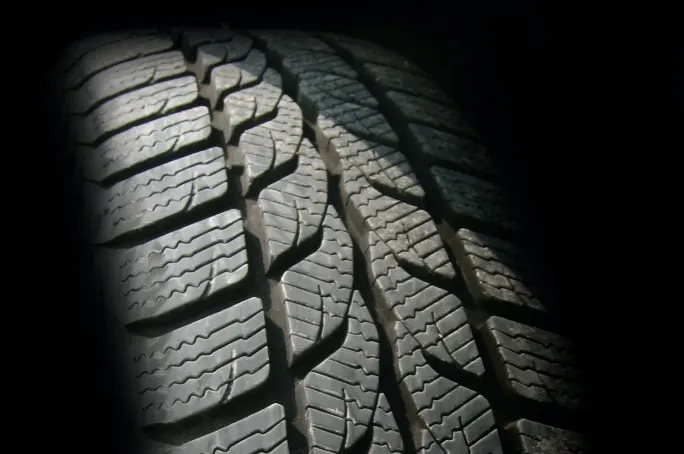
A key part of preventing tire issues down the road is doing more than a visual inspection.
Photo: Gerd Altmann
2. The Tire: What You Should Know
How much do we really know about tires and the tech behind them? We sat down with a tire expert who broke down why staying on top of tire maintenance is vital to your fleet’s safety.

3. Follow the 4 Principles of Safe Driving
That’s why driver safety training is essential. Professional safe drivers drive defensively. And defensive driving simply means being prepared. They see and react to risk ahead of time. They stay away from everyone and everything that could cause them problems. Most importantly, they take responsibility for protecting the people on the road with them.
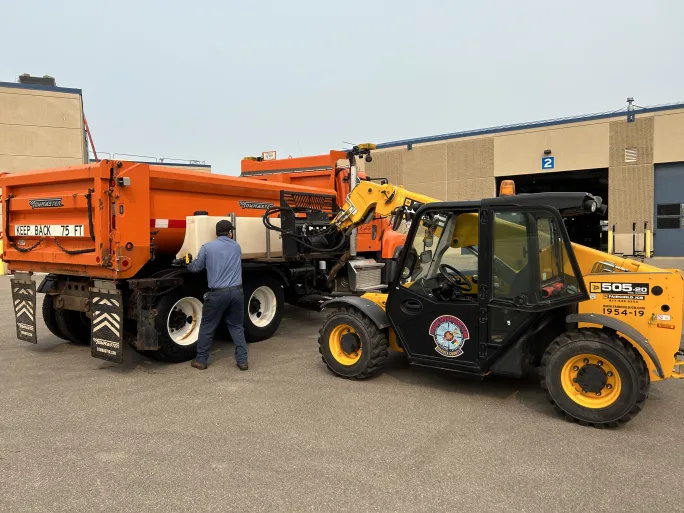
Typically, determining the right number of technicians to have in your shop is referred to as the “vehicle-to-technician ratio.”
Photo: Dakota County
4. How to Calculate the Right Vehicle-to-Technician Ratio
Typically, determining the right number of technicians to have in your shop is referred to as the “vehicle-to-technician ratio.” But three fleet managers agreed that only using the number of vehicles in the fleet to determine your technician needs won’t get you to the right number.
See How to Get it Right for Your Fleet’s Size and Demands...
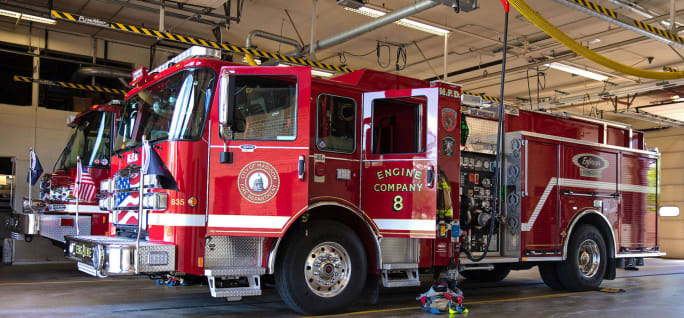
The city of Madison, Wisconsin's Pierce Volterra electric pumper is placed at Station 8, taking on an average of 10 to 12 calls per day, and an upwards of 24 calls on busy days. In the two years the truck has run, it has never run out of battery.
Photo: Pierce Manufacturing
5. Can Electric Fire Trucks Meet the Needs of Today’s Fire Departments?
There seems to be a lot of skepticism about whether an electric fire truck is capable of handling the rigors of firefighting. More often than not, the response to news about electric fire trucks is doubtful at best. Government Fleet took these concerns to a department that can respond to skepticism about the technology arguably better than anyone else.
Learn About the Madison, Wisconsin, Fire Department...

Learning how to make ChatGPT work for your fleet can help translate ideas into a solid plan for future fleet projects.
Photo: Canva.com
6. Making ChatGPT Work for Public Sector Fleets
With the way digital is moving, fleets have had to make big adjustments to accommodate the evolving technology to manage fleets. With everything already on you’re plate it may not make sense to add another “piece of tech” to your wheelhouse. But incorporating the chatbot into your daily operations presents a compelling case where the positives outweigh the negatives.
Tackling AI Today for a More Efficient Tomorrow...
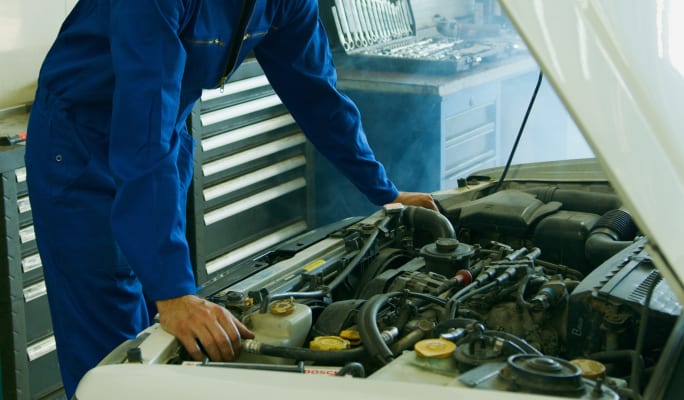
When it comes to the future of the technician, those in fleet believe that role may look even more different than what it’s evolved into now.
Photo: Artem Podrez
7. The Technician Transformation
Maintaining and monitoring the mechanical aspects of a fleet is no small feat. The people who keep government vehicles up and running have an intimate knowledge of what needs to be done to ensure fleets are running smoothly. As with many parts of this industry, this area of expertise has evolved. New vehicles, new tech, and new diagnostics tools have pushed the role of the technician into the future.
See How the Role of the Technician is Changing...
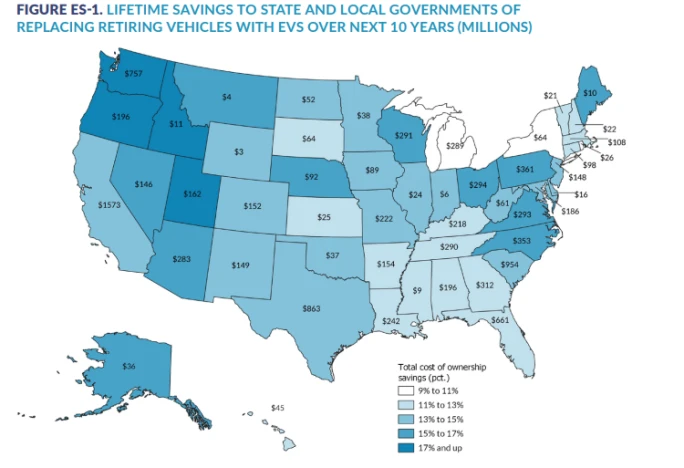
The states with the highest percentage savings from EV adoption are Idaho, Utah, Oregon, and Washington, all western states.
Photo: Arizona PIRG/Frontier Group
8. 'It’s Not that Simple,' Fleet Managers Say About Electrification Cost Savings Analysis
Fleet managers respond to a report by the Arizona Public Interest Research Group Education Fund and Frontier Group on projected cost savings public sector fleets could see if they electrify their light-duty vehicles.
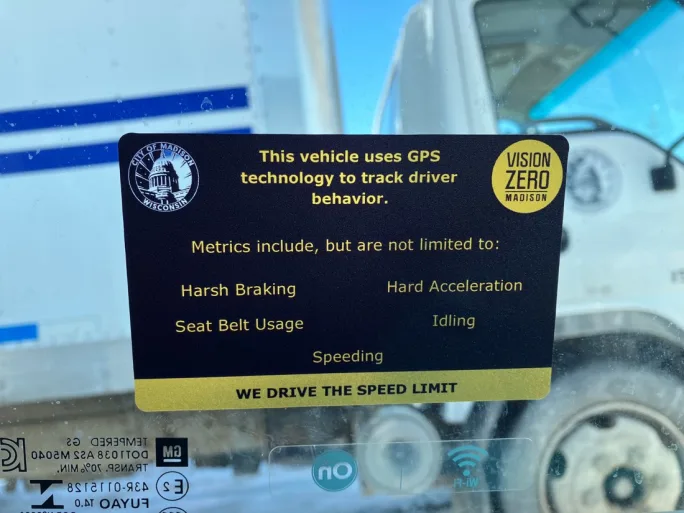
Stickers like this are a cost-effective way to promote safe driving among drivers.
Photo: City of Madison
9. Protecting Your Most Precious Assets
Keeping your drivers and other motorists safe is paramount. As safety features in vehicles evolve, so do the available equipment and technology you can use to add extra protection for peace of mind.
Public Fleets Changes in the Name of Safety...

The transition to an electric fleet costs more than just the price tag on the vehicle and the charging infrastructure.
Photo: Canva/Government Fleet
10. The Hidden Costs of Transitioning to Electric Vehicles
In the transition to electric vehicles, the term “you can’t put the cart before the horse” is often used. It can be easy for elected officials to come up with an order requiring EVs by a certain year when they don’t know what all that entails.
See Why Fleet Managers Say Electrification is 'Not That Simple'...
Subscribe to Our Newsletter
More Operations

Is Keeping Older Fleet Vehicles Really Saving Money?
Is keeping vehicles longer saving money, and what happens when a diagnostic test points to the wrong fix?
Read More →
How Smart Fleet Strategy Can Help Local Government Agencies Do More with Less
Keeping a vehicle longer may ease this year’s budget, but what does it cost the next one? A closer look at fleet decisions can reveal opportunities to reduce spending while protecting essential services.
Read More →
Connect with Government Fleet on LinkedIn
From industry news and fleet management strategies to conversations with peers, Government Fleet's LinkedIn page offers public-sector fleet professionals another way to stay informed and connected.
Read More →
Town of Queen Creek Named Most Successful Fleet Award Winner of Inaugural RTA Fleet Success Awards
Five fleets were honored at RTA Connect 2026 in Chicago for excellence across resource efficiency, intentional culture, risk management, and stakeholder satisfaction.
Read More →
Sponsored•October 14, 2026
A buyer's guide to fleet management software in 2027
Buying fleet management software in 2027 means looking beyond features and price. As fleet operations, technology and expectations evolve, this guide explores what today’s fleet professionals should consider when choosing a system that can deliver value now and adapt to what comes next.
Read More →
Hazard Alerts, Fleet Car Sales Rise and a New Shuttle Concept
Fleet car sales doubled, but the bigger picture tells a different story in this week’s roundup.
Read More →
How St. Johns County Turned Fleet Data Into Better Replacement Decisions
St. Johns County, Florida, had fleet data, but turning it into reliable decision guidance was another matter. Instead of starting over with a new fleet management system, the county connected existing tools and built a scoring system that gives managers an objective look at fleet health.
Read More →
Fleet Forward Conference Introduces One-Day Passes for 2026
New one-day registration lets fleet professionals attend Tuesday, Wednesday, or Thursday, with passes available for $249.
Read More →
ENC Unveils its ZAVIR Medium-Duty Shuttle
Two variants of the concept shuttles were revealed: a low-floor configuration and a high-floor configuration.
Read More →
Could Your Next Fleet Technician Start as an Intern?
What if your next technician hasn’t worked in a fleet shop yet? What fleets are doing to free up time.
Read More →