




Do’s and Don’ts in Spreader Preseason Prep
While spreaders vary widely, all require special servicing to maintain good operating health and avoid extra costs. Here are tips to prepare your winter-maintenance spreaders before the season begins.

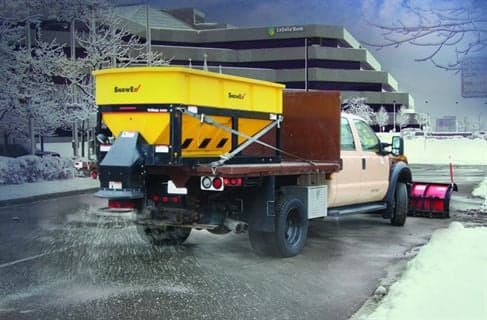
Imagine a teacher walking into the classroom on the first day of school having not touched a textbook or lesson plan since the spring. Or a professional athlete on opening day who hasn’t picked up a ball or hit the gym since the final play of the previous season. Chances are these individuals are not ready to perform as expected.
Whether they realize it or not, some fleets may have salt and sand spreaders in a similarly unprepared situation as they get ready for another season of snow and ice control. Nothing good can come from sending a spreader into battle at less than 100 percent ready. That’s why it’s a beneficial practice to run spreaders through a preseason maintenance checklist to ensure they’re in good working order before the snow flies and another winter season begins.
Different Spreaders Require Different Servicing
With spreaders as unique as the fleets that employ them, the best maintenance solution is to follow the suggested procedures outlined in the owner’s manual. A good manual includes specific details, such as proper belt and chain tension settings, and identifies common grease points. Engine-powered spreaders should also have individual manuals from the engine manufacturer providing maintenance details for the engine itself.
No single article can adequately address everything known about spreader maintenance, simply because so many equipment variations and options are available. For example, a spreader built with polyethylene requires a different maintenance approach than one constructed of steel or stainless steel. However, while every spreader has its own set of maintenance activities, there are universal practices every fleet should do, and some they shouldn’t, to prepare for an upcoming winter season.
DO: Clean Spreaders Thoroughly
Before winter hits in full force, all fleets should give their spreaders a thorough cleaning. This practice is particularly important for spreaders with metal hoppers because residual salt corrodes the surface and eventually leads to rust. Since so many deicing materials are corrosive in nature, metal hoppers actually should be cleaned out after every use. Even if the spreader was cleaned before storage, cleaning it again as a new season approaches is a good idea to ensure any caked-on salt is completely removed from the surface.
Cleaning also presents an opportunity to check the spreader for areas where paint or finish may have been scratched or chipped off, exposing metal below. These areas should be touched up to reduce the possibility of corrosion and rust. Components can also be examined at this time to determine a need for replacement or repair.
[PAGEBREAK]
DON'T: Clean Spreaders with Corrosive Materials
Some fleets like to use chemicals during the cleaning process, but they should be careful about what chemicals are used. For example, alkaline-based cleaners, such as those containing acetone, benzene, leaded gasoline, or brake cleaner, should not be used when cleaning hoppers made of polyethylene. These chemicals can damage poly and compromise its structural integrity.
For the most part, chemicals usually aren’t necessary when cleaning a spreader. Water is generally all that’s needed to clean the hopper and other components. Just prop the spreader up on its side and hose it out. The water will carry any dust, dirt, or deicing material with it as it flows from the hopper.
DO: Keep Engine and Hydraulic Components Clean
Spreaders powered by engines or hydraulics require additional preseason maintenance.
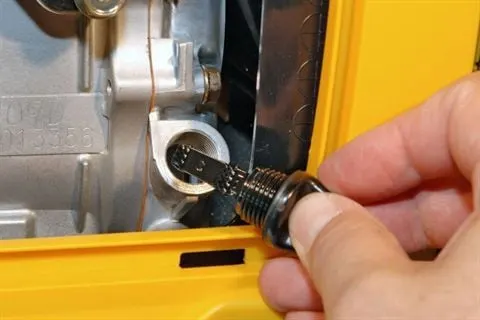
An engine, like the spreader itself, should be cleaned before returning to work. This cleaning can be done simply by spraying with water to remove residual salt, guarding against the corrosion of metal engine components. For hydraulic units, inspect all hoses and fittings for signs of damage or leaks and take care of any issues.
DON'T: Ignore Engine or Hydraulic System Service Intervals
In addition to performing a simple cleaning, fleets should follow the separate service intervals for the spreader’s engine (if equipped). This servicing includes regular changing of oil and air filters, spark plug inspections, and other maintenance checks suggested by the engine manufacturer in the manual.
For hydraulically powered spreaders, be sure to change the hydraulic fluid unless, of course, it was already changed prior to being stored for the off-season. Use a new hydraulic fluid of the type and viscosity recommended by the pump manufacturer.
DO: Grease Moving Parts
After cleaning and perhaps a few touchups or fixes, the next step for each spreader is to grease all necessary parts. Components vary from one spreader to the next, but every unit has moving parts and connectors that require lubrication.
Moving parts, such as bearings, chains, conveyors, rollers, and augers, should be lubricated with a high-quality, multipurpose grease or oil. The same applies for integrated grease fittings. How much time, effort, and grease are required differ according to the type of spreader. Conveyor-fed units and other models have more moving parts and therefore require more lubrication. Conversely, some auger-fed spreaders operate without pulleys, chains, and conveyors, and only need grease in a few areas to facilitate auger articulation. The owner’s manual indicates where and how much lubrication is necessary.
[PAGEBREAK]
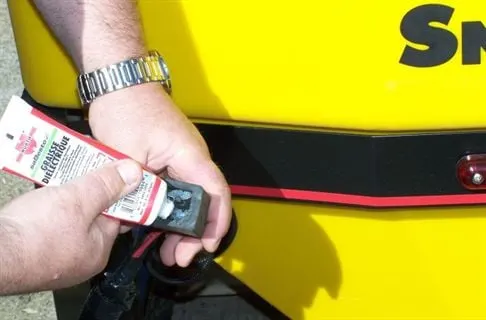
DON'T: Forget to Coat Electrical Connections with Dielectric Grease
When greasing components, sometimes the electrical connections are forgotten. But for spreaders featuring electric motors or other electrical components, such as lights, a coat of dielectric grease should be applied to all terminals to prevent corrosion and ensure easy reconnection. Actually, dielectric grease should be applied anytime these terminals are disconnected.
DO: Check Belt, Chain, and Conveyor Tensions
Fleets using spreaders with belts, chains, or conveyors should remember to adjust the tension before the season starts. The adjustment should also be done throughout the winter to reduce the chances of slippage or other performance issues. Tension adjustment varies depending on the spreader, so consult the owner’s manual for the recommended procedure.
DON'T: Overtighten Belts, Chains, or Conveyors
While tensions may vary by spreader, one issue is universal: belts and chains should never be overtightened or the motor or gearbox bearing could be damaged. Additionally, before attempting to adjust conveyor belt tension, check to make sure sand or deicing material is not trapped underneath the belt.
Ready to Go
Fleet maintenance crews typically focus on servicing larger equipment, but spreaders should never go ignored. Work will proceed much more smoothly if time and attention is dedicated to a little preseason preparation. When the brunt of winter hits, the snow won’t be slowing down. Make sure your spreaders don’t either.
5 Considerations to Remember When Purchasing Spreaders
When determining which spreader works for your fleet operation, consider the following factors:
Drive type. Is the spreader powered by electricity, hydraulics, or an engine? Often, an engine is overkill for providing spreader power. It adds weight to the unit and increases fuel consumption. Also, some trucks may not be equipped with a hydraulic system. Plumbing a truck with a new hydraulic kit typically costs much more than the spreader itself.
Size. Instinct, and not to mention a fleet manager’s pride, often leads to purchasing larger than required equipment. Examine your needs and explore spreader options before making a purchase. If a smaller spreader will do the trick, it may help reduce fuel costs while enhancing the operator’s visibility and maneuverability. Also, keep in mind gross vehicle weight (GVW). When fully loaded, a large spreader can add significant weight, which can severely damage a vehicle not rated for the load.
Material savings. Skyrocketing salt prices can easily blow a budget. But if equipped with the right products, the operator can precisely control the material flow rate. The result is reduced material usage and lower costs.
Environmental concerns. The same spreader features that lead to material savings can also help a fleet go green. High-quality spreaders allow operators to accurately control material placement, rather than fling debris aimlessly into undesired places. This control helps to prevent salt from ruining lawns, plants, or other environmentally sensitive areas.
Warranty. A strong manufacturer warranty reflects a product’s dependability. No one wishes to experience equipment downtime, but in the event something does break down, fleets rely on the manufacturer to respond quickly and get them back on the road again.
About the Author: Mark Hall is director of marketing & sales for TrynEx International, the Warren, Mich.-based manufacturer of SnoEx, TurfEx, and SweepEx specialty equipment. He can be reached at info@tryn exfactory.com
More Equipment
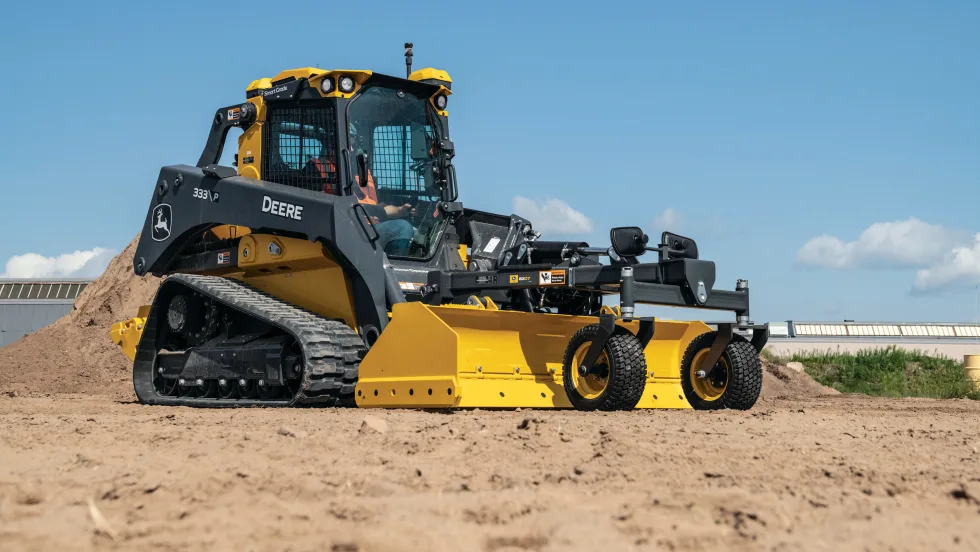
John Deere Adds SmartGrade Box Blades, Fire Suppression Option
John Deere is expanding the capabilities of its compact track loaders with new grading attachments and an equipment protection option. The additions include two SmartGrade box blades for the 333 and 335 P-Tier models and an integrated fire suppression system for large-frame machines.
Read More →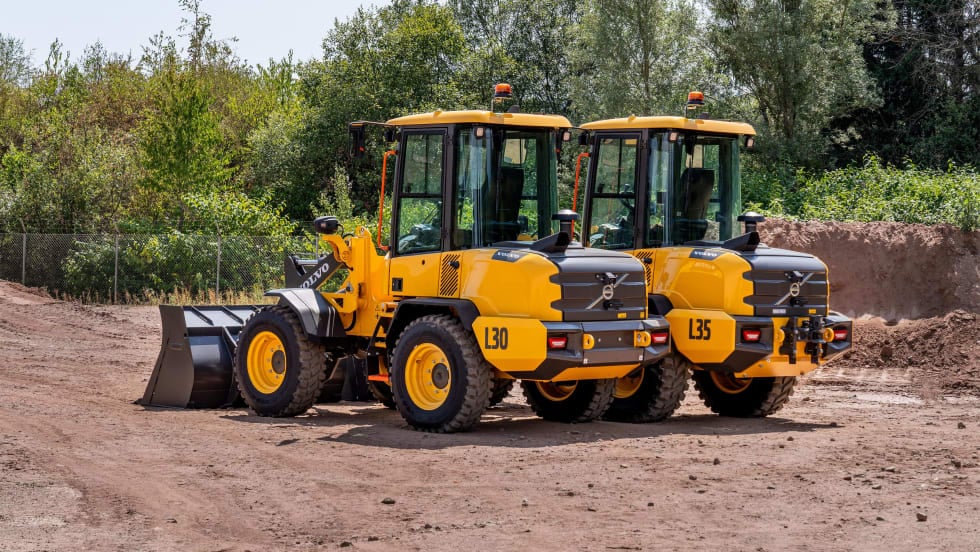
Volvo Updates L30 and L35 Compact Wheel Loaders With Redesigned Rear Frame
The updates aim to provide customers with more flexibility to use the machines for different jobs while improving service access and everyday operation.
Read More →
John Deere Updates Z700 ZTrak Commercial Mower Lineup
Public agencies responsible for maintaining large properties have several updated mower options from John Deere. The refreshed Z700 ZTrak lineup adds upgraded engines, transmissions, mower decks, and operator features across four models.
Read More →
Stellar Industries Acquires Midwest Fire
The acquisition brings a manufacturer of custom fire apparatus under Stellar Industries, expanding the work-truck manufacturer into the fire and emergency response market. Midwest Fire will continue operating from its existing Minnesota headquarters as a distinct company.
Read More →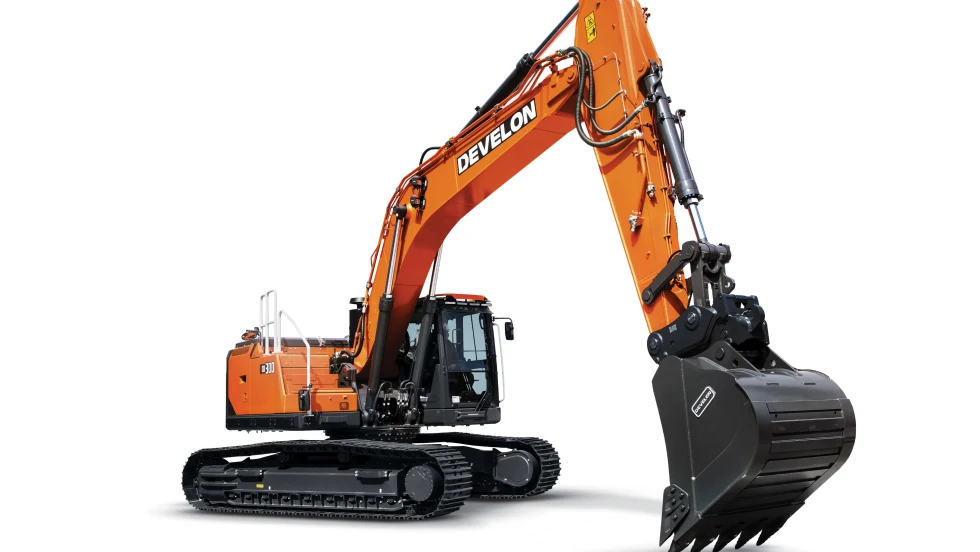
DEVELON Adds DX300LC-9 Excavator to -9 Series
For public works operations handling infrastructure, road, and utility projects, DEVELON has added a new 33-metric-ton excavator to its equipment lineup. The DX300LC-9 combines updated controls with technology designed to address operator safety, equipment monitoring, and machine operation.
Read More →
BendPak Ranger Wheel Service Equipment Receives Safety Certification
Equipment used every day in fleet maintenance shops comes with its own set of safety considerations. Following an 18-month redesign and testing process, BendPak's Ranger tire changers and wheel balancers have received certification to applicable U.S. and Canadian safety standards.
Read More →
JCB Introduces Dual Drive System for Backhoe Loaders
Public works operators traditionally switch positions and controls each time they reposition a backhoe during excavation. JCB's new Dual Drive system is designed to allow operators to move the machine while remaining at the excavator controls.
Read More →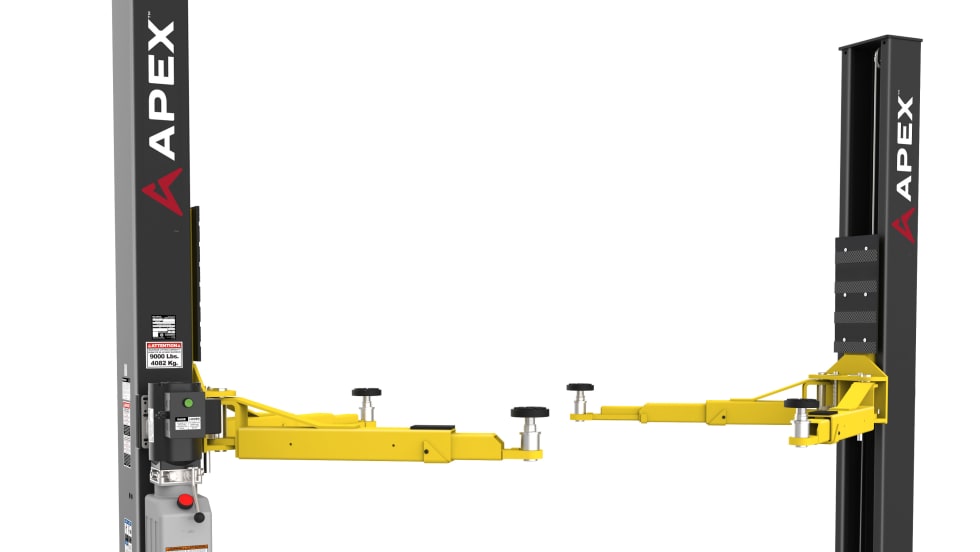
APEX by BendPak Launches AL9LC Two-Post Lift
The new low-ceiling floorplate car lift is designed to maximize overhead clearance for fleets.
Read More →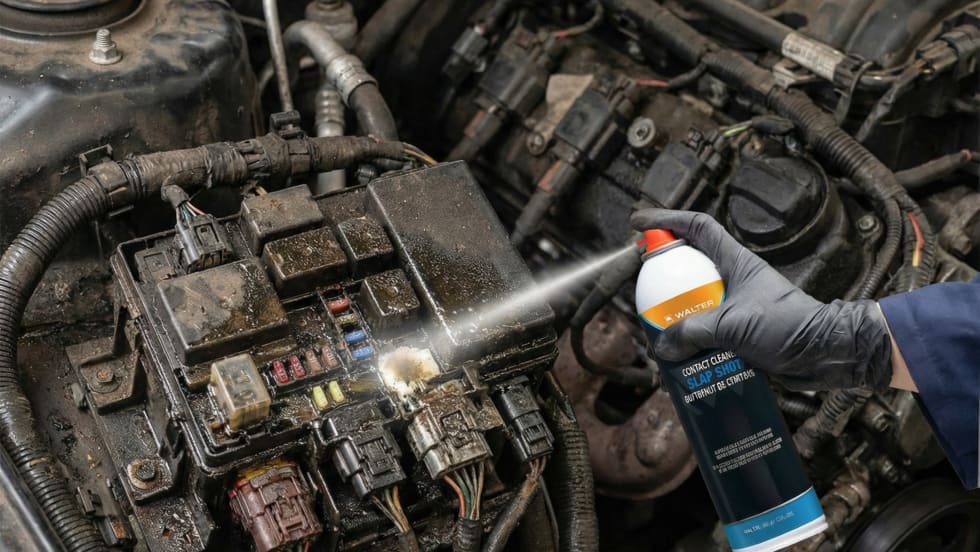
New Slap Shot Contact Cleaner: Heavy-Duty Cleaning Power Without the Residue
Slap Shot Contact Cleaner combines fast contaminant removal, rapid evaporation, moisture displacement, no-wipe cleaning, non-conductive performance, and residue-free cleaning into a single solution.
Read More →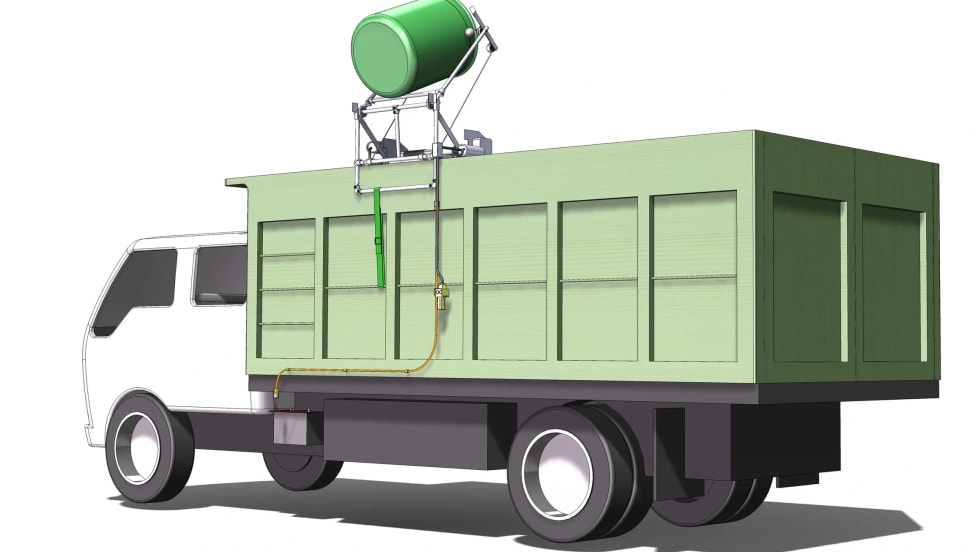
New Powered Carry Barrel Lift Helps Crews Dump Heavy Barrels Into Trucks With Less Manual Lifting
The Carry Barrel Lift is a new truck-mounted attachment designed to help landscape and municipal crews lift and dump heavy 60-gallon barrels more efficiently while reducing manual strain.
Read More →