




Coppell Creates Safety Culture
The city of Coppell, Texas takes a proactive approach to fleet safety that includes hands-on driver training, annual MVR checks, safety-related employee performance reviews and an accident review committee.
In the City of Coppell, Texas,“safety” isn’t just about quarterly campaigns or posters on the wall noting how long it’s been since an accident. Rather, it’s an underlying culture that continuously seeks to reduce risk rather than point the finger when a problem erupts.
“The bottom line,” says Mark W. Brochtrup, the City of Coppell’s fleet manager, “is that a safe employee is a productive, happy employee.”
Brochtrup, a member of the city’s Employee Safety and Accident Review Committee (ESARC), says he’s been “really lucky” that both his current and previous employers have been proactive regarding safety. In his department, that focus plays out through hands-on driver training throughout the year, annual MVR checks on anyone who “might” operate a city vehicle, and safety components tied into employee performance reviews. And then, of course, the review committee.
Review Committee Focuses on Prevention, Not Blame
“We see the review committee as being on a fact-finding mission,” Brochtrup says. “It’s not just to find fault. When there’s an accident, we really want to know what led up to it, so we can see if we can stop future reoccurrences.”
All too often, Brochtrup says, employees believe involvement in an incident automatically means disciplinary action. “But you can’t point the finger,” he says. “Even if we find that an individual has done something wrong, we don’t point at John – or Jane – Doe and say, ‘You did this wrong, and now you’re going to pay for it.’ In a case where disciplinary action may be warranted, the committee itself does not become involved. Those issues are handled strictly by the department director.”
According to Brochtrup, the committee’s sole responsibility is to review all actions that led up to the event, in aneffort to prevent a reoccurrence. “It’s rare that we actually call an employee before the committee in the first place, since it’s all normally done as a report through a representative. But if we did, it would be, ‘Thanks very much for your info.’ It’s not about how can we punish John Doe,” he explains.
At-Fault Incidents Do Have Consequences
However, at-fault incidents do have consequences; violations are recorded and points are assigned. Assigned points are a tool that the city can use to monitor employees’ safety performance “at a glance.” An employee accumulating points over a short period of time indicates
the need for closer supervision, training, and direction. Upon accumulating 10 points, the employee’s driving privileges are suspended.
After completing a state-sponsored defensive driving course, the employee regains his or her driving status, but still retains all 10 points.
All possible efforts are undertaken to keep an employee from reaching that point, Brochtrup says. “And we try to send the message that we’re not trying to ‘get’ anyone. We just want to determine the true cause of accidents.”
A current challenge, for example, involves backing-up. “We’ll probably discuss some safety issues with regard to that soon, ”Brochtrup says. “We’ll go over backing-up equipment with trailers, and hold training in a controlled environment, so the drivers can improve.We try to conduct safety training once a quarter. But it’s not like we just throw out a piece of paper, and say, ‘This is what we’re doing.’We’re constantly trying to keep the safety issue at the forefront and talk about it on a regular basis.”
Employees are Like Family
Part of the emphasis, Brochtrup says, stems from the fact that the city (which is just northwest of Dallas) is only 14.5 square miles; it’s so small, he notes, workers are “like family.”Brochtrup’s department has just five employees and 238 pieces of equipment.
“I don’t want to see any of the guys who work with me get hurt,” he says. “That doesn’t just affect the office. It affects their families and private lives as well. If we can do something to keep that from happening, it’s just one more thing that makes the job worthwhile.”
Brochtrup realizes not all departments are as forward-thinking when it comes to safety, so he offers a little advice.
First, he suggests, create a review committee with representatives from every division. “That way, you can have different perspectives,” he says. “You don’t want to see this kind of thing with blinders on, and with equal representation, you get different ideas and viewpoints.”
Second, focus on prevention. The City of Coppell, for example, requires monthly facility checks for “slip, trip, and fall hazards,” and when it comes to the vehicles, drivers do a complete 20-point walk-around check every day.
And finally, says Brochtrup, reward those who practice safety, rather than penalize those who don’t.
“If we can keep our employees safe, everyone wins,” Brochtrup says. “We have better productivity, people are happier, operations aren’t interrupted, we don’t have massive amounts of downtime, and no injuries. Just one person being out can affect the whole department.”
More Safety

New York City Expands Safety Technologies Across Municipal Fleet
Executive Order 19 moves intelligent speed assistance and pedestrian alerts from pilot programs toward standard fleet equipment, offering other public fleets a look at how safety technology can be tested, measured, and scaled.
Read More →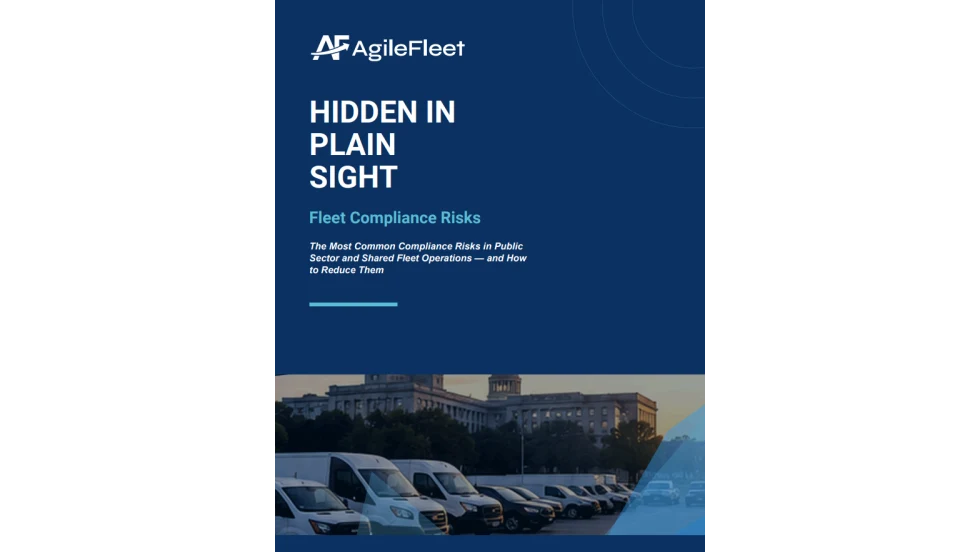
Hidden in Plain Sight: Fleet Compliance Risks
Fleet compliance isn't just about having policies — it's about consistently enforcing them. This practical guide reveals six hidden compliance risks common in public sector and shared fleet operations and outlines proven strategies to improve visibility, accountability, and audit readiness.
Read More →
5 Days Left to Submit Your 2026 Fleet Safety Award Nomination
Know a government fleet, safety, or risk manager who deserves recognition for making fleet operations safer? Nominations are open through Aug. 15.
Read More →
How the First 24 Hours Can Shape a Fleet Crash Response
How a strong accident response process helps government fleets move from the initial report to recovery while building a clearer record for what needs to change next.
Read More →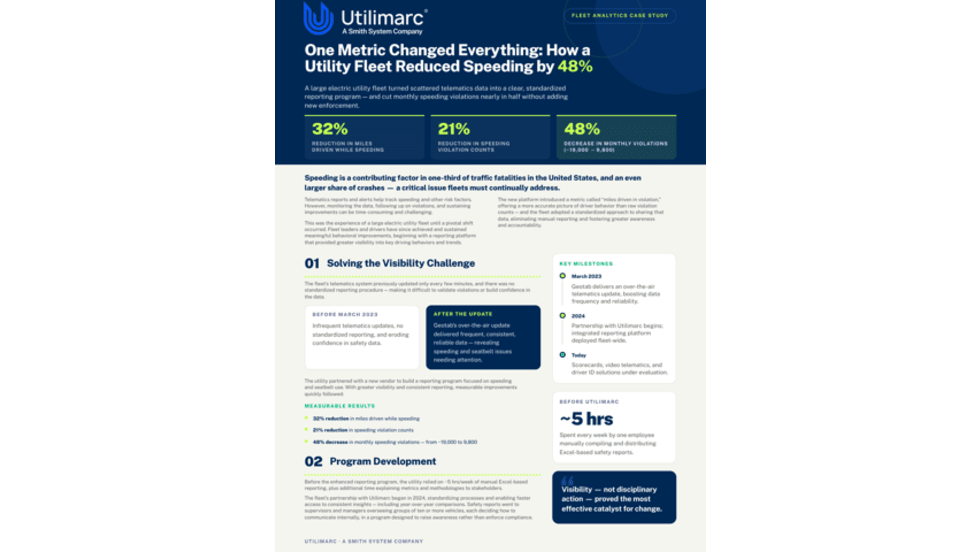
How Better Visibility Cut Speeding Violations by 48%
Fleet leaders don't need more data, they need clearer visibility into what the data is saying. This case study explores how one utility replaced speeding-event counts with a single metric — miles driven in violation — to strengthen safety and significantly reduce speeding violations.
Read More →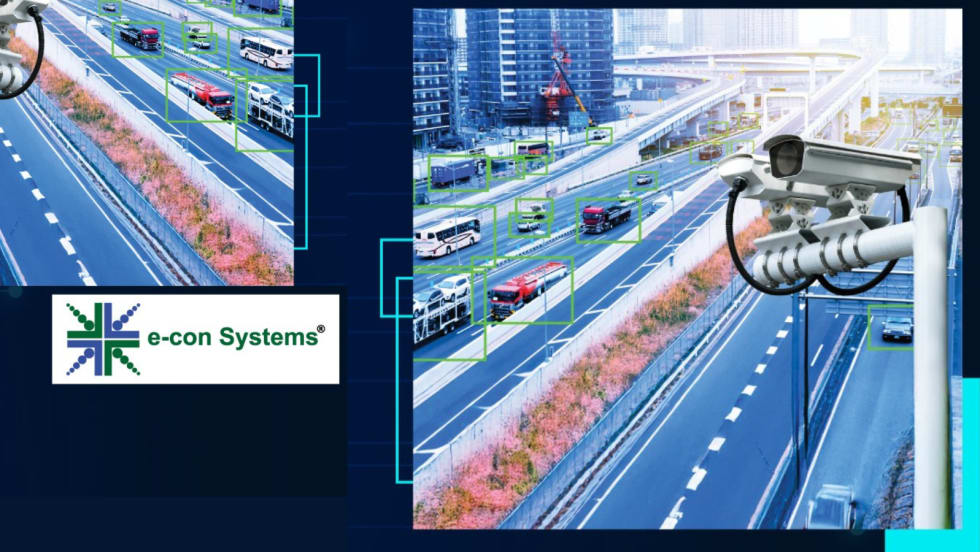
e-con Systems Expands AI Camera Tools for Traffic Monitoring
The systems support license plate recognition, traffic analytics, and video management for transportation agencies.
Read More →
King Township Pilot Links Driver Feedback to Reduced Speeding
How King Township, a best-in-class municipal fleet, reduced speeding by 10.9% and demonstrated a projected 349% ROI by putting safety ownership directly in drivers' hands.
Read More →
Beyond the Fireline: The Critical Role of Public Fleets in Wildfire Response
Behind every wildfire response is a complex network of vehicles, data, and decisions that must work in sync under extreme pressure. Global heating trends require strong fleet coordination and reliable communications to keep crews safe and operations running smoothly.
Read More →
How AI Is Transforming Public Fleet Safety - Part 1
AI-powered safety systems are helping public fleets tackle distracted driving by delivering real-time coaching and measurable behavior change behind the wheel. In part one of our Q&A, Nauto CEO Stefan Heck explains how agencies can improve safety, reduce costs, and navigate implementation challenges with AI-driven technology.
Read More →
Reducing Risk and Improving Safety in Public Sector Fleets with Advanced Driver-Assist Technology
Public sector fleets face increasing pressure to improve safety, reduce liability, and operate efficiently. See how advanced vehicle technologies are helping agencies protect drivers, the public, and their budgets.
Read More →